Jung’s Unanswered Question
What happens after you’ve done the inner work?
Jung’s Unanswered Question
What happens after you’ve done the inner work?
Part one of four.

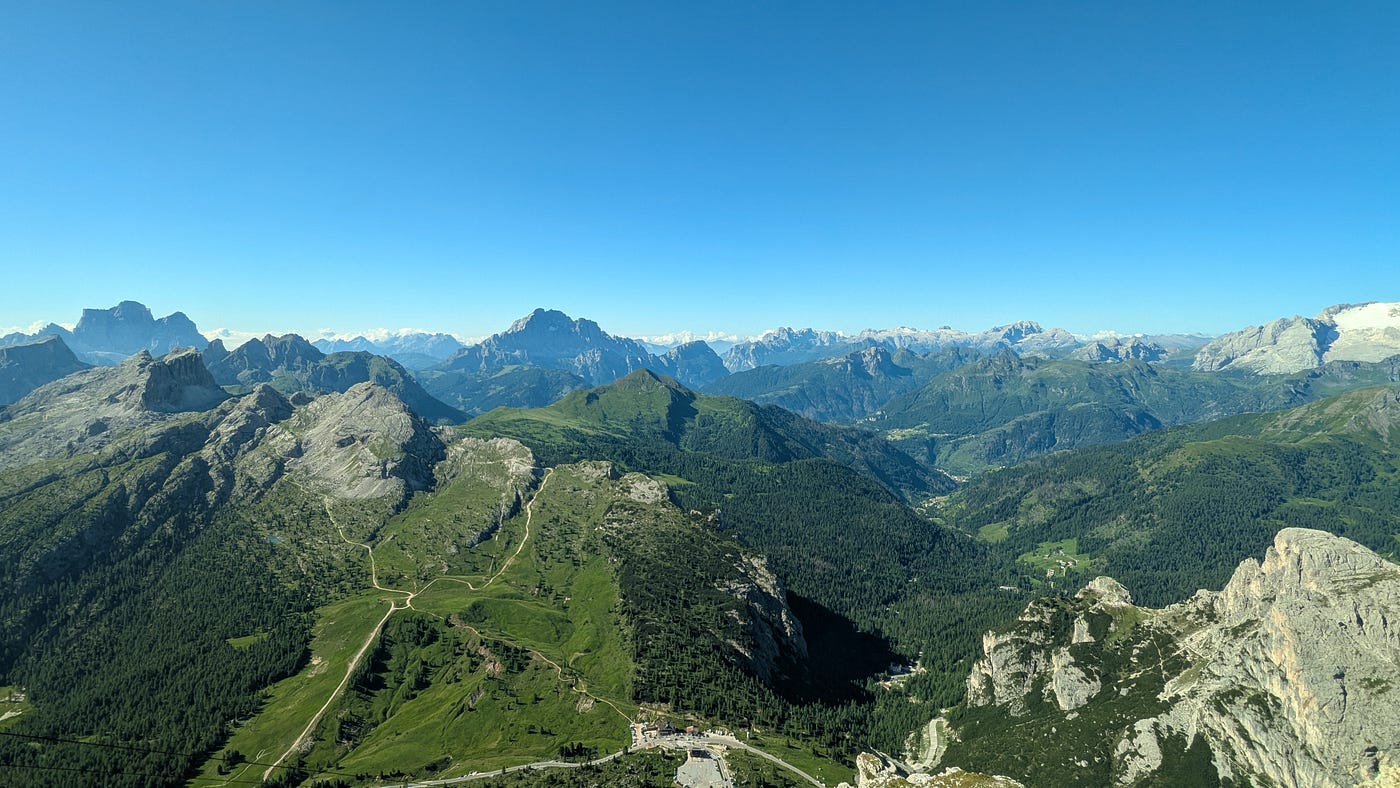
The summit is only half the journey. Photo by author.
There’s a moment in the journey of inner work that nobody prepares you for.
You’ve sat with the shadow. You’ve peeled back the persona, the mask you wore so long you forgot it wasn’t your face. You’ve confronted the parts of yourself you spent decades disowning: the jealousy, the cowardice, the quiet cruelty you reserved for the people closest to you. You did the work. You didn’t flinch.
And then you arrive somewhere. Not a destination exactly. More like a clearing. The fog lifts. You see yourself with a kind of brutal, tender clarity that would have destroyed you five years ago but now just feels like the truth.
Carl Jung called this individuation. The process of integrating the unconscious with the conscious mind, of becoming whole rather than performing wholeness. He considered it the central task of the second half of life. He mapped the territory with extraordinary precision: the shadow, the anima and animus, the Self as the archetype of totality that quietly orchestrates the whole journey.
But here’s what Jung never adequately answered: what do you do next?
I hit this wall personally. After years of deep psychological work, study, relentless self-examination, I found myself standing in that clearing with a question I hadn’t anticipated. The inner landscape had shifted. I understood myself in ways I couldn’t have imagined when I started. But the world around me hadn’t changed. My relationships were still there. My responsibilities hadn’t gone anywhere. Monday morning still showed up on schedule.
And none of the books I’d read, not Jung, not the Jungians, not the entire self-help industry that borrows his ideas without crediting him, had much to say about this part.
The literature gets mystical. It talks about the Self in capitalised, luminous terms. It gestures toward wholeness as though arriving there is the end of the story. But life isn’t a story that ends at the moment of insight. Life is what happens on the Tuesday after your revelation.
This isn’t a minor gap. It’s a structural failure in the framework.
Jung built one of the most sophisticated maps of the human psyche ever devised. His understanding of how we fragment, how we project, how we build elaborate defences against our own depth remains unmatched. But his map has four blind spots that become impossible to ignore once you’ve walked the territory yourself.
The first is moral. Individuation, as Jung described it, is morally neutral. You integrate the shadow, but toward what end? Without an ethical framework, shadow integration can become shadow celebration. “I’m just being authentic” becomes the most sophisticated excuse for selfishness ever invented. Jung deliberately avoided prescribing values, which was intellectually honest but practically dangerous. A map without a compass still leaves you lost.
The second is about what comes after. Jung is remarkably clear about the journey inward. He maps the descent into the unconscious, the confrontation with shadow and archetype, the slow assembly of a more integrated self. But the moment you ask “and then what?” the map goes blank. There’s no account of how you take this hard won inner transformation and bring it back into ordinary life. How you sit across from your partner at dinner. How you show up at work. How you re-enter the world that kept turning while you were doing the deep dig. The mountain gets climbed, but the descent back down is barely sketched. And that descent, it turns out, might be the harder journey.
The third is relational. Individuation is essentially a solo endeavour. The ego confronts the unconscious. The individual approaches the Self. But most of the wounds that drive us into fragmentation happened in relationship, with parents, partners, communities that couldn’t hold our wholeness. If the wounding was relational, can the healing really be solitary? Jung’s framework doesn’t adequately address this. The collective unconscious is there in theory, but the actual process remains stubbornly individual.
The fourth is practical, and it’s one that rarely gets discussed. Jung embarked on his famous confrontation with the unconscious from a position of extraordinary privilege. He was financially secure, living in one of the most stable and prosperous countries in the world, with a devoted wife managing his household and children, and a close companion in Toni Wolff providing further intellectual and emotional support. He could afford to spend years in the depths of his own psyche because the surface of his life was handled. That’s a luxury that almost no one has today, and arguably almost no one has had throughout most of human history. His framework assumes a freedom from ordinary pressures that makes the journey inaccessible to most of the people who might benefit from it most.
I sat with these gaps for a long time. Not as academic problems, as lived ones. I’d done the inner work. I could feel the difference. But the question that kept surfacing was deceptively simple: what comes next? How do you integrate back into the ordinary? How does the person who went through this transformation re-enter a life that wasn’t built for who they’ve become?
Modern psychology doesn’t help much here either. It’s borrowed Jung’s concepts. Shadow work is everywhere now. But it’s stripped them of depth and repackaged them as individual optimisation. “Become your best self.” For what? For whom? The question hangs in the air, unanswered.
And then I stumbled across something I wasn’t looking for.
Not in psychology. Not in the self-help section. In a tradition thousands of years old that had been thinking about exactly this problem, the problem of return, of reintegration, of what wholeness demands of you once you’ve touched it, long before Jung was born.
It didn’t replace what I’d learned through individuation. It completed it.
But that’s for next time.
For now, the question is worth sitting with on its own, because I suspect you recognise it. If you’ve done real inner work, not the Instagram version, not the weekend workshop version, but the kind that costs you something, you’ve probably felt this gap yourself. The sense that something essential is missing from the framework. That the journey doesn’t end where the books say it does.
It doesn’t.
And the fact that an ancient wisdom tradition saw this clearly enough to build an entire practice around it, that’s worth paying attention to.
This is the first in a four-part series exploring what happens after individuation, and the ancient framework that may hold the answer Jung was looking for.
메타데이터
- post_id
- 7c415290ffa3
- slug
- jungs-unanswered-question-7c415290ffa3
- url
- https://medium.com/the-mental-gym/jungs-unanswered-question-7c415290ffa3
- canonical_url
- https://medium.com/the-mental-gym/jungs-unanswered-question-7c415290ffa3
- author_url
- https://medium.com/@atayebnama
- status
- ok
- fetched_at
- 2026-07-23 07:59:38