The Advisory State
Part 1 of 3: The Double Hub — How UAE Economic Success Demands Regional Fragmentation
The Advisory State
Part 1 of 3: The Double Hub — How UAE Economic Success Demands Regional Fragmentation
When Iranian drones and missiles struck UAE infrastructure in recent months, they exposed something more significant than physical damage. They pierced the carefully constructed image of an invulnerable, hyper-connected middle power that had spent two decades engineering itself into the indispensable node of global trade. Despite building port networks across six continents, cultivating proxy relationships from Sudan to Somalia, courting Washington while hedging with Moscow and Beijing — the UAE’s accumulated levers of influence did not translate into strategic autonomy when Iran decided to escalate.
Moscow didn’t defend the UAE despite years of sheltering Russian oligarchs and their capital. Beijing issued familiar platitudes about regional stability. Washington delivered little meaningful deterrence.[1] Presidential adviser Anwar Gargash’s public frustration that “the friend has turned into a mediator instead of being a steadfast ally”[2] captured the gap between Abu Dhabi’s self-image as “Little Sparta” — disciplined, untouchable, shaping its strategic environment through network power — and the structural reality: a small state whose sophisticated architecture cannot compensate for geographic vulnerability.
This exposure matters not because it diminishes UAE achievements — which are real — but because it reveals the logic driving the security architecture accompanying those achievements. A state that cannot protect itself through conventional deterrence may seek to compensate for its vulnerability by shaping its external environment through networks, intermediaries, and dependency relationships. Not as preference, but as existential necessity.
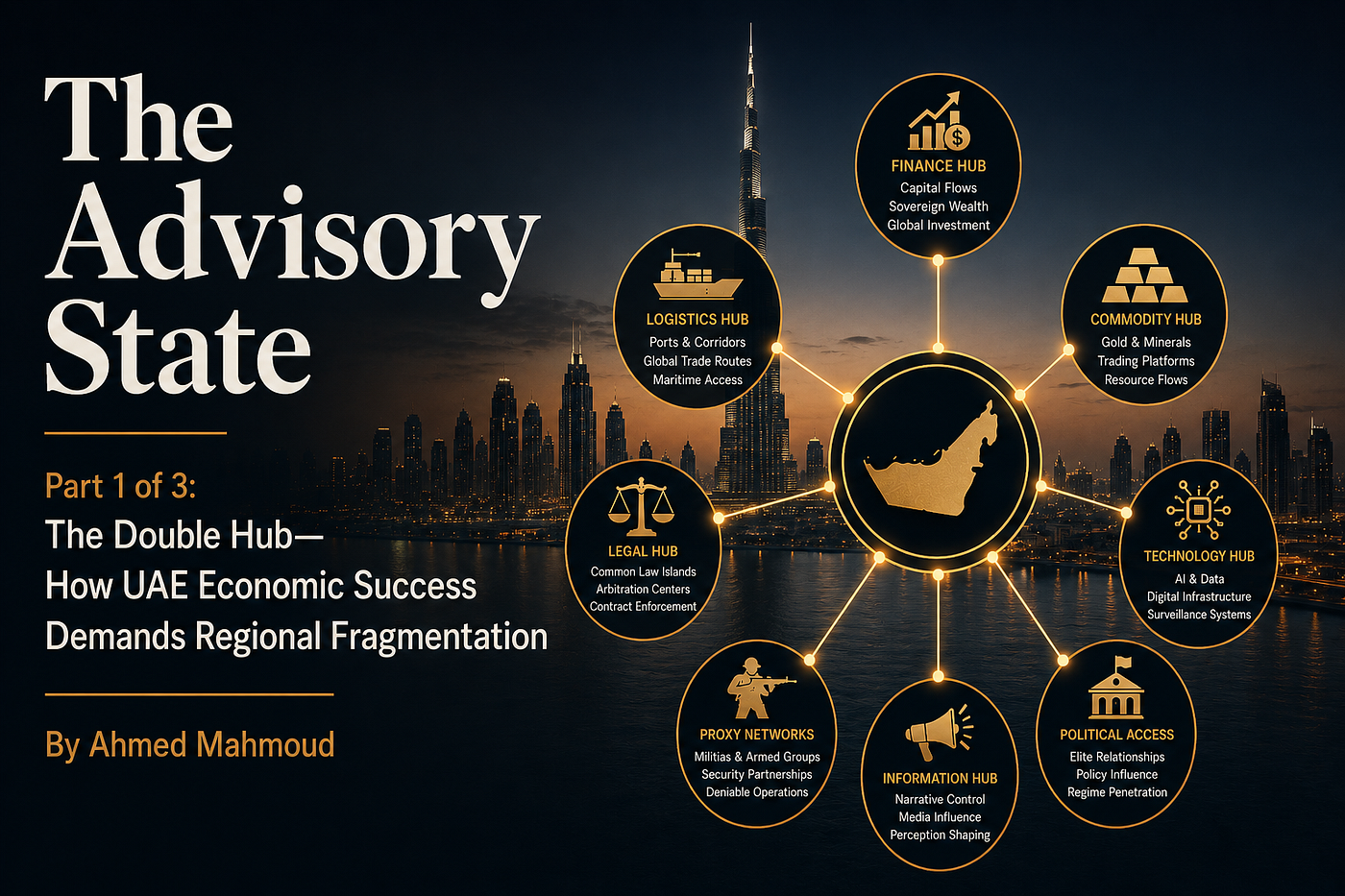
What follows examines both dimensions of this architecture: the visible economic hub that has genuinely transformed the UAE into a global connector of finance, commodities, logistics, and technology — and the parallel security hub operating in the shadows, fragmenting states and cultivating non-state armed groups to feed and protect the first. Both hubs radiate from the same geographic core. Both depend fundamentally on foreign expertise the UAE cannot indigenously replace. And both generate dependencies — economic and security — whose long-term sustainability is now seriously in question.
I. The Economic Hub: Engineering Success Through Imported Expertise
What non-oil sectors now contributing over 70% of UAE GDP[3] and foreign direct investment exceeding $20 billion annually[4] represent is not organic development. It is systematic institutional engineering by foreign specialists imported to design the very frameworks that would make the UAE indispensable to global flows. The distinction matters: the UAE did not grow its way to hub dominance — it bought the expertise to architect it.
Logistics: DP World’s evolution from Dubai-based port operator into a global conglomerate operating 82 terminals across six continents exemplifies this model.[5] Jebel Ali Port — handling over 15 million TEU annually — anchors a network extending to strategic chokepoints: Berbera in Somaliland (Horn of Africa positioning), Port Sudan (alternative access routes), Dakar (West Africa extension), London Gateway (European presence).[6]
Terminal locations were not selected by Emirati officials — they were identified through trade flow projections, geopolitical risk assessments, and infrastructure gap analyses conducted by former Hutchison Ports executives, Maersk logistics specialists, and maritime infrastructure experts recruited specifically for this purpose. Concession agreements were negotiated by international arbitration specialists. Operational systems were designed by logistics experts who understood how to integrate disparate terminals into networks offering shippers seamless global reach.[7]
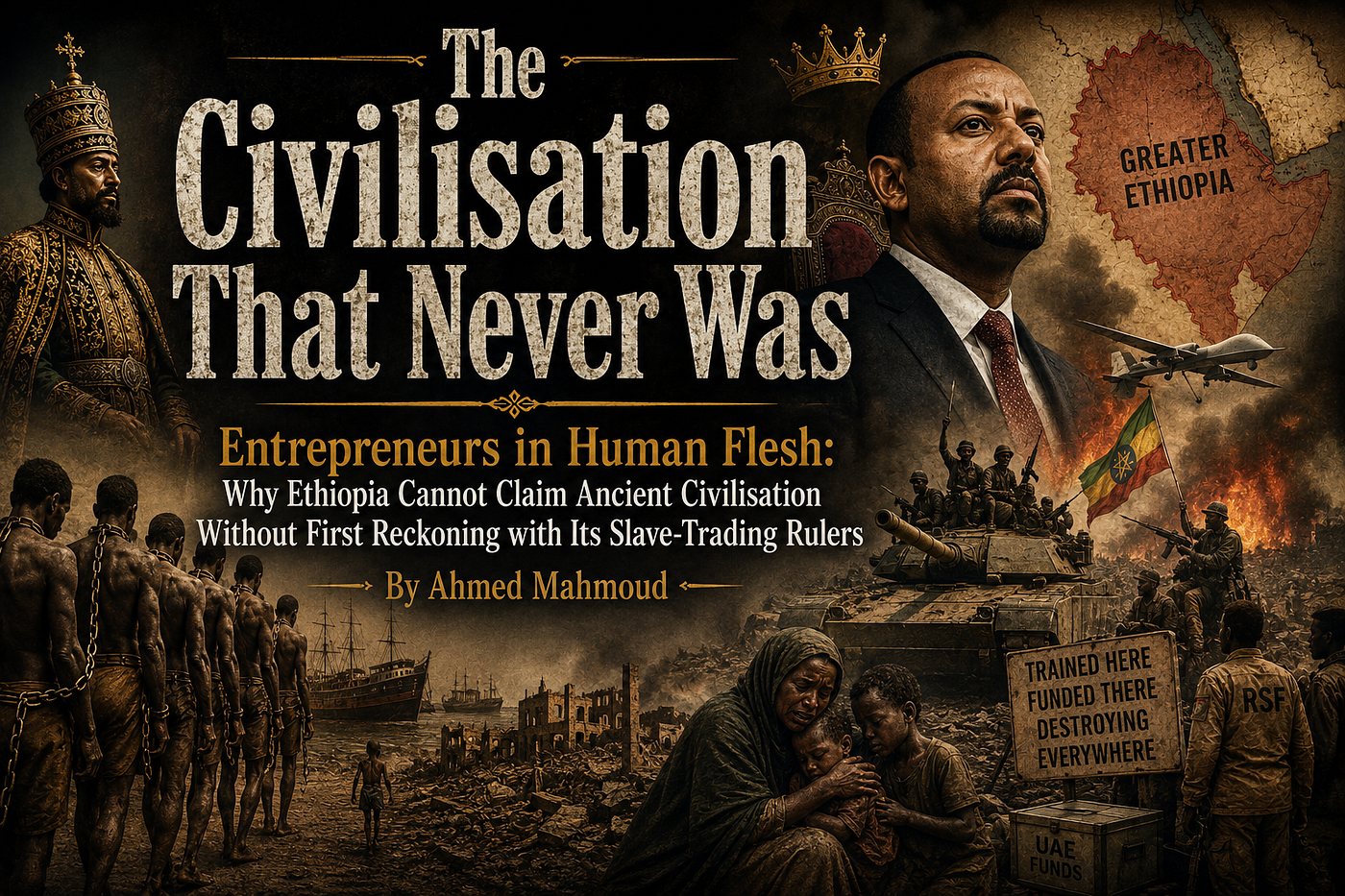
The advisory networks extend beyond technical specialists to politically connected elites providing access and policy influence in Western capitals. DP World’s relationship with Lord Mandelson — former UK Trade Secretary and EU Trade Commissioner who became chairman of Global Counsel advising DP World[8] — exemplifies this elite recruitment. Such connections help explain Western governments’ repeated failure to challenge UAE operations despite documented involvement in conflicts, arms embargo violations, and state fragmentation across multiple theaters. The advisory state cultivates not just technical expertise but political influence, creating networks that facilitate UAE penetration of Western establishments while reducing accountability for destabilising actions elsewhere.
Yet beneath these achievements lies a common pattern. Each institution was built not primarily through indigenous state capacity, but through imported expertise: commodity traders, financial engineers, logistics specialists, intelligence professionals, and regulatory architects. The UAE did not merely hire advisers; it incorporated advisory networks into the state-building process itself. This is what I call the Advisory State.
Commodities: Dubai handles over 20% of global gold trading despite producing none — importing 1,200 tonnes in 2022 alone.[9] Swiss traders with decades of Zurich-based experience designed the free zone regulations, assaying standards, and refining partnerships making Dubai attractive to African gold flows. Former London Metal Exchange specialists created the futures contracts providing regional price discovery.[10]
The architecture’s design choices are revealing: minimal documentation requirements, rapid customs processing, bonded warehouses, sophisticated trade financing. These features serve legitimate commerce — but they also create, as investigators have documented, a system where smugglers can bring suitcases of gold into Dubai with no questions asked, where it is quickly melted down and rendered untraceable.[11] In 2022 alone, Sudan exported $2 billion worth of gold through these channels to the UAE.[12] The commodity hub’s design simultaneously enables global trade and provides infrastructure for laundering conflict resources. This is not incidental — it is architectural.
Finance: Dubai International Financial Centre, designed by British and American regulatory specialists, created an institutional transplant: a common law jurisdiction within a civil law country, complete with courts staffed by British judges applying English legal precedent.[13] This was regulatory arbitrage at sovereign scale — impossible without deep comparative expertise in how global capital makes location decisions. DIFC now hosts over 5,000 firms managing assets exceeding $500 billion.[14] Abu Dhabi Investment Authority ($700+ billion) and Mubadala Investment Company ($280+ billion) were structured by former Wall Street executives and Asian sovereign fund specialists who designed not just investment portfolios but the institutional frameworks governing diversification strategies, risk management protocols, and the integration of geopolitical intelligence into capital deployment.[15]
Technology: UAE positioning as an artificial intelligence hub represents the model’s most recent iteration. G42’s advisory networks included former American intelligence officials, Chinese AI researchers — before U.S. pressure forced restructuring — and European technology executives, deliberately bridging competing ecosystems.[16] Following the 2020 Abraham Accords normalisation with Israel, figures with Unit 8200 backgrounds brought surveillance technology expertise extending far beyond commercial applications. The UAE has acquired advanced Israeli systems including Pegasus, capable of infiltrating global communication networks.[17] As massive data centres expand across UAE facilities, systematic capability to surveil and monitor businesses, governments, and individuals whose data flows through UAE digital infrastructure becomes integral to hub operations — not as side effect but as feature.
The Fundamental Vulnerability
The UAE has not built indigenous expertise. It has created perpetual dependence on foreign specialists who can leave, face political pressure, or demand unacceptable terms. This vulnerability becomes acute as geopolitical competition intensifies pressure to choose between incompatible partners. U.S. scrutiny forced G42 to restructure away from Chinese partnerships.[18] But China remains crucial for technology access and Asian market connectivity. Israel provides security technology — but at the cost of profound tensions with Arab and Muslim constituencies, particularly following Gaza. European financial specialists demand regulatory standards conflicting with Gulf governance models.
The UAE’s shock decision to exit OPEC signals Abu Dhabi’s determination to project autonomous middle-power status, no longer bound by Saudi-led production frameworks.[19] But leaving OPEC cannot resolve the deeper structural dependency. The advisory state model delivers rapid transformation — but creates vulnerabilities requiring perpetual management that Abu Dhabi cannot ultimately control.
II. The Hub-and-Spoke Model: Nodes Over Nations
The UAE’s approach to influence follows a network logic rather than the territorial logic of traditional great powers. Abu Dhabi functions as the hub where decisions, capital, logistics, and narrative direction converge. The spokes are not sovereign state partners but specific high-leverage nodes within fragile states: ports and logistics corridors, elite security units, regional administrations with autonomy claims, commodity pipelines, and media ecosystems.[20]
The hub doesn’t need to govern countries. It only needs to control enough critical nodes to shape outcomes — trade routes, security balances, political narratives, commodity flows. Influence routes through local actors, so agendas appear domestic rather than externally imposed, while Abu Dhabi retains leverage behind the scenes. Plausible deniability is not incidental to this model — it is core to its design.
How dependency gets built: Influence becomes durable when nodes become dependent across multiple reinforcing dimensions simultaneously. Long-term contracts (DP World’s 50-year Berbera lease) make departure costly. Ongoing training programmes requiring continuous UAE technical support create maintenance dependencies. UAE diplomatic backing in international forums makes nodes politically reliant on Abu Dhabi. Access to commodity markets through UAE trading infrastructure creates economic dependencies. And coordinated narrative amplification shapes the informational environment within which nodes operate. No single dependency is decisive — their combination is.
This creates what analysts describe as a “thin-but-sticky footprint”[21] — not occupation or formal control, but structural dependencies difficult to unwind precisely because they operate across so many dimensions simultaneously. The UAE wants, in the words of one regional analyst, “all the leverage of a patron while keeping enough ambiguity to reduce formal consequences.”[22]
III. The Security Hub: Why Fragmentation Is Necessary
The economic hub alone cannot function sustainably. To protect and feed it, the UAE engineered a parallel security hub operating through fundamentally different mechanisms: not sovereign partnerships but cultivated dependencies with armed groups, separatist authorities, and deliberately fragmented political orders.
The necessity is structural. Strong, unified states can regulate ports, scrutinise commodity trading arrangements, demand greater revenue shares, threaten nationalisation of foreign-operated assets, and align with UAE competitors — Egypt, Turkey, Qatar, Saudi Arabia. They possess the institutional capacity and accountability mechanisms to say no.
Fragmented political orders serve the hub perfectly. Separatist authorities desperate for recognition accept asymmetric terms that established states would reject. Militias dependent on external financing cede control over strategic assets in exchange for weapons and political backing. Competing factions create auction dynamics allowing UAE to play rivals against each other. There is no unified oversight, no effective accountability, no capacity to collectively negotiate.
The pattern across the region demonstrates this logic’s consistency:
Sudan: UAE cultivation of the Rapid Support Forces began when Sudanese fighters deployed to Yemen under the Saudi-led coalition, coming under Emirati coordination and receiving payments through UAE channels.[23] Support expanded to training, equipment, intelligence sharing, and critically — gold trade facilitation. In 2022 alone, Sudan exported $2 billion in gold to the UAE through channels where RSF production zones fed directly into Dubai refineries.[24] The RSF used UAE-derived wealth to buy mercenaries, weapons, and logistics for devastating civil war against Sudan’s military. Result: 150,000+ dead, millions displaced, state collapse — and gold flowing to Dubai regardless of Sudanese government policies, because there is no functioning government left to regulate it. The advisory networks designing Dubai’s gold trading infrastructure operate in the same strategic space as those coordinating RSF relationships. This is not coincidence. It is integrated design.
Yemen: UAE intervention began as coalition support for Yemen’s recognized government against Houthis. But UAE advisers simultaneously cultivated Security Belt Forces, Elite Forces in Aden, and Shabwani Elite Forces — units operating outside government command, reporting through UAE channels, receiving superior equipment and salaries compared to official forces.[25] When the Southern Transitional Council seized Aden from the government in August 2019, it deployed UAE-trained units.[26] Forces theoretically supporting the government had been built to serve Abu Dhabi’s interests. When Saudi Arabia objected — directly striking UAE weapons shipments to STC forces in Mukalla to enforce Riyadh’s dominance over Yemeni airspace[27] — the fracture between Gulf allies over Yemen’s fragmentation became publicly visible.
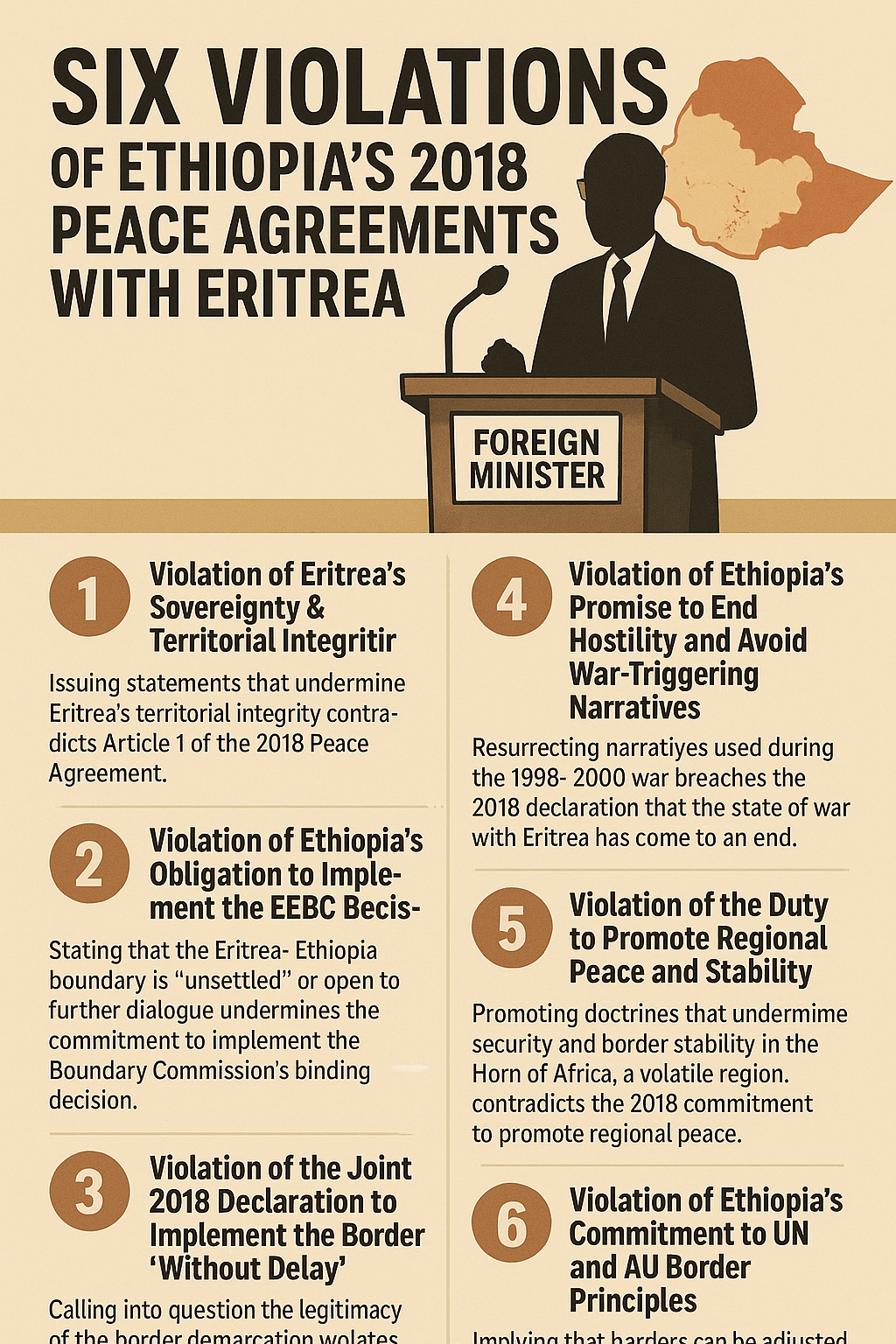
Somaliland: DP World’s development of Berbera Port simultaneously expands the logistics network and supports Somaliland separatism against Somali federal authority.[28] A unified Somalia exercising sovereignty could renegotiate port terms, impose regulatory oversight, or nationalise assets. Somaliland’s non-recognition and external dependence creates the asymmetric dynamics the model requires. From the perspective of the double-hub model, Somaliland’s recognition would be strategically advantageous. It would remove Berbera from Somali federal oversight, strengthen the autonomy of a key logistical node, and increase the importance of external economic and security partnerships for Somaliland’s long-term viability.
Libya: UAE support for Haftar’s forces against the UN-recognised Government of National Accord — including arms embargo violations documented by UN investigators[29] — prevents a unified Libyan state from regulating its ports, controlling oil exports, or aligning with UAE competitors. Fragmentation allows selective partnerships with whoever controls relevant facilities, without requiring buy-in from a central government that might impose conditions.
This represents what analysts have called an “axis of secessionists”[30] — a systematic preference for building up sub-state entities and enclaves over engaging UN-backed central governments. Rather than working with recognised authorities, UAE strategy focuses on creating what can be more easily controlled: authorities too weak and too dependent to regulate, resist, or renegotiate.
IV. The Information Dimension
The model extends beyond physical nodes into systematic narrative control. By 2030, an estimated $97 million will be spent recruiting Western influencers with luxury trips, golden visas, and tax-free living arrangements.[31] This creates an organic-seeming ecosystem whitewashing UAE authoritarianism — making individuals financially dependent on the UAE so they are compelled to comply with pro-state narratives to maintain their privileges.
This is not reputation management. It is systematic capture of Western opinion infrastructure. Influencers with millions of followers become nodes in UAE narrative networks — amplifying preferred framings (Dubai as cosmopolitan and progressive, Emirati operations as stabilising), suppressing critical coverage (Sudan atrocities, Yemen fragmentation, Eritrean sovereignty violations).
The weaponisation of the “Muslim Brotherhood” narrative reveals how information warfare directly serves the fragmentation strategy. Following the Arab Spring, the UAE promoted the false equivalence between moderate Islamic political thought and extremism, successfully exporting this narrative globally and empowering far-right groups in Europe to justify crackdowns on Muslim civil society.[32] The strategic function: delegitimising any Arab or African government with Islamic political dimensions (Turkey, Qatar, Somalia), justifying UAE support for military and authoritarian alternatives (Haftar, RSF), and framing UAE proxy operations as counterterrorism rather than systematic destabilisation.
When UAE’s relationship with RSF commander Hemedti — a warlord implicated in Darfur genocide — came under scrutiny, UAE hired PR firms to sanitise his reputation internationally.[33] When that proved insufficient, the Abraham Accords relationship with Israel functions as what analysts describe as an “out of jail card”: whenever UAE faces Western criticism for Sudan, Russian oligarch sheltering, or Chinese technology transfers, its Israeli relationship is invoked by Western politicians to deflect scrutiny.[34]
V. The Unsustainability Question
Both hubs contain contradictions now becoming acute.
Nodes escape control as armed groups develop independent interests diverging from Abu Dhabi’s commercial requirements. Sudan’s RSF — built into a formidable force with UAE support — launched war that UAE could not prevent, disrupting the very gold flows the commodity hub depends upon. Yemen’s STC pursues local political agendas that complicate rather than advance UAE strategic objectives. The fragmentation designed to provide flexible access to strategic nodes may be creating instability that ultimately threatens the flows hub operations require.
Saudi Arabia’s pushback is now military and institutional rather than merely rhetorical. Under Crown Prince Mohammed bin Salman, Riyadh has recognised that UAE’s “strategy of managing chaos fundamentally undermines Saudi security.”[35] Saudi forces directly struck UAE weapons shipments to STC forces in Mukalla.[36] Egypt has conducted airstrikes against Emirati supply chains sustaining RSF operations in Sudan.[37] Saudi Arabia is actively using Arab League and African Union mechanisms to block international recognition of Somaliland.[38] The counter-coalition — Egypt, Saudi Arabia, Turkey, Qatar, Eritrea, Djibouti, and Sudanese Armed Forces — is now working against UAE fragmentation operations across multiple theaters simultaneously.
Iran’s targeting of UAE infrastructure exposed the model’s deepest contradiction. The very integration into global flows that makes the UAE appear indispensable also makes it the prime target for any power seeking leverage over those flows. Despite years of accumulated network power, when the IRGC decided to escalate, UAE discovered that Moscow, Beijing, and Washington would not provide the deterrence its ambitions required. Abu Dhabi spent years treating the GCC as a constraint on its middle-power ambitions. Under pressure, it is discovering it cannot stabilise its environment without the same neighbours it previously dismissed.
The moral accountability dimension is mounting. 150,000+ dead in Sudan, 377,000+ in Yemen since 2015, 600,000 in Tigray. UN investigations document UAE arms embargo violations in Libya and Yemen. Swiss investigators and The Sentry document UAE gold trade links to conflict financing. The UAE’s integration into global financial systems — the cornerstone of hub legitimacy — creates exposure to pressure campaigns targeting conflict financing, money laundering, and sanctions evasion that cannot be indefinitely managed through influencer campaigns and diplomatic cover.
Conclusion: Eritrea as the Model’s Greatest Challenge
The UAE’s double hub represents sophisticated strategic engineering. The economic hub has delivered genuine transformation — diversifying away from oil dependence, attracting global capital and expertise, positioning the Emirates as essential connective tissue in global trade flows. The security hub has generated leverage — creating access to strategic nodes from Sudan to Somalia, Libya to Yemen.
But both rest on foundations requiring permanent regional fragmentation. Strong sovereign states threaten the model because they can regulate, resist, and renegotiate. The hub requires weak states, separatist authorities, dependent militias, and frozen conflicts providing access without accountability.
This is where Eritrea enters the analysis.
Eritrea possesses everything the double hub systematically works to eliminate: state unity preventing the factional divisions exploited elsewhere, sixty years of accumulated resistance to external domination, economic self-reliance rejecting dependency relationships — and most critically, Assab Port: sovereign, independent, strategically located, representing a genuine alternative to UAE-controlled Red Sea trade routes. An independent Assab could offer Ethiopia port access not mediated by Abu Dhabi. It could develop as a regional logistics hub competing with DP World networks. It represents, most fundamentally, a sovereignty that refuses to break.
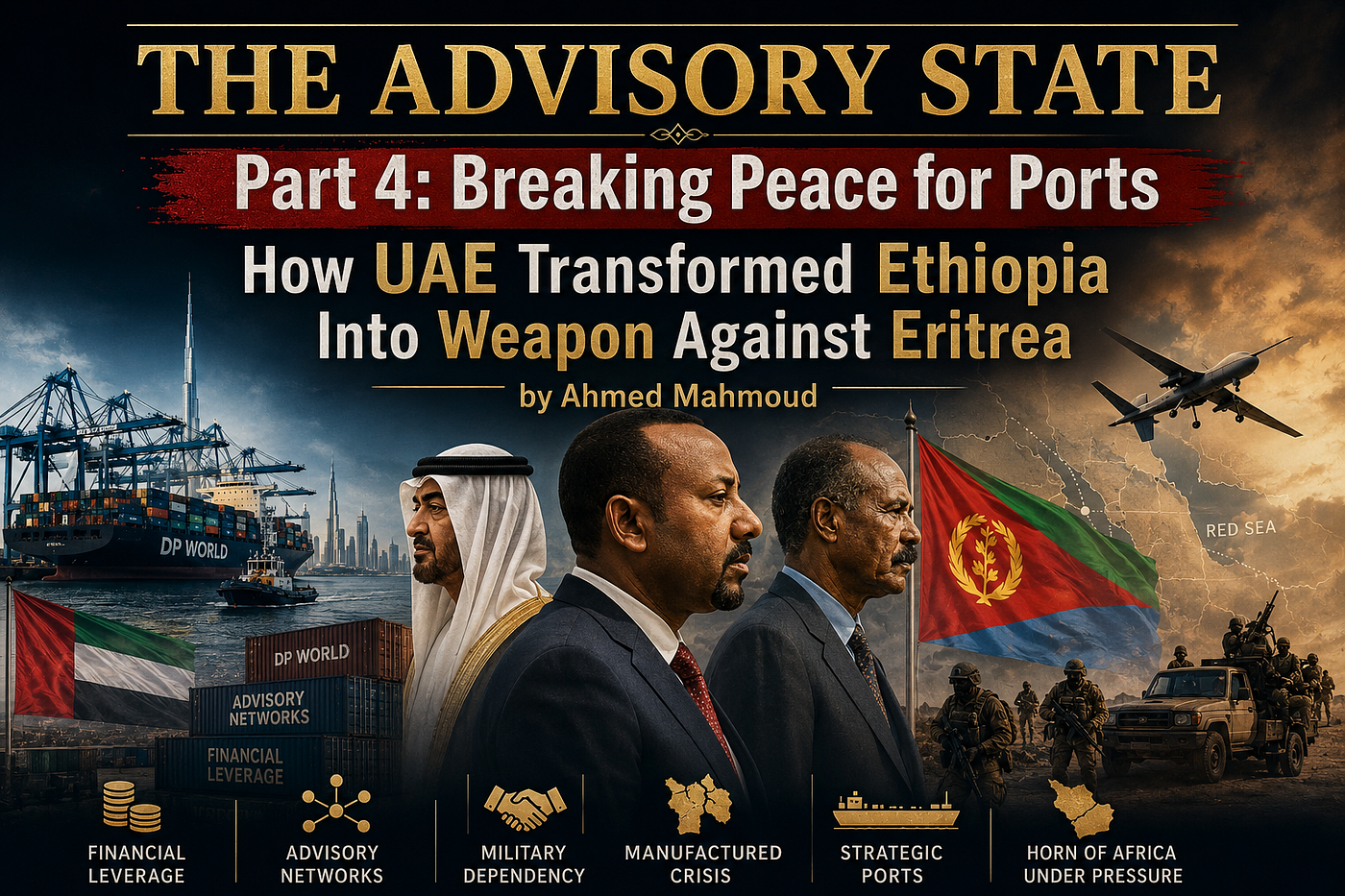
The UAE cannot fragment Eritrea, cannot buy Eritrea, cannot create rival Eritrean factions. Therefore it must weaken Eritrea through external pressure — specifically, through Ethiopia systematically transformed into an instrument of aggression through financial leverage, military support, and strategic manipulation.
Part 2 examines the full pattern of UAE fragmentation strategy across the Horn of Africa — proving this is coherent regional architecture, not isolated incidents.
Part 3 details how UAE transformed Ethiopia from peacemaker to aggressor, and why imminent war threatening hundreds of thousands of lives serves UAE commercial interests, not Horn of Africa populations’ welfare.
One-sentence takeaway: The UAE’s economic success requires a parallel security architecture that systematically fragments regional states — with Eritrea’s refusal to become a dependent node making it the next target, as UAE-manipulated Ethiopian aggression threatens another catastrophic war serving foreign commercial interests in controlling Red Sea trade routes.
References
[1] Reporting on Moscow, Beijing, and Washington responses to Iranian attacks on UAE infrastructure, 2025.
[2] Anwar Gargash, UAE Presidential Adviser, public statement widely reported in regional media, 2025.
[3] UAE Ministry of Economy, “Economic Diversification Report 2023.”
[4] UAE Central Bank, “Foreign Direct Investment Statistics 2023.”
[5] DP World, “Annual Report and Accounts 2023.”
[6] Jebel Ali Port statistics; DP World terminal network documentation.
[7] Industry analyses of DP World expansion; Drewry Maritime Research container throughput assessments.
[8] Lord Mandelson, Global Counsel chairmanship and DP World advisory relationship; public record documentation.
[9] Dubai Multi Commodities Centre, “Annual Trade Report 2022”; World Gold Council UAE data.
[10] DGCX documentation; commodity market specialist analyses.
[11] The Sentry, “The Golden Laundromat” (2022); gold laundering mechanism documentation.
[12] Ibid.; Sudan-UAE gold trade 2022 figures.
[13] DIFC Authority documentation; Herbert Smith Freehills legal structure analysis.
[14] DIFC Authority, “Annual Review 2023.”
[15] Sovereign Wealth Fund Institute analyses of ADIA and Mubadala structures.
[16] G42 partnership announcements; U.S. Commerce Department scrutiny reports (2023).
[17] Reporting on UAE acquisition of Israeli Pegasus surveillance technology; Haaretz and New York Times coverage of Israeli technology transfer post-Abraham Accords.
[18] G42 corporate disclosures; restructuring announcements following U.S. pressure.
[19] Analysis of UAE OPEC exit; regional media coverage of Abu Dhabi’s middle-power signalling.
[20] Andreas Krieg, “Network-Centric Statecraft and the UAE’s Axis of Secessionists.”
[21] Ibid.
[22] Regional security analyst characterisation of UAE patron-deniability model.
[23] Human Rights Watch documentation of Sudanese RSF Yemen deployment; The Sentry payment structure analyses.
[24] The Sentry, “The Golden Laundromat” (2022).
[25] International Crisis Group, “Yemen’s Southern Question” (2020).
[26] ACLED, “Southern Yemen Conflict Analysis” (August 2019).
[27] Krieg analysis; Saudi strike of UAE weapons shipment in Mukalla.
[28] DP World Berbera development announcements; Somaliland government statements.
[29] UN Security Council, “Panel of Experts on Libya” (2019–2021).
[30] Krieg, “axis of secessionists” characterisation.
[31] UAE influencer campaign spending projections to 2030; digital content strategy analyses.
[32] Analysis of UAE counter-revolution post-Arab Spring; Muslim Brotherhood narrative weaponisation documentation.
[33] Washington DC lobbying disclosures on UAE PR campaigns for Hemedti.
[34] Analysis of Abraham Accords as diplomatic cover; deployment to deflect Western criticism of Sudan operations.
[35] Krieg analysis of Saudi Arabia’s strategic recalibration under MBS.
[36] Ibid.; Saudi strike on UAE Mukalla weapons shipment documented.
[37] Ibid.; Egypt airstrikes against Emirati supply chains in Sudan documented.
[38] Ibid.; Saudi Arabia using Arab League and AU to block Somaliland recognition.
메타데이터
- post_id
- 7c5e2af9ed98
- slug
- the-advisory-state-7c5e2af9ed98
- url
- https://medium.com/@amm121/the-advisory-state-7c5e2af9ed98
- canonical_url
- https://medium.com/@amm121/the-advisory-state-7c5e2af9ed98
- author_url
- https://medium.com/@amm121
- status
- ok
- fetched_at
- 2026-07-10 08:43:10