The New World Disorder: Fragmented Law, Legal Vacuums, and Trade-offs
While much is being debated about the new World Order, we believe the right approach would be to emphasize the new World Disorder.
The New World Disorder: Fragmented Law, Legal Vacuums, and Trade-offs
While much is being debated about the new World Order, we believe the right approach would be to emphasize the new World Disorder because we currently do not see the outlines of the new World Order. This post makes an attempt to outline the new World Disorder, drawing on the historical patterns and modelling on the absence of institutions and mechanisms sustaining the current World Order. That also offers a civilian perspective seeking to understand how previous World Disorders impacted the life of an ordinary civilian and what a present-day civilian may expect of the new World Disorder, drawing on the experiences of the past. Still, we argue that the current World Order is not dead, has been historically successful, and there is still an opportunity to sustain that should efforts be applied to manage the chanllenges of the day. The post also proceeds to identify such challenges and offer the paradigms for their resolution.
But first, what do we mean by World Disorders and what would be their timeline in history? A World Disorder is the absence or poor functioning of institutions balancing national interests and setting a peaceful framework for conflict resolution on the global stage. All World Disorders in the past have been marred with major wars, victims and economic downturns — all degrading the standard of living of an ordinary civilian. In the end, all World Disorders evolved into new World Orders to hedge such risks and ensure a new conflict resolution framework. Herewith we offer the following timeline of World Disorders confined to the timeframe from 1337 to the present:
-
The World Disorder of 1337–1453 was a series of battles, raids, and truces between England and France, driven by territorial disputes and England’s claims to the French throne, known as the Hundred Years’ War. This period was marked by decline in trade, more taxes, social unrest, and the devastation of towns and villages by soldiers in both countries. As specific examples, English wool export to the Low Countries (present-day Belgium, the Netherlands, and Luxembourg) was disrupted, while the export of wine from Gascony to England dropped from 74,000 barrels in 1336 to just 6,000 in 1349. The French population faced indirect taxes such as the salt tax (gabelle) that was not abolished until the French Revolution of 1789, while Edward III of England (1327–1377) had called for taxes 27 times during his reign (1). The death toll is estimated at 2.3–3.5 million people, which was 0.51–1.00% of the global population then (2). And since this World Disorder lasted 117 years, some civilians were born and died during wartime without a single chance to live in peace. Western Europe stabilized and started recovering only after 1453, when France strengthened its monarchy, and England shifted focus to internal conflict, known as the Wars of the Roses (1455–1487). The new World Order replaced feudal levies with professional, standing armies and centralized monarchies, ending the dominance of feudal lords and setting the stage for the rise of modern states, despite immediate post-war turmoil.
-
The World Disorder of 1618–1648, or the Thirty Years’ War, was a long religious conflict between Catholics and Protestants which involved the Holy Roman Empire (present-day Germany), France, Sweden and other powers. This World Disorder had a different cause but similar consequences to the previous one, only even more exacerbated: devastation of agriculture and trade, heavy taxation, economic ruin, atrocities against civilians — all degrading the living standard across the board. The majority of deaths were not from direct combat but from rampant typhus, dysentery, bubonic plague, famine, and malnutrition caused by looting and destruction of agriculture. The death toll is estimated at 12 million, of whom around 450,000 died in direct combat, with the rest from other war-related consequences. Europe lost about 20% of its population, with areas like Germany up to 60%. About 2,200 castles, 18,000 villages and 1,500 towns (1/3) were wiped off the map of Germany alone. Communities had to pay invaders a Brandschatzung or other taxes as protection money against destruction and pillage. Despite the ever looming destruction of towns, people still flocked there because staying on the farmland was considered even more dangerous. As a result, Europe lost 1/3 of its farmland (3). This devastating World Disorder ended with a series of treaties called the Peace of Westphalia, concluded in 1648, which involved France, Sweden and various German principalities. That provided religious freedom when subjects were free to choose Catholicism, Lutheranism, or Calvinism within their territories, and established international law based on the recognition of legal independence and equality of sovereign states, regardless of size and power. On top of religious freedom, the Europeans agreed that soveriegn states should not interfere in the internal affairs of others and should utilize negotiations rather than solely rely on their armies for conflict resolution. Switzerland and the Dutch Republic were recognized as independent states. France and Sweden solidified their territorial claims. That was an enormous achievement of humanity born out of complete devastation. These achievements were tossed over in 144 years by the French Revolutionary and Napoleonic wars, which led to the next World Disorder.
-
The World Disorder of 1792–1815 was a period of near-constant conflict in Europe marked by the French Revolutionary and Napoleonic wars. This World Disorder spread revolutionary ideas, toppled established monarchies, redrew the map of Europe, triggered nationalism, introduced mass conscription and new taxes for civilians. All that sparked long-lasting tensions that influenced the 19th and 20th centuries’ politics. The French Revolution also included 10 months of Reign of Terror, when a radical faction of the revolutionaries, called the Jacobins, hunted down their “internal enemies”. As a result, 300,000–500,000 French citizens were arrested, 16,594 of those were guillotined, 10,000 died in prison, and thousands of others were killed in massacres all over France as the 1,800–4,800 people drowned in the freezing Loire River at Nantes (4). The persecution of the clergy and nobility in France destroyed traditional social structures, polarized the French society and caused a demographic crisis exacerbated by the following military campaigns. The chaos of the French Revolution facilitated the rise of military leaders, ultimately resulting in the authoritarian rule of Napoleon Bonaparte, who pursued the policy of France’s hegemony in Europe. France, Britain, Russia, Prussia, Austria, Spain, and Portugal each lost more than 100,000 soldiers, with overall combat deaths estimated from 2.5 to 3.5 million people in all the Napoleonic Wars. The range of civilian deaths is estimated from 750,000 to three million (5). All in all, the Revolutionary and Napoleonic Wars resulted in the loss of 0.49–0.86% of the global population (2), with some areas like Spain losing up to 6%. With the introduction of conscription (levée en masse), civilians’ lives did not belong to them anymore because anyone could be called for active duty. Conscription also drained the workforce from agriculture and industry, which hindered agricultural progress and the industrial revolution in countries like France. The regional economies of coastal and industrial areas like Nantes, Bordeaux, and Amsterdam were also ruined due to the British naval blockade and Napoleon’s counter-blockade called the Continental System. France faced hyperinflation between 1794–1796 from paper money (assignats), severe food shortages caused by poor harvests, and massive war-related debt. Prices in Britain also grew sharply due to a combination of the suspension of the gold standard in 1797, a reduction of the British trade with Europe by 25% — 55% and the poor harvest of 1809–1810. That followed by the introduction of new taxes in both countries. The new door and window tax of 1798 in France incentivised civilians to literally remove their windows and doors. Britain came up with the first ever income tax of 10% in 1799, which was levied on total income above £60. That was viewed as a temporary measure to fund wars and was cancelled in 1802. Just to be reintroduced in 1803, cancelled again in 1816 and reintroduced for good in 1842. Various occupied territories in Europe faced foreign armies demanding food, supplies, and shelter which was the worst form of tax. Europe finally stabilized only after the Congress of Vienna (1814–1815), led by Austria, Britain, Russia, Prussia, and France, which re-established political order, conservative monarchies, and balanced powers in Europe, ensuring relative peace for about 33 years. The Quadruple Alliance (Austria, Britain, Prussia, and Russia) and later France aimed to resolve disputes through meetings rather than war, prevent revolutions, and enforce a balance of power. This diplomatic framework, known as The Concert of Europe, was a new and important step in the evolution of international law born out of the World Disorder of 1792–1815.
-
The World Disorder of 1848–1922 started with the revolutions of 1848 in Paris, Vienna, Berlin, and Budapest and ended about 1922 after the Treaty of Versailles (1919), the establishment of the League of Nations and the end of the Russian Civil War (1922). This period features high frequency of international conflicts: the First Italian War of Independence (1848–1849), the First Schleswig War (1848–1851), Crimean War (1853–1856), the Second Italian War of Independence (1859), the Second Schleswig War (1864), the Third Italian War of Independence (1866), Austro-Prussian War (1866), Franco-Prussian War (1870–1871), Russo-Turkish War (1877–1878), Serbo-Bulgarian War (1885), Greco-Turkish War (1897), Russo-Japanese War (1904–1905), Balkan Wars (1912–1913), World War I (1914–1918), The Russian Revolution (1917), Russian Civil War (1917–1922), Irish War of Independence (1919–1921), and Irish Civil War (1922–1923). And these are just wars that happened on the European continent, although there were also wars fought by Europeans outside of Europe, like the Anglo-Boer Wars (1880–1881 and 1899–1902), the Second Opium War in China (1856–1860) and the invasion of China of 1899–1901. The American Civil War (1861–1865) happened on the North American continent. But we focus on Europe because it still was the hotbed of global conflicts with the keys to their potential resolution. It would be very hard to estimate the overall death toll of military personnel and civilians during the World Disorder of 1848–1922. Its deadliest episode, World War I (1914–1918) alone claimed 15–22 million lives, or 0.85–1.25% of the global population in direct combat, other wartime actions or war-related consequences like diseases, famine and genocides (2). The World Disorder of 1848–1922 was also marked by the rise of imperialism, nationalism, new political ideologies, the Second Industrial Revolution, the demolition of the German, Austro-Hungarian, Russian, and Ottoman empires, and the emergence of the USA as a global power. That was a global reshuffle, mainly through blood, that happened within a liferspan of a 74-year-old civilian who would not witness a period of relative peace on the continent lasting longer than 7 years. Of course, there were safer places even during such a volatile time because fighting was not going on all over Europe at the same time. But if one of these wars struck a civilian’s homeland, he or she would struggle for survival with food shortages, rationing, and mobilization for war production. And at the time of relative peace, workers worked 14 hours, lived in unhygienic slums and followed daylight hours for the lack of electricity until the late 19th century. All in all, a European civilian endured revolutionary fever, a destabilizing shift into industrial capitalism and the brutality of wars during that time. At the same, the Europeans once again realized the need for collective effort to restore peace and created the League of Nations — the first worldwide, intergovernmental organization with a general mandate aimed at maintaining world peace. The principle of “balance of power” was replaced with “community of power”. Unfortunately, the system faced challenges almost at its inception when the U.S. Senate failed to ratify the treaty and never joined it. In 1933, Nazi Germany withdrew from the League of Nations, i.e., 13 years after its creation, and began actively violating the military restrictions of the Treaty of Versailles (1919), which marked the start of the new World Disorder.
-
The World Disorder of 1933–1945 was the shortest and the deadliest one of all 5 dominted by World War II (1939–1945). This World Disorder was marked with the dismantling of democratic freedoms, a shift towards economic self-sufficiency (autarky) rather than international trade, total war economies, extreme ideologies, massive propaganda, intense state surveillance, totalitarian rule, civil wars, racial discrimination with the Holocaust, proxy wars, invasions, looting and destruction of cultural heritage. The World Disorder of 1933–1945 started gradually with territorial claims and neglect of international law by authoritarian regimes. The first signal came in 1923 when Mussolini’s Italy occupied the Greek island of Corfu, killing 15 civilians. Greece applied to the League of Nations, but the organization failed to protect a smaller nation from a larger power. The world was becoming more authoritarian and totalitarian which fuelled further military conflicts before the outbreak of World War II: Japanese invasion of Manchuria (1931), Austrian Civil War (1934), Italian Invasion of Abyssinia (1935–1936), Spanish Civil War (1936–1939), Annexation of Austria (1938) and Czechoslovakia (1939) by Nazi Germany, Italian Invasion of Albania (1939), Winter War between Finland and the Soviet Union (1939–1940). But nothing could compare to World War II (1939–1945) with the death of 70–85 million, including military personnel and civilians, or 3.04–3.69% of the global population. For civilians, these 12 years of World Disorder posed huge risks and challenges even in safer zones like neutral states and distant America. Yes, the world was lifted out of the Great Depression, and there was a sense of improving economic conditions both in the USA and Germany between 1933 and 1939. But that was due to defense jobs and at the expense of replacing the free market as the primary driver of economic activity by the state. And during World War II, even the U.S., the “arsenal of democracy,” faced strict rationing of basic goods like gas, food, and nylon. The Office of Price Administration issued coupons for scarce items like sugar, meat, and shoes. People grew about 60% of their own produce in “Victory Gardens” and participated in scrap metal, rubber, and kitchen fat drives. No automobiles were built for the civilian market between 1942 and 1945. Jobs were plentiful in the defense sector, but the wages were frozen. The draft was instituted in 1942 and remained in effect until the early 1970s. Coastal cities implemented blackouts, and mail was censored when the government could confiscate anything people sent and delete anything they wrote for national security reasons. And that was one of the best scenarios of civilian life among the parties at war. From 1939 to 1945, a German civilian faced strict rationing, food shortages, and homelessness as a result of bombings. Diets became monotonous (bread, potatoes), and by the final years of the war, malnutrition was widespread. Even after the end of of WW II in May 1945, many European nations still faced severe debt, high inflation, and food shortages, which continued to impact the life of civilians in the aftermath of the war.
The chaos and destruction of the World Disorder of 1933–1945 forced the creation of The Liberal International Order (LIO) — an international system designed to promote peace, the rule of law, economic stability, liberal democracy, open markets, and human rights. This time the system was supplemented with strong institutions like the UN, WTO, OECD, IMF, NATO, and later the EU, which have ensured peace and development in Europe for more than 80 years. The United Stated led, not abstained this time, and the new system was built on the human experience of the previous achievements. That borrowed the principle of equality of sovereign states from the Westphalia system (1648) and the League of Nations (1920), as well as the mechanism to uphold peace by a designated group of nations from the Vienna Congress (1814–1815), which resulted in the creation of the UN Security Council in 1945. The system rebuilt and healed Western Europe after the shambles of WW II and later lifted 11 countries of the former Eastern bloc and Warsaw Pact out of poverty and integrated them into the system through membership in NATO and the European Union: Poland, Hungary, the Czech Republic, Slovakia, Bulgaria, Romania, Estonia, Latvia, Lithuania, Slovenia, and Croatia. The system featured constant ideological tensions (Cold War) and even proxy wars (Korea) but proved its sustainability in the end. 3 former Soviet republics (Estonia, Latvia, Lithuania) have been fully integrated into the system, and there are 2 different Koreas now.
Recently, the system has been a target of criticism, mainly for the weakness of the UN Security Council in disputes over NATO’s bombing campaign against Yugoslavia (1999) and Iraq (2003). At the same time, the critics tend to forget that the UN Security Council has authorized over 70 peacekeeping operations since 1948. And the assumption that the UN would be able to fix every security problem in the ever-evolving world would be false from the beginning. Let it fix what it can, which is already a lot. Then the system receives more recent criticism for not being in line with the current power balance featuring the rise of countries like China, India and Brazil. But these countries, especially China, have been benefiting from the system’s open markets, and that’s partly the system that made them who they are today. All 3 are also full members of institutions like the WTO or the IMF, and the Chinese currency, the renminbi (RMB), is already part of the International Monetary Fund’s (IMF) Special Drawing Right (SDR) basket. It was included as such in 2016 as the fifth currency alongside the US dollar, euro, Japanese yen, and British pound. Also, such countries have created their own blocs like BRICS or MERCOSUR and are free to design new frameworks which they consider beneficial for them in addition to their share in the system. The path has been paved, and they can clearly see what’s worked in the West. Their new frameworks could be the add-ons or the upgrades to the current system, widening its scope and reach. Last but not least, the critics offer few ideas on the system upgrade, let alone the outlines of the new system. We do see more frequent unilateral actions in today’s world outside of the international security framework, and that is a direct threat to the system. But a responsible car maker doesn’t abandon the vehicles once there are issues found with the brakes. That calls affected vehicles back, installs upgrades and sends them back to the market. That’s how the brand is saved and poised to meet future challenges. That might be tempting for media or academia to come up with loud headlines on the decline or even the death of the current World Order. But no matter who is right in the end, the alternative is a new World Disorder. And there is no historical evidence that any of the previous World Disorders were more secure and sustainable than the current World Order. On the contrary, those caused disastrous consequences for civilians, and humanity always sought to establish a new peacekeeping framework afterwards. Even if we admit that the current World Order is dead, which we don’t believe in, then humanity would come to the same need to look for a new framework. And that will be based on the same principles of collective security and cooperation. The question is, would humanity allow for the new World Disorder with new casualties and destruction or would it be intelligent to keep what’s working and upgrade that?
Having broken the timeline since 1337 into 5 World Disorders and looked into their nature, we can make a few observations:
-
Out of 689 years since 1337, humanity has lived 255 years, or 37% of the time during World Disorders and 434 years, or 63% of the time during World Orders.
-
New World Orders do not skip new World Disorders.
-
The causes are different, but the consequences are the same. The recurring consequences of World Disorders are a significant drop in global population and a dramatic decline in the living standards of civilians.
-
World Disorders either coincide with wars or cultivate them.
-
World Disorders tend to be shorter over time but more international.
-
World Orders were trending to get shorter before the current one, the Liberal International Order (LIO), which has reversed the trend and been in place for over 8 decades already.
-
World Disorders always end with a new old goal — to reestablish peace and provide a framework for conflict resolution.
-
Such frameworks have been relying more on international law since 1648 or the Peace of Westphalia, with more focus on institutions in the recent past.
Considering the dangerous nature of World Disorders, it would be only rational to avoid them. There is no reason to go for another cycle of casualties and a drop of living standards of civilians. Especially when we know that at the end of such cycles, humanity always comes to the same need of reestablishing peace through another security framework. And we already have that framework, which has been successful for 8 decades already. There have appeared cracks in it, but that would be far less costly to upgrade than to dismantle it altogether and enter the sixth World Disorder. At the same time, we do see more markers of sliding into the new World Disorder as the use of unilateral force and neglect of institutions by major powers are getting more frequent. We’ve identified the following markers, which can be addressed with existing tools as well as novel legal paradigms:
- Fragmented Law: With that, we mean the selective use of international law by participating parties. That happens when they keep on participating in the current World Order agreements and institutions as far as that’s beneficial to them and ignore their frameworks once such agreements and institutions “hold them back”. For example, the US has consistently maintained its top position as the primary user of the WTO dispute settlement mechanism. In fact, that is a top complainant with over 100 disputes initiated since WTO’s inception in 1995. And that has also won the highest number of cases. At the same time, the Trump administration imposed a minimum of 10% tariff on almost all U.S. imports in 2025. That merits a violation of Art. I, II and XXVII GATT, which cannot be justified by national security concerns (Art. XXI) or general exceptions (Art. XX GATT). On February 20, 2026, the U.S. Supreme Court ruled in a 6–3 decision that most Trump’s sweeping global tariffs were illegal. The U.S. system of checks and balances worked, but that was a clear example of the use of “Fragmented Law” by a major power. The solution would be meticulous countering each similar case based on pacta sunt servanda — a foundational principle requiring that treaties in force are binding upon the parties and must be performed in good faith, as stated in Article 26 of the Vienna Convention on the Law of Treaties, 1969. In addition to legal challenges, there are broader tools within the current World Order to impose consequences on the violators. For example, Canada and the EU, major US trade partners, diversified their international trade policies. On January 26 of 2026, the EU and India concluded a landmark Free Trade Agreement (FTA), which had been negotiated for almost 2 decades. That cuts tariffs on over 90% of goods, including textiles, automobiles, and agricultural products. The EU also signed a comprehensive Partnership Agreement and an interim Trade Agreement with Mercosur (Argentina, Brazil, Paraguay, and Uruguay) on January 17, 2026, which removes tariffs on over 91% of goods traded between the two blocs over a 15-year period. Canada and India are planning to conclude a new Comprehensive Economic Partnership Agreement (CEPA) in 2026. So the world appeared to have a different view on Trump’s tariffs and instead relied on the benefits of the Liberal International Order (LIO) to diversify and expand trade. We believe that the U.S. Supreme Court ruling and more liberal trade policies pursued by the EU, India, Canada, and Mercosur are an important hedge against sliding into a new World Disorder. And we’ve singled out this episode as we clearly see disruption of international trade as a marker of all World Disorders since 1337.
- Legal Vacuums: A legal vacuum would be a situation when existing mechanisms of conflict resolution become defunct or ineffective in the absence of new ones. We believe the most recent risks that are currently associated with legal vacuums are immigration, populism and authoritarian rule. Those are connected and would require new paradigms to mitigate them and make upgrades to the current legal frameworks. The Liberal World Order has opened up new markets, removed a lot of borders and increased labor mobility. The International Organization for Migration (IOM) views migration as a driver of human development and economic growth, highlighting the more than 650% increase in international remittances from 2000 to 2022, rising from USD 128 billion to USD 831 billion (6). The recipient countries also need immigrants to sustain their population levels and ensure economic growth. At the same time, with estimated 281 million international migrants worldwide, 117 million, or about 42%, are displced because of conflicts, violance and disasters (6), which means they now live in palces they didn’t choose. One of the major concerns in this regard is whether immigrants can integrate into the recepient societies or not. If not, that increases tensions with the local population, which creates conditions for social unrest, extreme ideologies like far-right movements and authoritarian rule. The V-Dem Institute, based at the University of Gothenburg, Sweden, and specializing in the research of authoritarian countries, autocratization, and democracy reports in their Democracy Report 2025 that the number of authoritarian countries has already grown, with autocracies (91) outnumbering democracies (88) for the first time in over 20 years, with 72% of the world’s population now living in autocracies. In addition to that, 45 countries are also experiencing declining democratic standards, affecting 40% of the world’s population (7). We view unaddressed migration challenges, extreme ideologies and authoritarian rule as the main markers of a looming World Disorder. To address them, we’ve offered novel legal concepts to be incorporated into national and international law. The first one is jus codex culturalis, which calls for acquiring one’s citizenship through one’s cultural code in addition to jus soli (right of soil) and jus sanguinis (right of blood) (8). A cultural code is a set of instincts, beliefs and standards that predetermine behavioral patterns of an individual or a group of people on all walks of life and is studied within our wider research framework of cultural codes (9). The practical use of jus codex culturalis is to soften cultural shocks caused by immigration flows and make the recipient societies more sustainable by easing social tensions and reducing the risks of populism, extreme ideologies, and authoritarian rule, which thrive on such tensions. Within this paradigm, recipient societies would incorporate those individuals as citizens first, who share their cultural codes, rather than hoping for seamless assimilation of random individuals. The next legal paradigm we feel the need to introduce into contemporary legal systems should mitigate the risks of populism and harmful systems of governance as mentioned above. We’ve called this paradigm mala regula, which originates from the idea that humanity has already accumulated enough knowledge through its existential experience to know which political movements and systems of governance are outright dangerous and cause harm without the need of further proof or debate. Within mala regula, societies would outlaw such movements and systems in their legal systems, just like they’ve outlawed theft or murder in their criminal codes. That didn’t eradicate the practices of theft or murder in contemporary societies, but helped contain them by making them punishable. Mala regula would also be a legal check on democratic backsliding, where elected leaders weaken institutions from within. There are more arguments for these legal paradigms in the dedicated publication (10), and that’s not our aim to debate them within this reserch.
- Trade Offs: By trade-offs we mean the negligence of principle values and morals in pursuit of self-interest. These trade-offs often have a short-lived gain and prove harmful to the “traders” in the long run. Those can range from accommodating autocrats over their territorial claims to the denial of scientific evidence of climate change, or abrupt disengagement from major alliances. Some examples of such trade-offs in the past would include conceding to Mussolini over the Greek island of Corfu in 1923 and to Hitler over Sudetenland in 1938 — all paving the way to the 5th World Disorder dominated by WW II. Examples from the contemporary world would include the US withdrawals from the Paris Agreement in December 2015 and the Trans-Pacific Partnership (TPP) in January 2017. The decision by the Trump administration to withdraw from the Paris Agreement was criticized as “morally bankrupt capitulation” and “ as the wrong thing to do, at the wrong time and for the wrong reasons” (11). The Council on Foreign Relations now regards that as the 7th worst U.S. foreign policy decision ever (12). As for the decision to withdraw from the Trans-Pacific Partnership (TPP) by the same administration in January 2017, that was a major dump of trading partners and five years of negotiating efforts that covered trade, intellectual property, labor, and environmental rules among 12 Pacific Rim nations. Experts from such think tanks and organizations as Peterson Institute for International Economics (PIIE), Center for Strategic and International Studies (CSIS), Council on Foreign Relations (CFR), Atlantic Council, RAND Corporation, U.S. Chamber of Commerce & National Association of Manufacturers (NAM), and Canada West Foundation criticized the move, including the notion on the U.S. damaged reputation as a reliable partner on top of purely economic losses (13). Such trade-offs for short-term self-interest would futher distabilize current World Order and increase the chances of sliding into a new World Disorder. Each trade-off would require an individual response, but their fundamental trait would be reliance on principal values and morals. Countries sharing similar values and morals would need to hold them up and form safety islands against such attacks. That would show the rest of the world that values and morals matter, and culture is no less a part of the current World Order than institutions and agreements representing them. The Paris Agreement is still in effect, with 194 states and the EU aiming to limit global temperature increases and cut greenhouse gases. And after President Donald Trump withdrew the U.S. from the Trans-Pacific Partnership (TPP) in January 2017, Japan, with partners like Australia and New Zealand, spearheaded efforts to save the pact. They renegotiated certain elements to make it functional without the U.S. market, transforming that to the Comprehensive and Progressive Agreement for Trans-Pacific Partnership (CPTPP or TPP-11). Instead of walking away, they formed a safety island for their trade. And with such safety islands in place, chances remain that trade-offs will be reconsidered under new leadership that might want to rejoin the institutional frameworks the previous administration had abandoned. The safety islands will be there to do that, and that would boost credibility to the current system, reducing the risks of further sliding into a new World Disorder.
More frequent cases of fragmented laws, the expansion of legal vacuums and normalization of trade-offs over values and morals are strong markers of the looming sixth World Disorder. That’s getting evidenced through the increasing number of military conflicts, the rise of populist and far-right movements, and creeping autocratization. But that’s still possible to reverse course because the main institutions of the current Liberal World Order are still functioning and evolving. The UN, which has been receiving most of the criticism, is currently managing 11 active peacekeeping operations and 37 Special Political Missions. That now encompasses virtually any nation in the world, and none has withdrawn except for Indonesia in 1965, just to return about a year later under a new leadership. Newly formed sovereign states first look up to the UN for recognition. The Bretton Woods Institutions — the International Monetary Fund (IMF) and the World Bank remain in operation and have evolved to operate within a broader landscape of multilateral development banks like the Asian Development Bank and the African Development Bank. WTO disputes caseload has reached 644, with a substantial portion remaining in the active pipeline, particularly those initiated within the last 3–4 years. Despite Brexit in 2020, the number of EU official candidate countries has reached 9. And many other institutions of the current Liberal World Order, like OECD (Organisation for Economic Co-operation and Development), the Bank for International Settlements (BIS), The Organization for Security and Co-operation in Europe (OSCE) and the European Court of Human Rights (ECHR) are quietly working behind the scenes to increase the standard of living for civilians. The institutional network of the current Liberal World Order is vast and unprecedented in the history of mankind. And that would be a far more intelligent choice to upgrade that to address new challenges rather than abandon or dismantle that through another dangerous and costly World Disorder.

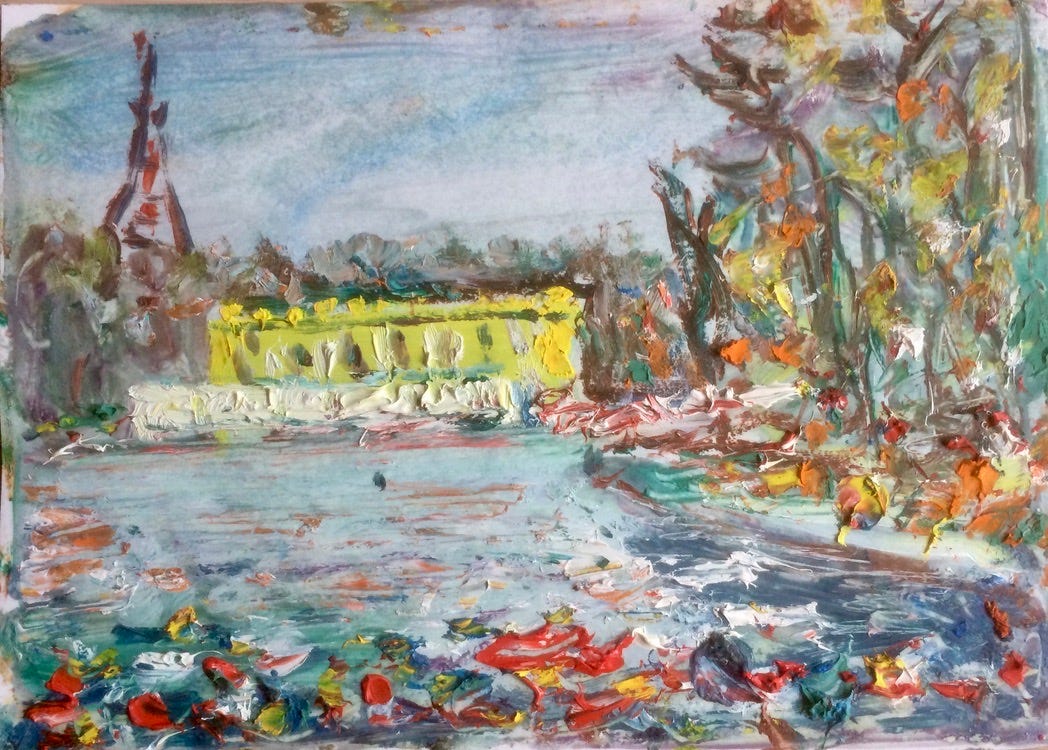
Crazy, Vladimir Yeltsov 2019, Fusion Artists, Oil on Paper 13x18
March 20, 2026
Maxim, Fusion Artists
메타데이터
- post_id
- 7c97aea01b1b
- slug
- the-new-world-disorder-fragmented-law-legal-vacuums-and-trade-offs-7c97aea01b1b
- url
- https://medium.com/@maximzakharov_13169/the-new-world-disorder-fragmented-law-legal-vacuums-and-trade-offs-7c97aea01b1b
- canonical_url
- https://medium.com/@maximzakharov_13169/the-new-world-disorder-fragmented-law-legal-vacuums-and-trade-offs-7c97aea01b1b
- author_url
- https://medium.com/@maximzakharov_13169
- status
- ok
- fetched_at
- 2026-06-26 03:39:16