Hinterkaifeck Murders: The Unsolved Bavarian Farmhouse Massacre
By David Sawin | The Architects of Eden
Hinterkaifeck Murders: The Unsolved Bavarian Farmhouse Massacre
By David Sawin | The Architects of Eden
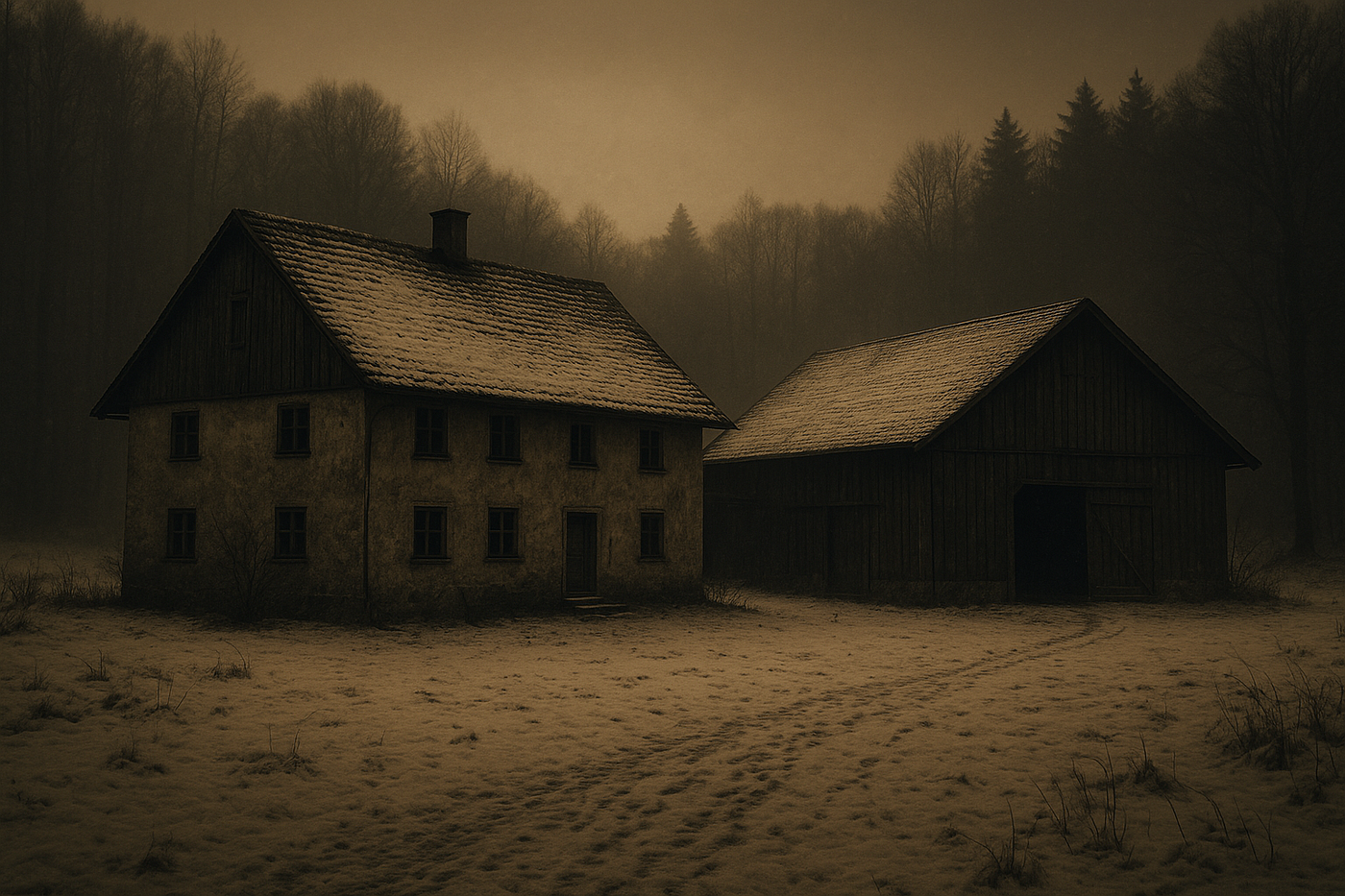
The snow should have told them something was wrong.
In late March of 1922, on a lonely farmstead in Bavaria, footprints appeared in the fresh powder — leading from the forest straight to the Gruber family home. Strangely, there were none leading back. Inside, the family began hearing footsteps in the attic. The keys to the house went missing. An unfamiliar newspaper appeared on the kitchen table.
Six days later, every living soul on the property would be dead.
The farm sat a good half-mile from the nearest neighbor, surrounded by bare fields and dense woods that pressed close at the edges. In late winter, it was a quiet place — too quiet. You could hear the wind shifting across the snow, the creak of the barn door in the cold, and, if you were unlucky, other sounds that didn’t belong. Andreas Gruber, sixty-three, and his wife Cäzilia, seventy-two, shared the property with their widowed daughter Viktoria, thirty-five, and her two children: seven-year-old Cäzilia and two-year-old Josef.

On March 31, a new maid, Maria Baumgartner, arrived to replace the previous one, who had left abruptly after claiming the house felt “haunted.” Maria had barely unpacked her belongings before night fell.
That night, the killer struck.
It would take four days before anyone came to check on them. A neighbor, concerned that Viktoria had missed choir and that no one from the Gruber farm had been seen in town, walked the dirt path to Hinterkaifeck. The air was sharp, each breath steaming in the cold. When he reached the barn, the heavy wooden door gave way with a groan.
Inside, the smell hit first — something metallic, wrong, mingled with the must of hay. Beneath loose piles of it, he found the bodies of Andreas, Cäzilia Sr., Viktoria, and young Cäzilia. They had been killed with a mattock — blunt, brutal blows to the head. The child’s face was twisted in terror, her fingers tangled in her own hair, as though she had lived long enough after the attack to pull it out in agony. The sight was the kind that carved itself into memory.

The search moved to the house. Upstairs in a small bedroom, Maria lay dead in her bed, her life ended within hours of arriving at the farm. In the nursery, Josef was still in his cot, motionless. It was clear the killings had been deliberate, methodical. And it became even clearer that whoever had done this hadn’t simply killed and fled.
The cattle had been fed. Fresh bread had been sliced. The fireplace held the faint glow of embers. For days after the murders, someone had lived in that house among the dead, moving between barn and kitchen, carrying on in a grotesque imitation of normal life.
Rumors spread faster than the official investigation could keep up. Some suspected Lorenz Schlittenbauer, a neighbor and former lover of Viktoria who had been in a legal dispute over Josef’s paternity. His behavior when he joined the search — unlocking doors without hesitation, disturbing the bodies — made some villagers uneasy. Others thought it could have been a vagrant or drifter passing through, someone who saw an isolated farm as an easy mark. But the footprints in the snow, the attic noises, the missing keys — these details suggested something more chilling. Whoever it was, they had been there before the killings, living above their unsuspecting victims.

In the quiet hours of village talk, there were whispers of darker explanations. The unfamiliar newspaper could have been a sign, the attic footsteps something more than human. Superstition clung to the edges of the story, wrapping it in a shroud of folklore. Perhaps it was easier to believe in a restless spirit than in a flesh-and-blood killer capable of such patience and cruelty.
The murders have been reexamined more than once in the last century. In 2007, modern investigators claimed they had identified a likely suspect. They would not release the name — citing respect for surviving relatives — but insisted they were confident. Without public proof, the official record remains unchanged: unsolved.
The original farmhouse was demolished in 1923, but the site still draws the curious. Some leave flowers. Others swear they’ve heard faint noises in the surrounding woods — footsteps crunching in snow, a faint knock against wood, the sound of something shifting in the dark.
It is not hard to imagine the morning after. The cold pressing in against the windows. The barn door swinging gently in the breeze. Animals shifting restlessly in their stalls, sensing something they cannot name. And somewhere, out of sight, the soft, measured crunch of footsteps in snow that will never melt.
The path from the forest to the house is still there in the old photographs. The path back? That’s the part no one ever found.
메타데이터
- post_id
- 7c9f44fcf1c3
- slug
- hinterkaifeck-murders-the-unsolved-bavarian-farmhouse-massacre-7c9f44fcf1c3
- url
- https://medium.com/@architectsofeden/hinterkaifeck-murders-the-unsolved-bavarian-farmhouse-massacre-7c9f44fcf1c3
- canonical_url
- https://medium.com/@architectsofeden/hinterkaifeck-murders-the-unsolved-bavarian-farmhouse-massacre-7c9f44fcf1c3
- author_url
- https://medium.com/@architectsofeden
- status
- ok
- fetched_at
- 2026-06-09 15:37:30





