What happens if you stop looking for other’s permission and trust the structural integrity of your…
Comforting illusions will always be more popular than harsh, disruptive truths
What happens if you stop looking for other’s permission and trust the structural integrity of your own work?
Comforting illusions will always be more popular than harsh, disruptive truths

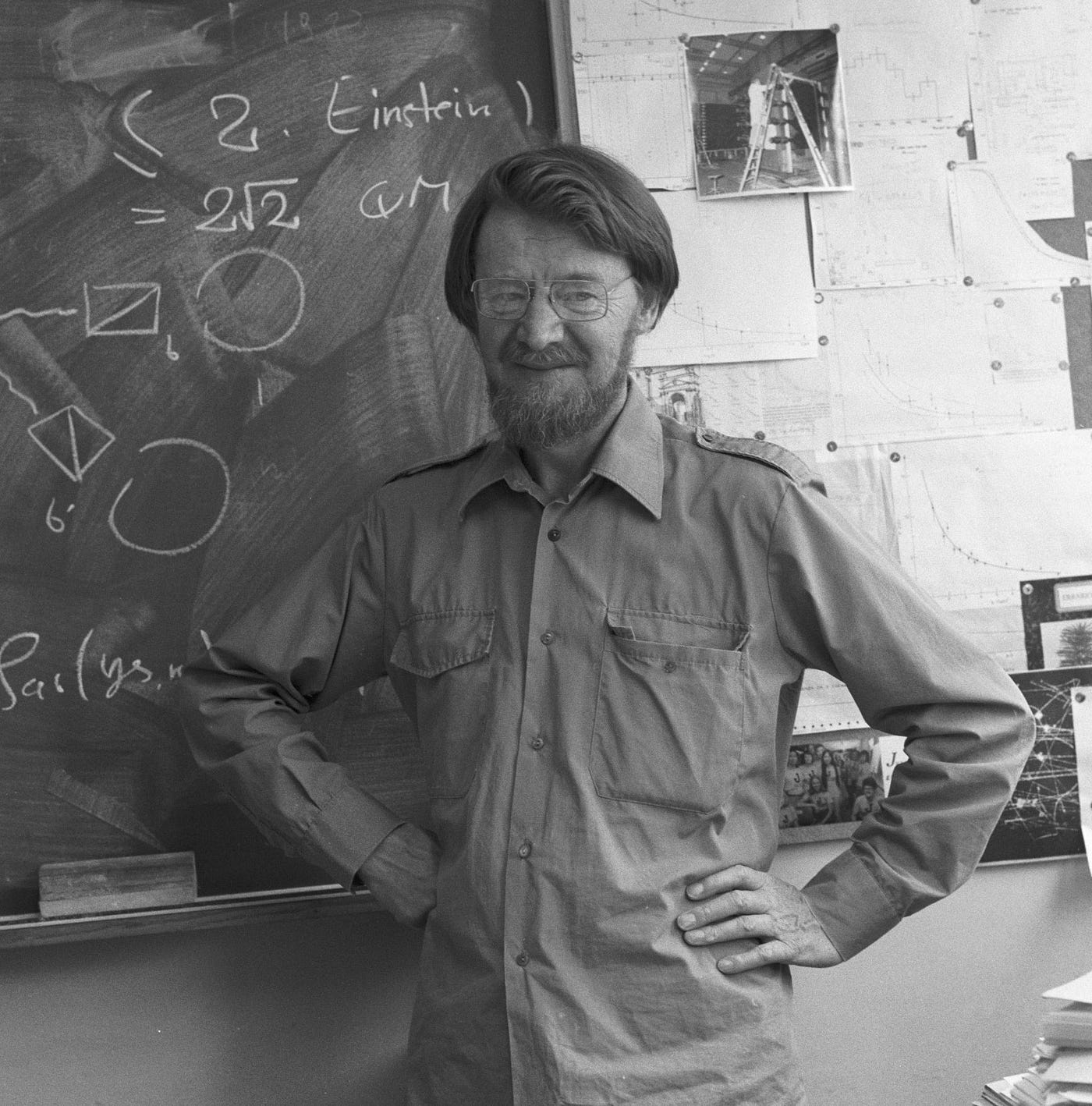
Subrahmanyan Chandrasekhar.
In 1930, a 19-year-old student sat on a steamship traveling from India to England, scribbling math equations in a notebook to pass the time.
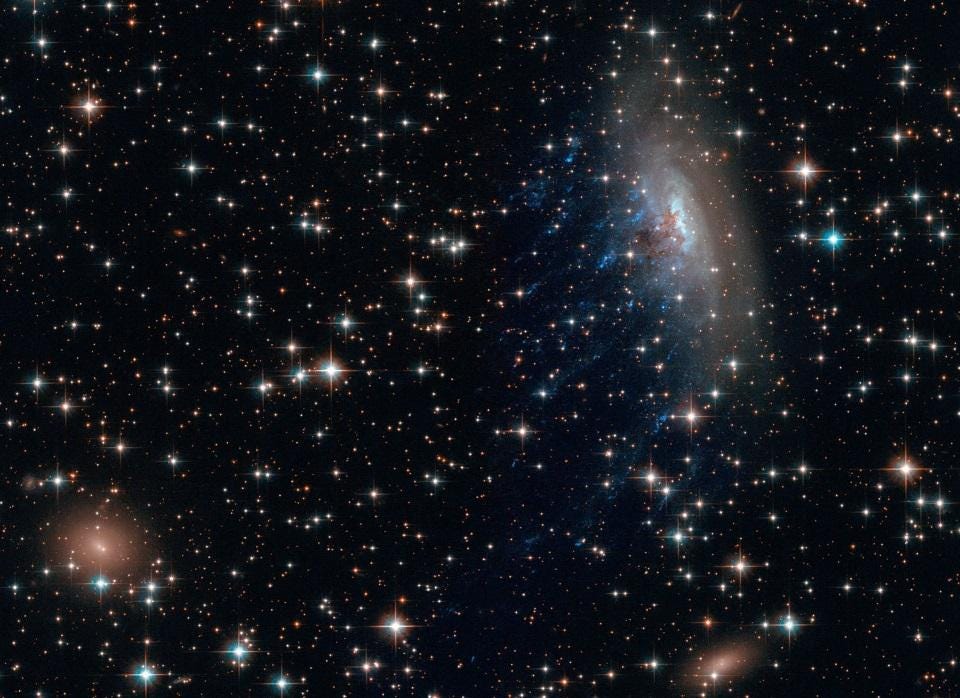
By the time the ship reached port, the teenager had mathematically proven that the most massive stars in the universe do not die peacefully. Instead, they are destined to collapse into infinitely dense, terrifying monsters.
He had just discovered the mathematical trigger for black holes.
But when he arrived at Cambridge and presented his work, the leading astronomer of the Western world publicly mocked him, calling his mathematics a stellar joke.
His name was Subrahmanyan Chandrasekhar.
It would take nearly 50 years for the scientific establishment to admit they were wrong and award him the Nobel Prize for the math he did on that ship when he was nineteen.
His struggle against scientific elitism is the ultimate lesson in what happens when rigid dogmas clash with undeniable mathematical reality.
In the early 20th century, astronomers believed they understood the life cycle of stars. They knew that when a star runs out of fuel, gravity tries to crush it. But quantum mechanics offered a beautiful safety net: a force called "electron degeneracy pressure" would push back against gravity.
The star would shrink into a stable, peaceful, glowing ember called a White Dwarf.
The entire scientific establishment agreed: every star, no matter how big, would eventually settle into this quiet retirement. It was a neat, comforting formula.
But on that ship, Chandra realized the establishment had left a massive variable out of their equations: Albert Einstein’s Special Relativity.
Chandra recalculated the math, factoring in what happens when the collapsing particles inside a dying star approach the speed of light.
What he found shattered the comforting consensus.
He proved that if a dying star is more than 1.44 times the mass of our Sun (a boundary now immortalized as the Chandrasekhar Limit), the quantum safety net snaps.
The gravity becomes so intense that the electrons cannot push back.
The star cannot form a peaceful White Dwarf. There is no formula to stop it. It must keep collapsing, falling inward forever, crushing itself into a single point of infinite density.
When Chandra presented this at the Royal Astronomical Society, Sir Arthur Eddington,the most powerful physicist in Britain, literally stood up, tore Chandra’s paper to pieces, and ridiculed the idea of stars collapsing into nothingness. Eddington’s ego couldn't accept a universe with such violent, unpredictable geometry.
Chandra was completely isolated. The establishment closed ranks around Eddington.
Instead of fighting a toxic, biased system, Chandra quietly shifted his focus to other areas of physics, leaving his flawless math in the journals for a future generation to find. Decades later, when advanced telescopes finally spotted real neutron stars and black holes in deep space, the world realized the 19-year-old kid on the boat had been right all along.
The philosophical blueprint Chandrasekhar left behind is a vital truth for navigating gatekeepers and institutional pushback:
Comforting illusions will always be more popular than harsh, disruptive truths. Trust the math anyway.
Most of us approach our careers and projects seeking the validation of the current experts or the established guard.
When we propose a radical new idea or try to change a broken system, and the authorities tell us we are wrong, our instinct is to assume our logic is flawed. We abandon our data to fit the consensus.
But Chandrasekhar’s legacy proves that institutional authority is not the same thing as truth.
Gatekeepers are human; they protect their own theories, their own legacies, and their own comfort.
What is an idea, a project, or a direction you’ve abandoned just because an expert or a boss told you it wouldn't work?
What happens if you stop looking for their permission and trust the structural integrity of your own work?
메타데이터
- post_id
- 7caaa2356e46
- slug
- what-happens-if-you-stop-looking-for-others-permission-and-trust-the-structural-integrity-of-your-7caaa2356e46
- url
- https://medium.com/philosophy-of-physics/what-happens-if-you-stop-looking-for-others-permission-and-trust-the-structural-integrity-of-your-7caaa2356e46
- canonical_url
- https://medium.com/philosophy-of-physics/what-happens-if-you-stop-looking-for-others-permission-and-trust-the-structural-integrity-of-your-7caaa2356e46
- author_url
- https://medium.com/@pioneerinphysics
- status
- ok
- fetched_at
- 2026-06-11 05:11:55