QR or NFC? What Works Better for Restaurant and Hotel Guests?
QR codes and NFC tags solve a similar problem, but they behave differently in real guest service. The best choice depends on placement…
QR or NFC? What Works Better for Restaurant and Hotel Guests?
QR codes and NFC tags solve a similar problem, but they behave differently in real guest service. The best choice depends on placement, trust, durability, and the type of interaction you want.
QR codes and NFC tags are often discussed as if one must replace the other.
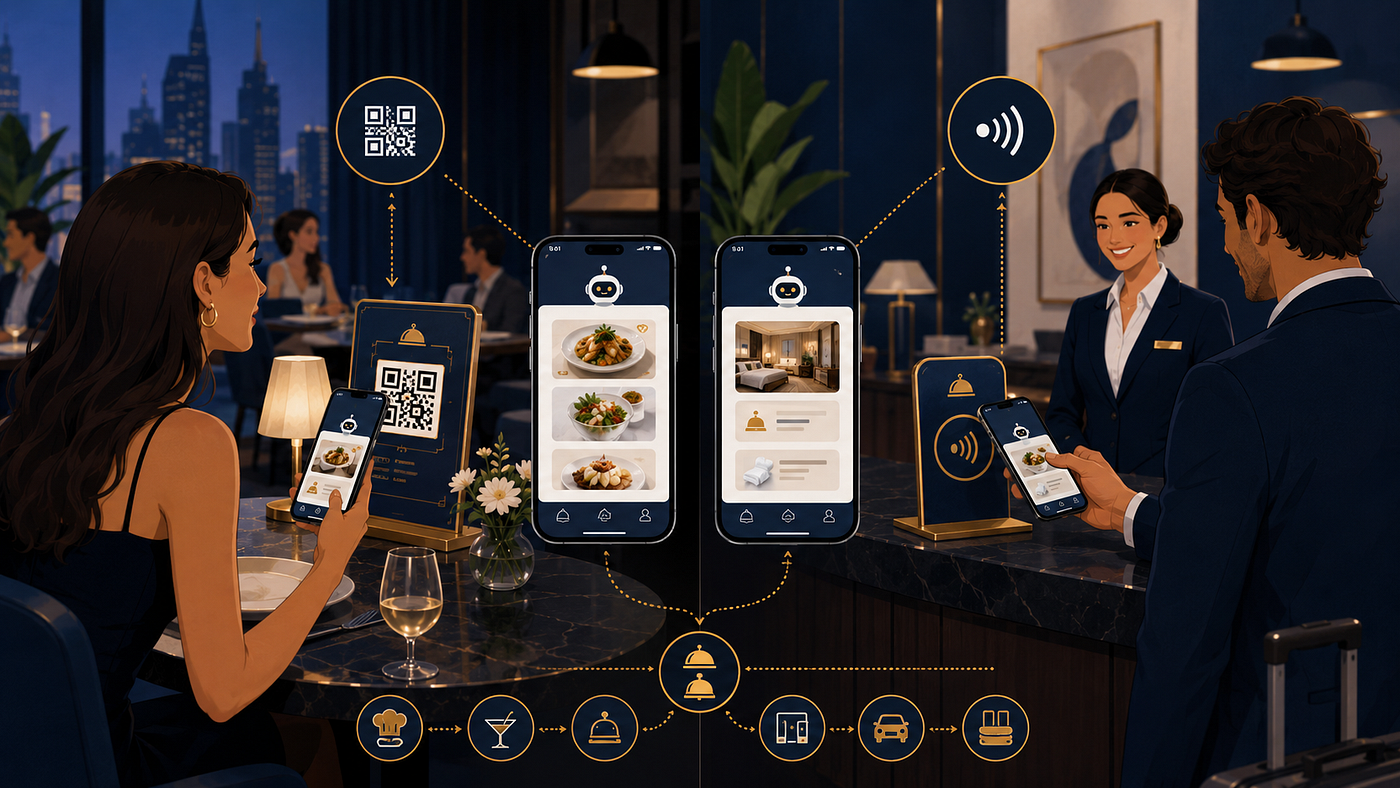
In reality, they are different entry points into the same digital service experience.
A guest wants a simple action:
- open the menu
- request service
- order food
- pay
- access hotel information
- contact staff
- leave feedback
The question is not only “QR or NFC?”
The better question is:
Which method feels easier, safer, and more natural in this specific hospitality environment?
QR codes are familiar
QR codes are widely understood.
Most guests know what to do:
- Open camera.
- Scan the code.
- Tap the link.
- Open the menu or service page.
For restaurants and hotels, QR codes are easy to print, cheap to distribute, and simple to explain.
They work well on:
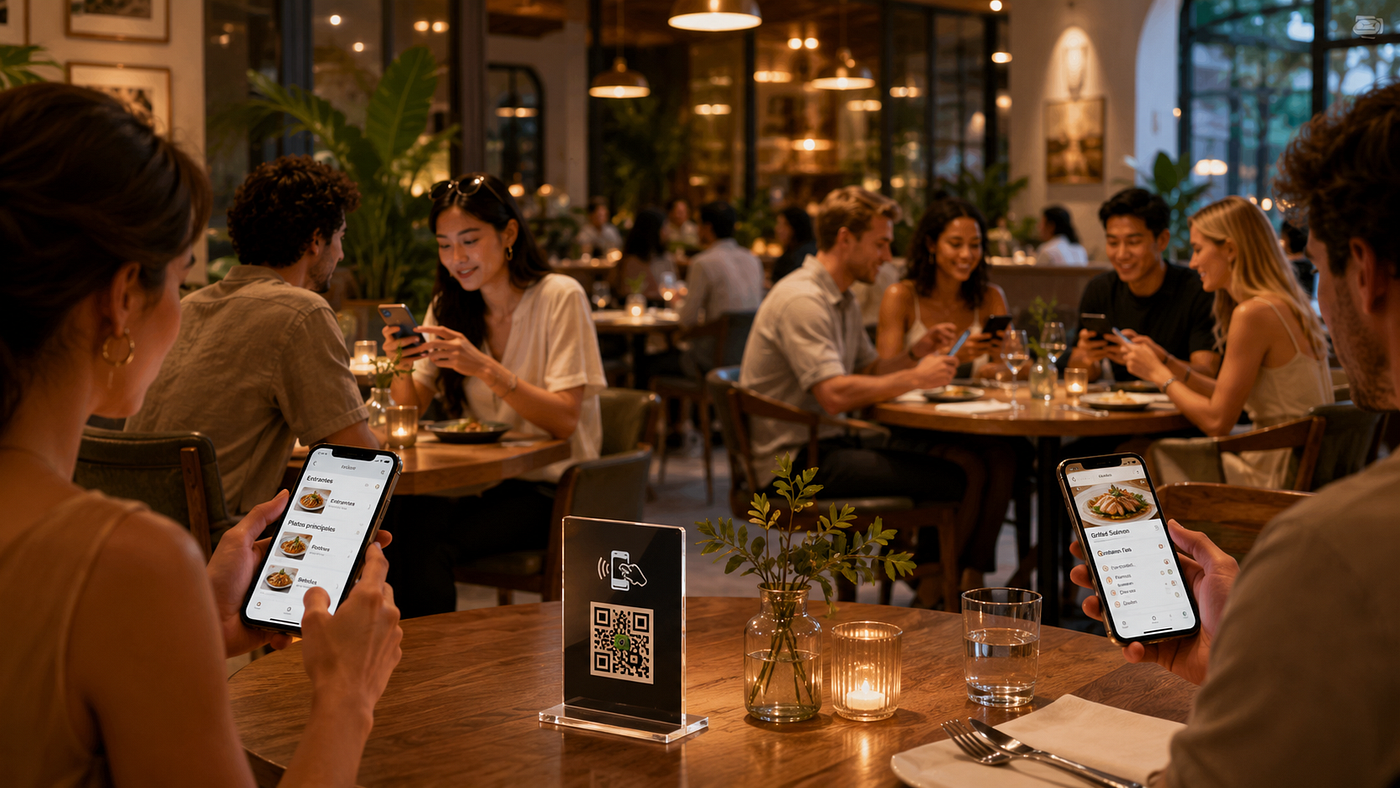
- table stands
- room cards
- posters
- stickers
- receipts
- flyers
- takeaway packaging
- hotel room information sheets
QR codes are especially good when the guest needs to clearly see what they are scanning.
A visible code creates a direct visual instruction.
NFC feels faster when it works
NFC is different.
The guest taps the phone near a tag and the link opens.
No camera. No scanning. No aiming.
This can feel smoother, especially in places where the guest is close to a physical object:
- restaurant table stands
- hotel room desks
- bar counters
- reception desks
- delivery pickup points
- tourist information points
NFC can feel more premium because it reduces visual clutter.
Instead of a large visible QR code, the interaction can be built into a small token, card, sticker, or stand.
The trust problem
Both QR and NFC have a trust issue.
A guest may ask:
“Where will this link take me?”
With QR codes, the guest can at least see that scanning is expected. The design can include a brand, instruction, and clear visual context.
With NFC, the interaction is less visible. If the label is poor, the guest may not understand what to do or may not trust the tap.
This means NFC needs better physical design.
A simple “Tap NFC” symbol is often not enough.
The guest should understand:
- what happens after tapping
- which brand or venue owns the action
- whether the link is official
- what service will open
QR codes are more obvious.
NFC can be more elegant, but it needs better explanation.
Durability and maintenance
In hospitality, physical placement matters.
Table stickers get scratched. Menus get wet. Stands are moved. Hotel cards disappear. Outdoor terrace materials face sun and rain.
QR codes must remain readable.
If the printed code is damaged, dirty, too small, too reflective, or placed poorly, scanning becomes frustrating.
NFC tags have different risks.
They can be hidden under design elements or integrated into stickers and stands. But if the tag is cheap, damaged, placed behind metal without proper design, or not clearly marked, the guest may not use it.
In both cases, the physical object is part of the product.
A bad sticker can ruin a good digital experience.
Guest behavior matters
Not every guest behaves the same way.
Some people prefer scanning.
Some people love tapping.
Some people do not know that their phone supports NFC.
Some people may be uncomfortable tapping unknown tags.
This is why the strongest approach is often to support both.
A table stand can show a QR code and include an NFC tag.
The text can say:
“Scan QR or tap NFC.”
This gives the guest a choice.
It also reduces failure.
If one method does not work, the other method is available.
Best use cases for QR codes
QR codes work best when visibility and simplicity are important.
Good use cases:
- restaurant table menu
- takeaway menu
- hotel room information
- poster in lobby
- printed flyer
- event menu
- transport seat service
- outdoor signage
QR is also better when many people must immediately understand the call to action.
Best use cases for NFC
NFC works best when the interaction is close, physical, and repeated.
Good use cases:
- table stand with embedded NFC
- hotel room desk card
- premium bar counter interaction
- reception support point
- membership or loyalty card
- staff service token
- controlled table or room identifier
NFC can also help when the design should look cleaner and more premium.
QR and NFC should open the same service flow
The biggest mistake is thinking only about the entry method.
The real value is what happens after the guest opens the page.
Whether the guest scans or taps, the system should know the context:
- table
- room
- zone
- location
- language
- service type
- order rules
Then the guest should be able to act:
- browse menu
- call staff
- request bill
- place order
- pay
- leave feedback
- open hotel information
QR and NFC are only doors.
The service workflow is the building.
Practical recommendation
For most restaurants and hotels, the best starting point is QR.
It is familiar, easy to print, and easy to test.
For better guest experience and premium physical design, add NFC where it makes sense.
The best practical setup is often:
- QR code for visibility
- NFC for convenience
- clear branding for trust
- durable stand or sticker
- one service flow behind both methods
Final thought
QR and NFC should not be treated as competitors.
They are complementary tools.
QR gives clarity.
NFC gives speed.
Together, they can make digital service access easier for guests and more reliable for hospitality businesses.
Garson.Pro supports QR and NFC-based guest entry points for digital menus, service requests, ordering, payments, feedback, and location-based hospitality workflows.
Website: https://garson.pro
Demo: https://garson.pro/demo
메타데이터
- post_id
- 7caad2d60b0b
- slug
- qr-or-nfc-what-works-better-for-restaurant-and-hotel-guests-7caad2d60b0b
- url
- https://medium.com/@garsonpro/qr-or-nfc-what-works-better-for-restaurant-and-hotel-guests-7caad2d60b0b
- canonical_url
- https://medium.com/@garsonpro/qr-or-nfc-what-works-better-for-restaurant-and-hotel-guests-7caad2d60b0b
- author_url
- https://medium.com/@garsonpro
- status
- ok
- fetched_at
- 2026-06-12 10:20:10