Learning to Slow Down:
Travel, Finances, and Chronic Illness
Learning to Slow Down:
Travel, Finances, and Chronic Illness
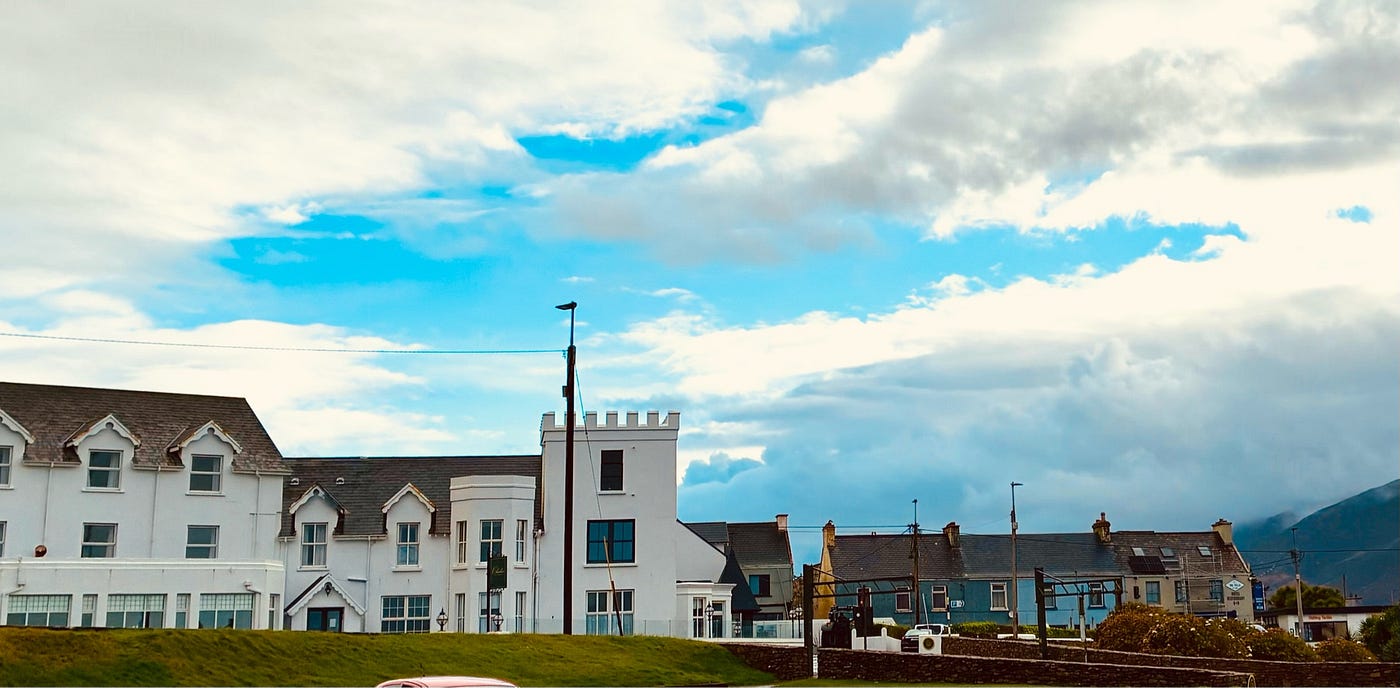
Waterville, Co. Kerry, Ireland, The big building is the hotel where Charlie Chaplin spent his summers. Photo taken by Kay Flanagan ©
Thursday, I thought again about the physical and financial toll of chronic illness. You need to eke out your limited financial and energy resources for what matters.
Three weeks ago, I spent heating money on my car. I bought new tyres. The nearest small shop or gas station is 6km (4 miles away) and the nearest convenience store is 8km (5 miles). Without the car, I have to walk, cycle or take the bus, which doesn’t run on Sundays, with four hours between one bus and the next. My bus stop is half a mile away along a winding road with no footpath, and tourists who are used to driving on the other side of the road. The road is mountainous. With Long Covid, steep hills and hard surfaces are the last trial I’ve yet to overcome.
Setbacks and relapses are par for the course with chronic, post-viral illness. My last bout of COVID, a year ago, left me with an “aura of seediness” that didn’t dissipate. I have to be parsimonious with finances and energy. I can’t drive far because I can’t afford the fuel, or the follow-up days in bed. Anything over an hour leaves me paying with pain and fatigue.
Could I hack giving up the car? It would mean more money for bills and less freedom. Last week, the choice was made for me. Two weeks after buying new tyres, I got a flat. I skittered home on it, inflated it enough to get to the nearest petrol station 6 km away and pumped it again. When I arrived home, the tyre was in ribbons. Replacing it isn’t an option for a couple of weeks. I had to eat, feed my dog and collect my money from the local post office, 6km away.
Getting to the post office was manageable. Walk to the bus and collect my money. Then, I could either stroll the 6km home, or wait in a pub for four hours to catch the bus back. I walked. Two kilometres in, I was stuck, unable to limp on or back. Sweat was dripping off me. My sciatica was hopping from the hard road surface.
Rural life has advantages. People are kind. Thankfully, a local stopped and dropped me home. Once, I could have walked 10k without thinking. Monday, 2km was my limit.
Monday afternoon and Tuesday, I crashed. By Wednesday, I had cancelled my usual classes. Thursday, I needed food. I set my alarm for 7 am because washing takes pacing.
I made the bus, did my shopping in five minutes, and had four hours left to kill before the next one home. Off-season means the cafés are closed. It was too early for pubs to be open. Sitting in the convenience store for four hours didn’t appeal.
I walked to the strand.
Although my home overlooks the sea, the shoreline on the other side of the peninsula feels different at high tide. I wandered until I found a bench. Sitting there, I watched and listened to the tide undulating and crashing on the rocks for ninety minutes. Birds, butterflies, insects and the sound of the ocean brought a spacey stillness.
My mind didn’t switch off. Every thought I had related to the environment. What was that grey bird with a forked tail called, and why was it playing with twigs on the pebbles? If I stood on the other side of the cliffs on the peninsula, would I be able to see my local beach? Would I sail across the ocean to Newfoundland, on the other side, one summer, despite not having sailed since I was a teenager?
I wasn’t thinking about money, illness, the future or to-do lists. I was focused on my surroundings until the chilly air distracted me. Before leaving the vista, I took out my phone and recorded the soundscape. Who needs meditation apps in the presence of nature’s majesty?
[embed]Ocean Waves 3. Recorded by me at the strand in Waterville, County Kerry.
I returned to the shop for a coffee, caught up with my online community, and wrote. The story I’d abandoned the day before flowed. I wandered to the bus stop and chatted to a stranger waiting for a different route. I asked the driver if he could drop me outside my house. “No problem.” By two o’clock, I was home with the dog, relaxed and tranquil.
When I got home, I googled the bird. It was a European stonechat.
I could get used to this slower carefree life. Enforced patience, renewed my energy. In the city, working hard and weighed down by responsibilities, I squeezed chores into tight timeframes. I didn’t notice nature or how noisy busy lives are. The natural world is part of my healing process. Being without the car gave me time to stop and drink it in.
Elle Becker has something to say about travelling with chronic illness:
[embed]Pain, Planes, and Pity Stares A chronically ill guide to travelmedium.com
Paul Ian Clarke noticed the benefits of nature too:
메타데이터
- post_id
- 7cbca401f7fa
- slug
- learning-to-slow-down-7cbca401f7fa
- url
- https://medium.com/chronically-ridiculous/learning-to-slow-down-7cbca401f7fa
- canonical_url
- https://medium.com/chronically-ridiculous/learning-to-slow-down-7cbca401f7fa
- author_url
- https://medium.com/@kayflanagan67
- status
- ok
- fetched_at
- 2026-07-14 16:36:29