Sports Injuries in Young Athletes: When Rest Is Not Enough?
Rest doesn’t fix every sports injury in a young athlete. Growth plate fractures, torn ligaments, stress fractures, and cartilage damage…
Sports Injuries in Young Athletes: When Rest Is Not Enough?
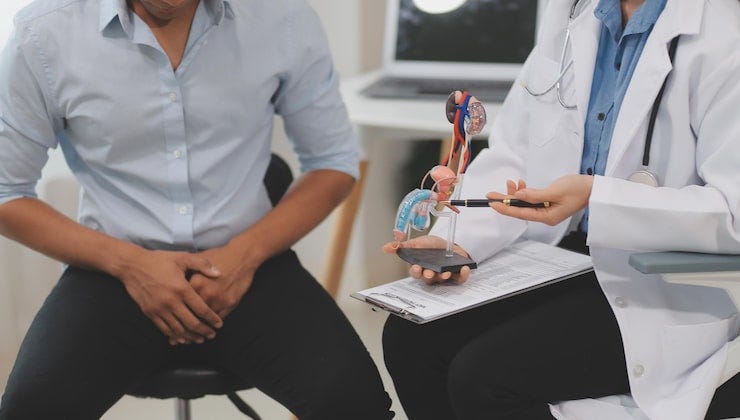
Rest doesn’t fix every sports injury in a young athlete. Growth plate fractures, torn ligaments, stress fractures, and cartilage damage, all need orthopedic assessment. An **orthopedic surgeon in Delhi** can diagnose what imaging misses at home and prescribe treatment before a manageable injury becomes a permanent one.

Rest is the right call for bruised muscles and mild strains. But is the wrong call for a torn ACL, a growth plate fracture, or a stress fracture that’s been quietly deepening for about six weeks. Read further to understand which injuries don’t heal on their own and when rest is enough.
Why Does a Young Athlete’s Body Don’t Work Like an Adult’s?
Children heal fast. Until the mid-to-late teens around 16 in girls, 18 in boys, long bones grow from soft cartilage zones near their ends called growth plates. Growth plate fractures are the most commonly missed sports injury in children. The child can often walk, the joint moves. Thus, wait for weeks, and then come to the **best orthopedic doctor in Delhi NCR, **when it’s not better.
By then, the fracture may have shifted. Untreated or mismanaged growth plate injuries can cause one leg to grow shorter than the other or a limb to grow at an angle. That’s not reversible without surgery.
This is why the standard adult advice to “rest and see” doesn’t transfer cleanly to athletes under 18.
Which Sports Injuries Won’t Heal on Their Own?
Some injuries in young athletes genuinely do resolve with rest and physiotherapy. But some don’t:
- Growth plate fractures: Tender directly over the bony end of the knee, wrist, or ankle after impact. They need an X-ray.and sometimes surgery.
- ACL tears: The knee swells within 24 hours. It feels loose. The athlete can’t fully straighten it. An MRI confirms it.
- Stress fractures: Without a structured rest protocol confirmed by imaging, stress fractures progress to complete fractures.
- Shoulder instability after dislocation: There’s a 70–80% chance of dislocation again before age 20 without treatment.
When Should You Stop Waiting And Visit A Multispeciality Hospital In Delhi?
Don’t wait for multiple reasons. Any one of these 6 signs of the injury is enough to past the “rest and monitor” stage:
- Swelling or pain that hasn’t changed after 7 days of rest
- The joint feels loose or buckles under normal walking
- Limping two weeks post-injury
- Swelling returns within minutes of activity
- Pain at night or without movement
- The joint locks, clicks with pain
The right step is an orthopedic surgeon and not a general physician. A GP can’t read an MRI for ligament damage or assess whether a growth plate has shifted. That assessment needs a specialist from the **best hospital in Delhi NCR, **who works with these injuries week in, week out.
Get the Best Sports Injury Care in Delhi NCR
Most sports injuries in children sort themselves out. But the ones that don’t, such as the growth plate fractures, the torn ligaments, the stress fractures all have one thing in common. A week of rest is reasonable, but two weeks of the same limp is not.
PSRI Hospital at Sheikh Sarai, South Delhi possesses orthopaedics & joint replacement department to manage the full range from adolescent growth plate injuries and ACL reconstruction to complex cartilage repair, with arthroscopic surgical capability on campus. With on-site imaging and in-house physiotherapy, MRI, X-ray, post-surgical rehab, and sports physiotherapy becomes easy too.
To book a consultation with an **orthopedic surgeon in Delhi**, call : +91 84 84 84 84 17.
Frequently Asked Questions (FAQs)
1. How do I know if my child has a growth plate injury and not just a sprain? Tenderness directly over the bony end of a joint and not over the muscle after a fall or collision is the key sign. If the child can still walk, that doesn’t mean it’s a sprain.
2. Can young athletes play through pain?
No, pain during sport in a growing athlete is a signal that something structural is under stress. Playing through a growth plate fracture or a partial ACL tear accelerates damage.
3. When does a sports injury actually need surgery?
Complete ACL tears in athletes who want to return to sport, growth plate fractures that have shifted out of position, and cartilage lesions that don’t respond to physiotherapy ask for surgery. Although an MRI is what separates “needs surgery” from “doesn’t.”
메타데이터
- post_id
- 7cccf5e797ec
- slug
- sports-injuries-in-young-athletes-when-rest-is-not-enough-7cccf5e797ec
- url
- https://medium.com/@pragyakelkar90/sports-injuries-in-young-athletes-when-rest-is-not-enough-7cccf5e797ec
- canonical_url
- https://medium.com/@pragyakelkar90/sports-injuries-in-young-athletes-when-rest-is-not-enough-7cccf5e797ec
- author_url
- https://medium.com/@pragyakelkar90
- status
- ok
- fetched_at
- 2026-06-20 20:29:01