GPT-5.6 Is Not a Codex Funeral. It’s a Desk Reorganization.
Marlow was sitting on my keyboard when I first saw the GPT-5.6 announcement.
GPT-5.6 Is Not a Codex Funeral. It’s a Desk Reorganization.
Marlow was sitting on my keyboard when I first saw the GPT-5.6 announcement.
This is normal behavior for him.
Marlow is an orange tabby with one bent whisker, a talent for looking offended by furniture, and a habit of sleeping with his tongue slightly out, as if he has just lost an argument with gravity.
He also believes that my desk has only two legitimate purposes.
One is food.
The other is him.
So when OpenAI announced GPT-5.6 on July 9, 2026, according to its own launch post, I read it with one hand on the trackpad and one hand gently preventing a cat from opening twelve browser tabs with his stomach.
Photo from SK ZHAO on Unsplash
That felt appropriate.
Because the headline is not just “a new model is here.” We get those now the way Tokyo gets vending machines: everywhere, bright, and somehow always selling a slightly different version of the same thing.
The more interesting change is architectural.
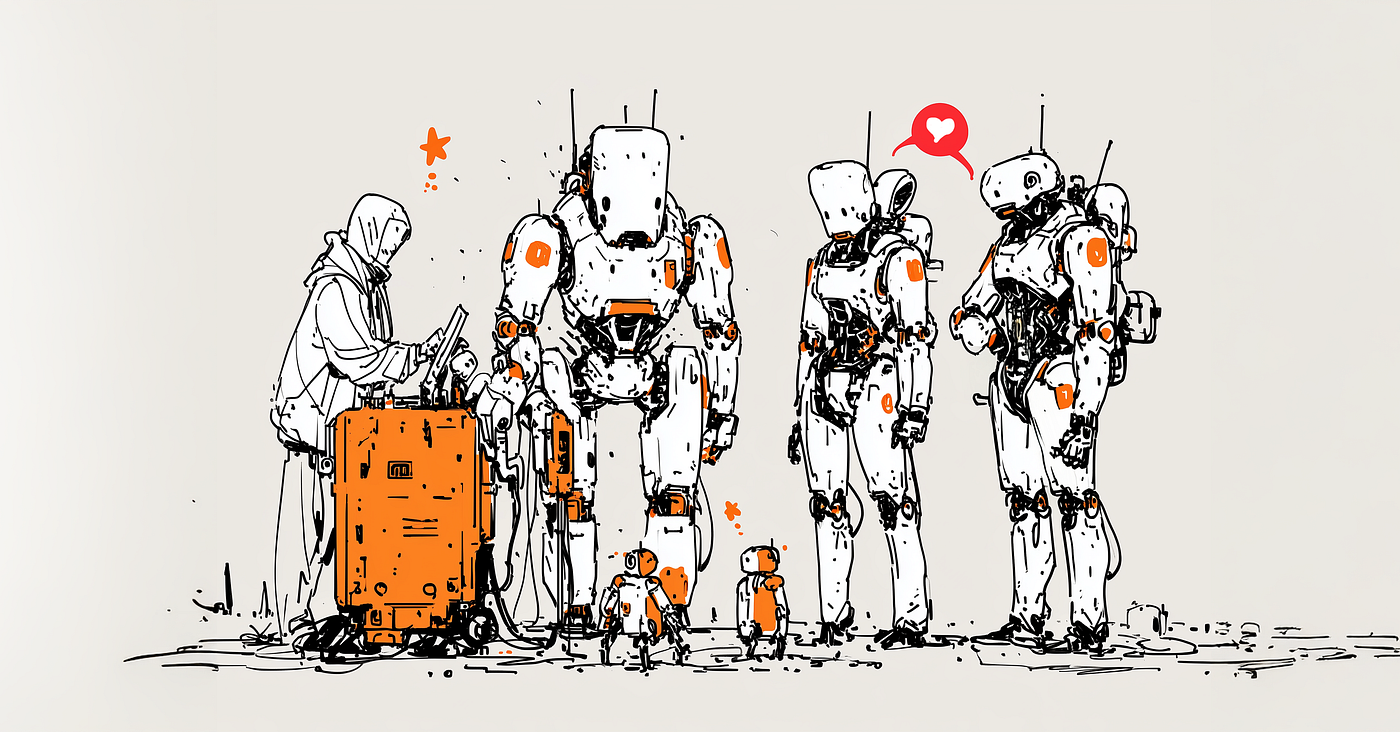
OpenAI is not only shipping GPT-5.6. It is rearranging the desk.
According to OpenAI’s announcement, the GPT-5.6 family has three model tiers: Sol, Terra, and Luna. Sol is positioned as the flagship. Terra is positioned as the balanced everyday model. Luna is positioned as the fastest and lowest-cost member of the family.
That matters because the naming already tells you what OpenAI wants this generation to be.
Not one giant model everyone argues about.
A workbench.
The first correction: it is Sol, Terra, and Luna
The early rumor version of this launch sounded messier.
I saw people describe GPT-5.6 as if it came in “Sol, Fable, and Opus” tiers. That is not what OpenAI’s official material says.
OpenAI’s GPT-5.6 launch page describes the family as Sol, Terra, and Luna. Fable 5 and Opus 4.8 appear as comparison points in OpenAI’s benchmark framing, not as OpenAI model tiers.
This seems small until you are the person building an actual workflow.
Model names become defaults. Defaults become habits. Habits become invoices.
If you are building with the API, the difference between “flagship,” “balanced,” and “low-cost” is not a branding detail. It is the difference between running every task through the expensive adult in the room and letting the cheap, competent intern handle the repetitive work.
Marlow understands this intuitively.
He does not summon me for every problem. Only the high-value ones.
Empty bowl. Closed door. Mysterious shadow near the rice cooker.
Everything else he handles by knocking something onto the floor and seeing what happens.
The second correction: ChatGPT Work does not simply replace Codex
The cleanest bad take is that ChatGPT Work “replaces Codex.”
I understand why that reading spread. OpenAI’s Work announcement says ChatGPT Work has Codex technology built in, and that more than 5 million people use Codex every week. It also says more than 1 million people use Codex for work outside software development.
That sounds like a product migration story.
But OpenAI’s own Learn documentation is more careful. Its Work guide says that if you have used Codex for non-coding work, you can stay in Codex or switch to Work. It describes Work as giving the same core capabilities with an experience designed for everyday work.
That is not a funeral.
It is a desk reorganization.
Codex remains the developer-shaped surface: CLI, IDE extension, cloud tasks, code review, plugins, MCP, and the slightly obsessive rituals of people who say “just one more test run” at 1:13 a.m.
Photo from Jakub Żerdzicki on Unsplash
ChatGPT Work is the broader surface: briefs, decks, spreadsheets, research packets, recurring updates, files, apps, and the kind of multi-step office work that usually dies inside a folder named “final_final_v7.”
The practical question is not “Which one wins?”
It is: where should the work live?
If the task is inside a codebase, with tests, repo memory, PR comments, and terminal state, Codex still makes sense.
If the task is across documents, browser tabs, slides, and files from five different corners of your professional life, Work may be the better surface.
Same engine family.
Different desk.
The pricing story is useful, but only if you read the footnotes
The SEO-friendly version of this launch is easy to write:
“GPT-5.6 beats Claude Fable 5 at one-quarter the cost.”
That sentence is tempting.
It is also too smooth.
OpenAI reports that GPT-5.6 Sol beat Claude Fable 5 by 13.1 points on Agents’ Last Exam, and that even at medium reasoning it beat Fable 5 by 11.4 points at roughly one-quarter the estimated cost. OpenAI also reports coding-agent gains against Fable 5 and says Terra and Luna improve the price-performance curve.
Those are OpenAI’s reported benchmark results, not my independent test results.
There is an important footnote in the same launch page: OpenAI says latency and API cost estimates are simulated offline from production behavior, and that real-world results may vary substantially.
That is the sentence I would tape to the monitor.
Benchmarks are useful. Benchmarks are not your invoice.
For the API, OpenAI’s pricing page, accessed July 10, 2026, lists Standard short-context pricing per 1M tokens as:
ModelInputCached inputCache writesOutputgpt-5.6-sol$5.00$0.50$6.25$30.00gpt-5.6-terra$2.50$0.25$3.13$15.00gpt-5.6-luna$1.00$0.10$1.25$6.00
The same page lists higher prices for long context and separate rates for Batch, Flex, and Priority processing.
So the honest pricing advice is boring, which is usually how useful advice sounds:
Do not migrate your whole workflow because a launch post says “cost.”
Take one repeated task. Run it through Sol, Terra, and Luna. Track total input tokens, output tokens, tool calls, retries, human corrections, and the final pass rate.
Then compare.
A model that is cheaper per token can still be expensive if it needs three attempts.
A model that is expensive per token can still be cheap if it gets the task right once.
Marlow, again, has solved this.
He spends very little energy most of the day. Then, at exactly 6:02 p.m., he deploys all available compute toward dinner.
The real shift is from chat to delegated work
The most important phrase in the ChatGPT Work announcement is not “GPT-5.6.”
It is “finished work.”
OpenAI describes ChatGPT Work as an agent in ChatGPT that can take action across apps and files, stay with a project for hours, and turn a goal into finished materials like sheets, slides, docs, and web apps.
Photo from SumUp on Unsplash
That is the product claim to watch.
Not whether the chat answer is more elegant.
Whether the system can hold a messy task long enough to produce something you would actually send, ship, review, or present.
This is where GPT-5.6 feels less like a model release and more like a boundary test for knowledge work.
For years, AI tools have been very good at producing the middle of things.
A middle draft.
A middle explanation.
A middle version of a function that probably compiles after you stare at it for a while.
But most professional value lives at the edges.
Finding the right source file.
Knowing what not to change.
Following the slide template.
Preserving the spreadsheet formula.
Asking for approval before touching the risky thing.
Making the final artifact boring enough to trust.
That is why Work matters.
If OpenAI can move ChatGPT from “answer box” to “reviewable work partner,” it changes the competitive frame. The rival is not only Claude or Gemini. The rival is the pile of half-finished tasks that knowledge workers quietly carry from one week into the next.
My migration rule would be conservative
If I were choosing a GPT-5.6 setup today, I would not start with Sol everywhere.
I would start like this:
Use Sol for ambiguous, high-value work where judgment matters: architecture changes, product strategy, research synthesis, security reviews, polished deliverables.
Use Terra for everyday agent work: code edits with clear scope, document transformations, structured analysis, internal reports, workflow automation.
Use Luna for repeatable jobs: extraction, formatting, classification, simple QA, routine transformations, and anything where failure is cheap and easy to detect.
Then I would keep Codex where the work is genuinely developer-shaped.
The best “Codex alternative” may not be Work.
It may be Codex plus Work, with each one kept in the lane where it has the least friction.
That is less dramatic than a replacement narrative.
It is also how real tools enter real work.
Slowly. Unevenly. One trusted task at a time.
The cat test
By the time I finished reading the docs, Marlow had fallen asleep beside the laptop.
Tongue out.
Bent whisker resting on the edge of my notebook.
Completely unimpressed by frontier intelligence.
And maybe that is the right emotional posture for GPT-5.6.
Interested, but not dazzled.
The launch is significant. OpenAI is clearly pushing toward agentic work surfaces, not just smarter chat. GPT-5.6’s Sol, Terra, and Luna structure makes model selection more operational. ChatGPT Work gives non-developers a surface for delegated tasks. Codex still has a place for code-heavy workflows.
But the only test that matters is not whether the announcement sounds powerful.
It is whether the tool can sit on your desk, among the files, tabs, templates, tests, approvals, and small daily chaos, and help you finish something.
Marlow woke up, stretched one paw across the trackpad, and closed the pricing page.
A fair editorial decision.
At some point, every benchmark becomes dinner.
메타데이터
- post_id
- 7cd19ea097d5
- slug
- gpt-5-6-is-not-a-codex-funeral-its-a-desk-reorganization-7cd19ea097d5
- url
- https://medium.com/@notesbyken/gpt-5-6-is-not-a-codex-funeral-its-a-desk-reorganization-7cd19ea097d5
- canonical_url
- https://medium.com/@notesbyken/gpt-5-6-is-not-a-codex-funeral-its-a-desk-reorganization-7cd19ea097d5
- author_url
- https://medium.com/@notesbyken
- status
- ok
- fetched_at
- 2026-07-10 19:45:50