Happy Together: “Lai Yiu-fai, Let’s Start Over”
Note: This article was originally published on an independent cinema website on August 7, 2022. Through this film, I would also like to…
Happy Together: “Lai Yiu-fai, Let’s Start Over”
Note: This article was originally published on an independent cinema website on August 7, 2022. Through this film, I would also like to celebrate Pride Month and send my love to everyone who continues to love, exist, and be themselves. 🌈
My love for this film is so immense that I could talk about it for days without ever getting tired. So consider this a warning: my thoughts on the film may contain spoilers. As cliché as it may sound, it is worth saying that Wong Kar-wai is a master of love stories. I think he understands the state of being in love exceptionally well, and he succeeds in presenting it as a complete package enriched with elements of nostalgia, while never allowing us to lose touch with reality. Heartbreak, separation, people who love each other but cannot be together…
As for the story itself, Lai Yiu-fai (Tony Leung Chiu-wai) and Ho Po-wing (Leslie Cheung) travel from Hong Kong to Argentina to see the Iguazu Falls, but their relationship unexpectedly comes to an end after they arrive. They are forced to continue on their own and, in order to do so, they need money. Lai Yiu-fai finds work at a tango bar, while Ho Po-wing continues trying to get by on his own. Their goal is to earn enough money to return to Hong Kong. When Ho Po-wing is beaten by a group of men and realizes he has nowhere else to go, he turns to his former lover, Lai Yiu-fai. Everything begins again.
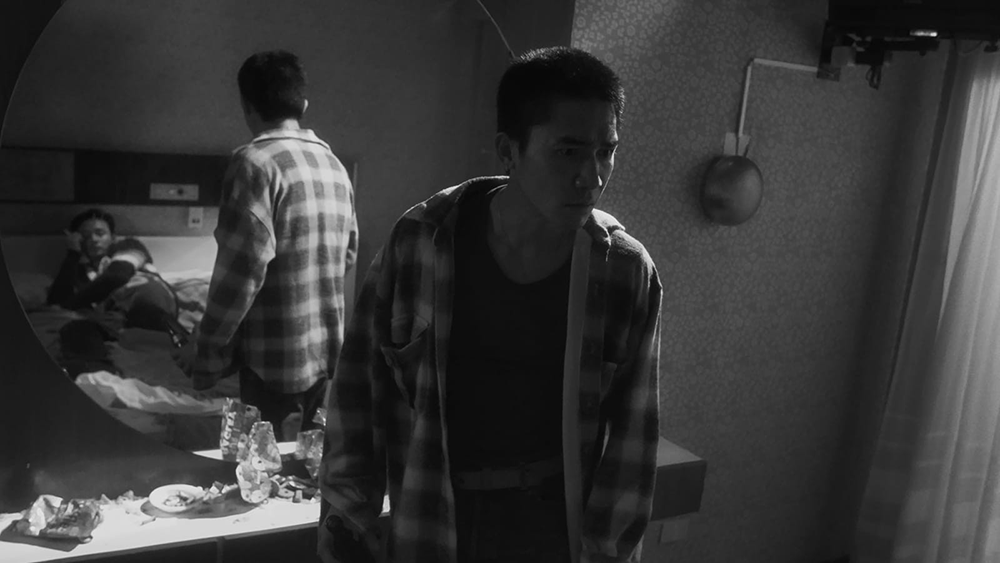
For most people, when Wong Kar-wai’s filmography is mentioned, the first films that come to mind are Chungking Express (1994), In the Mood for Love (2000), and 2046 (2004). For some reason, Happy Together is rarely included among them. For me, however, Happy Together is my favorite film in Wong Kar-wai’s filmography and one that holds a special place in my heart. Interestingly, the film did not completely draw me in the first time I watched it. But a few days later, I noticed certain scenes replaying in my head over and over again, and when I revisited the film, I was completely captivated by it. At first glance, it may seem like nothing more than a collection of stunning images dominated by a yellow color palette, but trust me, this film is much more than that.
I would like to begin with the opening scene. Po-wing’s words to Yiu-fai — “Let’s start over” — the screen shifting from color to black and white, Yiu-fai beginning to narrate their relationship through voice-over, and then the sudden arrival of the love scene… Within just a few minutes, we find ourselves immersed in the story. Looking at Wong Kar-wai’s filmography, it would not be wrong to say that Happy Together is less stylized than many of his other films. It does not contain the prolonged glances and lingering walks that define In the Mood for Love. Here, Kar-wai presents everything in a rougher and more physical way. This approach contributes greatly to expressing the contradiction at the heart of the film: two people who are deeply in love yet incapable of being together. One other interesting detail about the opening scene is that Wong Kar-wai initially sent Tony Leung a version of the script that did not include the love scene and convinced him to join the project on that basis. Until the day the scene was filmed, Tony Leung had no idea that it would be part of the film.
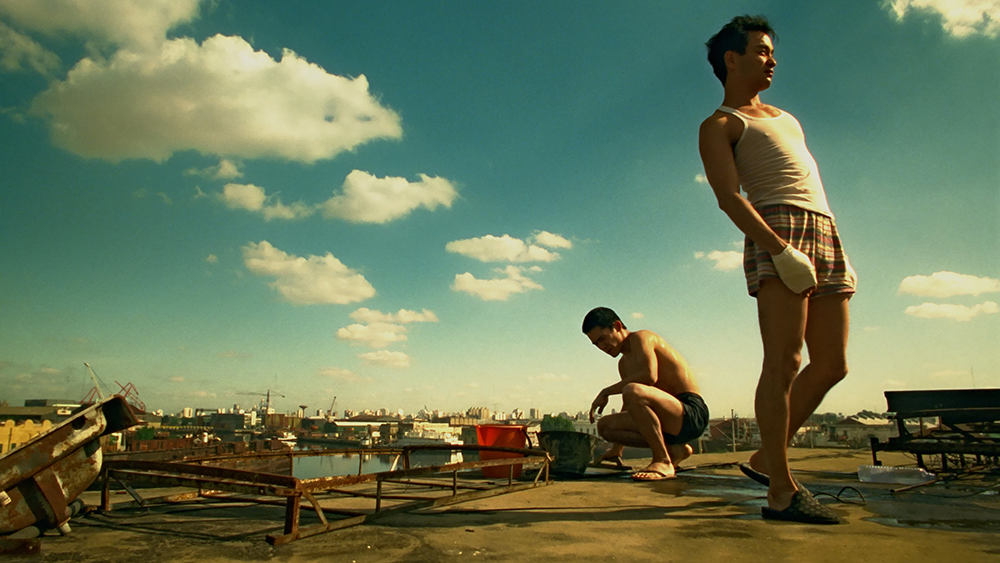
One of the things that interests me most about the film is that, despite being a love story between two men, it avoids many of the themes commonly found in queer cinema, such as coming out, AIDS, or bullying. From the very first moments, we are simply witnesses to the love shared by Lai Yiu-fai and Ho Po-wing. What matters from beginning to end is what they experience and what we witness alongside them. We never learn what society thinks of them, nor do we hear its judgments. Isn’t love something like that? Isn’t it ultimately about the intensity of feeling between two people and what takes place between them? Shouldn’t the opinions of outsiders become irrelevant?
At the same time, I think Wong Kar-wai is telling a very universal story. A story about love between two people. Those two people could have been two women, or a woman and a man. One could have been trans and the other non-binary. They could have come from Berlin or Tehran instead of Hong Kong. Possibilities like these remind me that emotions have neither a color nor a gender, and that the chaos we call love is not something experienced only by a particular group of people. In a way, the film serves as a reminder of exactly that.
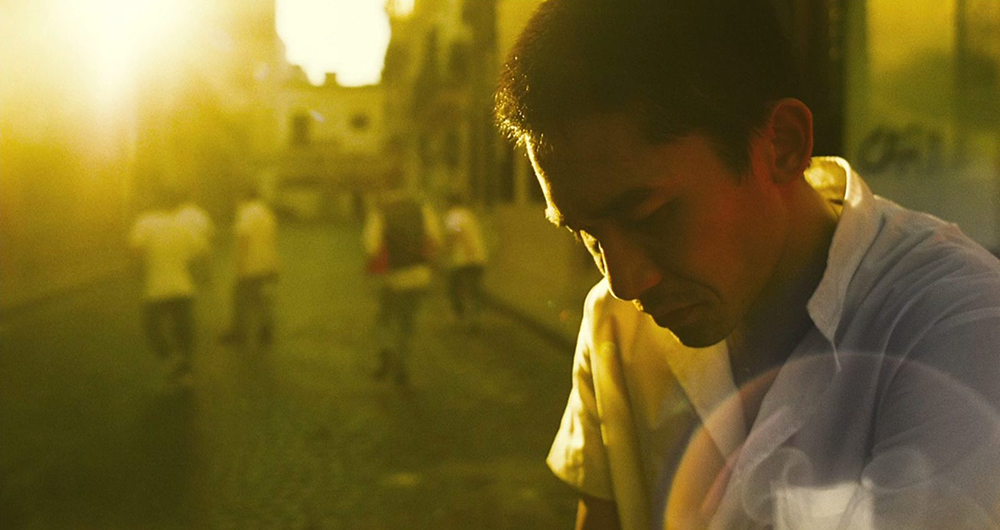
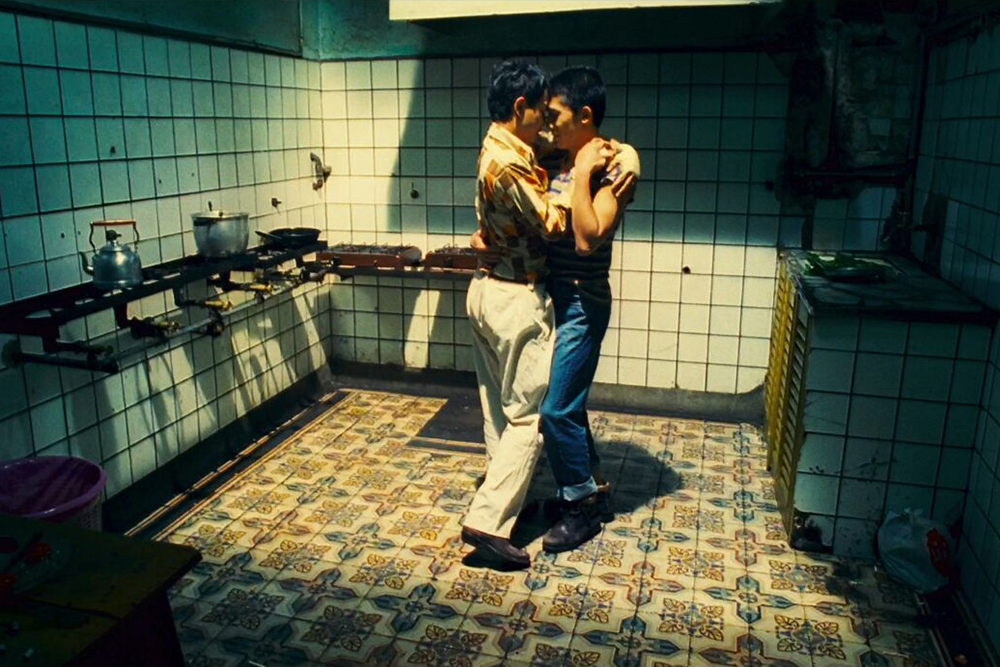
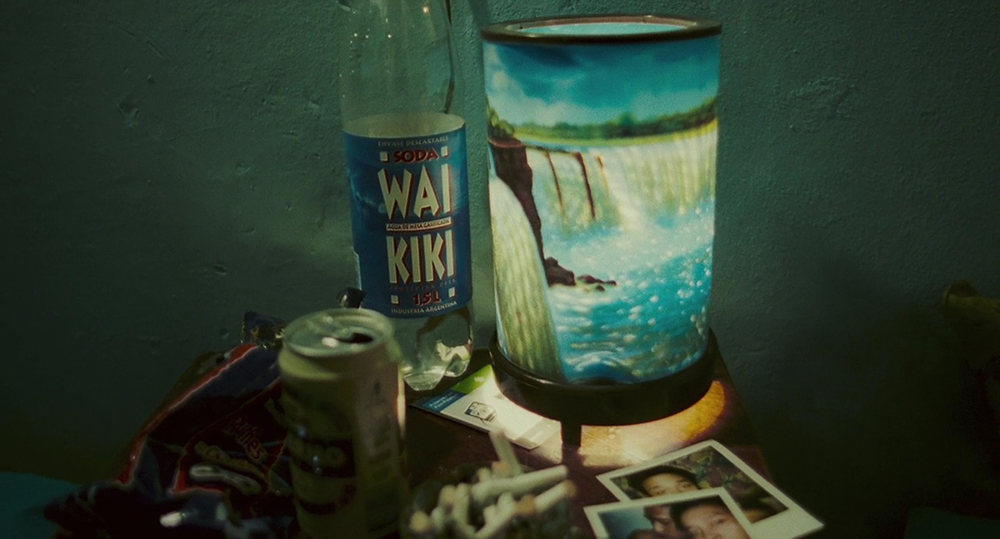
While the film tells the story of a relationship coming to an end, it also carries a sense of hope within it. One of the film’s most important scenes, in my opinion, comes near the end, when Lai Yiu-fai visits the Iguazu Falls alone and undergoes a moment of personal reckoning. Chang’s journey to the southernmost tip of the world and his decision to play Lai Yiu-fai’s voice recording there adds a powerful metaphorical layer to the ending. The use of The Turtles’ “Happy Together” during the final moments also plays a major role in sustaining that feeling of hope. Speaking of the music, Astor Piazzolla’s “Prologue,” “Milonga for Three,” and “Finale” are simply magnificent choices. And when it comes to the scene where Lai Yiu-fai and Po-wing dance the tango to “Finale,” I can only say this: I will remain silent forever after mentioning it. It is a scene you truly need to experience for yourself.
One thing that cannot be overlooked is Christopher Doyle, Wong Kar-wai’s longtime cinematographer and the creator of the film’s extraordinary visual style. The car scenes, the tango sequences, the images of the Iguazu Falls… Just as in Wong Kar-wai’s other films, he leaves us with unforgettable images that stay in our minds long after the film ends. Another aspect worth mentioning is the performances. Tony Leung and Leslie Cheung, both of whom had previously collaborated with Wong Kar-wai, are extraordinary together. No matter what I say about them, it will never feel like enough, but I can confidently say that I could watch these two for hours without ever getting bored. The fact that they were close friends in real life and yet managed to make this love feel completely genuine deserves special praise. I would especially like to take a moment to mention Leslie Cheung. He was actually a huge pop star in China and is even considered one of the pioneers of Cantopop music.
Although acting was not his original profession, Leslie Cheung delivers a performance as Po-wing that is impossible not to admire. The tragic part of his story is that, after a long struggle with severe depression, he took his own life in 2003. According to one story, Tony Leung kept Leslie Cheung’s phone number in his contacts even after his death. One day, he accidentally called it. The familiar voice he would never hear again answered with a simple message: “Please leave a message.” Tony Leung left one of his own:
“Why don’t we start over?”
메타데이터
- post_id
- 7cd6fbd5d01f
- slug
- happy-together-lai-yiu-fai-lets-start-over-7cd6fbd5d01f
- url
- https://medium.com/@hazalishere/happy-together-lai-yiu-fai-lets-start-over-7cd6fbd5d01f
- canonical_url
- https://medium.com/@hazalishere/happy-together-lai-yiu-fai-lets-start-over-7cd6fbd5d01f
- author_url
- https://medium.com/@hazalishere
- status
- ok
- fetched_at
- 2026-06-09 15:37:30