What’s Really Happening in the War
How history and semiotics shapes Putin’s thought
What’s Really Happening in the War
How history and semiotics shapes Putin’s thought
We often see clips on Telegram and YouTube (and probably Tiktok, Instagram and Facebook) of solitary, errant Russian soldiers being hit by an FPV drone. Depending on which battalion it is, this has been accompanied by heavy metal music. Of late things have calmed down somewhat. We no longer see the logo of the drone battalion (a very good thing for safety purposes) and videos are now cutting before the Russian soldier in question is hit. (I know similar is being shown on Russian social media but will not comment on that here.)
Every day for the past months, between 1,300 and 1,500 Russians end up as casualties. We are told that Russians have changed tactics, and now work in small teams of about 4. In fact that is not exactly what is happening. The mass assaults are still going on, and this is where the main casualties are coming from. These large assaults are being carried out to “fix” defenders to them, so that then small teams of about 4 to 10 men can break through and gain ground, group up, and…well, plant a flag.
Clearly the tactic has flaws. But in this time of drone warfare, any form of assault, attack or advance is going to result in high casualties. The act of moving [forward] is itself going to be spotted immediately by drones above, relaying the information to other drones above. Drone operators gain valuable training on the job, and are selected because of their particular skills: Russian infantry assault troops are selected because they have at least one leg and one arm. Drones move faster in every direction than a running Russian. The average number of braincells of a drone team is higher, than that of good soldier Serguy, Ivan, or Vladimir of the Russian horde and their vodka-addled space between their ears.

Perhaps the answer is to go back to the Roman Legion testudo formation/sourced from Pinterest.
Calling it quits
If Russia ever felt it needed to stop the war now it faces some serious challenges: Armenia might seize the moment to take some big steps closer to Europe politically, and Kazakhstan would probably also seek to relinquish ties to Moscow.
Chechnya would sense the weakness in the Kremlin, as would Dagestan, Bashkortostan and possible even Tatarstan. But what about China? One of the things Being does not want is an unstable, weak Russia on its border. Sure, it would dump Putin quicker than a chef tosses a spoiled fish, but how would it ensure stability? Would it use North Korean help in order to do so?
The waiting game
Trump, incompetent, & in love with all things Russian ruble, was an incredible bonus. Orbàn may be out of the picture, though he could yet turn up in Moscow. If Putin plays a waiting game he thinks he’ll have Marie Le Pen in the Elysé in Paris, the AfP in Berlin, Nigel Farage at 10 Downing Street and perhaps the Serbs back on board and no longer wavering. A “Fascist” Europe is worth waiting for.
Last night
Another few hundred 220 Shahed type drones and Iskander missiles hit Ukraine again last night. Putin does not seem any other choice that to vainly attempt to look strong, hope for more North Korean troops and demand ‘victories’ by this and that random date from his generals, and demand economic miracles from his advisors. His run of luck with Trump and Orbàn provided him with false hope, but the chances of disunited Europe remain, especially in the mind of a dictator, where every disagreement is sign of disfunction.
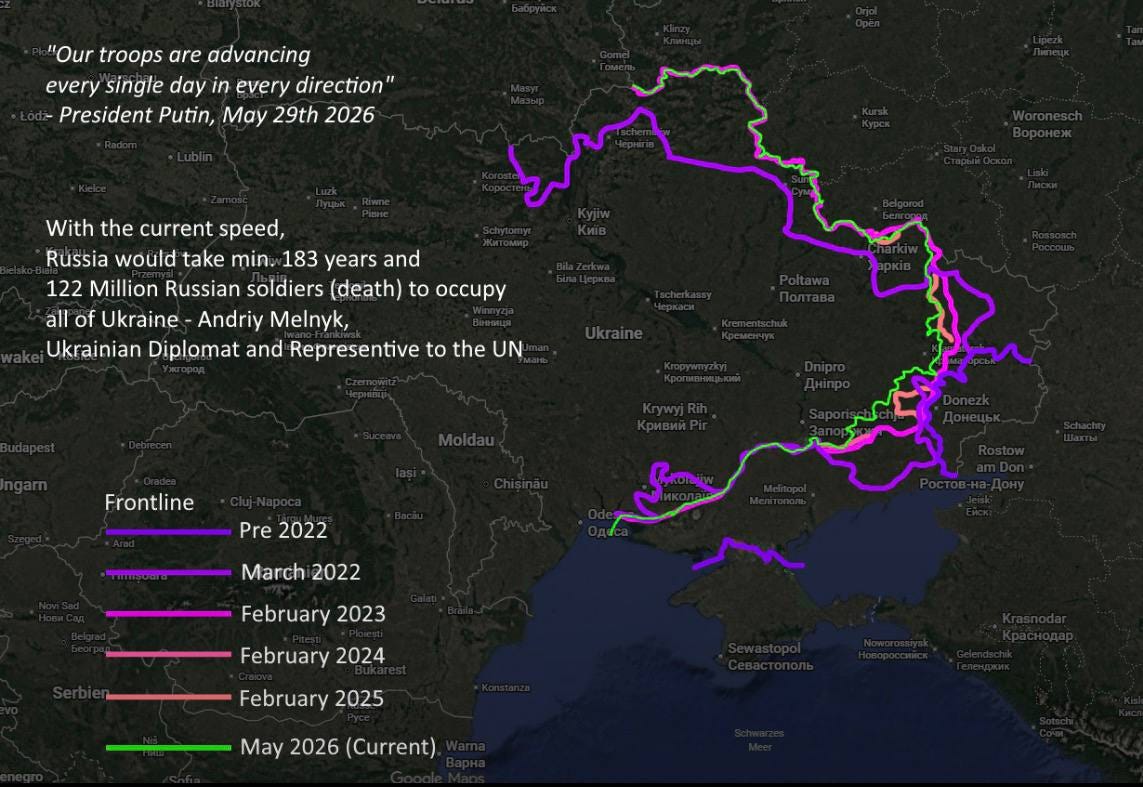
No need to analyse too closely: that area of give and take of land is the sum total of nearly 5 years of war.
Russia remains motivated by the unclear signals from its ex-Warsaw Pact neighbours
Here we go again. Ever since Hungary decided to get rid of the traitor Orbàn and nearly join the ranks of the decent (nearly because they have declared they will not support Ukraine financially), other countries have vied to take over as the belligerent child: for a time it was Fico, but he went all quiet when Orbàn was dispatched. The PM of Czechia, Babiš, has been a populist pain, now joined by the Bulgarians, but it is the Poles who are the most determined to throw a tantrums: Poland is now fighting for a piece of the 6.6 billion euro ($7.7 billion) package under the European Peace Facility, while Germany has called for full reimbursement to Kyiv. What is truly unbearable is this permanent crying about everything. Does Poland not understand why they are left out of all meetings about Ukraine in different formats between the larger European countries?
Almost ‘thankfully’ the overriding problem of Russian belligerence remains the strongest issue, but the squabbling is boring.
Putin is looking at the long term, as much as he is able, because he has no choice. The long term includes developing Russian military presence in the north.
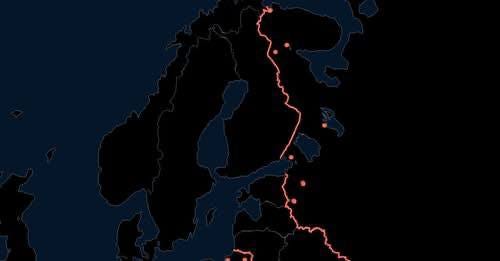
Further Russian military bases are popping up on the border with Estonia and Finland, and in Kalinidrad.
A quest to tame history
In June 1917, 101 years ago, the Central Rada (parliament) was preparing the proclamation of the First Universal, a landmark declaration of Ukrainian autonomy within the former Russian Empire, in a similar way that Finland was. The debates and decisions around 10 June were part of the process that culminated in the Universal’s announcement later that month, marking a major step toward Ukrainian statehood, which lasted a few short years. If only.
In the following months or year or two, Finland got away with independence. Poland did too, as Lithuania, Latvia and Estonia. Armenia, Georgia, Azerbaijan and Kazakhstan managed 2 to 3 years independence. Belarus, Tajikistan, Kyrgystan, Uzbekistan and Turkmenistan never saw the light of day.
The two most democratic nations, free from any authoritarianism of others previously within the Russian Empire, or the subsequent Soviet Union on a quest for independence, were Ukraine and…Azerbaijan; more than Finland, or Poland.
The Russian Empire had tried to incorporate Bulgaria, Romania and Serbia, as well as Mongolia, Manchuria and Korea. The empire expanded mostly by gradual conquest and treaties, not one unified plan. Its biggest expansion zones were: • East Europe: Poland — Ukraine — Belarus • Caucasus : — Circassia — Ossetia — Chechnya — Ingushetia — Dagestan — Armenia — Georgia — Azerbaijan (Longest and latest expansion, taking 400 years to subjugate the fierce locals) • Central Asia: “Turkestan,” later all the “stans” • Siberia
Putin has explicitly or implicitly compared himself to several major Russian rulers, usually to emphasise themes of territorial consolidation, or restoring “great power” status. The comparisons vary by speech, symbolism, and his political messaging.
He has drawn parallels about himself with Peter the Great, about expansion of Russian territory and influence and turning Russia into a major European power. In 2022 he explicitly referenced Peter the Great when discussing territorial recovery, suggesting Russia was “taking back” historically Russian lands; drawing a parallel with Peter’s expansion wars. He has also invoked Alexander III of Russia, for his stability and nationalism, strong centralised authority and conservatism, and inferred parallels, if not specific praise when talking about Ivan the Terrible, in a context of “strong statehood in difficult times,” never mind who created those difficult times. Never mind, also, Ivan the Terrible’s ruthless suppression of any opposition and complete centralisation of power
Putin’s historical comparisons are not casual—they form a coherent narrative: Russia is a continuous state that periodically “reassembles” itself after decline, led by strong rulers who “restore unity” and power…
If ‘Manifest Destiny’ was the semiological statement for American expansionism, what was Russia’s?
Manifest Destiny was more than a policy; it was a semiological and ideological narrative. It encoded American expansion as natural, providential, and civilizing. It transformed territorial conquest into a moral mission.
Russia never had a single phrase that played exactly the same role, but several overlapping narratives served analogous functions in different eras.
‘Gathering of the Russian Lands’
After the Mongol period, the rulers of Grand Duchy of Moscow justified expansion as the reunification of lands that belonged to the old Kievan Rus'.
The signification was not "conquering new territory" but "recovering and unifying a fragmented inheritance."
This narrative helped legitimise the absorption of neighboring principalities and later claims over East Slavic populations.
‘Moscow, the Third Rome’
Following the fall of Constantinople in 1453, Russian religious thinkers developed the idea that Moscow was the successor to Rome and Byzantium.
The formula was roughly:
First Rome fell.
Second Rome (Constantinople) fell.
Moscow is the Third Rome, and there will be no fourth.
This endowed Russian expansion with a sacred and universal dimension. The Tsar was not merely a ruler but the guardian of Orthodox civilization.
In semiotic terms, territory became linked to a civilizational and religious mission.
‘Imperial Civilisation of the Frontier & Near Abroad’
As Russia expanded across Siberia, the Caucasus, and Central Asia, imperial officials often described the process as bringing order, Christianity, administration, agriculture, or "civilisation" to frontier peoples.
This resembles some aspects of Manifest Destiny, although Russian expansion was generally contiguous across land rather than continental settlement across a frontier ocean.
The symbolic frontier was often the steppe rather than the American West.
‘Pan-Slavism (19th Century)’
In the nineteenth century, many Russian intellectuals and statesmen promoted the idea that Russia had a special responsibility toward Slavic peoples.
The ideology of Pan-Slavism portrayed Russia as the natural protector and leader of Slavs, especially Orthodox Slavs in the Balkans.
This provided a powerful symbolic language for influence and intervention beyond Russia's borders.
‘Soviet Internationalism’
After 1917, imperial and religious narratives were officially rejected, but a new universal mission emerged.
The Soviet Union framed its expansion and influence not as Russian nationalism but as the historical advance of socialism.
The key signifier was not "destiny" but "historical necessity."
Marxist-Leninist theory presented the spread of socialism as the inevitable next stage of history, giving Soviet geopolitical expansion a legitimizing narrative analogous to the role Manifest Destiny played for American expansion.
Semiotic Comparison
From a semiological perspective, both American Manifest Destiny and Russian "gathering of the lands" perform a similar function: they recode expansion from an act of power into an act of fulfillment.
Pavlovian Putin
Between 1898 and 1930, Pavlov explored how external stimuli could elicit salivation in dogs once associated with food. This conditioned reflex demonstrated how learning links stimuli and responses through experience. The framework became central to behaviorism and experimental psychology. Putin is Pavlovian, like the dog that salivates.
The problem with populists
If you listen to Putin, it is like reading an article in the National Enquire, or The Sun newspaper. He sincerely seems to believe gays and lesbians represent a mortal danger to society, and shows wrath when discussing the issue. Mine is not to question why it affects him so much, though his shirtless photos and inability to deal with women in ‘normal’ ways does raise a few ideas. He much prefers male company, in a ‘manly’ kind of way.
His innate populism means he genuinely believed he would be rather the hero strutting into Ukraine some time after the 3-day Special Military Operation along with his smartly dressed manly soldiers in their bright parade uniforms, that many had packed with them long the initial invasion (along with40,000 body bags to get rid of querulous Ukrainians, such as journalists, politicians, teachers etc etc. This is documented.
Events like the fighting between pro-Ukrainian ‘Maidan’ supporters and anti-free Ukrainian demonstrators in April and May of 2014 in Odesa, that culminated in 48 people dying, with the anti-free Ukraine group taking a stand in that was accidently was set alight when Molotov cocktails were being chucked back and forth led Putin to believe Ukrainians were ripe for invasion.
They did not. And the head of the Odesa police plus quite a few other officials persons escaping to Russia after the tragic events showed exactly where much of the cause of the trouble lay: Moscow.
The worst violence in Odesa was on 2 May, when a 'United Ukraine' rally was organised. The march was attacked at Hretska Square by pro-Russians with petrol bombs and homemade grenades at Hretska Square, where a pro-Russian gunman killed two United Ukraine marchers with an AK-47.
The pro-Ukraine demonstrators then moved to destroy a pro-Russian protest camp at Kulykove Pole. Some pro-Russian activists barricaded themselves in the Unions House overlooking the square, and opened fire and threw missiles from the roof and windows. Some of the pro-Ukraine group returned fire and attempted to storm the building, which caught fire as the two groups threw petrol bombs at each other.
As many dictators before him, and indeed after, Putin saw the chance to play the nationalist card. That has all been overblown many times over, but it is a stance that he is no longer able to take a step backwards from.
Ukraine constantly strikes
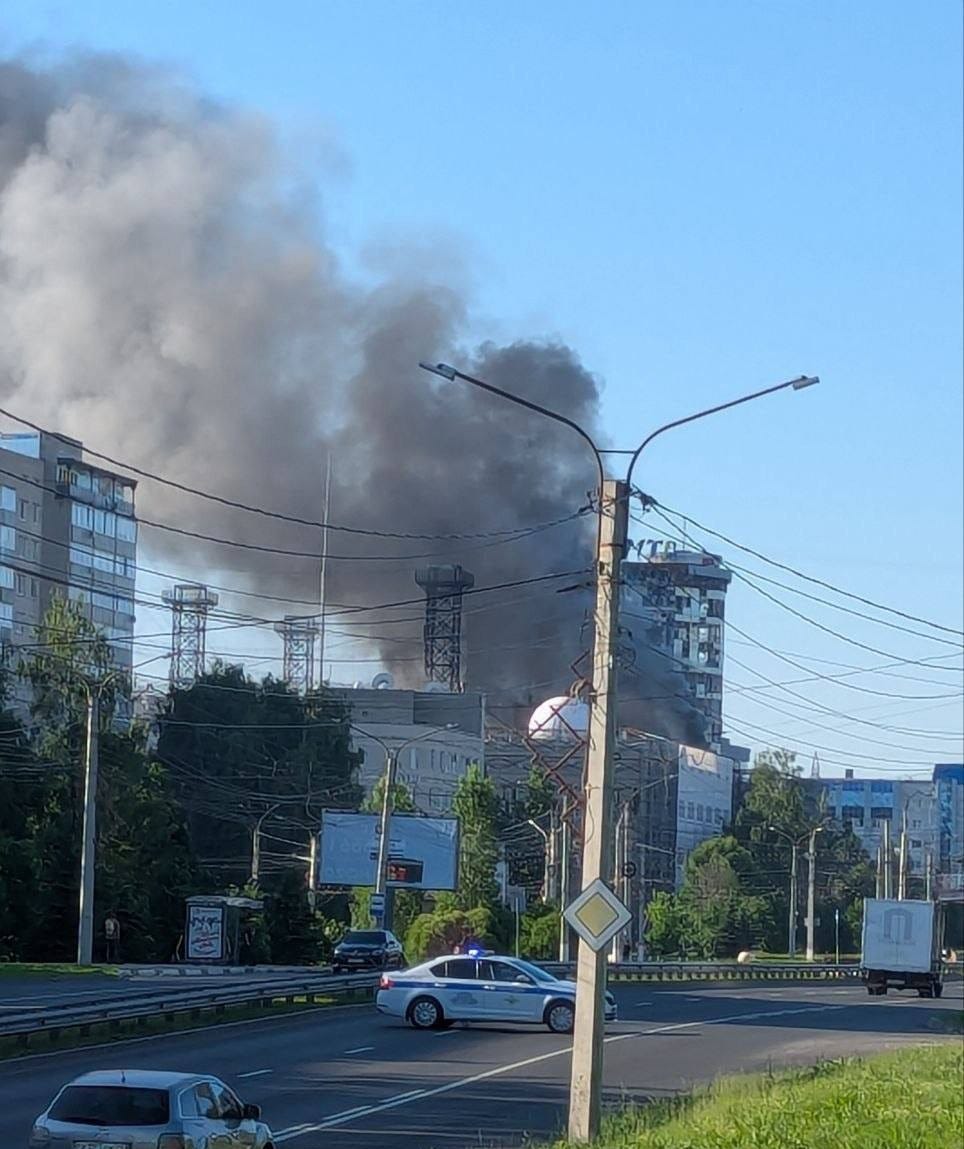
Bsng
During this night/morning, the following facilities were hit:
Kuibyshev Refinery in Samara
VNIIR "Progress", was hit twice by FP-5 "Flamingo" cruise missiles.
2 oil infrastructure facilities in the Vladimir region were hit. One of them is the NPS "Vtorovo".
Among others…

Bang
These continued, progressive (not quite politically) attacks are not designed to bring Putin to the peace table directly. As a dictator he is a long lost case in authoritative management, but they are designed to have his cabal, and indeed more and more Russians seriously question the whole “subjugate Ukraine" idea. More and more we find evidence this is happening. A weaker and weaker Putin will at one point have to listen to sweet nothings whispered into his ear. It is always about Balance. Want to run the Russian Imperium by enriching yourself and enacting fantasies of tsars gone by? Then feed the people. High oil prices helped him enormously over the years, as did not carting them off to Siberia all the time. But that dynamic has all changed. Once the balance is lost try getting it back. I know, I was often rejected from a seesaw as a wee lad for not knowing.
In a sad indictment of Russian society, it is not even about the absurdly high Russian casualty rates…yet. That will soon come along and bite him as well. Why it has not until now is one of the mysteries of the Russian World.
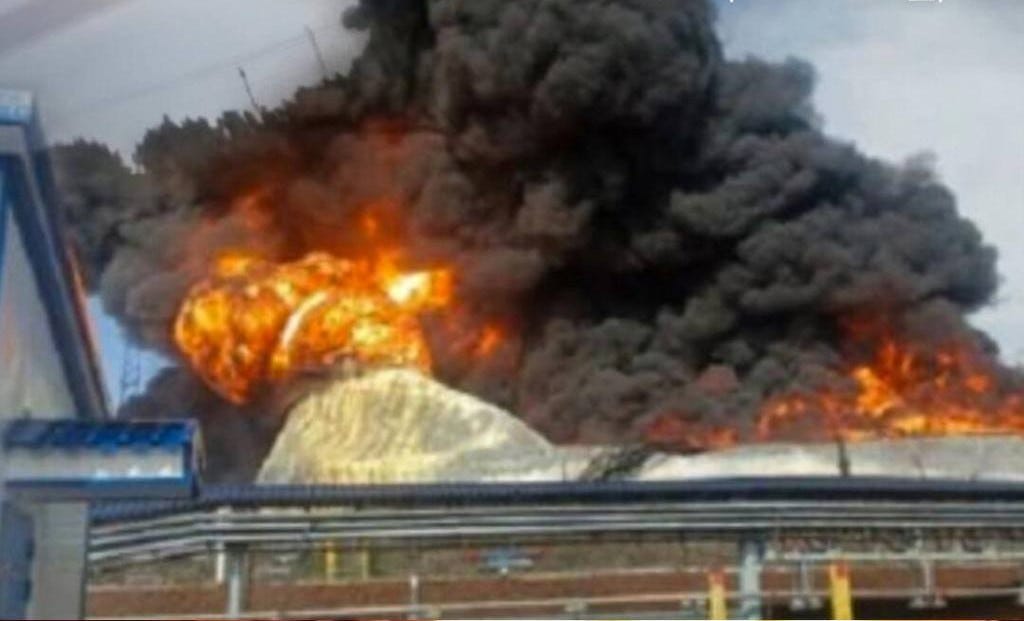
Bang…a reminder
Telegram channels that give you up-to-date news on Ukraine
Three of quite a few, but giving good coverage of what is currently happening in the war. Worth signing up, and easy to do so, with no payment required. One gets a good picture of events.
Maksym
Maksym never thought of himself as the main character in anything.
He was forty and moved through life with quiet resignation and the Friday night drunkennes of someone who had stopped expecting surprises. In the industrial town where he grew up, the apartment blocks all looked the same: gray concrete, peeling paint, windows glowing weakly through long winters. He had worked at a factory until it closed, then in a supermarket sticking shelves.
One day without thinking about it, Maksym signed up for the Special Military Operation in Ukraine.
“And your family get 3 Million Rubles if you are 200" the recruiter told him, meaning terminated. “And you will be a hero.”
For years he had felt like a passenger. Perhaps, this was at least a direction.
Maksym became a philosopher.
That night, lying in his bunk, he wondered whether he had mistaken movement for meaning.
A colleague in the next bunk became a physicist: claimed drones could never hit a moving target.
A full week’s training.
They boarded transport vehicles.
48 hours later they reached a staging area several kilometers behind the front.
Generators rattled constantly.
The air smelled of fuel.
An officer briefed them: “pay or group 1 in the attack.”
Maksym slept poorly.
Every unfamiliar sound woke him.
The next morning is his first day near active positions.
He and several others move along a dirt track toward a forward position.
The track wound between patches of trees.
They continue walking.
Then someone shouts:
"Dron!"
Nobody seems to know where to look.
Maksym looks upward.
A small dark shape against the clouds.
It hovers with mechanical patience.
A sound like an angry hornet.
Maksym starts running.
Then slips.
Around him men sprint in different directions.
The drone remain overhead.
Watching.
Calculating.
Maksym reaches a shallow depression beside the road, throws himself down.
The earth felt cold.
He thinks he might be safe.
The buzzing grows louder.
Closer.
He presses himself into the dirt.
The world narrows.
Nothing else exists.
Not politics.
Not voska.
Not the supermarket.
A shadow flickers across the ground.
Then a sharper buzz.
An object falling.
Maksym turns.
The last thing he sees was something small tumbling through the air.
There is no dramatic realisation.
No words.
No final revelation.
The convoy continued moving.
The war carried on.
In the end, his life had not transformed into a grand story.
There was no heroic charge.
No famous battle.
No glorious last stand.
On his first day of deployment, beneath an ordinary sky, Maksym became another name on a list.
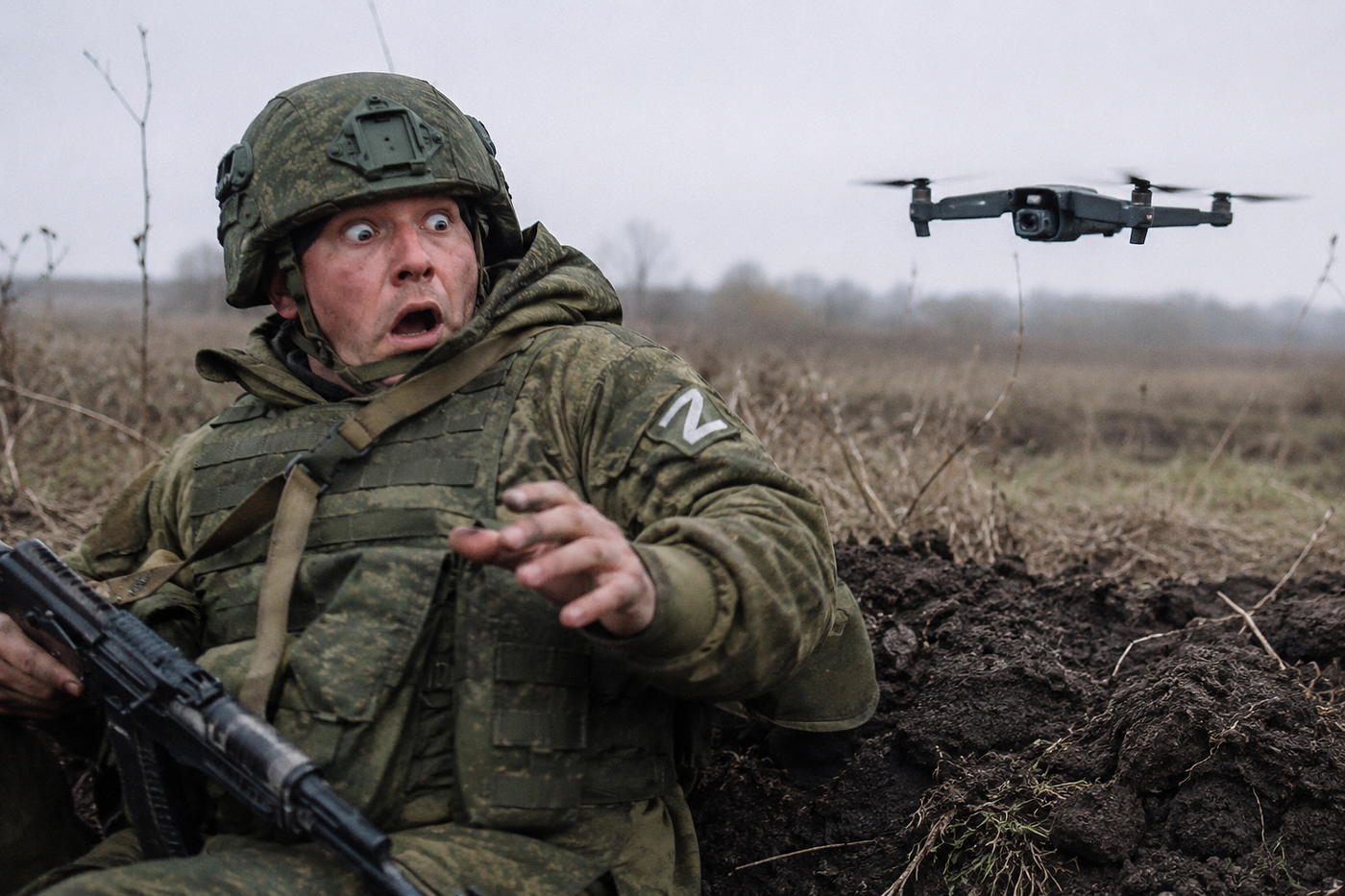
Maksym’s last blunder.
메타데이터
- post_id
- 7ce4a6eabdee
- slug
- whats-really-happening-in-the-war-7ce4a6eabdee
- url
- https://medium.com/ukraine-latest/whats-really-happening-in-the-war-7ce4a6eabdee
- canonical_url
- https://medium.com/ukraine-latest/whats-really-happening-in-the-war-7ce4a6eabdee
- author_url
- https://medium.com/@forestbather
- status
- ok
- fetched_at
- 2026-06-20 20:29:01