How Payroll Services Help Businesses Manage Compliance and Employee Salaries in India
Payroll is a critical business function because it connects employee compensation with financial administration, statutory requirements…
How Payroll Services Help Businesses Manage Compliance and Employee Salaries in India
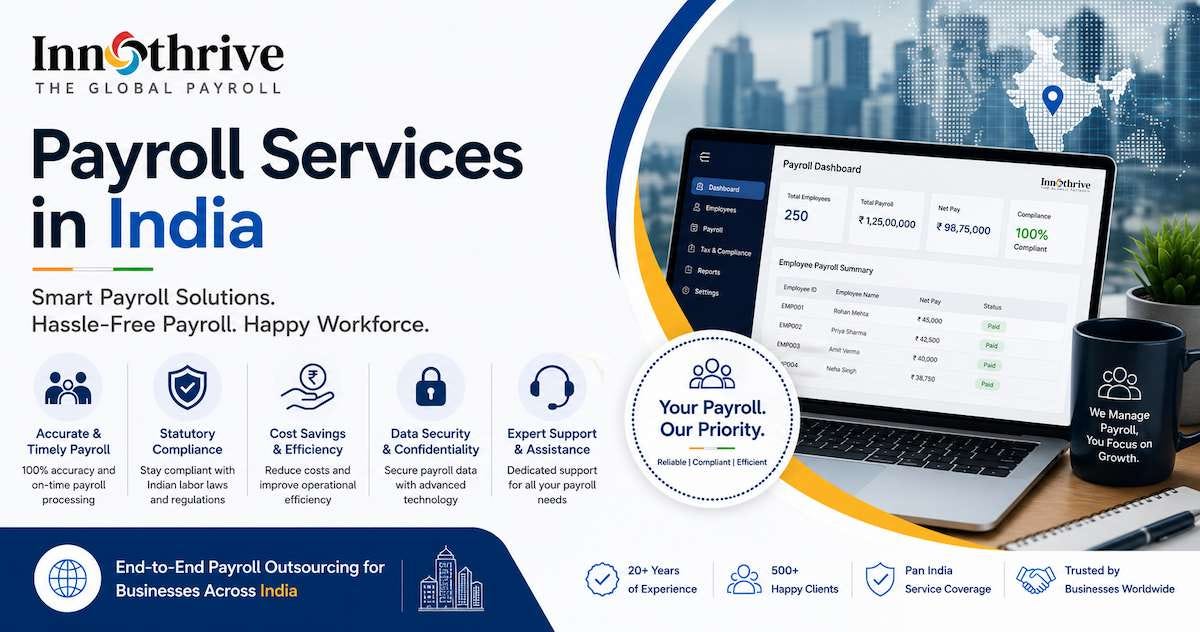
Payroll is a critical business function because it connects employee compensation with financial administration, statutory requirements, record keeping, and workforce management. A company must ensure that employees receive the correct salary while applicable deductions, reimbursements, incentives, taxes, and other payroll components are processed appropriately.
As an organization expands, managing all these activities internally can become increasingly demanding. More employees create more payroll inputs, salary changes, attendance records, joining and exit adjustments, employee queries, and compliance-related responsibilities.
Using professional Payroll services in India can help businesses establish a structured payroll process instead of depending heavily on spreadsheets and repetitive manual calculations.
Professional payroll support can be particularly valuable for growing companies that want to improve salary-processing consistency while allowing HR and finance teams to concentrate on broader business responsibilities.
Understanding the Payroll Process
Payroll is sometimes viewed simply as calculating an employee’s monthly salary.
The actual process can involve several stages.
Before payroll can be finalized, businesses may need to collect attendance information, employee changes, salary revisions, incentives, bonuses, reimbursements, deductions, and information about new employees or exits.
These inputs need to be checked and approved.
Payroll calculations are then completed according to the company’s compensation structure and applicable requirements.
After internal review, salary payments can be processed and payslips and payroll reports generated.
Each stage needs to operate correctly for the complete payroll cycle to remain reliable.
Why Payroll Compliance Matters
Payroll is connected with various statutory and regulatory responsibilities.
Depending on the employer, employee, compensation, location, and other applicable factors, payroll can involve areas such as:
- Tax Deducted at Source (TDS)
- Provident Fund (PF)
- Employees’ State Insurance (ESI)
- Professional tax where applicable
- Payroll records and documentation
- Applicable employee-related deductions
- Statutory reporting and payment timelines
Businesses need to determine which requirements apply to their particular operations.
Compliance should not be treated as an activity that receives attention only when a problem occurs.
It needs to be incorporated into the recurring payroll process.
Payroll Rules Can Add Administrative Complexity
One challenge with payroll compliance is that different obligations can have different calculations, documentation requirements, and deadlines.
An HR team concentrating on recruitment and employee management may not want to spend substantial time interpreting payroll-related requirements.
Finance professionals may also have many other responsibilities.
Specialized payroll providers can help operationalize applicable payroll requirements through defined monthly processes.
This can make compliance administration more systematic.
Businesses should still obtain qualified professional advice when they need interpretations regarding their specific legal or tax obligations.
Accurate Employee Data Is the Starting Point
Even the best payroll software cannot compensate for inaccurate employee information.
Payroll depends on reliable data.
This may include compensation details, joining dates, attendance inputs, leave information, approved bonuses, reimbursements, deductions, and employee status.
Companies need clear procedures for updating this information.
If an employee receives a salary revision but payroll is not informed before the cut-off date, the calculation may be incorrect.
Data accuracy therefore needs cooperation between employees, managers, HR, finance, and the payroll team.
Standardized Payroll Inputs Reduce Confusion
Companies often experience payroll problems because information arrives through too many channels.
One manager sends an email.
Another updates a spreadsheet.
Someone sends information through a chat message.
Another employee provides a document after the payroll cut-off.
A standardized input process can reduce this fragmentation.
Companies can define what information is required, who can submit it, which format should be used, who approves it, and when it must reach payroll.
This creates a cleaner audit trail and makes monthly processing easier to manage.
Salary Structures Need Accurate Processing
Employee compensation may contain several components.
The exact structure varies between employers and employees.
Payroll teams need to understand how approved salary components should be treated during monthly processing.
Changes must also be reflected correctly.
For example, promotions or annual compensation reviews can result in salary revisions.
If these revisions apply from a particular date, payroll needs accurate instructions regarding when the new structure becomes effective.
A structured payroll system makes such changes easier to track.
Variable Pay Creates Additional Work
Not every employee receives exactly the same compensation each month.
Some organizations provide incentives, performance-linked payments, bonuses, or other variable components.
These amounts may depend on information provided by managers, sales teams, HR, or finance.
Payroll should receive only properly authorized inputs.
A defined approval process helps prevent incorrect or unapproved payments from being included.
Cut-off dates are also useful because they give payroll teams sufficient time to process and review changes.
Managing Employee Reimbursements
Employee reimbursements can form another part of payroll administration depending on company policy.
Employees may incur approved business expenses and submit claims.
These claims usually need to be reviewed before payment.
A well-defined process establishes submission deadlines, required documentation, approval responsibilities, and payment timelines.
This reduces uncertainty for employees and prevents payroll teams from receiving large numbers of incomplete claims at the last moment.
TDS and Payroll Processing
Income-tax-related payroll calculations can be an important component of salary administration.
Employers need processes for handling applicable tax deductions based on relevant information and requirements.
Employee declarations or other required information may also influence payroll administration.
Because tax rules can change and individual circumstances vary, businesses need reliable processes and appropriate professional expertise.
Payroll providers can support the operational aspects of these calculations as part of an agreed service scope.
Provident Fund Administration
Provident Fund requirements can apply depending on relevant statutory provisions and employee circumstances.
Where applicable, payroll teams need to calculate and process contributions appropriately and maintain relevant payroll information.
As the workforce expands, manually managing such recurring calculations can increase administrative effort.
Integrating applicable PF processing into the regular payroll workflow can help businesses maintain greater consistency.
ESI-Related Payroll Requirements
Employees’ State Insurance may apply to eligible establishments and employees according to applicable rules.
Where relevant, payroll needs to account for required contributions and related processing.
Eligibility and requirements should be determined based on current regulations and the circumstances of the employer and employee.
Businesses should avoid relying on outdated assumptions because statutory requirements can change.
Professional payroll and compliance support can help organizations maintain more structured procedures.
Payroll Calendars Support Timely Compliance
A payroll calendar can be one of the simplest tools for improving payroll management.
The calendar can identify important internal dates such as:
- Payroll input deadline
- Attendance finalization
- Reimbursement cut-off
- Variable-pay approval
- Payroll review
- Final payroll approval
- Salary processing
- Report generation
- Applicable statutory activities
When responsibilities and dates are visible, teams are less likely to leave important activities until the last moment.
Internal Review Remains Important
Outsourcing payroll does not eliminate the need for employer oversight.
Companies should maintain an appropriate review and approval process.
Before final payroll is authorized, designated personnel can examine summary information and significant changes.
For example, unusual salary differences or unexpected deductions can be investigated before payment.
This creates an additional control layer.
The payroll provider performs the agreed processing, while the employer retains appropriate authority over its payroll.
Payroll Reports Support Financial Control
Payroll represents a significant recurring expense for many organizations.
Finance teams therefore need accurate information.
Payroll reports can help them understand total salary costs, department-level expenses, deductions, variable payments, and other relevant components depending on the reporting structure.
Reports can also support reconciliation between payroll calculations, salary payments, and accounting records.
Consistent reporting becomes increasingly valuable as the organization grows.
Employee Payslips Improve Transparency
Employees should be able to understand the major components of their salary.
Payslips provide a structured record of earnings and deductions for a payroll period.
When payslips are generated consistently, employees have a reference for understanding their compensation.
This can also reduce basic payroll queries.
However, organizations still need a clear process for employees who identify a discrepancy or require clarification.
Employee Queries Need a Defined Process
Even an accurate payroll system will occasionally generate questions.
An employee may want to understand a deduction.
Another may ask when a reimbursement will be processed.
Someone may believe a bonus is missing.
Businesses should define how these questions are submitted and who responds.
When outsourcing payroll, companies should clarify whether the provider handles employee queries directly or whether questions first go through internal HR.
A clear escalation system prevents requests from being lost between teams.
New Employee Payroll Setup
Employee onboarding needs to connect with payroll from the beginning.
Required payroll information should be collected accurately and within appropriate timelines.
The employee’s joining date and approved compensation need to be reflected correctly.
Incomplete onboarding information can create problems during the first salary cycle.
Standardized onboarding checklists can help HR teams ensure that payroll receives all necessary information.
Employee Exits Require Coordination
The exit process can be more complicated than simply removing an employee from next month’s payroll.
Companies may need to process salary up to the final working date and account for relevant adjustments, reimbursements, deductions, recoveries, incentives, or other components according to applicable policies.
HR and finance teams need to provide accurate information.
A standardized full-and-final settlement workflow can reduce delays and confusion.
Protecting Confidential Payroll Information
Payroll data is sensitive.
It can contain salaries, banking details, tax-related information, personal records, and other confidential information.
Organizations should control who can access this data.
When selecting an external provider, businesses should evaluate information-security practices alongside payroll expertise.
Data access, transfer methods, storage, confidentiality, authorization, and internal controls should all be discussed.
A lower service price should not justify inadequate data protection.
Technology Can Improve Compliance Workflows
Payroll technology can automate many recurring calculations and organize employee information.
It can also help generate reports, maintain payroll histories, and provide payslips.
Integration with HRMS or attendance systems may reduce duplicate data entry where appropriate.
However, automation should not create the assumption that payroll can operate without human review.
Technology processes the information provided to it.
Organizations still need accurate data, appropriate configuration, professional oversight, and clear approval procedures.
Payroll Outsourcing for Growing Businesses
As employee numbers increase, payroll complexity tends to increase as well.
The organization may need to process more employee changes, more variable payments, more exits, and larger volumes of payroll information.
Building a larger internal payroll operation is one option.
Outsourcing is another.
A professional service model can provide businesses with access to established payroll workflows without requiring them to develop every payroll capability internally.
Supporting International Companies in India
Foreign organizations entering India can face additional payroll challenges.
Their global HR and finance systems may have been designed around different regulatory environments.
They may need local expertise to manage Indian payroll processes while still providing reports to regional or global management.
An outsourced payroll provider can support local processing and help coordinate payroll information according to the agreed operating model.
Companies researching such support can explore The Global Payroll for information about payroll and workforce solutions.
Why Payroll Outsourcing Can Improve Scalability
A scalable payroll process should continue functioning as the organization grows.
Adding employees should not require completely redesigning the system.
Professional Payroll services in India can help companies establish standardized payroll calendars, employee-data procedures, calculation workflows, approval processes, reporting, and compliance-related administration.
This can be particularly useful for companies experiencing rapid recruitment or expanding operations across India.
Choosing a Payroll Provider Carefully
Businesses should examine the complete service model before outsourcing.
They can ask about:
Payroll-processing experience.
Compliance support.
Technology platforms.
Data-security practices.
Reporting capabilities.
Employee-query management.
Implementation timelines.
Scalability.
Support procedures.
Error-resolution processes.
The provider should also clearly explain which responsibilities remain with the employer.
A successful relationship depends on accurate expectations from both sides.
Conclusion
Payroll compliance and salary administration become increasingly complex as businesses grow.
Organizations need to coordinate employee information, salary structures, variable pay, reimbursements, deductions, statutory requirements, payroll reports, payslips, and employee queries within a predictable monthly schedule.
Manual and fragmented systems can make this process unnecessarily difficult.
Professional payroll outsourcing can help businesses introduce greater structure, improve payroll administration, reduce repetitive internal work, and integrate applicable compliance activities into a recurring process.
However, outsourcing does not remove the employer’s responsibilities. Accurate data, timely approvals, internal controls, secure information management, and qualified professional advice remain important.
When businesses combine these elements with reliable payroll expertise, they can create a payroll function capable of supporting employees while scaling alongside organizational growth.
FAQs
Q1. How can payroll services help businesses with compliance in India?
Payroll providers can support recurring processes involving applicable payroll calculations, statutory deductions, documentation, reporting, and payroll calendars. The exact requirements depend on the employer, employees, location, and applicable regulations.
Q2. What information does a company generally provide for monthly payroll processing?
Depending on its payroll structure, a company may provide attendance information, new-joiner and exit details, salary revisions, approved incentives, bonuses, reimbursements, deductions, leave-related information, and other authorized payroll changes.
Q3. Does outsourcing payroll remove an employer’s compliance responsibility?
No. Outsourcing can provide specialized operational support, but employers should maintain appropriate oversight, provide accurate information, approve payroll appropriately, and ensure their organization meets applicable legal and statutory responsibilities.
메타데이터
- post_id
- 7ce6e56bae4e
- slug
- how-payroll-services-help-businesses-manage-compliance-and-employee-salaries-in-india-7ce6e56bae4e
- url
- https://medium.com/@theglobalpayroll/how-payroll-services-help-businesses-manage-compliance-and-employee-salaries-in-india-7ce6e56bae4e
- canonical_url
- https://medium.com/@theglobalpayroll/how-payroll-services-help-businesses-manage-compliance-and-employee-salaries-in-india-7ce6e56bae4e
- author_url
- https://medium.com/@theglobalpayroll
- status
- ok
- fetched_at
- 2026-08-10 13:12:13




