Paint Protection Film (PPF) 101: What It Is, How It Works, and Whether Your Car Needs It in 2026
Key Takeaways
Paint Protection Film (PPF) 101: What It Is, How It Works, and Whether Your Car Needs It in 2026
Key Takeaways
- Paint Protection Film (PPF) is a multi-layer thermoplastic urethane film that absorbs impact energy before it reaches your paint stopping rock chips, scratches, and road debris at the film surface
- Modern PPF self-heals minor scratches using heat from sunlight or warm water keeping the surface looking new without polishing or correction
- PPF and ceramic coating serve different purposes PPF blocks physical damage, ceramic coating enhances gloss and repels contaminants many professionals apply both
- Full vehicle PPF coverage is the strongest protection option; partial coverage (hood, bumper, mirrors) covers the highest-impact zones for most daily drivers
- United Auto Film PPF carries a 7–10 year warranty against yellowing, bubbling, and delamination backed by same-day shipping for professional installers
What Is Paint Protection Film and Why Has It Become an Essential Vehicle Upgrade?
Paint Protection Film (PPF) is a transparent, multi-layer thermoplastic urethane (TPU) film applied directly to a vehicle’s painted surfaces to protect against rock chips, scratches, UV damage, and chemical contamination. According to the Specialty Equipment Market Association (SEMA, 2024), PPF adoption among new vehicle owners has grown by over 30% since 2020 driven by rising vehicle costs, longer ownership cycles, and the expansion of self-healing film technology that makes modern PPF dramatically more capable than the original “clear bras” of the early 2000s.
Unlike vinyl wrap, which is primarily a cosmetic modification, PPF is a protection product. Its purpose is to absorb the physical and environmental damage that would otherwise permanently mark a vehicle’s paint keeping it in showroom condition for years longer than unprotected paint. For luxury, performance, and everyday vehicles alike, professionally installed PPF is one of the highest-return vehicle investments available protecting both the paint and the resale value beneath it.
How Does Paint Protection Film Actually Work?
Paint Protection Film works by acting as a sacrificial physical barrier between a vehicle’s paint and everything that would otherwise damage it road debris, gravel, door dings, UV radiation, bird droppings, and chemical contamination. When a rock or piece of road debris strikes a PPF-protected panel, the film absorbs and disperses the impact energy across its surface instead of allowing it to concentrate on the paint below.
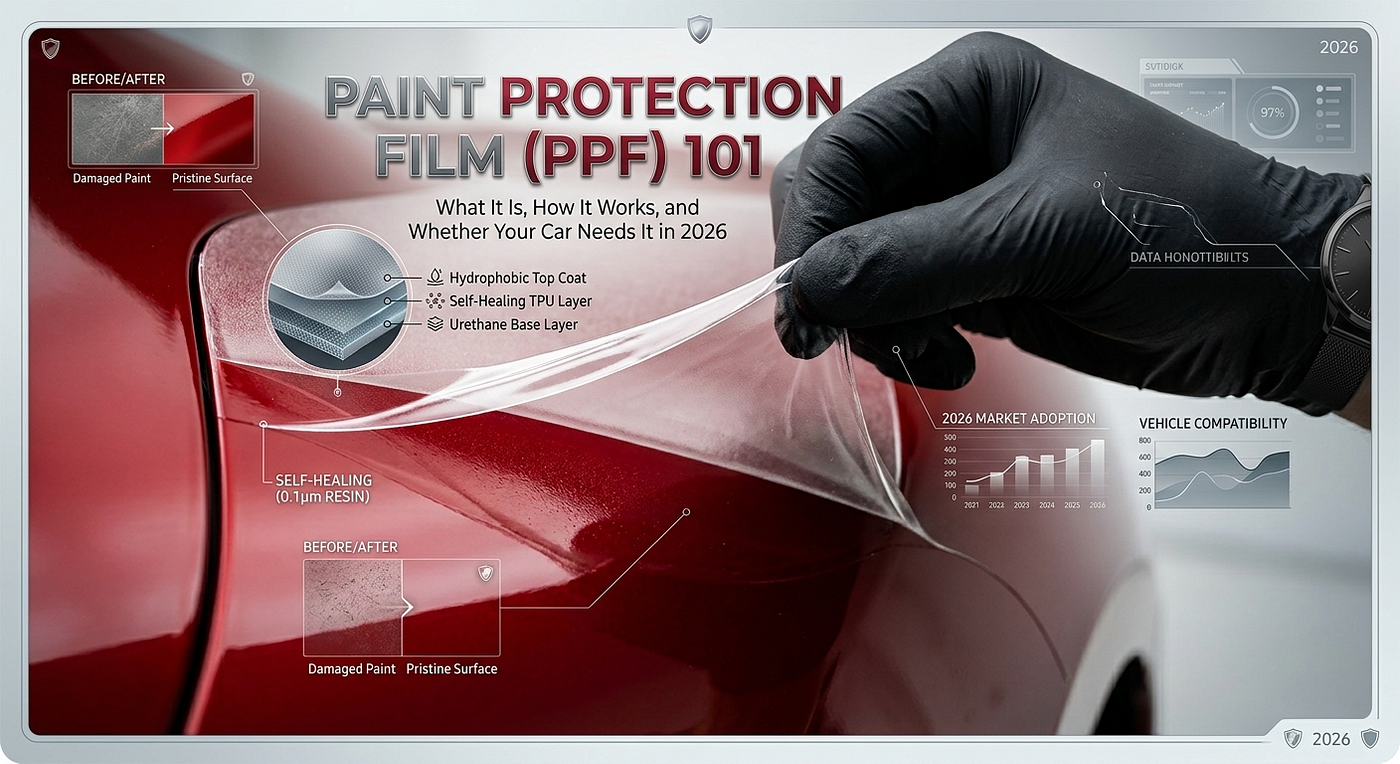
Modern professional-grade PPF is a multi-layer engineered product each layer performing a specific protective function:
The self-healing layer is the technology that separates modern PPF from all previous paint protection solutions. When the film surface is scratched by keys, fingernails, or light road contact the thermoplastic polymer chains in the self-healing layer return to their original position when exposed to heat. Sunlight exposure or a warm water rinse is typically enough to erase light scratches within minutes, keeping the surface looking new without any polishing, correction, or professional intervention.
What Are the Key Benefits of Paint Protection Film for Vehicle Owners?
Paint Protection Film delivers five categories of benefit that collectively protect both the vehicle’s appearance and its long-term financial value. Understanding each one helps vehicle owners make a confident, informed decision and helps professional installers communicate the value of PPF clearly at the point of sale.
Rock Chip and Impact Protection Road debris gravel, stones, construction material, and loose asphalt is the leading cause of paint damage on highway-driven vehicles. PPF absorbs these impacts at the film surface, preventing the paint chips, cratering, and bare metal exposure that lead to rust, repainting costs, and significant resale value loss. High-impact zones including the front bumper, hood, and leading fender edges take the most damage and benefit most from targeted PPF coverage.
Self-Healing Surface Minor scratches, swirl marks, and light surface abrasion from washing, parking lot contact, or everyday handling erase themselves from modern PPF’s self-healing layer when the film is exposed to heat. Sunlight exposure during normal driving typically resolves light scratches within 20–30 minutes. For deeper marks, a warm water rinse or brief heat gun pass accelerates the healing process. The paint beneath the film is never touched.
UV and Chemical Resistance PPF blocks the UV radiation that causes paint oxidation, color fading, and clear coat degradation over time. It also resists chemical damage from bird droppings, road salt, tree sap, insect acids, and fuel spills all of which can etch unprotected paint permanently if not removed immediately. With PPF, these contaminants sit on the film surface and wash off without marking the paint below.
Resale Value Preservation Vehicles with well-maintained paint in original condition command significantly higher resale and trade-in values than vehicles with chips, scratches, fading, or prior repaints. According to iSeeCars (2024), vehicles with documented paint protection and no paint correction history sell for 10–15% more on average compared to similar vehicles without protection. PPF is the most direct investment a vehicle owner can make in preserving that value across years of ownership.
Invisible Protection Professionally installed clear PPF is virtually invisible preserving the original factory finish, color depth, and appearance of the vehicle without adding any visible film layer, texture change, or color shift. The paint looks exactly as it did before installation, with the full protection of a physical barrier working underneath.
What Are the Most Common Areas to Install PPF and Which Coverage Level Is Right?
PPF can be applied to individual high-impact zones, partial coverage packages, or full vehicle coverage depending on the owner’s budget, use case, and protection goals. Professional installers typically offer tiered packages built around these coverage levels.
High-Impact Zone Coverage (Partial)
The most common entry-level PPF package focused on the panels that take the most road debris damage in normal driving conditions:
- Front bumper the highest-impact single panel on any vehicle; collects the most rock chips and debris
- Hood (partial or full) leading edge and full hood coverage options depending on highway exposure
- Side mirrors vulnerable to rock chips, car wash brushes, and parking lot contact
- Fender leading edges directly behind front wheels, high debris exposure
- Rocker panels ground-level panels exposed to road spray, gravel, and parking curbs
- Headlights protect against yellowing, pitting, and UV hazing
Full Vehicle Coverage
Full-body PPF coverage protects every painted surface on the vehicle doors, roof, trunk lid, rear bumper, pillars, and all partial panels in addition to all high-impact zones. This is the preferred option for:
- New luxury and performance vehicles where paint condition matters most
- Vehicles that will be kept long-term and resold at maximum value
- Owners who want complete peace of mind without thinking about which panels are protected
Which Coverage Level Is Right?
For daily drivers on mixed roads: front bumper + hood + mirrors covers 80% of the damage risk at a fraction of full vehicle cost. For highway commuters or performance vehicles: full front end coverage adds fenders, rocker panels, and headlights. For luxury, exotic, or long-term ownership vehicles: full vehicle coverage is the only option that guarantees complete protection.
What Is the Difference Between Clear Gloss and Matte PPF?
PPF is available in two primary finish options clear gloss and clear matte as well as color PPF in hundreds of finish and color combinations. The protection performance is identical across all finish types; the choice is purely aesthetic.
Clear Gloss PPF
Clear gloss PPF enhances the vehicle’s factory paint gloss adding depth and richness to the original color while providing full impact and UV protection. It is the most commonly installed PPF finish and is the right choice for any vehicle where preserving the factory paint appearance is the priority. United Auto Film Clear Gloss PPF comes with a 7–10 year warranty against yellowing, bubbling, and delamination.
Clear Matte PPF
Clear matte PPF delivers a satin, flat finish that changes the vehicle’s appearance from gloss to matte without paint modification. It is ideal for matte-painted vehicles where a standard gloss film would change the appearance, or for owners who want to convert a gloss-painted vehicle to a matte finish while simultaneously protecting the paint below. Matte PPF requires matte-specific maintenance products machine polishing is not compatible with matte finishes.
Color PPF
United Auto Film’s Color PPF line combines full paint protection performance with color change capability available in over 350 colors across 7 finishes including gloss, satin, matte, metallic, crystal, liquid metal, and carbon fiber. Color PPF protects the original factory paint while delivering a completely new exterior appearance with a 7.5-mil self-healing TPU construction and a 7-year warranty.
How Does PPF Compare to Ceramic Coating and Do You Need Both?
Paint Protection Film and ceramic coating are frequently compared and frequently confused. They are different products serving different protection purposes, and for maximum vehicle protection, the two are best used together rather than as alternatives.
The professional standard for maximum protection: apply PPF to high-impact areas (or full vehicle), then apply ceramic coating on top of the PPF. The PPF handles all physical impact protection. The ceramic coating on top adds hydrophobic properties, enhanced gloss, and easier maintenance keeping the PPF surface cleaner and the vehicle looking better between washes.
Why Does PPF Installation Quality Matter So Much?
PPF performance in the real world depends as much on installation quality as it does on film quality. A premium film installed incorrectly with visible seams, lifting edges, trapped contamination, or improper adhesive contact fails earlier and looks worse than a well-installed mid-tier film from day one.
What professional PPF installation delivers:
- Clean, invisible edges properly trimmed edges at panel lines and gaps that are not visible once the install is complete
- No trapped contamination professional surface prep eliminates the particles under the film that create bumps visible through the clear material
- Full adhesive contact correct installation technique ensures the film bonds evenly across the entire panel with no dry spots or air pockets
- Consistent stretch control PPF must be stretched to conform to curves without overstretching, which causes tension-driven edge lift over time
- Proper post-installation cure allowing the film to bond fully before the vehicle is exposed to rain, car washes, or heat extremes
United Auto Film PPF is engineered for predictable, installer-friendly handling controlled stretch characteristics, strong adhesive performance, and consistent roll-to-roll quality that gives professional installers the material reliability they need to deliver consistent results across every job.
Who Should Consider Paint Protection Film and When Is the Right Time to Install It?
PPF is the right investment for a wider range of vehicle owners than most people assume and the right time to install it is almost always sooner than owners think.
PPF is the right choice for:
- New vehicle owners who want to protect factory paint from the first mile
- Luxury and performance vehicle owners where paint condition directly affects resale value
- Highway commuters with significant daily rock chip exposure
- Enthusiasts keeping vehicles long-term and wanting preserved paint at resale
- Anyone who has paid for paint correction and wants to protect the corrected surface
When to install PPF: The best time to install PPF is before the first rock chip not after. Once paint has chips, scratches, or prior repairs, PPF will protect the remaining paint but cannot reverse existing damage. New vehicle owners who install PPF within the first 30–60 days of ownership protect paint that is in factory-perfect condition and maximize the return on the investment across the vehicle’s ownership lifecycle.
Frequently Asked Questions
What is Paint Protection Film and how is it different from a clear bra?
Paint Protection Film (PPF) is a modern multi-layer thermoplastic urethane (TPU) film that protects vehicle paint from rock chips, scratches, UV damage, and chemical contamination. “Clear bra” is an older term for the original generation of paint protection film typically a thicker, less optically clear product with no self-healing capability. Modern PPF like United Auto Film’s product line is significantly thinner, clearer, and more flexible, with self-healing technology that removes minor scratches using heat from sunlight or warm water.
Does PPF damage paint when it is removed?
No high-quality PPF installed on paint in good condition removes cleanly without damaging the underlying surface. The adhesive system in professional-grade PPF is designed to bond firmly enough for long-term protection while releasing cleanly when removed. PPF removal on paint with pre-existing damage flaking clear coat, prior repaints, or chips exposing bare metal carries more risk, which is why professional installers assess paint condition before installation and flag problem areas before beginning.
How long does Paint Protection Film last?
Professional-grade PPF typically lasts 7–10 years with proper care and maintenance. United Auto Film PPF carries a manufacturer warranty against yellowing, bubbling, and delamination for this period. Lifespan is affected by climate (high-UV regions see slightly shorter lifespans), maintenance habits (regular washing and matte-compatible products for matte finishes), and installation quality. PPF installed with proper surface prep and correct technique consistently reaches the upper end of its rated lifespan.
Can PPF be applied over existing paint chips or scratches?
PPF can be applied over minor paint imperfections, but it will not hide them the film conforms to the surface and any existing chips or scratches remain visible through the clear material. For vehicles with significant paint damage, professional installers typically recommend paint correction before PPF installation to ensure the film is applied to the best possible surface. PPF then protects the corrected paint going forward.
What is the difference between PPF and ceramic coating?
PPF is a physical film barrier that protects against rock chips, scratches, and impact damage ceramic coating cannot do this. Ceramic coating is a chemical surface treatment that enhances gloss, adds hydrophobic (water-repelling) properties, and makes the surface easier to clean PPF alone provides these benefits more modestly. The professional standard for maximum protection is applying PPF first for physical impact protection, then applying ceramic coating on top of the PPF for enhanced gloss and easier maintenance.
How much does Paint Protection Film installation cost?
PPF installation costs vary by coverage level, vehicle size, film type, and regional labor rates. Partial front-end packages (bumper, partial hood, mirrors) typically range from $500–$1,500 professionally installed. Full vehicle coverage on passenger sedans ranges from $3,000–$6,000+, with luxury and exotic vehicles at the higher end. Color PPF full vehicle coverage adds to the cost based on film selection. United Auto Film PPF is available direct to professional installers at wholesale pricing apply to become a dealer for current trade pricing.
Conclusion
Paint Protection Film is the most effective physical protection available for a vehicle’s paint and with modern self-healing TPU technology, professional-grade clarity, and 7–10 year warranties, it has become the standard upgrade for any vehicle owner serious about preserving their paint. Whether you are protecting a new vehicle from its first miles, preserving a luxury car’s resale value, or shielding a daily driver from highway debris, professionally installed PPF delivers protection that is invisible in appearance and undeniable in long-term impact.
United Auto Film supplies Clear Gloss PPF, Clear Matte PPF, NAR PPF, and a full Color PPF line in over 350 colors with same-day shipping on orders placed before 2pm ET and wholesale pricing for professional installers across the United States.
Explore United Auto Film PPF · Find a Professional Installer Near You · Become a Dealer
메타데이터
- post_id
- 7cfeb442dce2
- slug
- paint-protection-film-ppf-101-what-it-is-how-it-works-and-whether-your-car-needs-it-in-2026-7cfeb442dce2
- url
- https://medium.com/@unitedautofilm07/paint-protection-film-ppf-101-what-it-is-how-it-works-and-whether-your-car-needs-it-in-2026-7cfeb442dce2
- canonical_url
- https://medium.com/@unitedautofilm07/paint-protection-film-ppf-101-what-it-is-how-it-works-and-whether-your-car-needs-it-in-2026-7cfeb442dce2
- author_url
- https://medium.com/@unitedautofilm07
- status
- ok
- fetched_at
- 2026-08-08 10:30:53



