Himeji Castle
A Himeji stop and my plastic overuse reflections
Himeji Castle
A Himeji stop and my plastic overuse reflections

Another trip on the Shinkansen took us toward Osaka, but we decided to make a long stop in Himeji to visit its famed, fairy-tale-like castle. Known as the White Heron Castle for its graceful, white facade, it looks as though it could float right off the pages of a storybook.


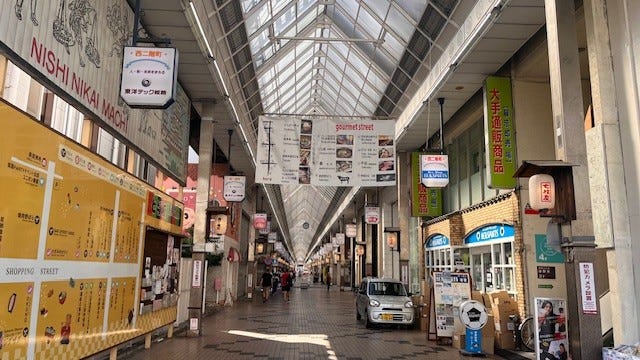
City of Himeji
When we arrived at Himeji Station, we expected a quiet town centered around its iconic castle. Imagine our surprise when we found ourselves in a bustling city! Then again, with so many people living in Japan, they have to settle somewhere. We left our luggage in a station locker and began the walk to the castle, which took about 15 minutes to reach the hilltop where it stands. Though slightly smaller than I’d imagined, the castle’s architectural elegance was as impressive as expected.


The castle and inside the bailey
We strolled around the grounds and picked up a ticket — opting for the combo that included entry to both the castle and the garden. Our first path took us along a long, narrow bailey, part of the outer fortifications. These narrow structures were where Japanese guards once kept watch, scanning the surroundings for any signs of danger. As we entered the bailey, we had to remove our shoes and carry them to the other side, as required. Each visitor received a brand-new, crisp white plastic bag for this purpose. Once through, we were asked to place the bags in a container for reuse, which led to a curious thought: if they’re reusing the bags, why hand out new ones each time? Why not use them again for the same purpose?
This raised an interesting question: are the Japanese truly committed to recycling, or is this more for show?


Plastic, plastic everywhere!
For example — next to vending machines there are usualy narrow receptacles for plastic bottles — yet none for any other material, even though the vending machines also sell cans. Why this singular focus on plastic bottles?


ever-present plastic

Beyond that, the sheer amount of plastic in everyday life here is overwhelming. “Overuse” feels like an understatement. In Japan, hygiene is highly valued, so even a pot of noodles comes with an extra layer of cling film for added protection. When I bought a face cream, it had two lids: an outer one, and an inner lid beneath it — presumably, again, for hygiene.
Plastic usage is apparent everywhere, especially in shops. Vending machines are packed with large plastic balls containing small plastic toys, and at every convenience store, you’re handed small plastic forks.
There are plastic gloves for handling items, plastic shoe covers in museums to protect the floors, and, astonishingly, even bananas and other fruits are often individually wrapped in plastic. Yet despite all this plastic, the only readily available recycling option is for plastic bottles. It’s hard not to question the recycling awareness here.


These are all plastic models of served food and drink!
Oh, I forgot to mention another way so much plastic found its way to the restaurant industry! There is this fascinating custom found only in Japan: the display of restaurant offerings in the form of plastic models. In front of many restaurants, you’ll see entire cabinets filled with these lifelike food models, along with drinks in glasses! At first, I found it really interesting and took many photographs, but then I realized that they are everywhere. There are also shops where you can buy these food models, as well as a whole industry dedicated to creating these plastic curiosities. It’s hilarious!


The store full of plastic menu items :)
Adding to the waste puzzle, there are surprisingly few public rubbish bins on the streets, yet everything remains remarkably clean. People generally take their rubbish home, which we found ourselves doing as well. But when we bought an ice cream from a vending machine — wrapped in plastic, with a plastic stick and additional plastic accessories— and couldn’t find a bin, it became tricky. I hadn’t brought a plastic bag to carry the messy wrapping back, so, as the public toilest can be encountered mostly everywhere, I improvised and used a small bin in a nearby public restroom. While not ideal, as those bins are supposed to be used only for toilet needs, desperate times call for desperate measures.
Alright, that’s enough plastic talk. Back to the castle!


View from the castle
After passing through the bailey, we slipped our shoes back on at the other end, dropped our pristine plastic bags into a container for questionable “reuse,” and headed to explore the castle interior. The main building has six floors, with each level getting progressively smaller as you ascend. The rooms are mostly unfurnished, and as you climb higher, the stairs become steeper and narrower. The top floor holds a small shrine and offers sweeping views in all directions. From there, you can look down over the castle’s tiled rooftops, its intricate maze of defenses, and out across the expanse of Himeji. Up close, you can admire the fish-shaped roof ornaments, thought to guard the structure from fire.


Beautiful Kokoen gardens
After exploring the castle, we made our way to the gardens. These are divided into nine distinct, walled sections, each designed in a different style of the Edo Period. The main garden features a pond with a small waterfall and is home to a large school of koi fish. We were lucky to catch a keeper feeding them — a spectacle as the koi leapt energetically, then followed him along the pond’s edge, hoping for more.
There’s also a tea garden, a pine tree garden, a bamboo grove, and a flower garden, all beautifully maintained. An army of caretakers moves about, each person diligently tending to their tasks, clearly proud of their work — and rightly so. The gardens were a masterpiece.


Portable shrine in Himeji station
Afterward, we headed back to Himeji Station. Our first hurdle was actually getting inside, as we’d left our Shinkansen tickets in the station lockers with our luggage. To retrieve them, we were issued temporary paper tickets, which we then had to show again at the Shinkansen gates, resulting in yet another set of tickets. So by the end, between our QR codes and the extra tickets, we had three additional paper passes — for reasons known only to the polite yet meticulous railway staff. It’s funny to think that you can use the same IC card to travel almost anywhere in Japan, but the Shinkansen system remains somewhat more intricate.
While waiting for our train, we had a chance to admire a large, portable shrine displayed in the waiting area. It’s part of Himeji’s famous Autumn Festival and is carried through the streets during the celebration. This impressive shrine can hold several young drummers and requires 70 to 100 people to transport it. The decoration is stunningly intricate — far more ornate than the portable shrines we’d seen in Tokyo.
Himeji Station is also known for the thrill of watching the Shinkansen bullet trains fly by at nearly 300 km per hour. Sitting in a café beneath the tracks, we could actually feel the rumble of the trains above us as we waited for ours to Osaka.
Tomorrow — an exciting day awaits in vibrant Osaka!


More pics from beautiful Kokoen gardens
메타데이터
- post_id
- 7d0b84de53ca
- slug
- himeji-castle-7d0b84de53ca
- url
- https://medium.com/@dorotacrates/himeji-castle-7d0b84de53ca
- canonical_url
- https://medium.com/@dorotacrates/himeji-castle-7d0b84de53ca
- author_url
- https://medium.com/@dorotacrates
- status
- ok
- fetched_at
- 2026-07-22 07:36:36