Clean water and Sanitation- SDG 6
Clean water and Sanitation- SDG 6
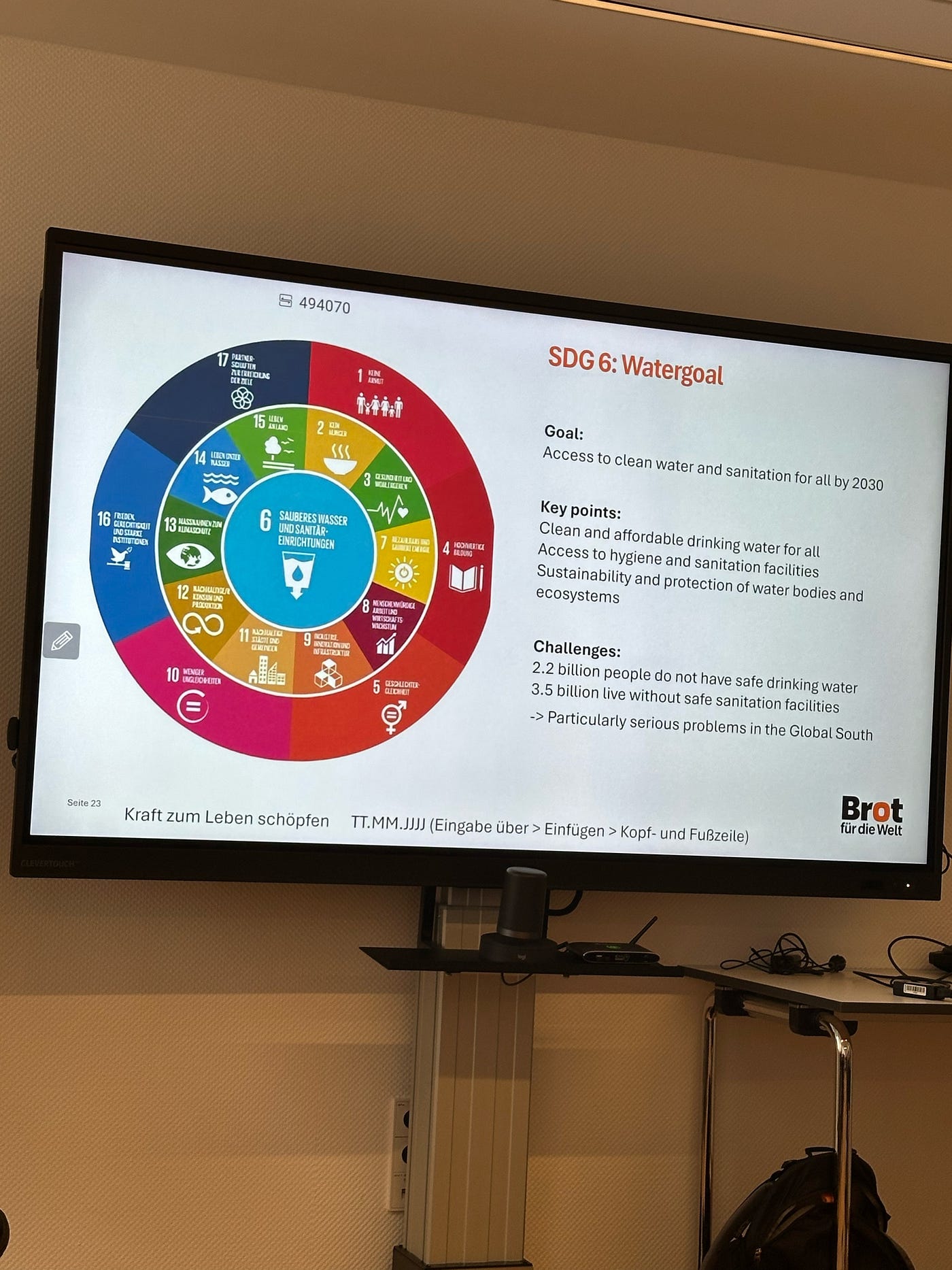
I recently attended a three-day training session in Nuremberg, Bavaria, focused on Sustainable Development Goal 6 (SDG 6): ensuring the right to clean water and sanitation for all.


Here are three incredibly fascinating facts I learned:
- The “Waste” Business of 800 Years Ago
Eight centuries ago, Nuremberg – though one of Germany’s wealthiest and most developed cities – had no modern plumbing or sewage systems. People would relieve themselves in buckets at home and simply toss the contents out the window. This gave rise to a specific business: collectors who gathered human waste to dump it into the river. Because waste was discarded directly into the water supply, diseases like typhoid, cholera, and dysentery were rampant. Consequently, the average life expectancy for Germans at the time didn’t even reach 50 years.
-
- Beer as “Liquid Bread” and the Mystery of Height
Until relatively recently, people didn’t know that water boils at 100°C, nor did they understand that boiling water makes it safe to drink; the concept of bacteria simply didn’t exist. However, Germans noticed a pattern: those who drank beer lived longer, while those who drank raw water fell ill and died quickly.
As a result, the population drank beer day and night. Even children as young as four began drinking it. This was safer because the brewing process requires boiling the water, effectively purifying it. Back then, beer wasn’t as strong as it is today – containing only about 1 – 3% alcohol – and it became known as “liquid bread.” Interestingly, because they consumed alcohol from such a young age, Germans were much shorter in the past. Today, their average height is around 180 cm, but in the 18th century, the average was only about 165 cm.
-
- Beethoven and the Price of Lead
When the legendary German composer Ludwig van Beethoven passed away at just 56, friends and fans kept locks of his hair as mementos. Modern analysis of these hair samples revealed that he died of lead poisoning. During that era, lead was commonly used in pipes for transporting and storing water.
Today, Germany enjoys a massive privilege: Water is a right. Across the country, tap water is safe, clean, and guaranteed. This embodies the essence of SDG 6 – equal access to water for everyone.
In the past, people couldn’t imagine a world where clean water flowed directly from a wall. Today, our goal is to ensure that in Mongolia and everywhere else, people can drink clean water straight from the tap. Water should not be a mere commodity of capitalism; it must be clean, accessible to all, and recognized as a fundamental human right.
A.Kh.
메타데이터
- post_id
- 7d15cee23e90
- slug
- clean-water-and-sanitation-sdg-6-7d15cee23e90
- url
- https://medium.com/@khishigtugsa/clean-water-and-sanitation-sdg-6-7d15cee23e90
- canonical_url
- https://medium.com/@khishigtugsa/clean-water-and-sanitation-sdg-6-7d15cee23e90
- author_url
- https://medium.com/@khishigtugsa
- status
- ok
- fetched_at
- 2026-06-21 15:33:18