Top AI Marketing Strategies and Frameworks That Will Drive Business Growth in 2030
As businesses navigate an AI-first, privacy-focused, and customer-centric digital economy, marketing is evolving from campaign execution to…
Top AI Marketing Strategies and Frameworks That Will Drive Business Growth in 2030
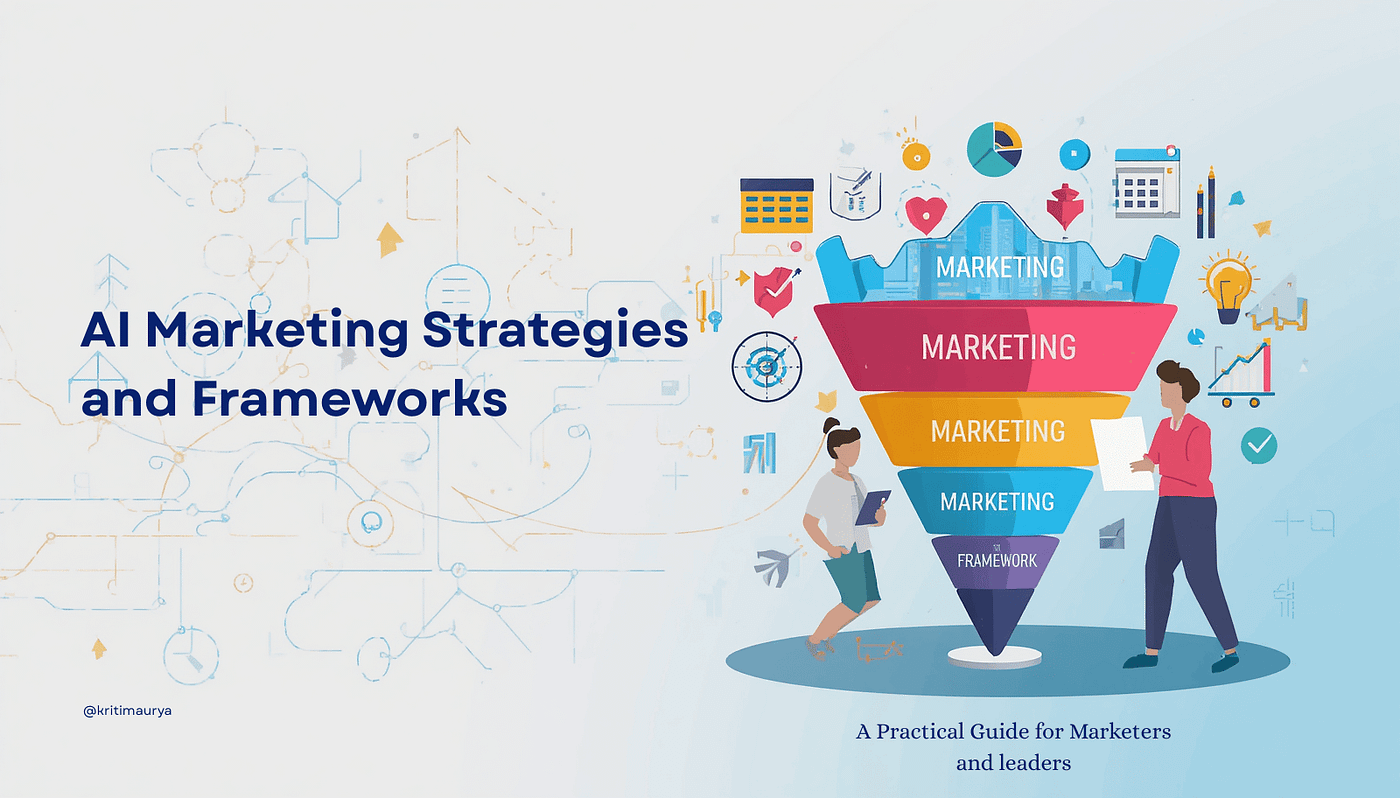
AI Marketing Strategies and Framework
As businesses navigate an AI-first, privacy-focused, and customer-centric digital economy, marketing is evolving from campaign execution to strategic business growth. This guide explores the marketing strategies, frameworks, and planning models that will help businesses build sustainable growth through 2030.
If you’re finding it harder to attract customers, improve ROI, or keep up with AI-driven marketing trends, you’re not alone. Many businesses struggle to choose the right channels, create scalable strategies, and measure what truly drives growth. AI, automation, and changing consumer expectations are driving businesses to adopt data-driven, customer-centric business growth strategies focused on personalization, growth, and measurable results.
According to HubSpot research, 61% of marketers expect AI to revolutionize marketing workflows and professional roles by 2030. At the same time, search behavior is evolving as users increasingly rely on AI assistants and conversational search, making it essential for businesses to optimize content marketing strategy framework not only for traditional search engines but also for answer engines and generative AI platforms.
Whether you are a marketing professional, startup founder, or business owner, this marketing strategy guide will help you understand the principles, frameworks, and best practices required to create sustainable business growth in the years ahead.
How Is AI Transforming Marketing Strategy?
An AI marketing strategy is a structured approach to integrating artificial intelligence into marketing processes to improve decision-making, automate repetitive tasks, personalize customer experiences, and drive measurable business growth.
Unlike traditional marketing strategies that often rely on historical data and manual execution, an AI marketing strategy leverages technologies such as machine learning, predictive analytics, natural language processing (NLP), and generative AI to make strategic marketing planning more efficient and data-driven.
For example, an e-commerce brand can use AI to analyze browsing behavior, recommend relevant products, personalize email campaigns, and optimize advertising budgets based on customer purchase intent. Similarly, a SaaS company can leverage AI to score leads, automate onboarding, predict customer churn, and improve retention through personalized engagement.
Marketing Strategy vs. Marketing Plan
Many businesses confuse a marketing strategy with a marketing plan, but they serve different purposes.
A marketing strategy defines the long-term vision, competitive advantage, **Mergers and Acquisition**, target audience, and overall direction.
A marketing plan outlines the tactical execution, including campaign timelines, budgets, responsibilities, and promotional activities.
Think of the strategy as the blueprint and the marketing plan as the construction schedule.
Why Every Business Needs a Marketing Strategy in AI Era?
Businesses need AI to scale while reducing their cost, and without a documented strategy and often relying on assumptions rather than evidence would be difficult. This leads to inconsistent messaging, ineffective campaigns, wasted budgets, and poor customer experiences.
An effective AI marketing strategy combines strategic decision-making with AI-powered capabilities to answer key business questions:
- Who are our ideal customers? Use AI-powered market research, predictive customer segmentation, and buyer persona development to identify high-value audiences.
- What problems are we solving? Analyze customer feedback, search trends, and behavioral data using AI to uncover pain points and unmet needs.
- How do we differentiate ourselves? Leverage competitor analysis, AI-driven market insights, and personalized content strategies to build a strong market position.
- Which marketing channels deliver the highest ROI? Optimize SEO, Google Ads, Meta Ads, email marketing, and content performance using AI-driven analytics and campaign automation.
- How will success be measured? Monitor campaign performance with real-time analytics, predictive insights, KPI dashboards, and continuous optimization to improve business outcomes.
More importantly, today’s buyers expect personalized experiences throughout their journey. Businesses that invest in customer persona development, buyer persona research, and customer journey mapping are better equipped to deliver relevant messaging at every stage of the decision-making process.
How to Choose the Right Marketing Channels for your business?
One of the biggest mistakes businesses make is trying to be present on every platform. A scalable digital marketing strategy focuses on selecting channels based on customer behavior, business objectives, and expected return on investment.
Before choosing channels, marketers should conduct:
- Comprehensive market research
- Competitor analysis
- SWOT analysis
- Audience behavior analysis
- Customer journey evaluation
These insights help identify where potential customers spend their time and how they prefer to engage with brands.
Organic Marketing Channels
Organic channels create long-term, compounding growth.
A strong SEO strategy helps businesses increase visibility for high-intent searches, while a well-defined content marketing strategy builds authority through educational resources, case studies, and thought leadership.
Similarly, a consistent social media strategy strengthens brand awareness and community engagement, whereas an effective email marketing strategy nurtures leads and improves customer retention through personalized communication.
Paid Marketing Channels
Paid media accelerates growth when aligned with business objectives.
An optimized Google Ads strategy captures existing demand by targeting users actively searching for solutions, while a Meta Ads strategy creates demand through audience targeting, storytelling, and creative testing.
An effective AI-powered Marketing Mix combines SEO and content marketing, Google Ads, Meta Ads, email marketing, social media, and AI chatbots to reach customers across every stage of their journey. Together, these channels improve brand visibility, customer acquisition, engagement, retention, and long-term business growth while maximizing marketing ROI.
Together, these channels form the foundation of a modern performance marketing ecosystem that supports scalable customer acquisition and measurable revenue growth.
The key is not choosing one channel over another but creating an integrated marketing mix where each channel supports different stages of the customer journey.
Building a Full-Funnel Marketing Strategy with AI
A successful growth marketing strategy doesn’t end with acquiring customers, it guides them through every stage of the buying journey, from awareness to advocacy. Businesses that optimize the entire funnel are more likely to achieve sustainable growth than those focused solely on generating leads.
Top of the Funnel (TOFU): Build Awareness
The awareness stage introduces your brand to potential customers who may not yet recognize their problem or know your solution exists.
Effective TOFU strategies include:
- SEO-optimized educational content
- Industry reports and research
- Social media campaigns
- Thought leadership articles
- Video marketing and webinars
- Organic search optimization
The objective is to establish trust and attract qualified traffic rather than drive immediate sales.
Middle of the Funnel (MOFU): Educate and Nurture
Once prospects are aware of your business, the focus shifts to building credibility and helping them evaluate their options.
High-performing MOFU activities include:
- Email nurturing campaigns
- Case studies
- Product comparison guides
- Lead magnets
- Retargeting campaigns
- Educational webinars
At this stage, lead generation should be supported by personalized communication based on customer behavior and interests.
Bottom of the Funnel (BOFU): Drive Conversions
Prospects at the decision stage need reassurance before purchasing.
Businesses should focus on:
- Free trials or demos
- Customer testimonials
- ROI calculators
- Pricing transparency
- Optimized landing pages
- Strong calls-to-action
Improving conversion rate optimization (CRO) can significantly increase revenue without increasing advertising spend. Even small improvements in landing page performance can produce meaningful business results.
Beyond Conversion: Retention and Advocacy
Customer acquisition is only the beginning. Long-term growth depends on maximizing customer lifetime value through retention.
Effective retention strategies include:
- Personalized onboarding
- Loyalty programs
- Product education
- Regular email engagement
- Customer feedback loops
- Referral incentives
Satisfied customers often become advocates who generate referrals, reviews, and user-generated content creating a sustainable growth cycle that lowers acquisition costs over time.
Proven AI Marketing Frameworks Every Strategist Should Know
Successful businesses are no longer relying solely on traditional frameworks. Instead, they are combining proven strategic models with AI-powered decision-making, predictive analytics, and customer intelligence to create scalable marketing systems.
HubSpot’s latest marketing report states, 52% of marketers use generative AI for content creation, 50.7% leverage AI to optimize email marketing campaigns, and 68% report a positive return on investment (ROI) from AI-powered blog and long-form content strategies. These findings highlight AI’s growing role in improving marketing efficiency, personalization, and content performance.
The most effective marketing frameworks for 2030 will help businesses make faster decisions, improve customer experiences, and optimize marketing investments while keeping human creativity at the center of strategy.
1. SWOT Analysis: Building Strategies Around Business Reality
SWOT (Strengths, Weaknesses, Opportunities, and Threats) remains one of the most valuable strategic planning tools because it evaluates both internal capabilities and external market conditions.
Today, AI enhances SWOT analysis by identifying market trends, competitor movements, and customer sentiment from large datasets, allowing businesses to make more informed strategic decisions.
Best used for:
- Market expansion
- Product launches
- Competitive positioning
- Annual strategic planning
Pro Tip: List your three biggest strengths, three weaknesses, three market opportunities, and three competitive threats. Use AI tools to analyze customer reviews and competitor messaging to validate your findings before making strategic decisions.
2. STP Framework (Segmentation, Targeting, and Positioning)
A successful marketing strategy begins with understanding who your ideal customers along with **creating effective marketing campaign** are and how your business should be positioned in their minds.
The STP framework enables marketers to:
- Segment customers based on demographics, behavior, interests, or purchase intent.
- Prioritize high-value customer segments.
- Develop differentiated market positioning that resonates with each audience.
AI-powered customer segmentation now allows marketers to identify micro-audiences based on behavioral patterns, making personalization significantly more effective than traditional demographic targeting.
3. Customer Journey Mapping
Modern marketing is built around customer experience rather than isolated campaigns. Customer journey mapping helps businesses understand every customer interaction, while AI-powered analytics identify drop-off points and optimize experiences to improve engagement, conversions, and long-term customer retention.
For Example: Imagine an online clothing retailer notices that many shoppers abandon their carts. Instead of increasing ad spend, AI identifies friction in the checkout process and recommends personalized follow-up emails with product reminders. This simple improvement can increase conversions without acquiring additional traffic.
A comprehensive customer journey typically includes:
Customer Stage: Awareness
Marketing Objective: Generate demand and educate prospects
Customer Stage: Consideration
Marketing Objective: Build trust and nurture interest
Customer Stage: Decision
Marketing Objective: Encourage conversion
Customer Stage: Purchase
Marketing Objective: Deliver a seamless buying experience
Customer Stage: Onboarding
Marketing Objective: Help customers achieve early success
Customer Stage: Retention
Marketing Objective: Increase customer lifetime value
Customer Stage: Advocacy
Marketing Objective: Turn satisfied customers into brand advocates
4. Marketing Strategy Framework
Every scalable marketing strategy framework should provide a repeatable process that aligns marketing efforts with business objectives.
A comprehensive framework should include:
- Business objectives
- Market research
- Competitor analysis
- Customer persona development
- SWOT analysis
- Value proposition
- Positioning strategy
- Marketing channel selection
- Content marketing strategy
- Budget allocation
- Marketing roadmap
- KPI measurement
- Continuous optimization
Rather than treating these elements as one-time activities, successful organizations continuously refine their strategy using customer feedback, analytics, and AI-powered insights.
5. RACE Framework
The RACE Framework (Reach, Act, Convert, Engage) provides a practical approach to managing the entire customer lifecycle.
- Reach: Increase brand visibility through SEO, paid advertising, and social media.
- Act: Encourage meaningful engagement with content, landing pages, and lead magnets.
- Convert: Optimize the buying journey using conversion-focused campaigns.
- Engage: Build long-term relationships through email marketing, loyalty programs, and personalized experiences.
This framework is particularly effective for businesses focused on digital transformation because it integrates acquisition, conversion, and customer retention into a single strategy.
6. AARRR Framework (Pirate Metrics)
Popular among SaaS companies and startups, the AARRR Framework helps marketers measure growth across the customer lifecycle.
It focuses on:
- Acquisition
- Activation
- Retention
- Revenue
- Referral
By tracking each stage independently, businesses can identify growth bottlenecks and prioritize optimization efforts that deliver the highest return. Without understanding where customers drop off in their journey, businesses often invest more in advertising instead of fixing the experience that’s preventing conversions.
Marketing KPIs Every Business Should Measure
A marketing strategy is only as effective as its ability to produce measurable business outcomes. Tracking the right key performance indicators (KPIs) helps marketers evaluate campaign performance, optimize budgets, and align marketing with business goals.
Customer Acquisition Metrics
Measure how effectively your marketing attracts new customers.
- Website Traffic
- Organic Search Traffic
- Click-Through Rate (CTR)
- Cost per Click (CPC)
- Cost per Lead (CPL)
- Customer Acquisition Cost (CAC)
- Lead-to-Customer Conversion Rate
Engagement Metrics
Understand how audiences interact with your content and brand.
- Average Engagement Rate
- Time on Page
- Scroll Depth
- Email Open Rate
- Email Click Rate
- Social Media Engagement
- Returning Visitors
Conversion Metrics
Evaluate how efficiently marketing activities generate revenue.
- Conversion Rate
- Cost per Acquisition (CPA)
- Return on Ad Spend (ROAS)
- Marketing Qualified Leads (MQLs)
- Sales Qualified Leads (SQLs)
- Revenue per Visitor
Retention and Growth Metrics
Long-term business success depends on retaining and expanding customer relationships.
- Customer Lifetime Value (LTV)
- Customer Retention Rate
- Churn Rate
- Repeat Purchase Rate
- Net Revenue Retention (NRR)
- Customer Satisfaction (CSAT)
- Net Promoter Score (NPS)
Common Mistakes while implementing Marketing Strategy
Even experienced marketers can undermine business growth by overlooking strategic fundamentals.
Prioritizing Tactics Over Strategy
Launching campaigns without clearly defined objectives often results in fragmented efforts and inconsistent outcomes.
Skipping Market Research
Ignoring market research or competitor analysis increases the risk of poor positioning and ineffective messaging.
Poor Audience Definition
A broad target audience leads to generic messaging. Investing time in developing detailed buyer personas and customer personas improves personalization and campaign effectiveness.
Ignoring Retention
Many businesses spend heavily on customer acquisition while neglecting retention. Improving retention rates can have a significant impact on long-term profitability.
Measuring Vanity Metrics
High impressions or follower counts do not always translate into business growth. Strategic marketers focus on revenue, profitability, customer lifetime value, and retention rather than metrics that look impressive but provide limited business value.
The Future of Marketing in the Era of AI
The growing adoption of AI-powered insights is accelerating business transformation across industries. MarketsandMarkets projects that the global AI analytics market will expand from USD 13.5 billion in 2023 to USD 38.8 billion by 2028, reflecting a strong 23.3% CAGR.
Forward-thinking businesses will use AI to automate market research, predict customer behavior, personalize content, optimize advertising, and forecast campaign performance. However, the most successful organizations will continue to rely on strategic thinking, ethical data practices, and human creativity to guide these technologies.
The marketers who thrive in 2030 will not be those who use the most AI tools, they will be those who combine proven marketing frameworks with data-driven insights to build adaptable, customer-centric growth strategies.
Industry research from a **PwC** 2026 survey done on 1,217 senior executives found that Organizations with strong AI performance are 2.6 times more likely to use AI to reinvent their business models. They are also two to three times more likely to leverage AI to identify new growth opportunities through industry convergence and cross-sector collaborations.
Marketing success in 2030 won’t depend on who adopts the most AI tools it will depend on who uses them strategically. Start by understanding your customers, document your marketing framework, measure meaningful KPIs, and continuously refine your approach. Businesses that combine AI with strategic thinking and customer-focused execution will be better equipped to adapt, compete, and grow in an increasingly digital marketplace.
메타데이터
- post_id
- 7d2f4b74cd07
- slug
- top-ai-marketing-strategies-and-frameworks-that-will-drive-business-growth-in-2030-7d2f4b74cd07
- url
- https://medium.com/@kritimaurya2910/top-ai-marketing-strategies-and-frameworks-that-will-drive-business-growth-in-2030-7d2f4b74cd07
- canonical_url
- https://medium.com/@kritimaurya2910/top-ai-marketing-strategies-and-frameworks-that-will-drive-business-growth-in-2030-7d2f4b74cd07
- author_url
- https://medium.com/@kritimaurya2910
- status
- ok
- fetched_at
- 2026-07-19 03:27:03