Opening lines
So? How should we begin?
Opening lines
So? How should we begin?
I’m unashamedly fascinated by words — always have been. But not individual words — rather what they do to each other, when placed in proximity.
In writing for games, I’m particularly interested in the opening lines of a game. The first presentation. I iterate on these incessantly during development until I find one that feels right: something singular that contains within it the drive of the whole game.
Here are some examples of what I mean.
**80 Days**: “I have entered into the service of a new gentleman. It would seem he is a gambling man.”
Pendragon: “A.D 643. Camelot has fallen.”
Overboard: “We stood together at the rail, Malcolm and I.”
Expelled: “I am only asking, Verity, for the truth…”
Heaven’s Vault: “Stories don’t have tidy beginnings. The past is always present.”
A Highland Song: “There’s a song, Moira, tha’ the sea whispers to the land… A song for pilgrims and babbies, goin’ tae sleep.”
I can pick apart each one to talk about why it works in some detail. The “rail” in the Overboard, for instance, serves both as a marriage altar and the precipice of change that will end that marriage. Miss Mulligatawney’s request for simple truth belies the whole premise of Expelled’s convoluted network of lies and appearances, in which Mullligatawney is thoroughly enmeshed herself. The finality of Pendragon’s opening sets it up, from the off, as something in the past that has already failed: a doomed death-march.
These are the best of them. A Highland Song’s words aren’t so polished; they’re really there to frame the poem, called The Pilgrim’s Aiding, which forms the true heart of the game, which was found on page 195 of the *Carmina Gadelica*, a collection of lore and poems collected in the Highlands and islands between 1860 and 1909 by Alexander Carmichael.

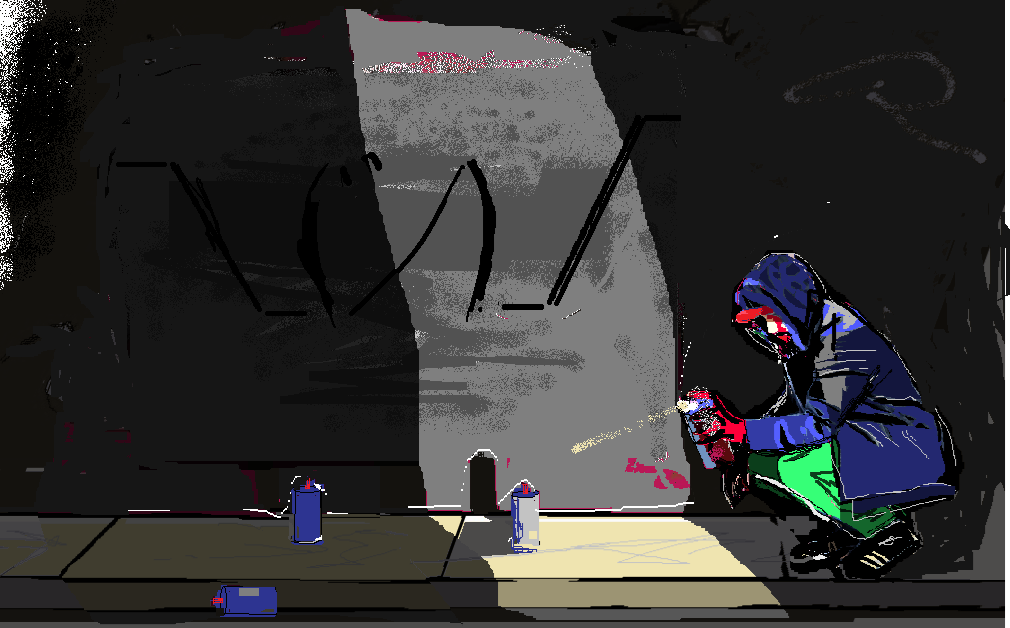
The Pilgrim’s Aiding
But all the same: the land is for babbies and the sea is for pilgrims, and Moira’s journey will take her, finally and fully, from one state to the other.
(And Heaven’s Vault’s opening is—in a game about language, and buried meaning —of all things, a pun in plain sight!)
Inspirations
This kind of opening — both spacious and spare — is a fairly striking form. It doesn’t go back to novelistic writing: novels usually have quite wordy openings to establish the narrator’s voice; Austen’s classic “It is a truth universally acknowledged, that a single man in possession of a good fortune, must be in want of a wife” is a furiously good example. (The opening we used for 80 Days is, to be fair, somewhat in this style: it’s longer and wordier than most of ours, with deliberate self-referential understatement.)
I think for the pacing of a game opening, my touchstone is radio drama. When I was young, I had a cassette tape of Douglas Adams’ The Hitch-hiker’s Guide to the Galaxy, which contains some of the best phrased spoken dialogue ever committed: less profound than Shakespeare, okay, yes, but fantasically well-turned.
Here’s the opening speech of the second series.
There is a theory which states that if ever anyone discovers exactly what the Universe is for and why it is here, it will instantly disappear and be replaced by something even more bizarre and inexplicable.
There is another theory which states that this has already happened.
This reads novelistically (I’m sure Adams uses it verbatim in the book version) but it’s the delivery in the show that changes everything. The first line is broken after the first few words, to make it an emphatic statement of universal truth.
There is a theory.
… Not a God; only a theory. Which encapsulates Hitch-hiker’s philosophical underpinning perfectly.
TR-49
For our most recent game, TR-49, radio drama was a pillar. The goal was to mix narrative deduction — the “database thriller” genre of looking stuff up in order to understand a story by looking more stuff up — with the storytelling of full-cast podcast audio plays. There are people here, right now, talking in your ear, and they matter. The game opens somewhat cautiously, with a quote, and a few lines to introduce the two main characters, but its first key line — the one that serves the function of the lines quoted above — is the same line that Star St.Germain chose to open the trailer she cut for us with.
[embed]
Tell me what you can see.
In true radio writing, this is a line you’re pretty much forbidden to write. Characters have to tell the audience what they’re looking at, but the whole game is to do it subtly, not to draw attention to it. We say, instead, “Where do I even begin with this machine? It’s all knobs and levers and switches. It looks like it was made by a maniac…” Or to quote another line from the Hitch-hiker’s Guide: “Ford! You’re turning into a penguin! Stop it!”
But here, I think, it works. Why? Partly because we can see, of course. But it tells us that one of the characters, the man speaking, can’t. It’s also an order, and that tells us about the relationship between him and us. (While the words leave plenty of space for the actor to tell us so much more with his tone: does he expect to be obeyed? What does he expect the answer to be?)
But it’s also the setting out the stall of the whole game. What can you see? To see isn’t just to receive visual information through our two shiny face-holes. It’s to perceive. To understand. What can you see? What can you see?
What Sherlock Holmes sees at a crime scene, we do not see. What Hercule Poirot sees in someone’s manner, we miss. At a seancé, the medium is there to see through the veil.
We are each of us within our own relativistic light-cones, forever separated, sharing our experiences as best as we can through inadequate communication. Reaching out, and hoping to be understood.
It invites us into that gap — the physical gap between our character, and our interlocutor —the gap between our perception and the underlying truth. The gap between two things — people, ideas, words, images — that creates a larger meaning. (Something I think Joe Humfrey, inkle’s co-founder, captured beautifully and simply in the game’s key art.)

TR-49’s key art: two characters, separated by a codeword
It asks: what can you see, that I can’t?
— Jon Ingold
메타데이터
- post_id
- 7d4b1a53d03e
- slug
- opening-lines-7d4b1a53d03e
- url
- https://medium.com/@inklestudios/opening-lines-7d4b1a53d03e
- canonical_url
- https://medium.com/@inklestudios/opening-lines-7d4b1a53d03e
- author_url
- https://medium.com/@inklestudios
- status
- ok
- fetched_at
- 2026-08-01 04:39:42