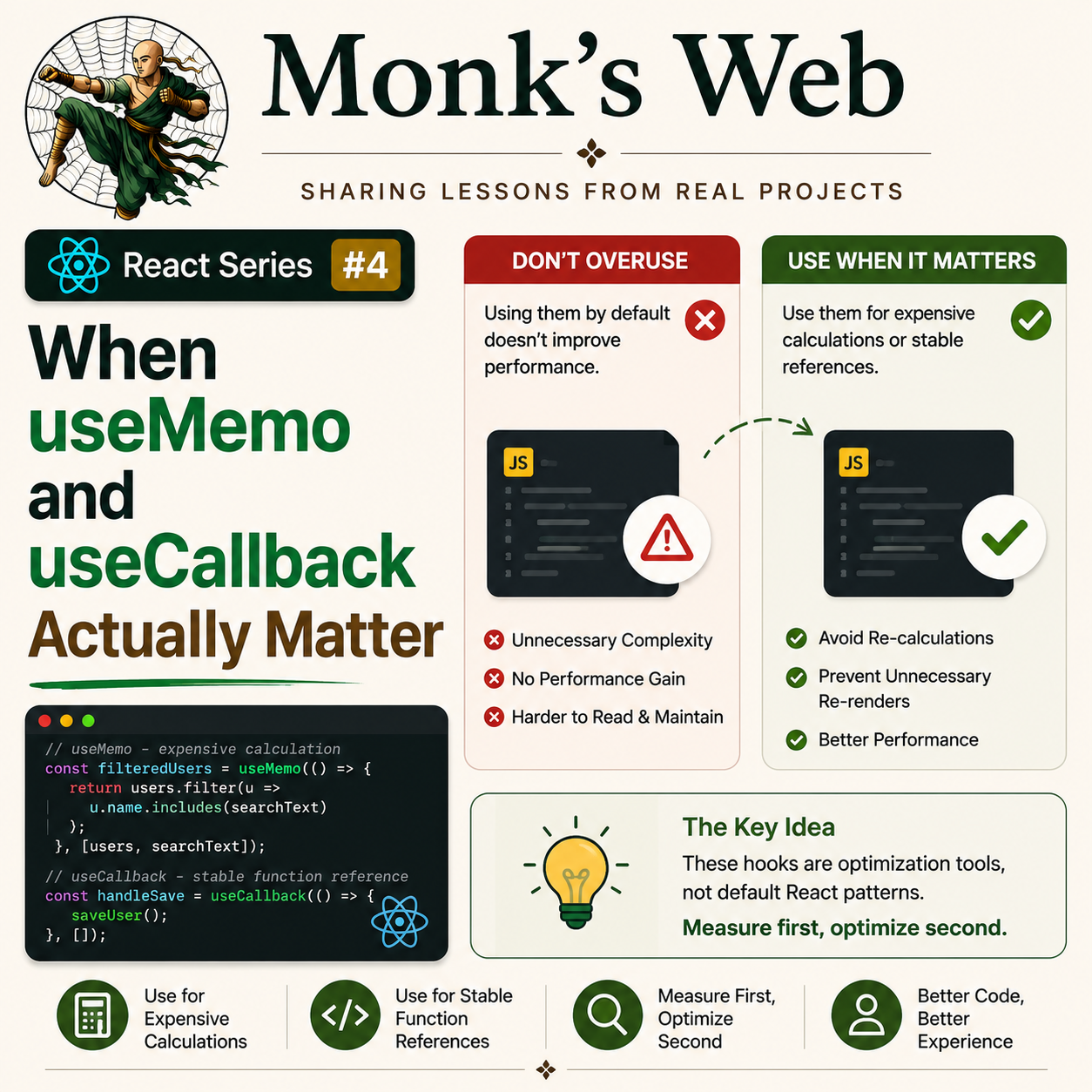
Monk’s Web React Series #4: When useMemo and useCallback Actually Matter
I noticed something strange while working on our testing dashboard. The application felt sluggish while browsing through the test results…
Monk’s Web React Series #4: When useMemo and useCallback Actually Matter
I noticed something strange while working on our testing dashboard. The application felt sluggish while browsing through the test results list. While investigating, I came across this pattern throughout the codebase.
Every function and calculated value had been wrapped with useMemo or useCallback
— — — — — — — — — — — — — — — — — — —
What was happening? The assumption was that memoizing everything would make the app faster. So the code looked like this:
const statusLabel = useMemo(() => {
  return "Status: " + testResult.status;
}, [testResult.status]);
And this:
const handleRunTest = useCallback(() => {
  setPhase("running");
}, []);
Is formatting a status string expensive? Is a one-line state update slowing down the test runner? Probably not. These hooks were being added without understanding whether they solved a real problem. All we did was add complexity without gaining any real benefit.
— — — — — — — — — — — — — — — — — — —
The fix I started asking one question before reaching for either hook: What problem am I trying to solve?
useMemo for expensive calculations:
// Test dashboard processing hundreds of test cases
const failedTests = useMemo(() => {
  return testCases
    .filter(test => test.status === "failed")
    .map(test => ({
      ...test,
      duration: test.endTime - test.startTime,
    }));
}, [testCases]);
useCallback when passing functions to memoized child components:
// Test suite list rendering hundreds of test cases
const handleRetry = useCallback((testId) => {
  dispatch({ type: "RETRY_TEST", payload: testId });
}, [dispatch]);

return <TestCaseList onRetry={handleRetry} />;
Without a stable function reference, every parent re-render triggers the entire test case list to re-render. useCallback prevents that.
— — — — — — — — — — — — — — — — — — —
How does it help? Using these hooks in the right places reduces expensive recalculations, prevents unnecessary child re-renders, and improves performance for large datasets. Using them everywhere increases code complexity, adds memory overhead, and creates a false sense of optimization.
— — — — — — — — — — — — — — — — — — —
One rule to remember Before adding useMemo or useCallback, ask yourself : can I measure this performance problem? If the answer is no, skip the hook usage.
Most performance problems come from poor architecture, unnecessary API calls, or excessive state updates — not from missing memoization.
“Don’t optimize because React gives you the tool. Optimize because your application needs it.”
메타데이터
- post_id
- 7d57ca22d5cf
- slug
- monks-web-react-series-4-when-does-usememo-and-usecallback-actually-mattermonk-s-web-react-7d57ca22d5cf
- url
- https://medium.com/@monksweb/monks-web-react-series-4-when-does-usememo-and-usecallback-actually-mattermonk-s-web-react-7d57ca22d5cf
- canonical_url
- https://medium.com/@monksweb/monks-web-react-series-4-when-does-usememo-and-usecallback-actually-mattermonk-s-web-react-7d57ca22d5cf
- author_url
- https://medium.com/@monksweb
- status
- ok
- fetched_at
- 2026-07-19 03:56:16