She Spied on Jefferson Davis From Inside His Own House and America Still Can’t Get Her Name Right
Mary Jane Richards operated at the highest levels of Civil War intelligence. The legend they built around her erased the woman who actually…
The Wrong Name on the Wall
She Spied on Jefferson Davis From Inside His Own House and America Still Can’t Get Her Name Right
Mary Jane Richards operated at the highest levels of Civil War intelligence. The legend they built around her erased the woman who actually lived it.
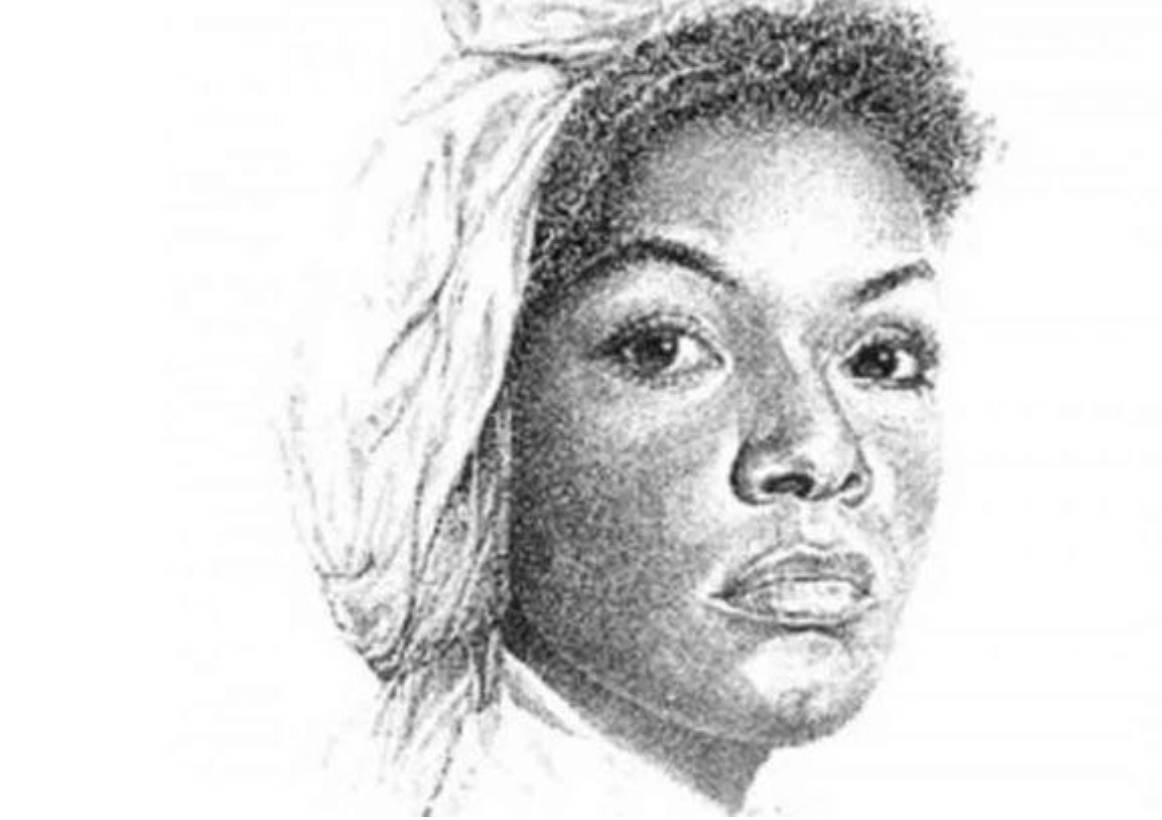
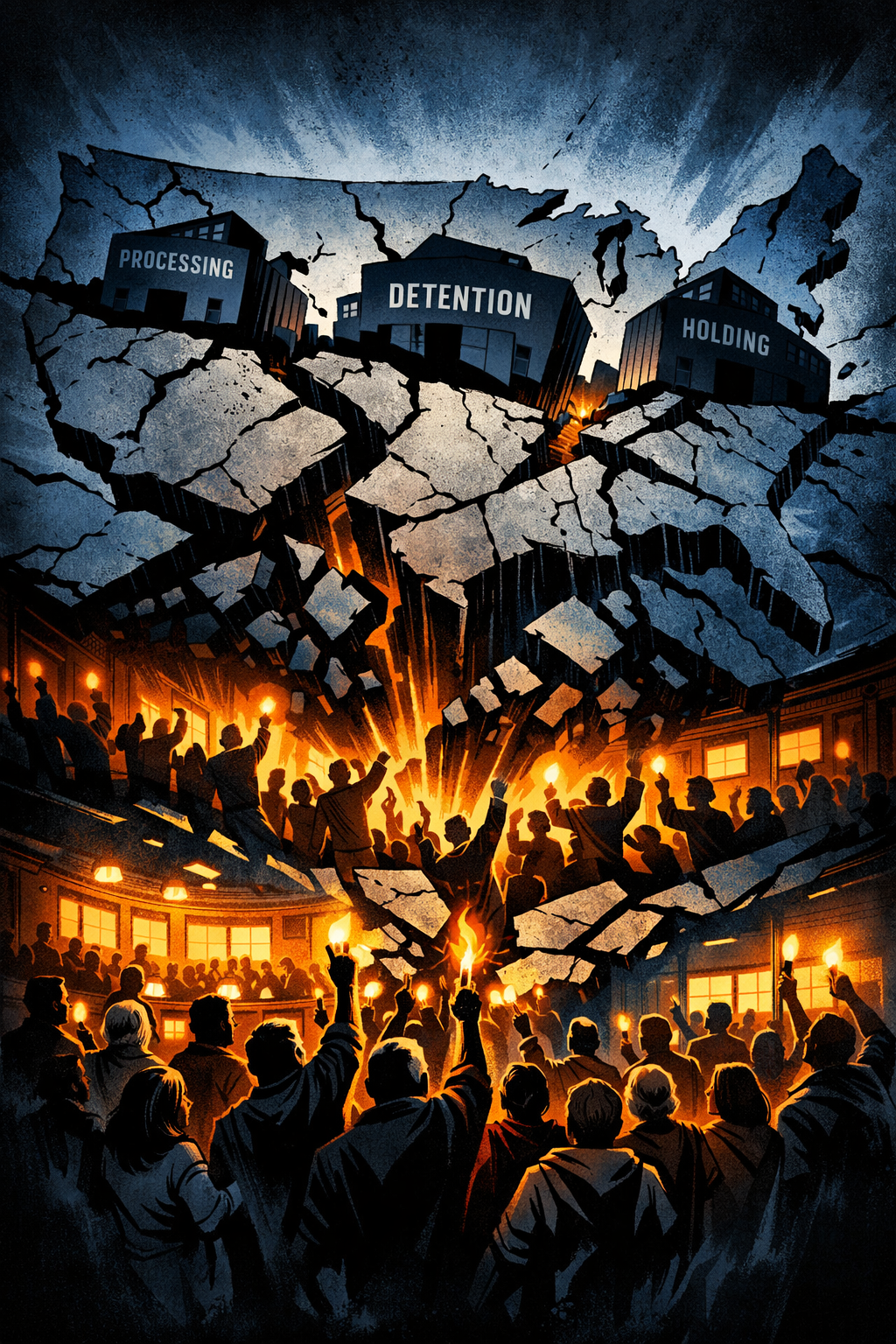
Image of Mary Jane Richards generated using Perplexity AI (2026)
In 1995, the United States Army Military Intelligence Corps inducted a woman into its Hall of Fame at Fort Huachuca, Arizona. The ceremony honored her as one of the most productive espionage agents of the Civil War. Her name, according to the official record, was Mary Elizabeth Bowser.
That is not her name.
It has never been her name.
The woman the United States government honored that day was born Mary Jane Richards. She used at least seven different names across her lifetime —
Mary Jane Henley, Mary Jones, Richmonia Richards, Richmonia R. St. Pierre, Mary J. R. Garvin, Mary J. Denman —
and not one of them was Mary Elizabeth Bowser.
The name on the wall at Fort Huachuca was pulled from a 1911 Harper’s Monthly article written by a journalist named William Beymer, who got it from Elizabeth Van Lew’s niece, Annie Randolph Hall. Hall was a small child during the Civil War. She had no firsthand knowledge of any clandestine operations. She supplied a name from memory half a century after the fact, and she got it wrong.
That single error became the foundation of over a hundred years of compounding historical fiction, repeated by NPR, The Washington Post, NOW with Bill Moyers, the U.S. Army, a 1987 television movie, a Comedy Central miniseries, and a Houston Grand Opera that premiered in 2023.
Every one of them told the story of a Black woman who spied on the Confederacy from inside Jefferson Davis’s own residence. Every one of them called her by the wrong name.
This is a story about an intelligence operative. It is also a story about what happens when a country decides to celebrate a Black woman’s bravery without doing the basic archival work required to identify who she actually was.
Mary Jane Richards was born into slavery around 1840 in Richmond, Virginia, as property of the Van Lew household.
The earliest record of her existence is a baptism entry at St. John’s Church in Richmond, dated May 17, 1846, listing
“Mary Jane, a colored child belonging to Mrs. Van Lew.”
That baptism is significant for a reason that has nothing to do with religion. The Van Lews were a wealthy, socially prominent white family. Their other enslaved people were baptized at Richmond’s First African Baptist Church, the Black congregation.
Mary Jane was baptized in the white family’s own church. Someone in that household, and all evidence points to Elizabeth Van Lew, singled this child out from the beginning.
Van Lew was an abolitionist operating in the capital of the slaveholding South.
What she did next with Mary Jane was strategic, though the strategic dimension would not become visible for years. She sent the girl north for education, probably to Princeton, New Jersey, or Philadelphia.
Then, in December 1855, she arranged for the fourteen-year-old to sail from Sandy Hook, New Jersey, to Monrovia, Liberia, as a missionary through the American Colonization Society.
The colonization movement reflected a belief shared by pro-slavery and anti-slavery whites alike that free Black people had no rightful place in America.
Van Lew participated in that belief even as she positioned herself against slavery. Mary Jane Richards was sent across an ocean by a woman who freed her but could not imagine a country that would include her.
Liberia did not suit her.
She wrote letters back to the Van Lews describing difficult conditions in the colony. By 1860, at around twenty years of age, she was back in Richmond.
Her return was itself a criminal act.
Virginia law forbade free Black people from entering the state. Richards was arrested for, as the record states,
“perambulating the streets claiming to be a free woman of color.”
Under Virginia law, she could have been sold back into slavery for the offense.
Instead, Elizabeth Van Lew appeared in court, claimed Richards as her slave, and paid a ten-dollar fine for
“permitting her slave, Mary Jane, to go at large.”
It was a legal fiction designed to keep Richards alive and positioned inside Confederate territory. Whether Richards understood at that moment what Van Lew intended for her is unknown. But the operational architecture was already being assembled.
On April 16, 1861, one day before Virginia voted to secede from the Union, Mary Jane married a man named Wilson Bowser at St. John’s Church. The marriage was brief.
According to the American Battlefield Trust, there is no evidence she ever used his surname. Church records list the marriage under his name only. Researchers who spent decades searching for
“Mary Bowser”
found nothing, because she was never Mary Bowser.
She was Mary Jane Richards before the marriage and Mary Jane Richards after it. The name that would follow her into the Hall of Fame, onto historical markers, into opera librettos and television scripts, belonged to a man she was apparently done with before the first major battle of the war.
What happened next is where the documented record and the popular legend begin to diverge, and this divergence matters.
Elizabeth Van Lew organized what became known as the Richmond Underground, a network of at least twelve operatives, Black and white, conducting pro-Union activities inside the Confederate capital.
Historian Elizabeth R. Varon of the University of Virginia documented this network extensively in her 2003 biography of Van Lew, Southern Lady, Yankee Spy, published by Oxford University Press.
What Varon’s research shows is that the network’s activities evolved in phases. From 1861 to 1863, the primary mission was humanitarian:
smuggling food, medicine, and escape opportunities to Union soldiers imprisoned in the tobacco warehouses that served as makeshift jails, most notably Libby Prison.
Only in 1864 and 1865, as Union and Confederate forces closed in on Richmond, did the network’s focus shift to military and political intelligence collection.
Mary Jane Richards participated in both phases.
The popular version of this story, the one that circulates in children’s books and cable television specials and now an Amazon Prime series, has Richards embedded as a permanent servant in Jefferson Davis’s household for years, reading documents off his desk daily with a photographic memory, feeding a steady stream of classified intelligence to Union generals.
That version is not supported by the evidence.
The photographic memory claim originates from a document called the
“Recollections of Thomas McNiven and his activities in Richmond during the American Civil War,”
an oral history held by the Library of Virginia that was not written down until the mid-twentieth century.
Its accuracy is disputed by historians including Varon. The claim that Richards was smuggled out of Richmond in a cartload of manure is fabricated.
The claim that she attempted to burn down the Confederate White House is unsubstantiated.
The alias “Ellen Bond,” which appears in multiple popular accounts, was not one of her known aliases.
And the photograph that has circulated for decades as her image depicts a different woman entirely — another Mary Bowser, born decades later, as Dr. Lois Leveen confirmed in a 2013 investigation published in The Atlantic.
What is documented, in Richards’s own words, is this:
after the war, she told audiences that she “clandestinely entered in the Rebel Senate while it was in secret session” and, separately, that she went “into President Davis’s house while he was absent, seeking for washing, and while there was conducted into a private office by one of the clerks, when she opened the drawers of a cabinet and scrutinized the papers.”
That account was reported in the Anglo-African newspaper on October 7, 1865, based on a lecture she delivered at the Abyssinian Baptist Church in Manhattan on September 11, 1865.
She gave that lecture under the alias Richmonia Richards.
Two days later, at an African Methodist Episcopal Church in Brooklyn, she spoke again, this time as Richmonia R. St. Pierre. The New York Times previewed her Manhattan lecture, describing her as
“recently from Richmond, where she has been engaged in organizing schools for the freedmen, and has also been connected with the secret service of our government.”
The Anglo-African described her delivery as
“very sarcastic and at times quite humorous.”
Even when she stood before a public audience to tell the story of her own espionage, she used tradecraft. She never appeared under her real name.
Elizabeth Van Lew’s diary entry from May 14, 1864, provides the most suggestive corroboration of Richards’s intelligence value. Van Lew wrote:
“When I open my eyes in the morning, I say to the servant, ‘What news, Mary?’ and my caterer never fails! Most generally our reliable news is gathered from negroes, and they certainly show wisdom, discretion and prudence, which is wonderful.”
Generals Benjamin Butler, Ulysses S. Grant, and George H. Sharpe all acknowledged the value of Van Lew’s intelligence network.
None of them named Richards specifically.
That is how intelligence works.
The source is protected.
The product is consumed.
The analyst gets the credit.
The asset disappears.
Anyone who has worked in intelligence recognizes the architecture of this operation. Van Lew was the handler. Richards was the asset. The network used cutouts — Thomas McNiven, the local baker who delivered to the Confederate White House, served as one conduit for information.
Van Lew’s operatives communicated using colorless ink that could only be read when milk was applied to the page. The entire operation depended on compartmentalization, on the principle that no single member of the network could compromise the whole.
Richards operated under the most dangerous form of cover:
not a fabricated identity in a foreign country, but a racial performance inside the enemy’s own household.
She weaponized the Confederate assumption that a Black servant could not read, could not think, could not be dangerous.
The Confederacy’s institutional racism was her operational security. That is not a metaphor. That is a description of how the intelligence cycle functioned in this specific case. The enemy’s cognitive bias was the gap in their security posture, and Richards exploited it.
After Richmond fell in April 1865, Richards was teaching former slaves in the city within days.
She moved quickly into work with the Freedmen’s Bureau, eventually running an entire school by herself in St. Marys, Georgia. Her letters from that period, preserved through the research of Dr. Lois Leveen, describe the conditions faced by Black teachers and students in the post-war South with unflinching specificity.
She wrote about the threat of “secret societies” — the earliest formations of the Ku Klux Klan in Georgia — and about the violent racism of both Southern and Northern whites. She signed her letters from this period as Mary J. R. Richards.
In 1867, she signed a resignation letter from her teaching post as Mary J. Garvin, announcing that she was newly married and that her husband had gone to the West Indies.
She did not go.
Within months, she had reopened the school. By 1868, she was using the name Mrs. John T. Denman, requesting a transfer to a school closer to Atlanta to be near her husband, who was stationed there.
John T. Denman was white.
An interracial marriage in Georgia during the most violent period of Reconstruction.
The last confirmed document from her life is a letter to Elizabeth Van Lew, dated October 31, 1870, sent from New York City. Leveen, who discovered the letter during research that earned her the inaugural Cokie Roberts Women’s History Fellowship at the National Archives, confirmed that the handwriting matches Richards’s other correspondence.
In that letter, Richards writes:
“I hope you will not loose sight of me, as I cannot bear the thought that no one is interested in my weal or woe.”
After that, she vanishes.
No death record.
No obituary. No archive.
No diary.
A family member reportedly found what may have been her wartime journal in the 1950s and inadvertently discarded it.
The woman who gathered intelligence from inside the Confederate White House, who taught herself to disappear behind aliases and performance, who stood before audiences in New York and told her own story while refusing to use her own name, vanished so completely that it took historians over a century to reconstruct even the outlines of her actual life.
In the absence of her real story, America built a legend. The legend featured a photographic memory, a dramatic escape in a manure cart, an attempted arson, and a name that belonged to a man she left.
The legend was more comfortable than the documented reality because the documented reality implicates everyone.
It implicates the Confederacy, obviously, for its institutional inability to conceive of Black intelligence.
But it also implicates the Union, which compensated Van Lew financially after the war while Richards struggled to support herself as a teacher.
It implicates the historians and journalists and filmmakers who, for a hundred years, repeated a wrong name rather than doing the archival work.
And it implicates the United States Army, which inducted a Black woman into its Military Intelligence Hall of Fame and could not be bothered to verify her identity before they put her name on the wall.
Dr. Leveen has written about this problem with precision.
In a 2019 essay for TIME, she argued that the impulse to celebrate a Black spy in the Confederate White House has paradoxically impeded accurate history.
Actions undertaken by other African Americans in the Richmond Underground have been falsely attributed to the “Mary Bowser” legend, concentrating credit in a single mythologized figure while erasing the broader network of Black resistance.
Leveen also noted that focusing exclusively on the espionage obscures the full scope of Richards’s life, her activism during Reconstruction, her advocacy for voting rights and racial justice, her struggle to survive as a free Black woman in a country that had not yet decided whether her freedom was real.
“We can best honor Mary Richards Denman,” Leveen wrote, “by being unwaveringly honest about America in her era, and our own.”
The corrective scholarship is ongoing.
Varon, who initially described Richards as elusive, later cited newly discovered sources confirming key elements of her wartime espionage.
Working from the National Archives, Leveen has uncovered documents that extend the known timeline of Richards’s life and reveal her post-war relationships, financial struggles, and continued activism.
A new historical marker in Richmond, developed in collaboration with Leveen, attempts to correct the record while acknowledging that more information will emerge.
The story is being rebuilt, document by document, name by name.
But here is the part that stays with me. In that 1870 letter, Mary Jane Richards Denman was thirty years old, living in New York, working as a seamstress, trying to survive.
She had been enslaved, educated, shipped to Africa, returned to America, arrested, deployed as an intelligence asset inside the home of the enemy president, and then left to fend for herself while the white woman who ran her network received government compensation.
She had taught children in the ruins of the Confederacy. She had married across the color line in a state that would kill her for it. She had watched the Klan organize in real time and written letters about it to people who could not protect her. And she wrote to Van Lew, the woman who had both freed her and used her, asking not to be forgotten.
America forgot her anyway. Then America invented someone else to remember in her place.
The name on the wall at Fort Huachuca is wrong.
It has been wrong for thirty years. The woman whose name should be there, Mary Jane Richards, who operated under more aliases than most trained intelligence officers accumulate in a career, who performed illiteracy as cover while reading Confederate war dispatches, who told her own story to public audiences and still refused to give them her real name — that woman understood something about this country that the country has never been willing to understand about itself.
She knew that a Black woman’s intelligence would always be consumed and never credited. She knew that the asset always disappears.
She just did not know that they would also get her name wrong.
If you found this work valuable, a clap goes a long way toward keeping investigative journalism like this visible on the platform. Share it with someone who needs to know this name.
Further Reading
Elizabeth R. Varon, Southern Lady, Yankee Spy: The True Story of Elizabeth Van Lew, a Union Agent in the Heart of the Confederacy (Oxford University Press, 2003)
Lois Leveen, The Secrets of Mary Bowser (HarperCollins, 2012)
Lois Leveen, “The Vanishing Black Woman Spy Reappears,” Los Angeles Review of Books, June 2019
Lois Leveen, “What the ‘Mary Bowser’ Civil War Spy Story Gets Wrong,” TIME, June 2019
National Park Service, “Mary Jane Richards,” Richmond National Battlefield Park
American Battlefield Trust, “Mary Jane Richards”
Encyclopedia Virginia, “Mary Richards Bowser (fl. 1846–1867)”
메타데이터
- post_id
- 7d7d99fc2533
- slug
- she-spied-on-jefferson-davis-from-inside-his-own-house-and-america-still-cant-get-her-name-right-7d7d99fc2533
- url
- https://medium.com/the-quiet-awakening/she-spied-on-jefferson-davis-from-inside-his-own-house-and-america-still-cant-get-her-name-right-7d7d99fc2533
- canonical_url
- https://medium.com/the-quiet-awakening/she-spied-on-jefferson-davis-from-inside-his-own-house-and-america-still-cant-get-her-name-right-7d7d99fc2533
- author_url
- https://medium.com/@jusbouey
- status
- ok
- fetched_at
- 2026-08-22 21:39:42