Hailo AI Modules for Real-Time Video Analytics
TL;DR: Edge-deployed video analytics architectures combine heterogeneous embedded computing with dedicated neural acceleration to deliver…
Hailo AI Modules for Real-Time Video Analytics
TL;DR: Edge-deployed video analytics architectures combine heterogeneous embedded computing with dedicated neural acceleration to deliver deterministic, low-latency inference without continuous cloud dependence, enabling scalable and energy-efficient intelligent vision across industrial environments.
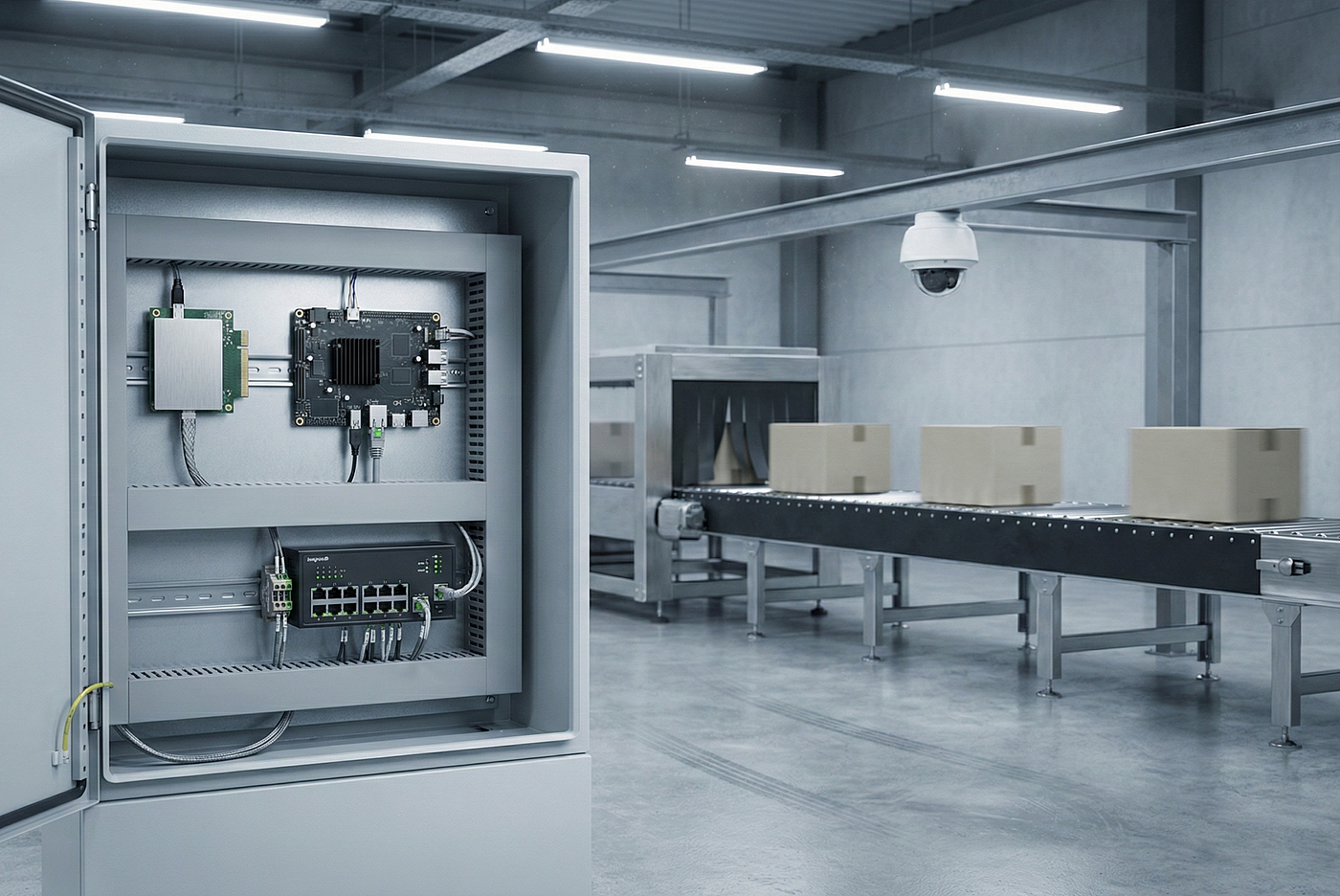
Real-time video analytics has evolved into a foundational pillar of modern digital infrastructure. Across advanced manufacturing, intelligent transportation systems, smart cities, retail environments, and critical infrastructure protection, organizations now require continuous, on-device interpretation of visual data rather than retrospective video analysis. The strategic objective is no longer passive recording but real-time semantic extraction: generating structured insights, activating automated control loops, and informing predictive decision models directly at the edge. Local processing mitigates network-induced latency, reduces the attack surface associated with data transmission, and optimizes bandwidth utilization by transmitting only metadata or event-driven outputs. As deep learning architectures mature and model efficiency improves, embedded hardware platforms have become central to operationalizing intelligent vision. The ability to process multiple high-resolution streams concurrently, execute layered inference pipelines under strict temporal constraints, and initiate automated responses within milliseconds fundamentally redefines risk management, compliance assurance, and operational optimization. In this architecture, visual input becomes an active system signal rather than a passive archival artifact.
Why Edge AI Is Redefining Video Infrastructure
Conventional video analytics systems were historically architected around centralized servers or cloud-based inference engines, aggregating distributed camera feeds for remote computation. Although flexible, this model introduces measurable latency, exposure to network instability, and expanded cybersecurity vulnerabilities. In mission-critical contexts — such as automated production facilities, logistics hubs, or transportation control networks — even minimal delays can disrupt synchronized operations or compromise safety mechanisms. Edge AI architectures address these systemic limitations by relocating inference workloads to the point of data acquisition. Through the integration of embedded processors and specialized accelerators, intelligent cameras and industrial gateways execute semantic interpretation locally, preserving deterministic response characteristics regardless of upstream connectivity conditions. This decentralized topology strengthens system resilience, supports regulatory compliance related to data residency, and reduces dependency on persistent cloud infrastructure. As cyber-physical systems continue to proliferate, edge-based analytics is increasingly recognized as an architectural prerequisite for reliable, real-time decision support.
Building a Reliable Processing Foundation
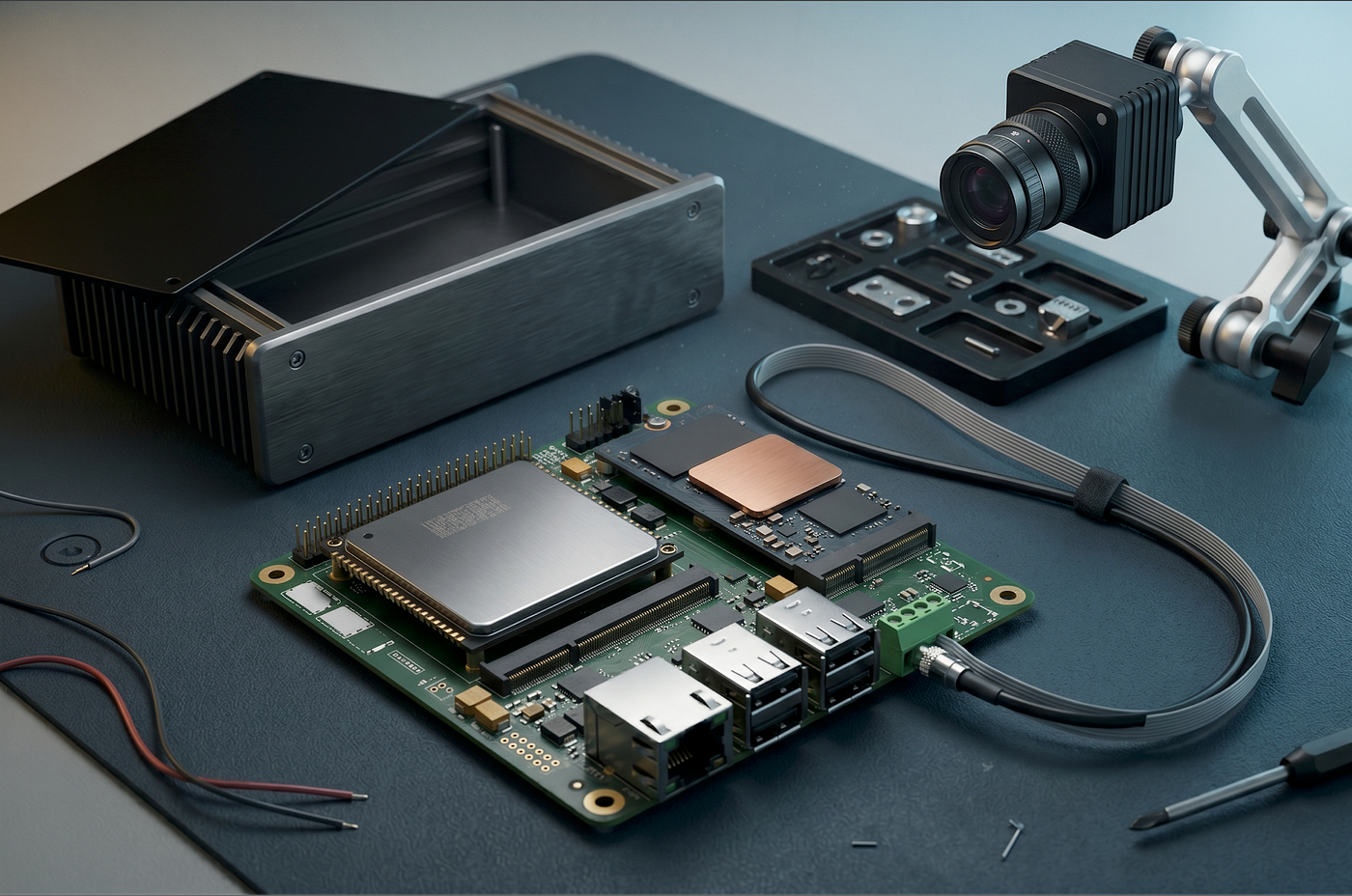
Sustained real-time analytics requires an embedded computing substrate capable of managing high-throughput multimedia streams, concurrent task execution, and predictable latency within constrained thermal and power envelopes. Platforms built on Renesas rz processors exemplify an industrial-grade foundation engineered for lifecycle longevity and environmental robustness. These processors integrate high-performance ARM cores, advanced connectivity interfaces, and hardware-accelerated video encoding and decoding pipelines that streamline preprocessing and data movement. Security primitives — including secure boot chains and firmware authentication mechanisms — protect deployed systems against unauthorized modification and intrusion. Compatibility with real-time operating systems and Linux-based environments facilitates seamless integration of computer vision frameworks, neural network runtimes, and containerized services within cohesive software stacks. By harmonizing computational throughput, security assurance, and long-term maintainability, such platforms form the execution core of intelligent cameras, automated inspection stations, and distributed industrial gateways operating in thermally and mechanically demanding conditions.
Turning Visual Data into Actionable Intelligence
Transforming raw pixel data into operationally meaningful intelligence requires a stratified computational workflow extending well beyond elementary object detection. Each captured frame undergoes normalization, denoising, feature extraction, object localization, classification, temporal tracking, and, in advanced deployments, contextual or behavioral modeling. These processes must execute within tightly bounded latency windows while maintaining statistical robustness and minimizing false positives. In high-speed manufacturing lines, vision systems identify sub-millimeter defects or alignment deviations without interrupting throughput. Within intelligent transportation networks, cameras classify dynamic actors — vehicles, cyclists, and pedestrians — and detect anomalous motion patterns in real time to support adaptive signaling and incident mitigation. Achieving such performance demands heterogeneous workload orchestration in which general-purpose processing cores coordinate with hardware accelerators and optimized memory hierarchies. By distributing inference tasks across CPUs, GPUs, and neural processing units, system architects preserve stable frame rates and deterministic execution even under multi-model concurrency. The resulting infrastructure delivers both analytical precision and operational resilience in latency-sensitive environments.
High-Performance Inference at the Edge
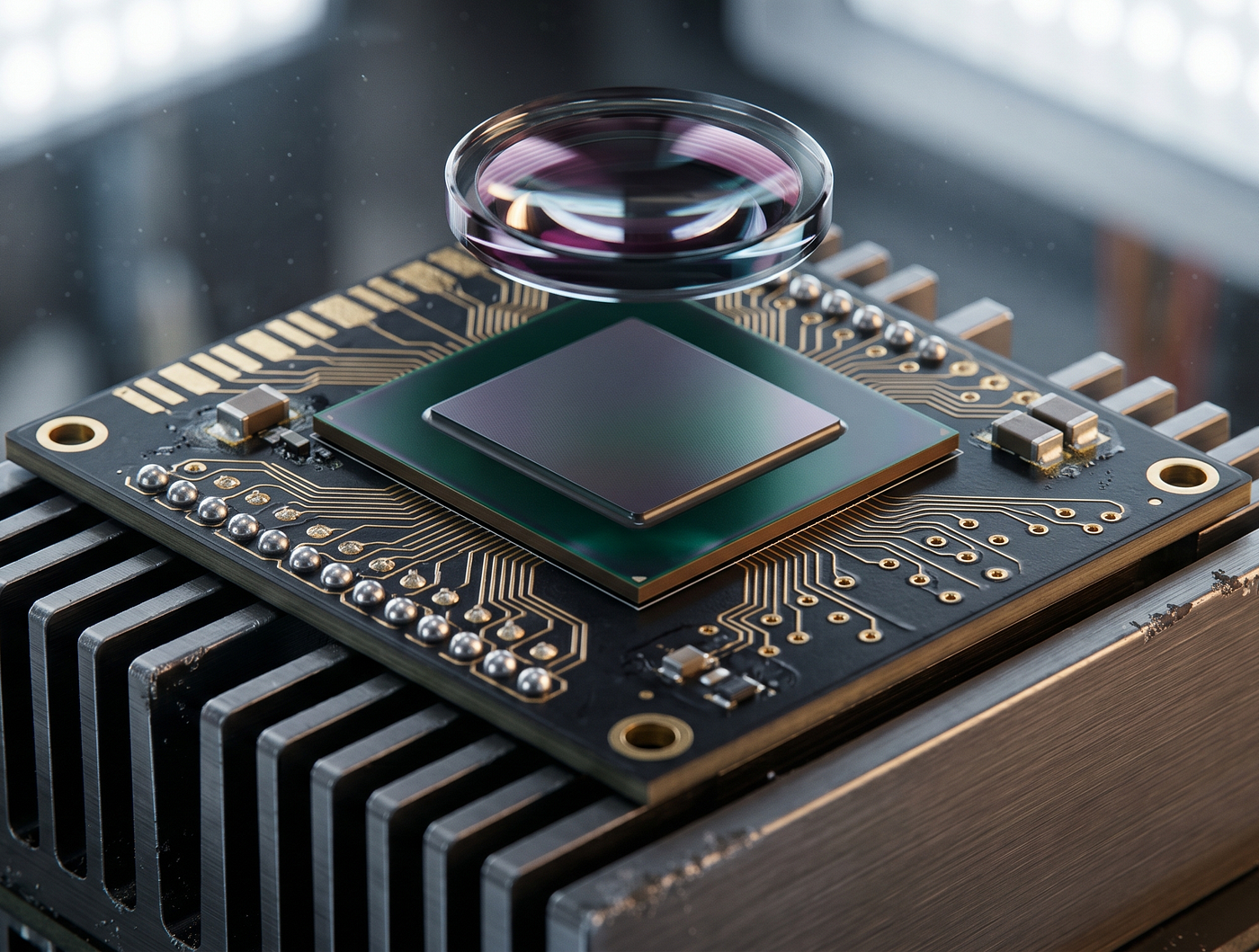
While embedded processors provide system orchestration and peripheral management, computationally intensive neural inference workloads frequently require dedicated acceleration to achieve optimal performance-per-watt efficiency. In this context, Hailo AI modules introduce a purpose-built neural processing architecture tailored for edge deployment. Engineered to execute complex convolutional and transformer-based models efficiently, these accelerators enable sustained high frame-rate, multi-stream inference without saturating host CPU resources. Comprehensive architectural insights and benchmark data are documented in the official AI accelerator specs, which outline throughput, parallelization capabilities, and energy efficiency metrics for embedded environments. The architecture’s dataflow-oriented design supports extensive parallel execution, allowing multiple networks to operate concurrently while maintaining low latency and predictable thermal characteristics. In applied scenarios — including robotics, industrial inspection, and intelligent retail analytics — offloading neural computations to dedicated hardware reduces overall power consumption, stabilizes system thermals, and ensures consistent real-time responsiveness even under demanding segmentation, detection, and recognition workloads.
Real-World Industry Applications
The convergence of scalable embedded processors and specialized neural acceleration is catalyzing structural transformation across diverse industrial sectors. In advanced manufacturing ecosystems, real-time vision systems enable automated quality assurance, closed-loop process control, and predictive maintenance by detecting deviations at their earliest manifestation. Logistics and warehousing operations deploy intelligent cameras to monitor asset movement, validate safety compliance, and generate actionable performance analytics for throughput optimization. Urban infrastructure initiatives leverage distributed video intelligence to coordinate traffic flows, analyze crowd dynamics, and support emergency response operations while preserving localized data processing to maintain privacy compliance. In agriculture, energy production, and construction, edge-deployed vision systems monitor equipment integrity, identify environmental anomalies, and inform proactive maintenance strategies. Collectively, these implementations demonstrate how modular hardware architectures, when paired with efficient inference engines, produce adaptable and domain-agnostic solutions capable of satisfying stringent reliability, safety, and performance criteria.
Addressing Deployment and Scalability Challenges
Large-scale deployment of edge-based video analytics systems introduces multidimensional engineering challenges that extend beyond computational performance alone. Designers must reconcile throughput objectives with thermal dissipation constraints, limited energy budgets, electromagnetic compatibility standards, and environmental ruggedization requirements. Industrial environments often expose hardware to vibration, particulate contamination, humidity, and temperature extremes, necessitating resilient mechanical and electronic design. Cybersecurity architecture is equally critical, encompassing encrypted communication protocols, authenticated firmware updates, hardware root-of-trust implementations, and ongoing vulnerability assessment. Moreover, the management of geographically distributed device fleets demands centralized orchestration frameworks, remote observability tooling, and containerized software distribution to streamline updates and AI model lifecycle governance. Optimization strategies must address memory bandwidth allocation, storage durability, and failover mechanisms to ensure sustained high availability. When computational design, security engineering, and lifecycle management are cohesively aligned, organizations can establish robust edge analytics infrastructures that deliver enduring operational value.
The Future of Intelligent Video Systems
As deep learning methodologies continue to evolve and edge hardware architectures mature, real-time video analytics is positioned to assume increasingly autonomous and collaborative roles within cyber-physical ecosystems. Contemporary industry discourse, including this edge AI announcement, highlights the emergence of on-device generative and adaptive capabilities that extend beyond traditional detection and classification paradigms. Prospective advancements such as federated learning frameworks will enable distributed devices to refine model parameters locally while exchanging aggregated updates in privacy-preserving formats. Continually adaptive neural networks optimized directly on deployed hardware will enhance robustness under dynamic environmental conditions. Integration with broader Internet of Things ecosystems will facilitate bidirectional data exchange among cameras, sensors, robotic actuators, and supervisory control systems, forming tightly integrated intelligent infrastructures. In this convergent landscape, embedded processing and dedicated neural acceleration collectively define the computational substrate for pervasive machine perception. Organizations that invest strategically in scalable, edge-centric architectures today will be positioned to capitalize on accelerated decision cycles, improved systemic resilience, and sustained innovation across increasingly data-driven operational domains.
메타데이터
- post_id
- 7d7f3b1bf875
- slug
- hailo-ai-modules-for-real-time-video-analytics-7d7f3b1bf875
- url
- https://medium.com/@goldshteinm08/hailo-ai-modules-for-real-time-video-analytics-7d7f3b1bf875
- canonical_url
- https://medium.com/@goldshteinm08/hailo-ai-modules-for-real-time-video-analytics-7d7f3b1bf875
- author_url
- https://medium.com/@goldshteinm08
- status
- ok
- fetched_at
- 2026-06-24 04:09:36