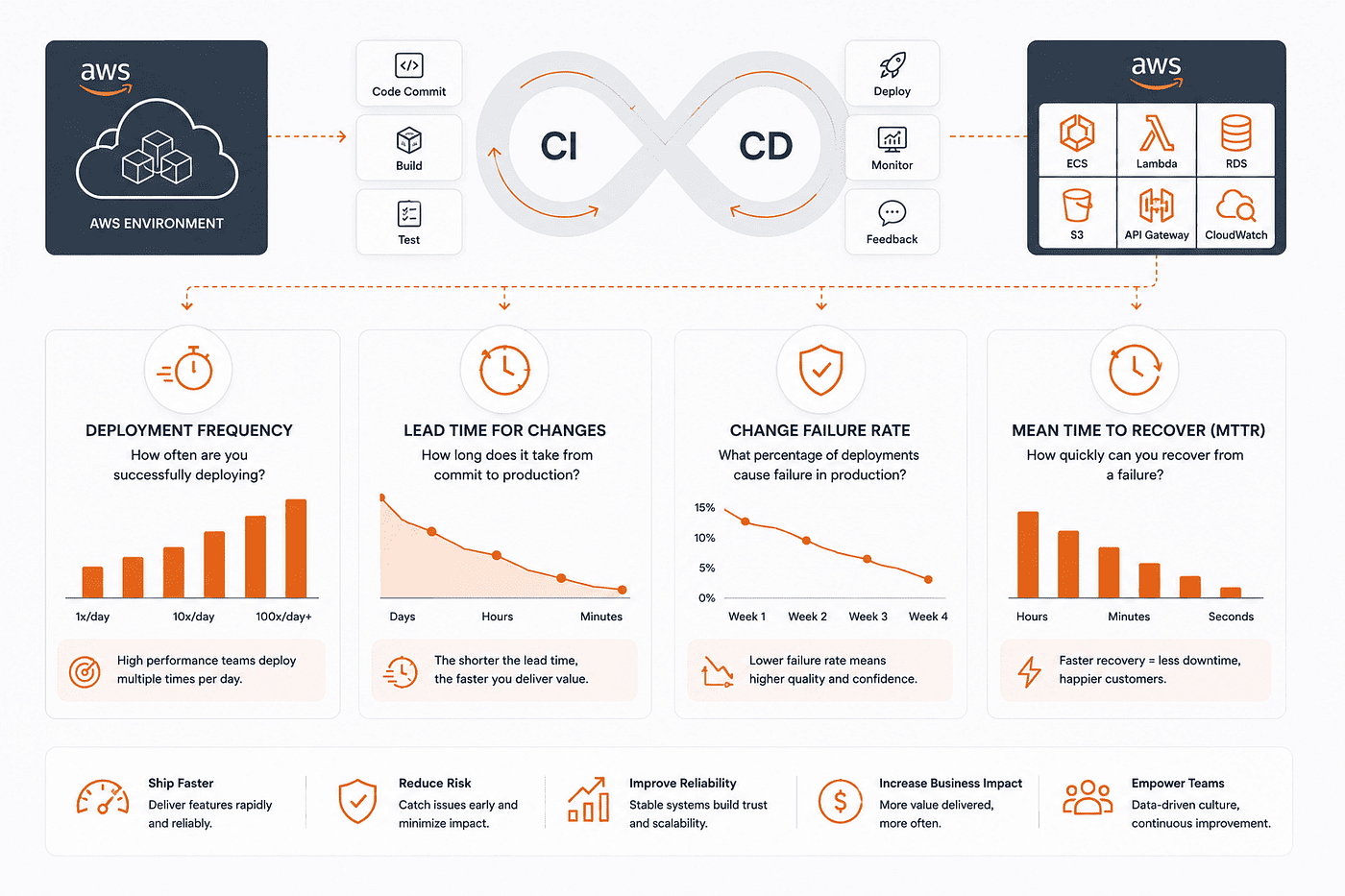
Software Testing Does Not Slow Teams Down. The Fear of Breaking Things Does
There is a belief that circulates in engineering teams, usually unspoken, that shows up in how decisions get made under pressure.
Software Testing Does Not Slow Teams Down. The Fear of Breaking Things Does

There is a belief that circulates in engineering teams, usually unspoken, that shows up in how decisions get made under pressure.
Testing takes time. Deadlines are real. When the two come into conflict, testing is the thing that gets compressed. A quick manual check instead of a full suite run. A “we’ll add tests later” comment in the PR. A deployment that goes out on a promise rather than on evidence.
The belief underneath these decisions is that software testing is a cost- something that slows the team down, that competes with shipping, that produces value only in proportion to the bugs it catches. Under this framing, skipping or compressing testing when pressure is high is a reasonable tradeoff. You pay a small quality cost to meet a deadline.
What actually slows teams down is not testing. It is the fear of breaking things that accumulates when testing is absent or unreliable. That fear shows up in deployment anxiety, in excessive manual checking before releases, in the organizational weight that attaches to every deployment when the team cannot fully trust what they are shipping. The fear is the tax. Testing is what reduces it.
What Is Testing Actually For
The question of what is testing often gets answered narrowly- testing finds bugs before users do. This answer is accurate and incomplete.
Testing’s deeper function is producing knowledge. Specifically, it produces verified knowledge about how software behaves under defined conditions. A passing test suite does not just mean no bugs were found. It means the team has evidence- structured, repeatable, documented evidence- that the software works in the ways the tests cover.
This distinction matters because it changes what testing is competing against. If testing is only about finding bugs, it competes against the assumption that the current code is probably fine and shipping it quickly is worth the risk of being wrong. That is a bet teams make regularly, sometimes correctly.
If testing is about producing knowledge, it competes against uncertainty. Shipping without adequate testing does not eliminate the uncertainty about whether the software works. It just defers encountering that uncertainty until production, where the cost of being wrong is higher. The question is never whether to deal with uncertainty. It is when and where.
The Fear That Actually Slows Teams Down
Engineering teams that skip testing to ship faster do not actually ship faster over time. They ship the first release faster and then slow down progressively as the codebase becomes something nobody fully trusts.
The slowdown is not dramatic. It accumulates in small increments that are easy to attribute to other causes. Pull requests start taking longer to review because reviewers are checking things the test suite should be covering. Deployments acquire more manual verification steps because the automated checks are not trusted. On-call rotations become more stressful because incidents that should have been caught in development surface in production instead. Senior developers spend more time on “just checking” tasks that junior developers could own if the testing infrastructure gave them sufficient confidence.
Understanding the fundamentals of **software testing** is what allows teams to break this cycle. Not because knowing testing theory eliminates bugs, but because teams that understand what their tests are actually covering, and what they are not- can make informed decisions about where confidence is warranted and where caution is still needed. The fear of breaking things is highest in teams that do not know what their testing covers. It is lowest in teams that understand exactly what their tests verify and can deploy within that knowledge rather than in spite of its absence.
Testing Meaning in the Context of Team Velocity
Testing meaning, in the context of team velocity, is not primarily about quality gates or coverage metrics. It is about the relationship between a team and the software it ships.
Teams with reliable software testing have a different relationship with deployment than teams without it. Deployment is not an event that requires preparation, coordination, and anxiety management. It is a routine output of a process that is already running. The testing that makes this possible is not the testing that catches every possible bug- no test suite does that. It is the testing that gives the team accurate, current knowledge about what the software does, sufficient to make deployment a decision rather than a hope.
This relationship with deployment is what velocity actually looks like in practice. Not a team shipping as fast as possible regardless of what they know, but a team shipping as confidently as possible given what they know, and continuously expanding what they know through testing that stays current as the software evolves.
For teams working with API-driven systems, one of the most common sources of eroded confidence is integration test coverage that has drifted from current service behavior. Mocks that were accurate when written become historical artifacts as downstream services continue to deploy and change. Tests keep passing against the old mock while the actual integration has quietly changed. Keploy addresses this by capturing real HTTP traffic between services and keeping integration test coverage grounded in how services currently communicate rather than how they communicated when someone last updated a mock file. The confidence that comes from testing that reflects current reality is qualitatively different from the confidence that comes from testing that reflects a past state, and it is the former that actually reduces the fear of breaking things.
What Changes When Testing Becomes Infrastructure
The teams that have stopped treating software testing as a cost and started treating it as infrastructure describe a specific change in how engineering culture feels.
Developers stop hedging in pull request descriptions. “This should work” becomes “this is tested against current behavior.” Deployments stop requiring the same people to be available just in case. Junior developers start owning more of the release process because the testing infrastructure gives them the context they need to make informed decisions. Senior developers spend less time on manual verification and more time on the work that actually requires their judgment.
None of this happens because the team became more careful or more diligent. It happens because the testing infrastructure removed the uncertainty that was generating the fear that was generating the caution. The team did not slow down to be safe. The team built the infrastructure that made moving fast safe.
Software testing does not slow teams down. Uncertainty slows teams down. Testing is how teams reduce uncertainty to the point where moving fast and shipping confidently are the same thing rather than a tradeoff between them.
메타데이터
- post_id
- 7dc87992f263
- slug
- software-testing-does-not-slow-teams-down-the-fear-of-breaking-things-does-7dc87992f263
- url
- https://code.likeagirl.io/software-testing-does-not-slow-teams-down-the-fear-of-breaking-things-does-7dc87992f263
- canonical_url
- https://code.likeagirl.io/software-testing-does-not-slow-teams-down-the-fear-of-breaking-things-does-7dc87992f263
- author_url
- https://medium.com/@sancharini.panda
- status
- ok
- fetched_at
- 2026-07-11 17:23:42