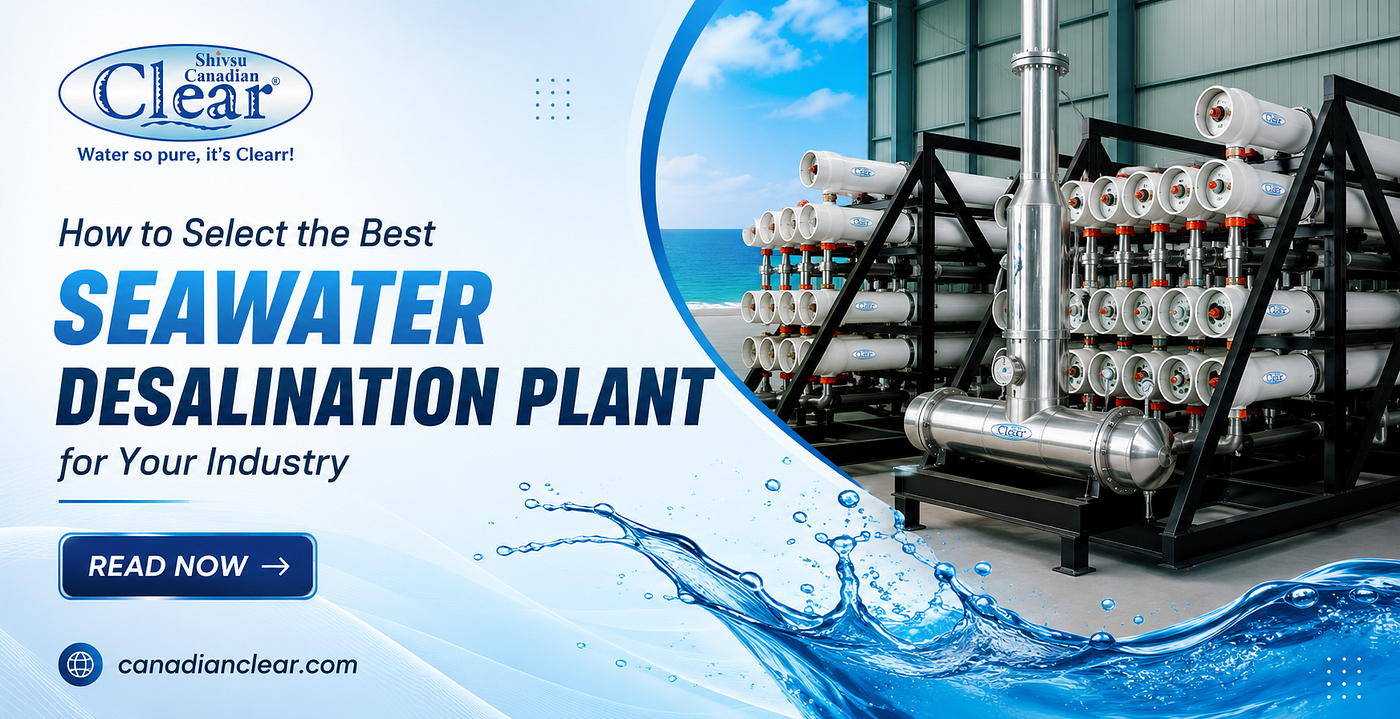
How to Select the Best Seawater Desalination Plant for Your Industry
Access to clean water is becoming one of the biggest challenges for industries operating in coastal regions and water-scarce areas. From…
How to Select the Best Seawater Desalination Plant for Your Industry
Access to clean water is becoming one of the biggest challenges for industries operating in coastal regions and water-scarce areas. From manufacturing plants and mining sites to hotels, resorts, offshore platforms, and municipalities, many organizations are turning to **seawater desalination plants** as a reliable and sustainable source of freshwater.
However, selecting the right system involves much more than choosing the largest capacity or the lowest price. Every industry has unique water quality requirements, production demands, and operating conditions. Understanding these factors can help ensure long-term efficiency, lower operating costs, and dependable water production.
In this guide, we’ll explore the key factors to consider when choosing the best seawater desalination plant for your business.
Why Seawater Desalination Matters
A **seawater desalination plant** converts seawater into freshwater by removing dissolved salts, minerals, and other impurities. Today, reverse osmosis (RO) technology is the most widely used desalination method because it offers high efficiency, consistent water quality, and lower energy consumption compared to traditional thermal processes.
Industries increasingly rely on desalination because it provides:
- A dependable freshwater supply
- Reduced dependence on groundwater
- Consistent water quality
- Support for operations in remote coastal locations
- Long-term water sustainability
As freshwater resources continue to decline in many regions, desalination has become a practical solution for ensuring uninterrupted operations.
1. Understand Your Water Demand
The first step in selecting a desalination system is determining how much freshwater your facility requires each day.
Consider questions such as:
- What is your daily water consumption?
- Will demand increase in the future?
- Do you need continuous or intermittent operation?
- Is the water used for production, cooling, cleaning, or drinking?
Choosing a system based only on current demand may limit future expansion, while an oversized system can increase unnecessary capital and operating costs.
2. Evaluate Feed Water Quality
Not all seawater sources have the same characteristics.
Factors such as salinity, suspended solids, temperature, algae, and organic matter can significantly affect system performance.
A proper water analysis helps determine:
- Salt concentration
- Turbidity
- Biological contaminants
- Seasonal variations
- Potential scaling issues
This information allows engineers to design the appropriate pretreatment system and optimize membrane performance.
3. Choose the Right Plant Capacity
Seawater desalination plants are available in a wide range of capacities, from compact units producing a few cubic meters per day to large-scale industrial systems supplying thousands of cubic meters daily.
Capacity selection should consider:
- Peak water demand
- Future expansion
- Operating hours
- Storage availability
- Emergency backup requirements
A scalable system offers greater flexibility as your operations grow.
4. Focus on Energy Efficiency
Energy consumption is one of the largest operating costs of any desalination system.
Modern RO plants use advanced technologies to reduce energy usage without compromising water quality.
Look for features such as:
- Energy recovery devices (ERDs)
- High-efficiency pumps
- Variable frequency drives (VFDs)
- Low-energy RO membranes
- Intelligent control systems
An energy-efficient design helps reduce long-term operating expenses while improving overall sustainability.
5. Consider Water Recovery Rate
Water recovery refers to the percentage of freshwater produced from the seawater entering the system.
Higher recovery rates mean:
- Better utilization of feed water
- Lower wastewater discharge
- Reduced operating costs
- Improved environmental performance
However, recovery rates should be optimized carefully to avoid excessive membrane fouling or scaling.
A well-designed system balances efficiency with long-term reliability.
6. Evaluate Pretreatment Technology
Pretreatment is one of the most important parts of any seawater desalination plant.
Without proper pretreatment, membranes can foul quickly, leading to higher maintenance costs and reduced system performance.
Effective pretreatment may include:
- Multimedia filtration
- Activated carbon filtration
- Ultrafiltration
- Cartridge filters
- Chemical dosing systems
The right pretreatment process extends membrane life and ensures stable operation.
7. Look for Automation and Smart Monitoring
Modern desalination systems are increasingly equipped with automated controls that improve efficiency and reduce manual intervention.
Features may include:
- PLC-based automation
- Touchscreen HMI controls
- Remote monitoring
- Automatic flushing cycles
- Alarm and diagnostic systems
- Real-time performance tracking
Automation simplifies plant operation while minimizing downtime.
8. Think About Installation Location
Installation conditions vary significantly across industries.
Some projects require permanent facilities, while others benefit from modular or portable systems.
Common installation options include:
- Skid-mounted systems
- Containerized desalination plants
- Permanent industrial installations
- Offshore platform installations
Containerized systems are particularly useful for remote sites because they can be transported and commissioned quickly with minimal civil work.
9. Maintenance Requirements Matter
Maintenance directly impacts the lifespan and reliability of a desalination plant.
Before selecting a system, evaluate:
- Ease of membrane replacement
- Availability of spare parts
- Cleaning procedures
- Service accessibility
- Operator training requirements
Choosing equipment designed for easy maintenance helps reduce downtime and operating costs.
10. Ensure Compliance with Water Quality Standards
Different industries require different levels of water purity.
For example:
- Drinking water must meet public health standards.
- Food and beverage production requires strict hygiene.
- Pharmaceutical manufacturing demands extremely high water quality.
- Industrial processes may require specific mineral content.
Understanding your water quality requirements helps ensure the selected system consistently meets operational standards.
Industries That Benefit from Seawater Desalination
Today, desalination technology serves a wide range of industries, including:
- Hotels and beach resorts
- Municipal water supply
- Mining operations
- Food and beverage processing
- Power generation
- Oil and gas facilities
- Marine and offshore platforms
- Manufacturing industries
- Island communities
- Defense and emergency response
Each application requires a customized approach based on water demand, operating environment, and quality requirements.
Why the Right Desalination Plant Manufacturer Matters
Selecting the right **desalination plant manufacturer** is just as important as choosing the equipment itself.
An experienced manufacturer should provide:
- Application-specific system design
- Comprehensive water analysis
- Quality engineering and manufacturing
- Reliable components
- Technical support
- Installation assistance
- Operator training
- After-sales service and maintenance
Rather than offering a one-size-fits-all solution, reputable manufacturers design systems that match the customer’s unique operational requirements.
Canadian Clear’s Approach to Seawater Desalination
At Canadian Clear, we understand that every project has different water challenges. As a **desalination plant manufacturer, we design seawater desalination plants** tailored to a wide range of industrial, commercial, and municipal applications.
Our systems incorporate advanced reverse osmosis technology, efficient pretreatment, intelligent automation, and energy-saving features to deliver reliable freshwater production while optimizing operational efficiency. Whether it’s a containerized solution for a remote location or a large-scale industrial installation, each project is engineered to meet specific site conditions and long-term performance goals.
Conclusion
Choosing the right **seawater desalination plant** is an investment that can significantly influence your operational reliability, water security, and long-term costs. By carefully evaluating factors such as water demand, feed water quality, energy efficiency, pretreatment, automation, maintenance, and future scalability, businesses can make informed decisions that deliver lasting value.
Working with an experienced desalination plant manufacturer ensures that your system is designed around your specific application rather than a standard configuration. As industries continue to seek dependable freshwater solutions, well-engineered desalination systems will play an increasingly important role in supporting sustainable growth and uninterrupted operations.
Whether you’re planning a new installation or upgrading an existing facility, taking the time to select the right desalination solution today can help secure a reliable water supply for years to come.
메타데이터
- post_id
- 7dca7588f2d6
- slug
- how-to-select-the-best-seawater-desalination-plant-7dca7588f2d6
- url
- https://medium.com/@seppasolutions11/how-to-select-the-best-seawater-desalination-plant-7dca7588f2d6
- canonical_url
- https://medium.com/@seppasolutions11/how-to-select-the-best-seawater-desalination-plant-7dca7588f2d6
- author_url
- https://medium.com/@seppasolutions11
- status
- ok
- fetched_at
- 2026-08-16 20:55:50