Does a Liver Lesion Mean Cancer?
Finding out that you have a liver lesion can be alarming, but it does not automatically mean you have liver cancer. In fact, many liver…
Does a Liver Lesion Mean Cancer?
Finding out that you have a liver lesion can be alarming, but it does not automatically mean you have liver cancer. In fact, many liver lesions are benign and never become cancerous. However, some lesions require additional evaluation because they may represent early-stage hepatocellular carcinoma (HCC) or another type of liver malignancy. An **early cancer detection test, combined with medical imaging and clinical evaluation, helps physicians determine whether further investigation is needed. Understanding[ can you detect liver cancer early](https://heliogenomics.com/patients/early-detection)** is essential because timely diagnosis offers the best opportunity for successful treatment.
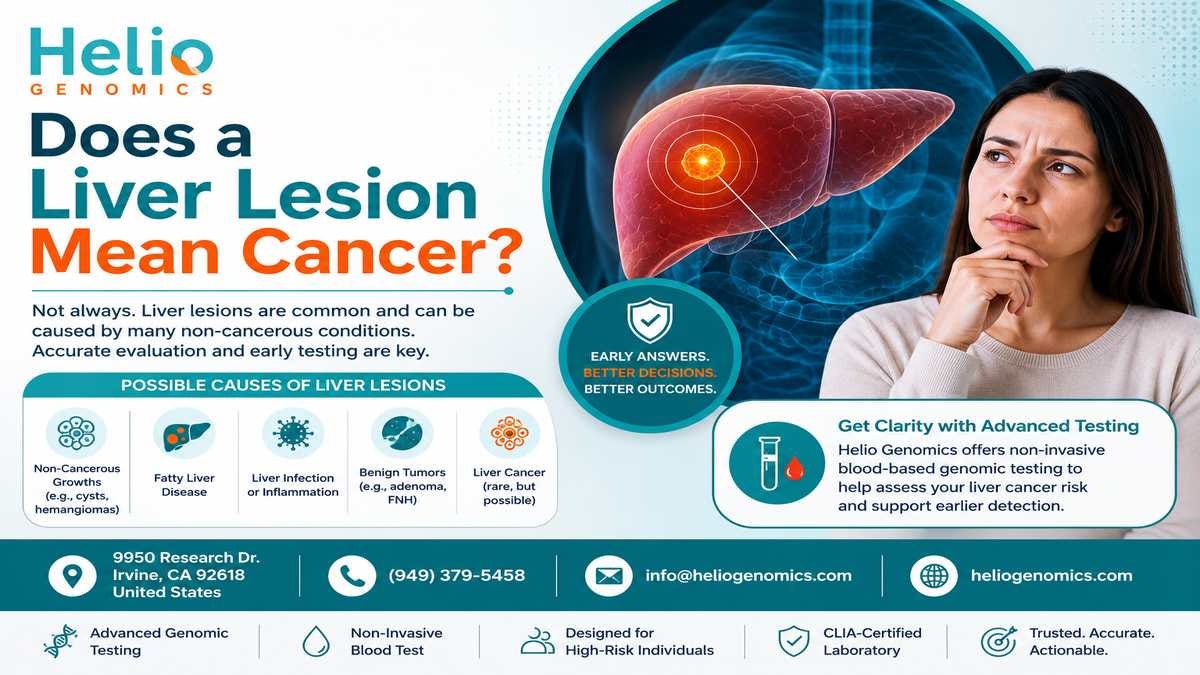
Helio Genomics infographic explaining that a liver lesion does not always mean cancer and may require further evaluation and early testing.
What Is a Liver Lesion?
A liver lesion is an abnormal area of tissue found within the liver. These lesions are commonly discovered during imaging studies such as ultrasound, CT scans, or MRI performed for unrelated medical reasons. Many liver lesions are harmless and remain stable for years without causing symptoms or requiring treatment. Others may need closer monitoring because they can represent precancerous changes or liver cancer. Determining the exact nature of a lesion requires careful evaluation by a healthcare provider using imaging, laboratory tests, and sometimes a biopsy.
Are Most Liver Lesions Cancerous?
Benign Liver Lesions
The majority of liver lesions are not cancerous. Common benign lesions include liver cysts, hemangiomas, and focal nodular hyperplasia, all of which usually require little or no treatment unless they cause symptoms. These conditions often remain stable over time and are frequently discovered by chance during routine imaging. Physicians evaluate their appearance, size, and growth patterns to determine whether additional testing is necessary. Regular follow-up imaging may be recommended for certain lesions to ensure they remain unchanged.
Cancerous Liver Lesions
Some liver lesions may represent primary liver cancer, such as hepatocellular carcinoma, or cancer that has spread from another organ. Patients with chronic liver disease, cirrhosis, hepatitis B, or hepatitis C are at a higher risk of developing malignant liver lesions. In these cases, physicians use imaging characteristics, blood-based biomarkers, and clinical history to determine the likelihood of cancer. Early evaluation is critical because liver cancer is often easier to treat when diagnosed before symptoms develop. This is why prompt assessment should never be delayed after a suspicious lesion is identified.
What Causes Liver Lesions?
Liver lesions can develop for many different reasons, and not all are related to cancer. Benign growths may form due to changes in blood vessels or normal liver tissue development, while infections and inflammatory conditions can also create abnormal areas visible on imaging. Fatty liver disease, chronic hepatitis, and cirrhosis increase the likelihood of developing more concerning liver abnormalities. Certain medications and inherited liver disorders may also contribute to lesion formation. Understanding the underlying cause helps physicians determine the most appropriate next steps.
How Doctors Determine Whether a Liver Lesion Is Cancer
Medical History and Risk Factors
The evaluation begins with a detailed review of the patient’s medical history and liver disease risk factors. Chronic hepatitis B, hepatitis C, cirrhosis, metabolic dysfunction-associated steatotic liver disease (MASLD), and long-term alcohol use all increase the possibility that a liver lesion may require further investigation. Family history and previous liver conditions also influence clinical decision-making. Physicians combine these risk factors with imaging findings to estimate the likelihood of malignancy. This comprehensive assessment guides additional testing when appropriate.
Advanced Imaging
Modern imaging plays a central role in evaluating liver lesions. Multiphase CT scans and contrast-enhanced MRI provide detailed information about blood flow patterns that help distinguish benign from malignant lesions. Certain enhancement patterns are highly suggestive of hepatocellular carcinoma, allowing experienced radiologists to make more confident diagnoses. Imaging also determines the number, size, and location of lesions, which are important factors in treatment planning. Repeat imaging may be recommended if a lesion cannot be fully characterized initially.
Blood-Based Biomarkers
Blood tests provide additional information during the evaluation process. Biomarkers such as alpha-fetoprotein (AFP), AFP-L3, and des-gamma-carboxy prothrombin (DCP) may support the assessment of patients at increased risk for hepatocellular carcinoma. An **early cancer detection test** may identify biomarker changes that complement imaging findings and help physicians determine whether additional diagnostic procedures are necessary. Blood testing alone cannot confirm cancer, but it provides valuable clinical information when combined with imaging. Together, these tools improve the accuracy of early detection strategies.
Can You Detect Liver Cancer Early?
Many patients ask **can you detect liver cancer early** after learning they have a liver lesion. The answer is yes, particularly for individuals who participate in routine surveillance because they have chronic liver disease or other recognized risk factors. Modern screening combines imaging with blood-based biomarkers to identify suspicious changes before symptoms develop. Early-stage liver cancer is often more treatable than advanced disease, making regular monitoring extremely important. Consistent surveillance significantly improves the likelihood of detecting cancer when more treatment options are available.
When Is a Biopsy Needed?
Not every liver lesion requires a biopsy because many can be diagnosed accurately using imaging alone. When imaging findings remain uncertain, physicians may recommend collecting a small tissue sample for laboratory analysis. A biopsy helps determine whether abnormal cells are present and identifies the exact type of lesion. The procedure is typically performed using image guidance to improve safety and precision. Your healthcare provider will recommend a biopsy only when the potential benefits outweigh the associated risks.
Who Should Be Closely Monitored?
Patients with chronic hepatitis B or C, cirrhosis, advanced MASLD, or significant alcohol-related liver disease require closer surveillance than the general population. Individuals with previous liver cancer or a strong family history may also need regular monitoring. Physicians often recommend routine imaging and laboratory testing at scheduled intervals based on each patient’s individual risk profile. Ongoing follow-up helps identify changes before symptoms become noticeable. This proactive approach supports earlier diagnosis and more effective treatment planning.
The Role of Screening in Liver Cancer Prevention
Routine **screening for liver cancer** remains one of the most effective ways to identify hepatocellular carcinoma before it progresses. High-risk patients typically undergo regular ultrasound examinations together with blood-based biomarker testing every six months. Screening does not prevent cancer from developing, but it greatly improves the likelihood of detecting disease at an earlier stage. Earlier diagnosis often expands treatment options and may improve long-term outcomes. Following your physician’s recommended surveillance schedule is an important part of protecting liver health.
Key Takeaways
A liver lesion does not automatically mean you have cancer, and many liver lesions are completely benign. However, individuals with chronic liver disease or other significant risk factors should undergo careful evaluation to rule out hepatocellular carcinoma. An **early cancer detection test, together with advanced imaging and clinical assessment, helps physicians determine whether a lesion requires additional investigation. Understanding[ can you detect liver cancer early](https://heliogenomics.com/patients/early-detection)** highlights the importance of routine surveillance for high-risk individuals. If a liver lesion is discovered, working closely with your healthcare provider ensures timely diagnosis and appropriate management.
Frequently Asked Questions
Does every liver lesion mean cancer?
No. Most liver lesions are benign and never become cancerous. Further testing helps determine whether a lesion is harmless or requires additional evaluation.
What is the most common benign liver lesion?
Hemangiomas are among the most common benign liver lesions. Liver cysts and focal nodular hyperplasia are also frequently diagnosed and usually do not require treatment.
Can liver cancer be detected before symptoms appear?
Yes. Regular surveillance using imaging and blood-based biomarkers allows physicians to detect many liver cancers before symptoms develop, particularly in high-risk individuals.
How are suspicious liver lesions evaluated?
Healthcare providers typically use contrast-enhanced imaging, blood-based biomarkers, medical history, and, when necessary, a biopsy to determine whether a liver lesion is cancerous.
Who should receive routine liver cancer screening?
People with chronic hepatitis B, hepatitis C, cirrhosis, advanced MASLD, or other major liver cancer risk factors should discuss routine screening with their healthcare provider.
메타데이터
- post_id
- 7dd16a74f07b
- slug
- does-a-liver-lesion-mean-cancer-7dd16a74f07b
- url
- https://medium.com/@heliogenomics77/does-a-liver-lesion-mean-cancer-7dd16a74f07b
- canonical_url
- https://medium.com/@heliogenomics77/does-a-liver-lesion-mean-cancer-7dd16a74f07b
- author_url
- https://medium.com/@heliogenomics77
- status
- ok
- fetched_at
- 2026-07-30 13:46:24