The Light We Forgot to Leave Out
What Tanizaki Jun’ichiro Knew About Beauty That We’ve Spent a Century Unlearning.
The Light We Forgot to Leave Out
What Tanizaki Jun’ichiro Knew About Beauty That We’ve Spent a Century Unlearning.

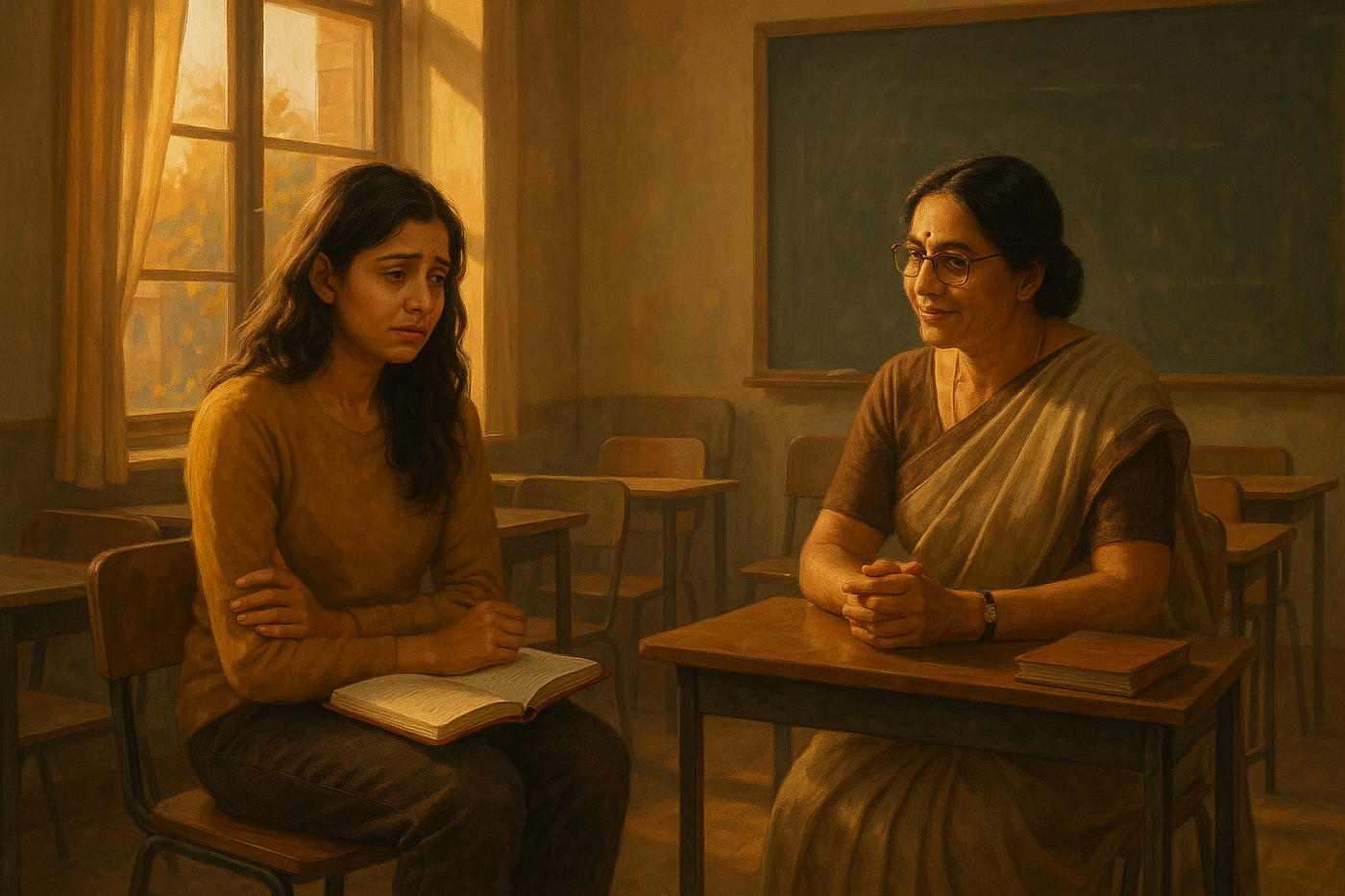
Reading a book amidst the beauty of yin and yang (Photo by Takeshi Kitagawa)
There are certain afternoons in Kyoto — late autumn, sky the color of old silk — when the gold leaf on a folding screen stops being decoration and becomes something else entirely. Something harder to name.
I saw it once. A room in a temple, barely lit, the kind of light that arrives sideways and then gives up. The byōbu — the folding screen — was old, its gold leaf worn unevenly in places, darkened at the edges where generations of hands had folded and unfolded it. And for perhaps twenty minutes, as the clouds shifted outside, that screen seemed almost to breathe. The gold didn’t shine. It moved. Not with light, but with the absence of it.
I’ve been trying to put that into words ever since.
Tanizaki Jun’ichiro did it for me. Ninety years ago.
Who Was Tanizaki?
Before we go further, a brief introduction for readers unfamiliar with the name.
Tanizaki Jun’ichiro (1886–1965) was one of the defining literary voices of modern Japan — a novelist, essayist, and cultural provocateur whose work spanned nearly six decades. His novels, including The Makioka Sisters and Some Prefer Nettles, explored the tension between Japan’s rapid Westernization and the quieter, more ambiguous world of traditional Japanese aesthetics. He was nominated multiple times for the Nobel Prize in Literature.
But in 1933, between novels, he wrote something small and strange and quietly radical: a long essay called In’ei Raisan — In Praise of Shadows.
It is not a straightforward argument. It is more like a confession, or a lament. Tanizaki noticed that Japan was flooding itself with electric light, adopting Western standards of brightness and clarity, and in doing so, was destroying something — a particular quality of beauty that had taken centuries to cultivate. Beauty that depended not on illumination, but on its careful, deliberate withholding.
The essay is 60 pages. Every sentence is worth reading slowly.
You Know This Feeling, Even If You Don’t Know the Word
You’ve probably been to a restaurant that was lit too well. Every surface exposed. Menu items photographed perfectly under controlled light. The food, when it arrived, looked exactly like the picture.
And somehow, the meal felt strangely flat.
It wasn’t the food. It was the light. Or more precisely, what the light had erased.
Tanizaki understood this in 1933. He didn’t have the vocabulary of modern restaurant design or Instagram optimization, but he understood the mechanism exactly: when everything is made visible, the imagination has nothing left to do. And when the imagination goes quiet, something essential about the experience of beauty goes with it.
This is the first idea at the heart of In Praise of Shadows — and it’s worth sitting with before we go deeper.
Three Places Where Shadows Do the Work
The Lacquer Bowl
Tanizaki begins, almost playfully, with lacquerware.
Japanese lacquer bowls — urushi — are among the most quietly spectacular objects in traditional craft. The black ones especially. But Tanizaki insists you are seeing them wrong if you look at them under electric light. The surface becomes glassy, a little garish. The depth disappears.
Put the same bowl in a room lit by a single candle or a paper lantern, and something shifts.
The lacquer stops reflecting and begins absorbing.
The warmth of the light sinks into it. Shadows pool in the curves. The bowl seems to hold darkness like liquid.
He’s not being romantic about this. He’s making an almost technical argument: the material was designed for low light. The craftsmen who developed these finishes over centuries were working in dim interiors, by lamplight or firelight. The aesthetics grew from the conditions. Electric light didn’t reveal the object — it changed it into something it was never meant to be.
I’ve thought about this in my own design work. There’s a version of every textile, every pattern, every surface that only exists in certain light. Not better or worse — different. The question is whether we ever stop long enough to let that version appear.
The Gold Leaf Screen
This brings me back to Kyoto.
Tanizaki anticipates the obvious objection: surely gold leaf is meant to be bright? Surely it’s decorative excess, designed for impact and visibility?
His answer is essentially: no. And once he explains, you can’t unsee it.
The gold leaf on old Japanese screens and architectural interiors was not meant to catch light — it was meant to catch what little light existed in a dark room and redistribute it slowly, gently, across a space that had no other source of warmth. In deep shadow, a gilded screen becomes a secondary light source, not a decoration. It holds the room together. It makes the darkness inhabitable.
Move that screen into a brightly lit gallery, and it becomes something else — impressive, certainly, but its function has been amputated.
You’re looking at the skin of the object without the body it was made to inhabit.
This is, I think, one of the most counterintuitive ideas in the essay. That restraint — darkness — was the condition that made opulence work. Not despite the shadows, but through them.
The Lavatory
Tanizaki saves his strangest observation for last — or rather, he places it so calmly among the others that it almost doesn’t register as strange.
He argues that the most aesthetically considered room in the traditional Japanese house is the toilet.
Not the receiving room. Not the tokonoma alcove with its hanging scroll and single flower. The lavatory.
In old Japanese architecture, the toilet was placed at the end of a covered walkway, apart from the main house, surrounded by garden. You had to walk to reach it, sometimes through rain or cold. The room itself was dark and cool, with a small wooden lattice window that let in — not light exactly, but the idea of light. A filtered suggestion of the garden outside. Moss. The sound of water somewhere.
Tanizaki writes that poets and literary men of old were particularly fond of this room for its contemplative atmosphere. He credits it with inspiring an uncommon quality of quiet thought.
I used to find this mildly eccentric. Then I spent a winter in Kyoto.
The house where I was staying had no central heating. The toilet — separate from the bath, as is traditional — was at the far end of a narrow corridor. On cold nights it was genuinely uncomfortable. But in the mornings, there was sometimes a quality of light through the small frosted window, with steam from the bathhouse nearby and the sound of a neighbor’s garden — a birdsong — and I understood, in a small and specific way, what Tanizaki meant.
A space designed to make you pause, cool down, become briefly aware of weather and season and the pace of your own breath — that is not inefficiency. It’s a different theory of what a room is for.
What He Was Really Saying
Underneath the aesthetics — the lacquer, the gold, the lavatory — Tanizaki is making a larger argument.
Western modernity, as it arrived in Japan, brought with it a particular value system: visibility is clarity, clarity is progress, and shadow is simply a problem to be solved with better lighting. The ideal was to make everything available to the eye, all at once, without ambiguity.
Japanese aesthetic tradition had built itself on something close to the opposite premise. Not everything should be seen. Not everything should be immediately available. The parts left in shadow are not gaps in the design — they are invitations to the imagination, and to the other senses. A surface half-lit is more complex, more alive, more interesting than one fully exposed.
This is not mysticism. It’s a theory of perception that Western design has been slowly and partially rediscovering — in the language of “negative space,” in the architectural interest in “threshold” and “liminal zones,” in the deliberate under-lighting of restaurants that want their rooms to feel like something worth being in.
Tanizaki was there first. And he was specific.
What I’m Still Thinking About
I don’t read In Praise of Shadows as a protest against modernity. Tanizaki was too honest for that — and too in love with electric blankets and Western toilets, which he admits cheerfully.
What he’s mourning is something subtler: a set of perceptual habits that took centuries to develop, calibrated to specific conditions of light and material and space, and that were being abandoned in a generation without anyone quite noticing what was lost.
Every culture has its version of this. There are things you learn to see slowly, through repeated exposure to a particular kind of beauty, and once you’ve been trained out of that seeing — by brightness, by speed, by the requirement that everything be immediately legible — it’s hard to get back.
I still visit the temple in Kyoto occasionally. The screen is still there. On overcast afternoons, it still does what it does.
But I notice I have to wait longer now before I stop looking for the light and start letting the shadows speak.
Tanizaki Jun’ichiro’s In Praise of Shadows (陰翳礼讃, In’ei Raisan, 1933) is widely available in English translation. The Thomas J. Harper and Edward G. Seidensticker translation, published by Leete’s Island Books, remains the standard edition.
— Takeshi Kitagawa
This article was developed with AI assistance. The thinking, research, and perspective are mine. The English expression is a collaboration.
메타데이터
- post_id
- 7de5afa5ddd7
- slug
- the-light-we-forgot-to-leave-out-7de5afa5ddd7
- url
- https://medium.com/readers-club/the-light-we-forgot-to-leave-out-7de5afa5ddd7
- canonical_url
- https://medium.com/readers-club/the-light-we-forgot-to-leave-out-7de5afa5ddd7
- author_url
- https://medium.com/@shibumi4011
- status
- ok
- fetched_at
- 2026-06-09 15:37:30