please share: AANHPI artist grants for Massachusetts residents up to $1000. Apply by 3/18/2024
Update March 1, 2026:
why setting up AANHPI artist grants from the Commonwealth of Massachusetts was important
Update March 1, 2026:
The grant is happening again, but we have increased it to $5000 maximum each recipient. It’s lumped together with the other small grants AAPIC awarded, so it’s not exclusively for artists. Application deadline March 15, 2026.
AAPIC has gone through a lot of changes since 2024. Due to many factors, we could not get this grant going again in 2025, but it’s running again in 2026. I look forward to learning about more talented artists but with it being lumped together with other small grants, it will be difficult to decide between, for example, a widely reaching film, fictional or documentary, discussing unlawful imprisonment by ICE vs. a grassroots organization that offers legal support for those imprisoned by ICE. Hopefully there will be enough to fund both.
What I wrote in 2024:
(This article originally had the title of “please share: AANHPI artist grants for Massachusetts residents up to $1000. Apply by 3/18/2024” however, that deadline passed. It is still worthwhile to leave this article up though. I changed the title to what it is currently)
I was voted in as the Chair of the Arts and Culture Subcommittee of the Commonwealth of Massachusetts Asian American and Pacific Islanders Commission a few months ago, and was appointed to be a Commissioner back in February 2023. (more on that later)
I’m excited to announce that we set up grants for artists who are Massachusetts residents and identify as Asian American, Native Hawaiian, and/or Pacific Islander up to $1000 each. It’s not much, but this is 100% of the subcommittee’s budget. Our subcommittee’s budget is $5000, but I’ll be checking in with other subcommittees to see if they have unused budget to give out more of these grants. The application is live now, until March 18, 2024. To the applicants, I look forward to seeing and reading about your talent and am proud of you for telling your own stories through art.
(Application link was here) (AAPIC’s IG post) (AAPIC FB post) (LinkedIn post)
(Update: April 18, 2024
We received 74 applications and I think at least 68 deserved to get the grants. Reading the applications was a reminder of how talented and compelling AANHPI artists are. We are multifaceted, face racism, are forced into having resilience, conflict resolution skills, empathy, and develop gripping ways to tell our stories through art. It’s crucial to remind the world that “DEI” initiatives are not supporting undeserving or lesser talent; our identities and experiences make our work compelling.
Of those who I didn’t mark as a deserving winner, the reasons were mostly related to rushing through the application, not the talent or quality of the art. There was one person who identified as high school student in the application whose work wasn’t there yet in terms of quality but I applaud that they applied as a teenager.
I fought for more winners and was able to get the budget for 10 grants, double what our subcommittee’s budget is. I wish we could have awarded 68+, but this is the first year of the grant, so I likely need to lower my hopes. $10,000 is relatively low compared to other aspects of the state budget but $1000 is still helpful to artists.
This is a start. Hope it can be impactful, and hope we can increase the number of grants we can give out next year.
Links to other grant opportunities, from places with significantly higher budget, will be pasted below)
In a country that has a history of devaluing AANHPI storytelling/artistry/experiences, and the corollary of unjustly overvaluing white stories/experiences/art, it is meaningful that the Commonwealth of Massachusetts shows that they also believe the artwork of AANHPI is valuable to the entire state, even if it is demonstrated with only $5000 in grants. While many in AANHPI communities recognize that our creative talent has always been there, the ubiquitous devaluing of our humanity throughout history has caused internalized racism where we sometimes don’t even recognize or believe in our own talent.
Too often, white mediocrity is celebrated and rewarded more than POC excellence. Although things have gotten better in the last few decades, so many US history classrooms still center and unjustly elevate white European contributions to the US, and ignore AANHPI contributions despite our centuries long history of contributions to this country. These racist ideas of who is and isn’t important gets reinforced in what’s deemed important for “core” classes, and in standardized tests, some required by the state and universities.
In addition to dealing with and combatting racism in our own lives, people of color are often expected by too many white folks to solve racism without compensation in a Sisyphean way that avoids white discomfort, including not mentioning the words: race, racism, white, Asian, people of color, Black, Latine/x/o/a, etc. and not discussing that devaluing of people of color is a problem, and the necessary but often ignored acknowledgement of the corollary of devaluing people of color–overvaluing white people.
If people of color fail at avoiding white discomfort, we too often get labeled as people who “talk too much about race,” as trouble makers, and not as team players, further harming our careers and personal well being. And these are the people who at least outwardly admit racism is a problem that needs solving. Some white folks deny that racism exists.
How much effort do people of color have to spend making the people who cause us harm comfortable?
I disappointingly need to write a “not all white people” statement here to avoid certain white folks being too offended by reading this despite using language that doesn’t say “all white people.” The white folks I’m close to would appreciate my direct language, recognize the problems I describe, and respect me for sharing my personal experiences, and work to fight against racism in their communities. I hope more white people follow that empathetic lead.
As a photographer and videographer for my career, and a multi-genre violinist, (who also plays a few other instruments), I know what it’s like to be bombarded by inaccurate, racist, ubiquitous messaging from too many white storytellers that Asian people can only be technically good at things and lack creativity and artistry. Setting up this grant helps reinforce the idea on a state level that AANHPI art is important.
If you are interested to hear more about part of what drives my art, check out this video.
[embed]
(this is 12 minute video)
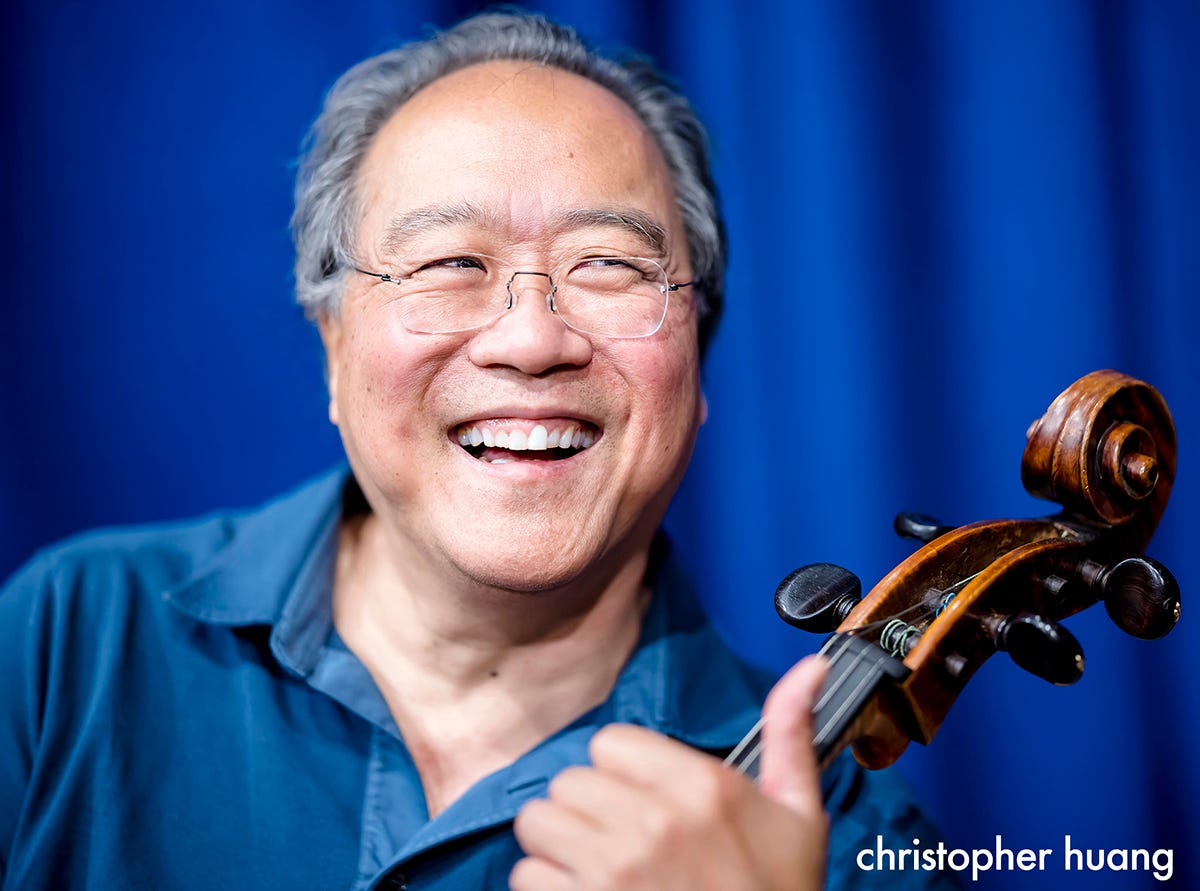
These Instagram links to portraits of the following people include me speaking (much more briefly) about the impact of them on my life, including discussing what it was like dealing with those inaccurate racist ideas of Asian creativity.
[embed]
I was appointed as a Commissioner by staff members of the House Speaker’s office after applying for this volunteer position. There are 7 appointing authorities: Governor, Senate President, Treasurer, Secretary of State, House Speaker, Attorney General, and Auditor, and applicants have no control or choice in who reads the application. Each authority appoints 3 Commissioners. Based on the fact that the House Speaker wasn’t copied on any of the emails for my application or appointment, it seems like it’s the staff that reads the applications and not the Governor, for example.
Although I don’t know the race of those who appointed me based only on their names/email addresses, given how so much of politics is made up of white folks, I wouldn’t be surprised if the application process involves white staffers judging whether the AANHPI applicants are deserving to provide unpaid DEI consulting to the Commonwealth of Massachusetts. Of those appointing authorities, all but Attorney General Andrea Campbell are white. Any time white folks are judging people of color there’s an uncomfortable power dynamic, made worse that they are judging an AANHPI’s ability to serve other AANHPI.
Given white US history of expecting people of color to provide unpaid (or really cheap) labor, I dislike that so many of these state commissions (there are many) involve expecting people of color to do unpaid work.
My generically written 3 sentence Commissioner appointment letter, written on official House Speaker letterhead, contained typos and grammar mistakes, which does not instill in me the idea that they really care about this Commission. They likely sent the same letter, with multiple mistakes within 3 sentences, to other people they appointed. Growing up, I had at least one white English teacher in middle school who would treat me like a foreigner who didn’t belong in the US and struggled with English if I made ANY grammar mistake or typo. I pointed out the errors and asked the House Speaker staff members on the email to send a corrected letter, and brought up this anecdote of my racist English teacher. They did send a corrected letter, but did not acknowledge my anecdote. I understand government staffers deal with other important matters and likely are understaffed, but their first impression was not good.
I do hope that if the white appointing authorities show up for future AAPIC events, including the Unity Dinner, they don’t literally and figuratively center themselves among a group of AANHPI people. They have, more often than not, at previous events. In my photography career, I’ve photographed many events where important white leaders/elected officials are invited to events celebrating the contributions of people of color, and tactlessly center themselves, as if they’re there just for a photo op to show they don’t only stand in photos with white people. Earlier in my career I didn’t say anything but now I do what I can to ask them to not stand in the center so they can avoid coming off as unempathetic, self centered, and obtuse. I’ve met a few white leaders who at least have the empathy and social skills to know when they shouldn’t be centered as a supporter/guest.
I did knowingly apply for this volunteer position though. I’m glad I could do something impactful my first 12 months as Commissioner. I hope I can do more impactful things too, but getting anything done requires a lot of hoop jumping, so I’m not too hopeful. The Commission, from my observations 12 months in, not anywhere near as well versed as other Commissioners who have been appointed longer, wasn’t set up by the state to be as impactful as it could be. There are many inefficiencies and limitations that are seemingly beyond the control of any of our impressive, caring, and passionate Commissioners or AAPIC staff members. It leads me to question how much the state sees this commission as performative while not really wanting much impact in the fight for equity and inclusion. I’ve had significantly more impact in my work outside this commission. I have no frame of comparison though, since I have never worked in government, aside from being hired to photograph political portraits and events. I hope things can get better, and any appointing authority or their staff members reading this works to make things better. I have doubts about how much impact we can have in this existing structure/system. I suspect many of these commissions were formed when those historically excluded were desperate for a seat at any table. I would hope that we could raise the bar from that, and hope future generations of people demand more.
I had an idea to put on an AANHPI performing artist showcase, with the vision to pay all artists well, and normalizing the idea that even if the artists had quoted lower, to tell them that they deserve more and pay them more, and to get key hirers of performing artists in the crowd, but that would require way more than $5000, so these grants are at least one thing we could realistically do with our budget, and it opens it up to other forms of non-performing art. Sadly, because of all the ubiquitous devaluing of people of color, we often internalize that we aren’t worth as much as we are.
Leo Hwang, the other Commissioner on this 2 person subcommittee, and 2 of our AAPIC staff members, Lizette and Jennifer, who are assigned to this subcommittee, have contributed greatly to setting this up and I’d like to thank them for their work on this.
Leo and I (both Asian in ethnicity) will be deciding who will be awarded these grants. I’ll likely have to abstain from voting on the applicants who I personally know.
Although it’s better that Asian Americans (rather than white people) are deciding who receives these grants, my Asian American identity, my identity as a professional photographer and videographer who shoots a lot of different arts doesn’t make me an authority on judging the art of others. Art is so subjective. Even within my expertise, there aren’t any rules or right ways to capture things. Rules limit creativity. My experience as a musician and as a fan of music doesn’t make me any authority on music. My experience as someone who has photographed a lot of dance doesn’t make me any authority on judging dance. I have some knowledge, but that doesn’t make my opinion any more important than others. I have very little knowledge about sculpture, for example, and don’t feel at all qualified to make any informed opinions on sculpture. My opinion on someone’s art really doesn’t matter, except that I was placed in this position to help decide who receives the grants. I believe I’m the only professional artist in the commission and the other commissioners saw me advocating for artists, but I haven’t asked them specifically why they voted. With the exception of art disciplines that require a lot of specific elements (such as European classical violin, figure skating, ballet, among many others), most judges of art don’t have more authority or importance than others but may be placed in positions where they are deciding impactful things.
These statements do not reflect any viewpoint of the AAPIC, or Arts and Culture Subcommittee as a whole. I cannot speak for the Commission.
(There’s many grants I haven’t even heard of so I am not able to make this an exhaustive list)
Mass Cultural Council massculturalcouncil.org
There are grants for creative individuals which will open again in fall 2024, and two grants open now, one for operating grants for arts organizations with a deadline of June 13, 2024, and another for festivals and projects with a deadline of May 23, 2024. There’s also lists of Local Cultural Councils that have grants.
Each program has a phone number and email address for questions as well as helpful information including recordings of info sessions. You’d have to click into Application Process to see info session recordings, sign up for office hours to speak to staff more knowledgeable about the grant, etc.
https://massculturalcouncil.org/organizations/festivals-projects/
https://massculturalcouncil.org/organizations/operating-grants-for-organizations/
City of Boston https://boston.gov/grants https://www.boston.gov/departments/arts-and-culture#our-grant-opportunities
There’s also the recently announced Wake Up The Night Grant which gives $10,000 to individuals and groups who put on free night time activities
https://www.boston.gov/news/mayor-wu-announces-launch-wake-night-grant
$3000 Opportunity Fund June 9 deadline https://www.boston.gov/departments/arts-and-culture/opportunity-fund
The Boston Foundation https://www.tbf.org/nonprofits/grant-making-initiatives/asian-community-fund
https://www.tbf.org/nonprofits/grant-making-initiative
LAB supports a cohort of 30 artists and creators at different points in their careers with individual grants of $30,000 to nurture their creative practice and artistry and, for some grantees, to also present new and/or existing work. Over the course of the 18-month grant period, grantees commit to participate in at least 70 percent of the seminars and sessions, shaping peer-to-peer learning to deeply connect, empower, and encourage their fellow artists to advance their work, practice, and relationships.
The goal of the biennial Brother Thomas Fellowship program is to support and celebrate a diverse group of Greater Boston artists working at a high level of excellence in a range of disciplines — the visual, performing, literary, media and craft arts — and to enhance their ability to thrive and create new work. Each Brother Thomas Fellow receives an unrestricted award of $15,000.
The Shout Syndicate was formed in 2017 as a vehicle to develop new funders and supporters for Boston’s creative youth development ecology through the local for-profit performing arts sector and national field. This pilot grant program provides grants to proven, high-quality creative youth development organizations in need of funding support for youth-centered programming.
The mission of the Free for All Endowment Fund at the Boston Foundation is to ensure that everyone from the Boston region — children, adults, families — will have regular and permanent access to the rich world of classical, orchestral music and related cultural events. The Free for All Endowment Fund provides grants to organizations who strive to respond to the moment by expanding programming and engaging different audiences across Greater Boston.
With a mission to strengthen the field of dance in Greater Boston, Next Steps for Boston Dance provides grants and multi-layered support for Greater Boston’s choreographers and Circus Artists. This grant program supports choreographers and circus artists creating original work in any dance genre to move forward and take a “next step” in their careers by providing: $5,000 of paid rehearsal space that can be used in a wide variety of venues, five consulting meetings with expert advisors, $6,000 in implementation funds, cohort meetings to learn from other awardees, and access to ongoing support.
NEFA (New England Foundation for the Arts)
메타데이터
- post_id
- 7df0ffa0cf00
- slug
- please-share-aanhpi-artist-grants-for-massachusetts-residents-up-to-1000-apply-by-3-18-2024-7df0ffa0cf00
- url
- https://medium.com/@christopherhuang/please-share-aanhpi-artist-grants-for-massachusetts-residents-up-to-1000-apply-by-3-18-2024-7df0ffa0cf00
- canonical_url
- https://medium.com/@christopherhuang/please-share-aanhpi-artist-grants-for-massachusetts-residents-up-to-1000-apply-by-3-18-2024-7df0ffa0cf00
- author_url
- https://medium.com/@christopherhuang
- status
- ok
- fetched_at
- 2026-07-14 20:41:06





