Gehu Ki Kheti: Sustainable Practices for Higher Farmer Income
Gehu Ki Kheti, or wheat farming, is one of the most important agricultural activities in India. Wheat is a major rabi crop and a staple…
Gehu Ki Kheti: Sustainable Practices for Higher Farmer Income
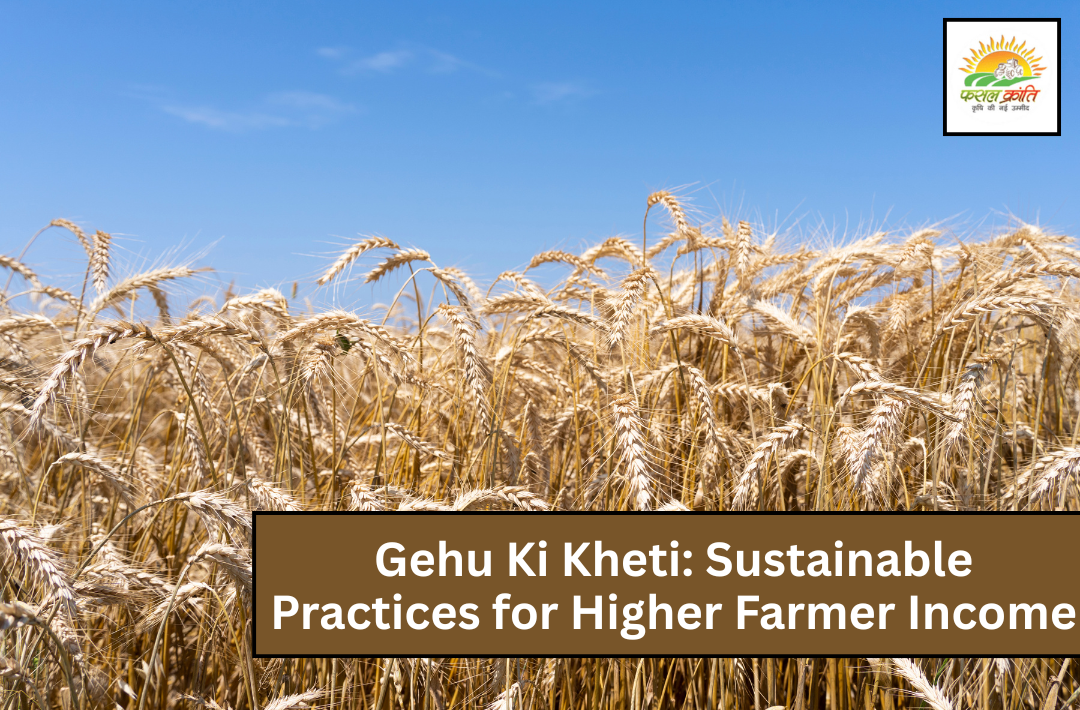
Gehu Ki Kheti, or wheat farming, is one of the most important agricultural activities in India. Wheat is a major rabi crop and a staple food for millions of people. From chapati and bread to flour-based food products, wheat plays a key role in daily diets and the national food supply. For farmers, Gehu Ki Kheti is not only a traditional practice but also a major source of income.
However, modern agriculture is facing new challenges. Rising input costs, climate change, declining soil fertility, water shortage, pest attacks, and unpredictable weather patterns are affecting wheat productivity. In such conditions, farmers need sustainable practices that reduce expenses, improve crop health, protect natural resources, and increase overall profit.
Sustainable Gehu Ki Kheti focuses on smart planning, better soil management, efficient irrigation, improved seed selection, balanced nutrition, and eco-friendly pest control. These methods help farmers grow more wheat with fewer resources while keeping the land productive for future generations.
Importance of Gehu Ki Kheti in India
Wheat farming is mainly practiced in states such as Uttar Pradesh, Punjab, Haryana, Madhya Pradesh, Rajasthan, Bihar, Gujarat, and Maharashtra. India is among the leading wheat-producing countries in the world. The crop supports food security, rural employment, flour mills, food processing units, and livestock feed systems.
For small and marginal farmers, Gehu Ki Kheti is a dependable rabi season crop because it has strong market demand and government support through Minimum Support Price. But to earn higher income, farmers must move beyond traditional methods and adopt scientific and sustainable wheat farming practices.
A good wheat crop depends on proper land preparation, timely sowing, quality seed, suitable variety, balanced fertilizer use, irrigation at critical stages, and timely harvesting. Even small improvements in these areas can increase yield and reduce losses.
Climate and Soil Requirement for Wheat Farming
Wheat grows best in a cool and dry climate. The ideal temperature for germination is around 20°C to 25°C, while grain filling needs slightly lower temperatures. High temperature during grain development can reduce grain size and final yield. That is why timely sowing is very important in Gehu Ki Kheti.
Wheat can be grown in different soil types, but well-drained loamy soil is considered best. The soil should have good organic matter, proper moisture-holding capacity, and a neutral to slightly alkaline pH. Heavy clay soils may cause waterlogging, while sandy soils may need more frequent irrigation and nutrient management.
Before sowing, farmers should test their soil. Soil testing helps identify nutrient deficiency and guides the correct use of fertilizers. This reduces unnecessary expenses and improves crop performance.
Land Preparation for Sustainable Gehu Ki Kheti
Proper land preparation gives wheat plants a strong start. The field should be clean, level, and free from weeds. A well-prepared seedbed improves seed germination and root development.
Farmers should avoid excessive tillage because it increases fuel cost and damages soil structure. Conservation agriculture practices such as minimum tillage or zero tillage can be useful in wheat farming, especially after paddy harvesting. Zero tillage helps save time, reduce diesel use, preserve soil moisture, and allow timely sowing.
Laser land leveling is another useful practice. It ensures uniform irrigation, reduces water wastage, and improves crop stand. Though the initial cost may look high, farmers can use custom hiring centers to access laser leveling services at affordable rates.
Selection of Improved Wheat Varieties
Choosing the right variety is one of the most important steps in Gehu Ki Kheti. Farmers should select wheat varieties according to their region, soil type, irrigation facility, sowing time, and disease pressure.
Popular wheat varieties in India include HD-2967, HD-3086, DBW-187, DBW-303, PBW-343, PBW-725, WH-1105, HI-1544, and HI-8759. Some varieties are better for timely sowing, while others perform well under late-sown conditions. Farmers should prefer certified seeds from reliable sources because seed quality directly affects germination and yield.
Before sowing, seed treatment is necessary. It protects young plants from seed-borne and soil-borne diseases. Seed treatment is a low-cost practice that can prevent major crop losses at the early stage.
Best Time for Wheat Sowing
Timely sowing is a key factor in successful wheat farming. In most wheat-growing regions of India, the ideal sowing time is from mid-October to mid-November. Late sowing may reduce yield because the crop faces higher temperature during grain filling.
If sowing is delayed after paddy harvest, farmers should choose late-sown wheat varieties. They should also use proper seed rate and irrigation management to support quick establishment.
Timely sowing helps the crop use winter conditions effectively. It also improves tillering, root growth, and grain formation. Farmers who sow wheat at the right time usually get better production and higher income.
Seed Rate and Sowing Method
The normal seed rate for wheat is usually around 100 to 125 kg per hectare, depending on the variety, sowing method, and field condition. For late sowing, the seed rate may be slightly increased to maintain proper plant population. Line sowing is better than broadcasting because it ensures uniform spacing, better nutrient use, and easier weed control.
Seed drills and zero-till seed drills can help farmers sow wheat at proper depth and spacing. The ideal sowing depth is generally 4 to 5 cm. Proper spacing allows plants to grow strongly and reduces competition for sunlight, water, and nutrients. This improves the overall efficiency of Gehu Ki Kheti.
Balanced Fertilizer Management
Balanced nutrition is essential for healthy wheat farming. Farmers often apply more nitrogen but ignore phosphorus, potassium, sulphur, zinc, and organic matter. This creates nutrient imbalance and affects soil health.
A general fertilizer recommendation for wheat is around 120:60:40 kg NPK per hectare, but the exact dose should be based on soil testing. Nitrogen should be applied in split doses. One part should be given at sowing, and the remaining should be applied after first irrigation and during active growth stages.
Farmers should also use organic manure, compost, farmyard manure, green manure, and crop residue management. Organic matter improves soil structure, microbial activity, moisture retention, and nutrient availability. Use of biofertilizers can also support sustainable Gehu Ki Kheti. They improve nutrient uptake and reduce dependency on chemical fertilizers over time.
Efficient Irrigation Practices for Gehu Ki Kheti
Water management plays a major role in wheat productivity. Wheat needs irrigation at important growth stages such as crown root initiation, tillering, jointing, flowering, and grain filling. The first irrigation at crown root initiation stage is very important because it supports root growth and tiller formation. Over-irrigation should be avoided because it wastes water, increases cost, and may cause nutrient leaching. Farmers should irrigate according to soil moisture and weather conditions.
Sprinkler irrigation and drip irrigation can be useful in areas facing water scarcity. These methods improve water-use efficiency and reduce wastage. Laser land leveling also supports uniform water distribution across the field. Sustainable wheat farming means producing more grain with less water. This is especially important as groundwater levels are falling in many agricultural regions.
Weed Management in Gehu Ki Kheti
Weeds compete with wheat plants for nutrients, water, sunlight, and space. If not controlled on time, weeds can reduce yield significantly. Common weeds in wheat fields include Phalaris minor, Chenopodium, wild oat, and broadleaf weeds.
Farmers should follow integrated weed management. This includes clean seed, proper field preparation, timely sowing, crop rotation, line sowing, and need-based herbicide use. Manual weeding may be possible in small fields, while larger farms may need chemical control.
Herbicides should be used carefully and at the recommended dose. Repeated use of the same herbicide may lead to resistance. Therefore, farmers should rotate weed-control methods and avoid unnecessary chemical use.
Integrated Pest and Disease Management
Wheat farming can be affected by diseases such as rust, powdery mildew, loose smut, and Karnal bunt. Pest problems may also occur depending on region and weather. Sustainable Gehu Ki Kheti requires regular crop monitoring so that problems can be detected early. Farmers should use resistant varieties, treated seeds, proper spacing, balanced fertilizers, and crop rotation.
Excessive nitrogen should be avoided because it can make plants more vulnerable to diseases. Chemical pesticides or fungicides should be used only when needed and according to expert advice. Integrated Pest Management reduces input cost and protects beneficial insects, soil organisms, and the environment.
Crop Rotation and Soil Health
Growing wheat continuously on the same field can reduce soil fertility and increase pest and disease pressure. Crop rotation is a simple and powerful method to maintain soil health.
Farmers can rotate wheat with pulses, oilseeds, vegetables, or fodder crops depending on local conditions. Pulses help fix nitrogen in the soil and reduce fertilizer requirement for the next crop. Crop rotation also breaks pest and disease cycles.
Residue management is another important part of sustainable wheat farming. Burning crop residue damages soil microbes, reduces organic matter, and causes air pollution. Instead, farmers can use residue as mulch, compost, or incorporate it into the soil.
Use of Modern Technology in Wheat Farming
Modern technology can make Gehu Ki Kheti more profitable. Mobile apps, weather forecasts, soil testing services, drone monitoring, seed drills, laser leveling, and digital advisory platforms help farmers make better decisions.
Weather-based advisories can guide irrigation, fertilizer application, and disease management. Drones can help monitor crop health and identify stress areas. Custom hiring centers allow small farmers to use machines without buying expensive equipment.
Digital tools also help farmers access market prices, government schemes, crop insurance, and expert advice. When technology is used with practical field knowledge, wheat farming becomes more efficient and income-oriented.
Harvesting and Post-Harvest Management
Wheat should be harvested when the crop turns golden yellow and grains become hard. Delayed harvesting may lead to grain shattering, lodging, or weather-related losses. Early harvesting may result in higher moisture and poor grain quality.
After harvesting, grains should be properly dried before storage. Moisture content should be reduced to a safe level to prevent fungal growth and storage pests. Clean storage bags, dry storage rooms, and regular inspection are necessary. Post-harvest care directly affects farmer income. Better grain quality can help farmers get better prices in the market.
How Sustainable Practices Increase Farmer Income
Sustainable Gehu Ki Kheti increases farmer income in several ways. Timely sowing and improved varieties increase yield. Soil testing and balanced fertilizer use reduce unnecessary expenses. Efficient irrigation saves water and electricity. Integrated pest and weed management reduces crop loss. Better harvesting and storage improve grain quality.
Farmers can also increase income by selling wheat straw as fodder, using crop residue for compost, joining Farmer Producer Organizations, and selling produce directly in better markets. Value addition through flour processing can also improve returns in some areas. The goal is not only to produce more but to produce profitably. Sustainable wheat farming helps farmers reduce risk and earn stable income year after year.
Conclusion
Gehu Ki Kheti remains one of the most important farming systems in India. But traditional methods alone may not be enough in today’s changing agricultural conditions. Farmers need sustainable and scientific wheat farming practices to improve productivity, reduce cost, and protect soil and water resources.
By using quality seeds, suitable varieties, timely sowing, balanced fertilization, efficient irrigation, weed control, crop rotation, and better post-harvest management, farmers can achieve higher income from wheat cultivation. Sustainable Gehu Ki Kheti is not just good for the environment. It is also good for farmer profit, food security, and the future of Indian agriculture.
메타데이터
- post_id
- 7e06b4f19c85
- slug
- gehu-ki-kheti-sustainable-practices-for-higher-farmer-income-7e06b4f19c85
- url
- https://medium.com/@hatoliya50/gehu-ki-kheti-sustainable-practices-for-higher-farmer-income-7e06b4f19c85
- canonical_url
- https://medium.com/@hatoliya50/gehu-ki-kheti-sustainable-practices-for-higher-farmer-income-7e06b4f19c85
- author_url
- https://medium.com/@hatoliya50
- status
- ok
- fetched_at
- 2026-07-09 20:42:47





