How to Actually Reduce Fuel Costs in Water Well Drilling (It’s Not What You Think) ⛽
The metric most drilling teams track is the wrong one — here’s what to measure instead.
How to Actually Reduce Fuel Costs in Water Well Drilling (It’s Not What You Think) ⛽
The metric most drilling teams track is the wrong one — here’s what to measure instead.
There’s a number almost every drilling crew watches obsessively: liters per hour.
It feels logical. Less fuel burned per hour = lower costs. Simple math, right?
Wrong. And this one misconception quietly bleeds money out of drilling projects all over the world. 🌍
The Real Metric That Matters
Here’s the formula nobody talks about enough:
Fuel Cost per Meter = Fuel Consumed ÷ Meters Drilled
That’s it. That’s the number your project lives or dies by.
Let me show you why with two side-by-side scenarios:
Rig ARig BDaily fuel consumption100 L120 LDaily drilling progress20 m35 mFuel per meter5 L/m3.43 L/m
Rig B burns more diesel every single day. But Rig B is the cheaper option per meter of finished well. This is why blindly chasing low hourly consumption is a trap — it optimizes the wrong variable.
The 8 Levers That Actually Move the Needle
1. 🔩 Match Your Equipment — Precisely
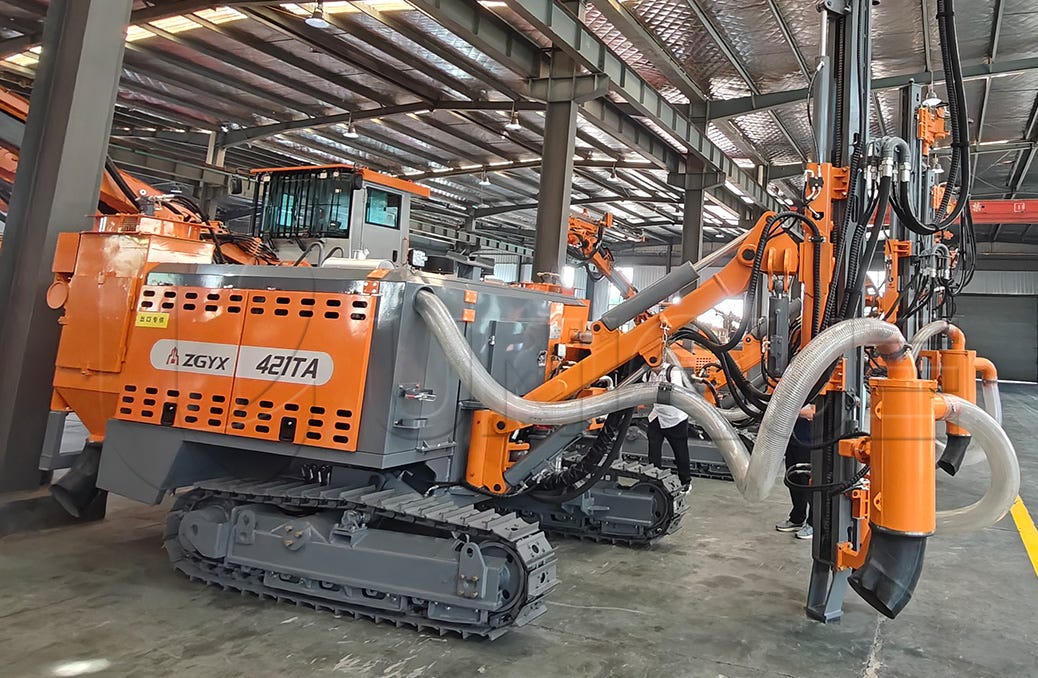
The most underappreciated fuel-waster in DTH drilling is a mismatched air compressor. Too small, and your DTH hammer underperforms — rocks don’t crush cleanly, cuttings don’t clear, and your penetration rate crawls. Too large, and you’re burning diesel to spin a compressor that’s running 40% loaded.
The target: compressor output matched to the DTH hammer’s rated working pressure and airflow. Not close to it. Matched to it.
The same logic applies to mud pumps. Oversized auxiliary equipment running light loads is a silent fuel tax on every project.
2. ⚡ Fix Your Drill Bit Selection
A worn or mismatched bit is the great disguiser of fuel waste. The bit still spins. The rig still runs. But penetration slows, engine load climbs, and hours-per-meter balloons.
Selection criteria that actually matter:
- Formation hardness (soft clay vs. granite demand completely different geometries)
- Borehole diameter
- Drilling method (rotary vs. DTH)
- Compatible DTH hammer model
Swap a dull bit 10% earlier than you think you need to. The diesel you save will far outweigh the bit cost.
3. 🛑 Kill Idle Time — Ruthlessly
This one requires almost no capital investment, just management discipline.
Think about a typical day on site: waiting for drill pipe to arrive, repositioning the rig, tool changeovers, mud circulation restarts. The engine idles through all of it. Every idle hour is 100% cost, 0% output.
Practical interventions:
- Stage drill pipes before drilling begins, not during
- Shut down engines during breaks longer than 10–15 minutes
- Consolidate maintenance into non-drilling windows
- Track downtime by cause — you can’t fix what you don’t measure 📊

4. 🪨 Choose the Right Drilling Method for the Formation
Geology is not a constant — and neither should your drilling approach be.
FormationOptimal methodSoft soil / loose sandRotary or mud drillingGranite / basalt / dense limestoneDTH impact drillingSand / gravel (unstable)Mud circulation + casing priorityFractured limestoneReal-time fluid loss monitoring
Forcing a soft-formation method into hard rock doesn’t just slow you down — it wrecks your bit, loads your engine, and burns through fuel with nothing to show for it.
5. 🔧 Maintain Consistently (Not Just When Something Breaks)
Reactive maintenance is expensive in two ways: repair costs and degraded efficiency in the months before failure. A partially clogged fuel filter, worn hydraulic seals, or degraded hydraulic oil can quietly add 10–20% to fuel consumption before anything visibly fails.
Minimum maintenance cadence:
- Engine oil & filter: per OEM intervals, no exceptions
- Air filter: weekly inspection in dusty conditions
- Hydraulic oil & filter: track hours, not just calendar time
- Cooling system: daily visual check
6. 💨 Eliminate Air and Hydraulic Leaks
In DTH drilling, air leaks are slow poison. A leak at a hose connection or pipe joint forces the compressor to work harder to maintain pressure — which directly increases fuel burn — while simultaneously degrading hammer performance.
Hydraulic leaks have the same effect on the other side of the system: reduced transmission efficiency means the pump works harder for the same output.
Build leak inspection into your daily pre-shift checklist. The leak you catch on Monday saves you a week of wasted diesel.
7. 📋 Investigate the Geology Before You Drill
Pre-construction geological survey isn’t just good engineering practice — it’s a fuel cost control tool.
Clay formations drill quickly but clog bits and drill strings. Sand requires aggressive mud management to prevent borehole collapse (collapse = re-drilling = double the fuel). Gravel accelerates bit wear and creates instability. Hard rock formations require sustained high-power output that simply cannot be avoided — but can be planned for.
Understanding the ground before you enter it means fewer surprises, fewer adjustments, and more meters per day.

8. 📈 Track the Right Numbers Daily
Most projects track liters consumed per day. That’s necessary but not sufficient. Here’s the minimum viable fuel data set:
- L/day — Total fuel consumed
- m/day — Drilling progress
- L/m — The core efficiency metric
- Engine hours — Utilization rate
- Downtime hours by cause — Where you’re actually losing meters
With this data, you can see efficiency trends across formations, rigs, and crews — and make targeted decisions instead of guesses.
The Bigger Picture 🌐
Water well drilling doesn’t happen in a vacuum. Every project serves a community, a farm, a mine, or an industrial facility that needs reliable water access. Fuel efficiency isn’t just about margin — it’s about project viability, especially in remote locations where diesel is expensive to transport and supply chains are fragile.
The most efficient drilling operation isn’t the one with the lowest hourly fuel consumption. It’s the one that delivers the most meters of finished well per liter of diesel consumed, project after project, formation after formation.
That’s the standard worth optimizing for.
Planning a water well drilling project? UNIQUEMAC’s engineering team can review your required drilling depth, borehole diameter, and site geology to recommend a matched rig configuration and drilling scheme. Reach out via www.uniquedrilling-tech.com or WhatsApp: +86 158 9060 9031.
메타데이터
- post_id
- 7e2ad195bbcd
- slug
- how-to-actually-reduce-fuel-costs-in-water-well-drilling-its-not-what-you-think-7e2ad195bbcd
- url
- https://medium.com/@uniquevania83/how-to-actually-reduce-fuel-costs-in-water-well-drilling-its-not-what-you-think-7e2ad195bbcd
- canonical_url
- https://medium.com/@uniquevania83/how-to-actually-reduce-fuel-costs-in-water-well-drilling-its-not-what-you-think-7e2ad195bbcd
- author_url
- https://medium.com/@uniquevania83
- status
- ok
- fetched_at
- 2026-09-12 20:42:29