Comeback albums [Pt 3]: When artists return only to be greeted with a shrug
Not every second coming gets the red carpet treatment
Comeback albums [Pt 3]: When artists return only to be greeted with a shrug
Not every second coming gets the red carpet treatment
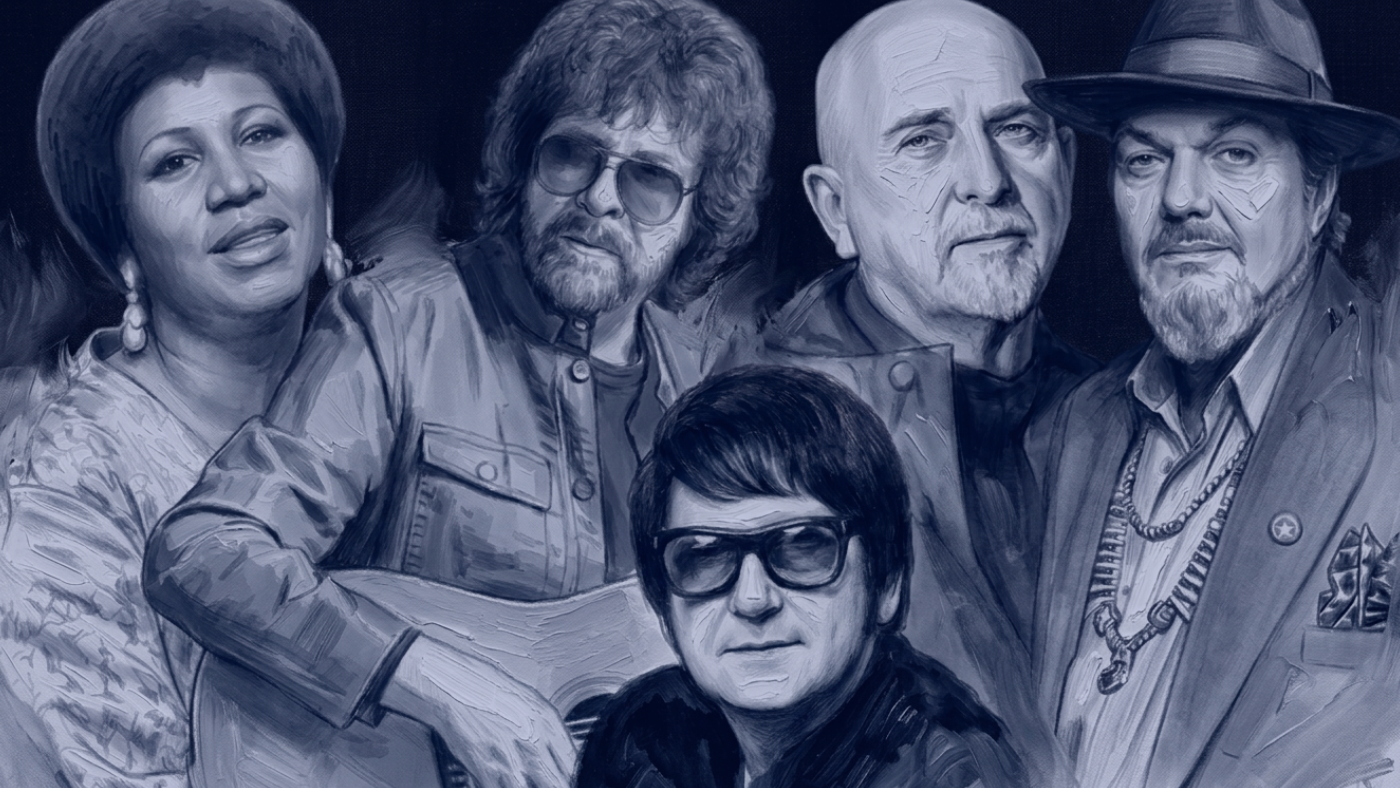
Aretha Franklin, Jeff Lynne, Roy Orbison, Peter Gabriel, Dr John. Image created in Canva using AI
Parts 1 and 2 made the case for the comeback as one of music’s most compelling narratives — absence, return, vindication, the crowd on its feet. But the story doesn’t always resolve that cleanly.
It took 40 years for Dr John to release an album the equal of his first. But don’t be embarrassed if you didn’t know that. Nobody else noticed either.
Aretha Franklin, on the other hand, teamed up with Eurythmics, got some reflected glory, then went back to obscurity. Either way, these artists of eminence were reduced to relics.
Part 3 is for these artists and albums. The returns that were genuine — artistically considered, emotionally earned — but failed to convert.
The third 10, in alphabetical order.
ELO — Zoom [2001]
Fifteen years is long enough to forget what you were. Jeff Lynne hadn’t forgotten — he’d just spent the intervening years producing everybody else’s nostalgia, working with Harrison, Starr, McCartney, Dylan, Petty, Orbison, absorbing enough to know what ELO had been missing. *Zoom arrives lean and deliberate, stripped of the orchestral excess that eventually swallowed the band whole. The songwriting is Lynne at his most unencumbered: melodic, warm, Beatlesque without apology. That the album vanished on arrival says more about the market than the music. Bev Bevan’s absence is felt, and the one-man-band architecture occasionally mistakes polish for intimacy. But as a statement of intent, Zoom* does something rare — it makes a comeback feel like a genuine return rather than a transaction.
Rolling Stone verdict: 3 stars
[embed]Source: YouTube
Aretha Franklin — Who’s Zoomin’ Who? [1985]
By 1985, Franklin had nothing left to prove and everything left to lose. *Who’s Zoomin’ Who? could have been an embarrassment — a legend chasing a decade that had no obvious place for her. Instead, paired with producer Narada Michael Walden and the full armory of mid-80s pop, Franklin didn’t so much adapt as annex. [Freeway Of Love](https://open.spotify.com/track/0lpIVCLNQRBKffcRRNrHyh?si=7b207ba222d64082) put her on MTV; Sweet Bitter Love *reminded anyone who’d forgotten what genuine vocal architecture sounds like. The synths date the album; Franklin doesn’t.
The album charted, largely on the back of *Sisters Are Doin’ It For Themselves*, but that would be it. Eight albums would follow. But no one went with her.
Rolling Stone verdict: 3 stars
[embed]Source: YouTube
Peter Gabriel — i/o [2023]
Twenty-one years is less a gap than a philosophical position. Gabriel didn’t disappear — he covered other people’s songs, re-orchestrated his own, co-founded NGOs, built a digital distribution network, launched something called an “infinitely expandable data globe”. What he didn’t do was finish *i/o,* an album that began when most of its eventual listeners were in primary school. That it arrives sounding neither exhausted nor overworked is the genuine surprise. Gabriel’s voice, still the instrument that defines him, carries melodies that feel earned rather than laboured. Some lyrics betray the overthinking; the music rarely does. Whether this constitutes a comeback or simply a resumption is a question the album quietly declines to answer — which, for an artist of Gabriel’s temperament, is probably the right call.
Uncut verdict: 8/10
[embed]Source: YouTube
Wanda Jackson — The Party Ain’t Over [2011]
Wanda Jackson was 73, a born-again Christian, and 50 years removed from the records that made her the most dangerous woman in rockabilly. Jack White understood exactly what that meant, which makes *The Party Ain’t Over* both an act of devotion and a partial misreading. He knows how to record her voice — close-miked, distorted at the edges, as though the equipment is registering a mild complaint. What he can’t quite reconcile is the distance between the Jackson he worships and the one who turned up to the session. The album lurches between inspired and laboured, landing somewhere in between. But when it works — and it works more than critics gave it credit for — Jackson doesn’t sound retrieved. She sounds returned, which is a different thing entirely.
NME verdict: 4 stars
[embed]Source: YouTube
Dr John — Locked Down [2012]
The question with *Locked Down isn’t whether Dr. John needed rescuing — he didn’t — but whether Dan Auerbach understood the difference between rescue and amplification. Fortunately, he did. Where lesser producers might have smoothed Mac Rebennack into something palatable, Auerbach went the other direction: cranking the humidity, sharpening the funk, letting the horns draw blood. The result sounds less like a reinvention than a pressure wash — same architecture, considerably more menace. At 71, Rebennack’s voice retains its distinctive rubberiness, his outrage over post-Katrina inequity giving the lyrics a weight that goes beyond performance. Locked Down* doesn’t announce itself as a comeback because it refuses to accept the premise. Some artists don’t fall from grace. They just occasionally need a better room.
Paste verdict: 9/10
[embed]Source: YouTube
Jerry Lee Lewis — Last Man Standing [2006]
The title tells you everything about the framing and nothing about the music. Jerry Lee Lewis at 71, surrounded by Jagger, Page, Clapton, Springsteen, Richards — the obvious reading is tribute, the industry genuflecting before one of its surviving monuments. What actually happens is something more subversive. Lewis doesn’t receive these guests; he processes them. Rock and Roll loses its Zeppelin riff and comes out sounding like a Sun Studios outtake. Page, to his credit, simply follows. The rest of the 21 do likewise, bending to a will that has never softened. Producer Jimmy Rip has the wisdom to stay out of the way. Last Man Standing isn’t a comeback and it isn’t a farewell — it’s a demonstration, conducted at volume, that some musicians never actually leave.
Rolling Stone verdict: 4 stars
[embed]Source: YouTube
Roy Orbison — Mystery Girl [1989]
The exception to this list is The Big O. Orbison spent most of the 1960s being underestimated, then spent the next two decades being forgotten. By 1988, the rehabilitation was almost complete — the Wilburys, the Black and White Night concert, Bono waking in a cold sweat with someone else’s song fully formed in his head. *Mystery Girl *arrived as confirmation rather than surprise: proof that the voice had not only survived but deepened, its upper register carrying something it couldn’t have managed at 25. Lynne, Petty, Harrison, Costello, Bono — the guest list reads like a congregation. What’s remarkable is that none of them overshadows him. Orbison died before the album charted. The comeback he’d earned, the vindication he’d waited 20 years for — he never quite saw it land.
Rolling Stone verdict: 4 stars
[embed]Source: YouTube
Robbie Robertson — Robbie Robertson [1987]
Eleven years of silence, then this. Robertson’s self-titled debut arrives not as a man reclaiming lost ground but as one who has spent a decade deciding what ground is worth claiming. The Band’s Americana is largely absent; in its place, something more cinematic and atmospheric, Daniel Lanois draping everything in the same cathedral reverb he’d been applying to U2 and Peter Gabriel. The first half is close to extraordinary — *Fallen Angel, Showdown At Big Sky, Broken Arrow *moving as a single piece of music, connected by theme and texture. The second half is less assured, and Robertson’s voice, never his strongest suit, occasionally struggles with the weight of what he’s trying to say. Still, for a man unsure he had anything left to offer, this is a remarkably confident first sentence.
Uncut verdict: 6/10
[embed]Source: YouTube
Pops Staples — Peace To The Neighborhood [1992]
The John Lee Hooker template was irresistible in the early 90s — take a veteran, surround them with famous admirers, watch the rock press rediscover someone they’d never properly discovered in the first place. *Peace To The Neighborhood* follows the blueprint and mostly misses the point. Staples was not a bluesman in need of rehabilitation; he was a gospel architect, a civil rights-era original whose tremolo guitar and quiet authority had shaped American sacred music for 40 years. Asking him to work through blues standards is a category error dressed up as opportunity. The album finds its footing only when he’s left alone, or when his daughters appear and the old chemistry reasserts itself. The comeback framing was the problem. Pops Staples hadn’t gone anywhere.
Uncut verdict: 6/10
[embed]Source: YouTube
Bill Wyman — Back To Basics [2015]
Thirty-three years between solo albums is less a hiatus than a statement of priorities. Wyman left The Rolling Stones in 1993 and didn’t so much disappear as redirect — photography, archaeology, The Rhythm Kings, the patient accumulation of a life beyond the bass guitar. *Back To Basics arrives without fanfare or apparent need, which is both its strength and its limitation. Wyman whispers through 13 songs of everyday observation, his voice a worn, confiding rasp that suits the material better than singing might. The best moments — I Got Time, [Seventeen](https://open.spotify.com/track/12GTbuuDW0FmDU2pUpDka0?si=9ae1efccc02a4dcd), [Running Back To You](https://open.spotify.com/track/6VyUV5A6yZwwGGaoqeTqAu?si=aa6588725b624b1e)* — suggest a man genuinely comfortable in his own company. The weakest suggest a man who knows it. As comeback albums go, this one barely raises its voice. That, mostly, is the right call.
Louder verdict: 3 stars
[embed]Source: YouTube
Related reading
20 most important comeback albums [Pt 1]
20 most important comeback albums [Pt 2]
메타데이터
- post_id
- 7e5d3b0cb0df
- slug
- comeback-albums-pt-3-when-artists-return-only-to-be-greeted-with-a-shrug-7e5d3b0cb0df
- url
- https://medium.com/rock-on/comeback-albums-pt-3-when-artists-return-only-to-be-greeted-with-a-shrug-7e5d3b0cb0df
- canonical_url
- https://medium.com/rock-on/comeback-albums-pt-3-when-artists-return-only-to-be-greeted-with-a-shrug-7e5d3b0cb0df
- author_url
- https://medium.com/@sacott66
- status
- ok
- fetched_at
- 2026-07-13 06:23:13