The Digital Grooming Behind the Tacloban School Shooting Tragedy
How an international extremist network bypassed locked doors and reached into the bedrooms of Filipino teenagers.
The Digital Grooming Behind the Tacloban School Shooting Tragedy
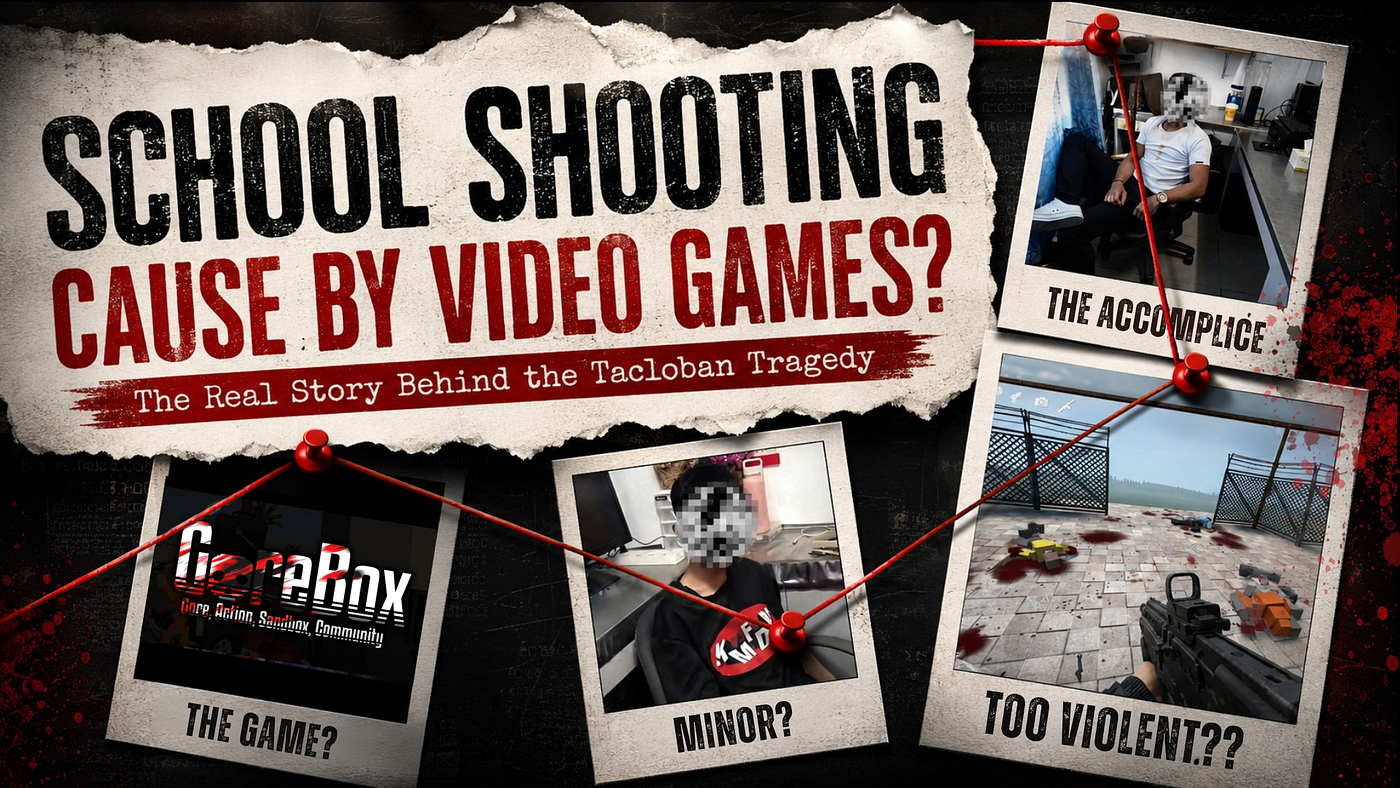
Photo by The Black Box Index
How an international extremist network bypassed locked doors and reached into the bedrooms of Filipino teenagers.
It sounds like dystopian fiction: an international extremist group reaching across the globe directly into the bedrooms of teenagers in a provincial Philippine city. But on the morning of June 22, 2026, at San Jose National High School, that digital premise became a devastating physical reality.
The Tacloban school shooting has forced a nation to ask where the boundaries of the internet end and where the failures of the real world begin.
This breakdown examines the exact timeline of the tragedy, the shocking digital footprint left behind by the perpetrators, and the fierce debate over who is truly to blame when a teenager pulls the trigger.
The Devastating Timeline
The sequence of events was brief but catastrophic. At 7:07 AM, a 14-year-old student identified by his police alias, “Nash” arrived on campus for the morning flag-raising ceremony accompanied by a 15-year-old accomplice.
For two hours, the morning proceeded normally. At 9:13 AM, the two teenagers entered the school’s blue and green buildings. They were not carrying textbooks. They brought a .38 caliber revolver and a Glock 9mm semi-automatic pistol.
Within minutes, they opened fire. The human cost was staggering:
- 20 students were injured.
- 3 students were killed.
Among the dead was 15-year-old Chris Lorenz Fabian, who lost his life while attempting to block a classroom door to protect his classmates.
In the chaotic hours following the arrest of the two juvenile shooters, the public assumed this was a familiar story of severe school bullying reaching a breaking point. As investigators seized the suspects’ devices, the narrative abruptly shifted away from local schoolyard grievances.
Digital Grooming and the “764 Network”
The digital footprint left by the teenagers pointed outward to a shadowy corner of the internet.
The Department of Justice and the Cybercrime Investigation and Coordinating Center (CICC) uncovered digital traces linking one of the suspects to an online network known as “764.”
According to international law enforcement, 764 is a network associated with Nihilistic Violent Extremism (NVE). These groups operate on unmoderated platforms, using an aesthetic obsession with past mass casualty events like the 1999 Columbine shooting to attract isolated youth. This discovery led the DOJ to float a terrifying theory: the Tacloban shooters were victims of digital grooming.
The meeting ground between international extremists and teenagers from Leyte was reportedly a mobile game. Investigators found that one of the suspects frequently played GoreBox, a physics-based sandbox game known for graphic, user-generated violence.
The GoreBox Ban and Online Outrage
The Philippine government mobilized quickly. On June 23, the CICC issued a temporary nationwide GoreBox ban, while President Ferdinand Marcos Jr. publicly considered legislating stricter curbs on violent video games.
Almost immediately, a bizarre escalation threatened to derail the conversation. A graphic circulated widely across Filipino social media, allegedly showing a list of everyday games like Minecraft, Candy Crush, and 8 Ball Pool that Local Government Units planned to ban. Netizens mocked the policymakers, noting that predatory online gambling apps were completely ignored.
Independent fact-checkers soon discovered the list was entirely fake, originating from a satirical Facebook page called “Malacañang Republic.”
While the document was parody, the furious reaction exposed deep societal skepticism regarding the government’s ability to regulate the digital space. The lines between parody and state reality blurred further when DILG Secretary Jonvic Remulla endorsed a wider crackdown, stating children should stick to games like Candy Crush.
Banning Code vs. Real-World Solutions
To investigate the mechanics of online radicalization, the Philippine Senate convened a special hearing and invited GoreBox developer Felix Filip. The Senate hit a jurisdictional wall when Senator Risa Hontiveros revealed an email from the Germany-based programmer officially declining the invitation.
The empty chair in the Senate ignited a multi-sided debate across the country.
The DOJ argues that unmoderated platforms act as hunting grounds for malicious adults who bypass parents to coerce children into acts of self-harm, animal cruelty, and mass violence. Medical experts and the gaming community strongly push back.
Dr. Rafael Henry Legaspi, a psychiatrist at the UP-Philippine General Hospital, testified that blaming code is a superficial solution that sparks moral panic. Experts point out that countries like Japan and South Korea have massive, ingrained gaming cultures yet virtually no gun violence.
Medical experts and the scientific consensus agree: there is no proven direct causal link between playing violent video games and committing real-world violence.
Industry insiders acknowledge that chatroom grooming is a genuine threat, but argue the danger lies in the adults communicating on the platform, not the software itself.
“In the search for answers, it is easier to ban a game than to fix a broken system.”
The Unanswered Questions on Youth Gun Violence
This debate over pixels and platforms obscures a massive, unresolved physical question: the firearms.
How did a 14 and 15-year-old acquire a .38 revolver and a Glock 9mm, transport them through a city, and walk them into a high school? Evidence shows the 14-year-old took one of the weapons from an aunt who serves in the police force. The exact timeline of the theft and the specific breakdown in security remains heavily disputed.
Critics argue that focusing on a German video game developer is a convenient way to avoid addressing domestic gun control and school security.
The Reality of Philippine Juvenile Law
As investigations stall, the pursuit of justice faces a complex legal reality under the Juvenile Justice and Welfare Act of 2006. The two suspects face entirely different futures based on a single year of age:
- The 14-year-old: Legally exempt from a standard criminal trial. Due to the severity of the crime, he is subject to mandatory, intensive confinement and intervention.
- The 15-year-old: Exists in a legal gray area. Prosecutors must prove he acted with “discernment”meaning he fully understood the moral and legal consequences of his actions to face a criminal trial.
The public remains divided. Some citizens demand lowering the age of criminal liability, while human rights advocates argue against punitive measures for minors.
Where Do We Go From Here?
The tragedy on June 22 was not just a failure of a digital firewall. It was a catastrophic failure of the physical world. Two children slipped through the cracks of parental oversight, found a community in the darkest corners of the internet, and were somehow able to put real bullets into real guns.
Until these physical failures are addressed, the digital threat will continue to find a way in. Our digital lives and real-world vulnerabilities are permanently intertwined, and policymakers must look past quick fixes to find heavily contested, yet necessary, real-world solutions.
Where do you stand on this issue? Is banning violent video games a necessary step to protect our youth, or is it a distraction from deeper failures in domestic gun control and school security? How should we police international networks without slipping into a modern moral panic?
Leave your thoughts and perspectives in the comments below, and follow for more fact-checked, investigative reporting on stories that matter.
메타데이터
- post_id
- 7e623f9018f3
- slug
- the-digital-grooming-behind-the-tacloban-school-shooting-tragedy-7e623f9018f3
- url
- https://medium.com/@theblackboxindex/the-digital-grooming-behind-the-tacloban-school-shooting-tragedy-7e623f9018f3
- canonical_url
- https://medium.com/@theblackboxindex/the-digital-grooming-behind-the-tacloban-school-shooting-tragedy-7e623f9018f3
- author_url
- https://medium.com/@theblackboxindex
- status
- ok
- fetched_at
- 2026-07-19 12:29:59




