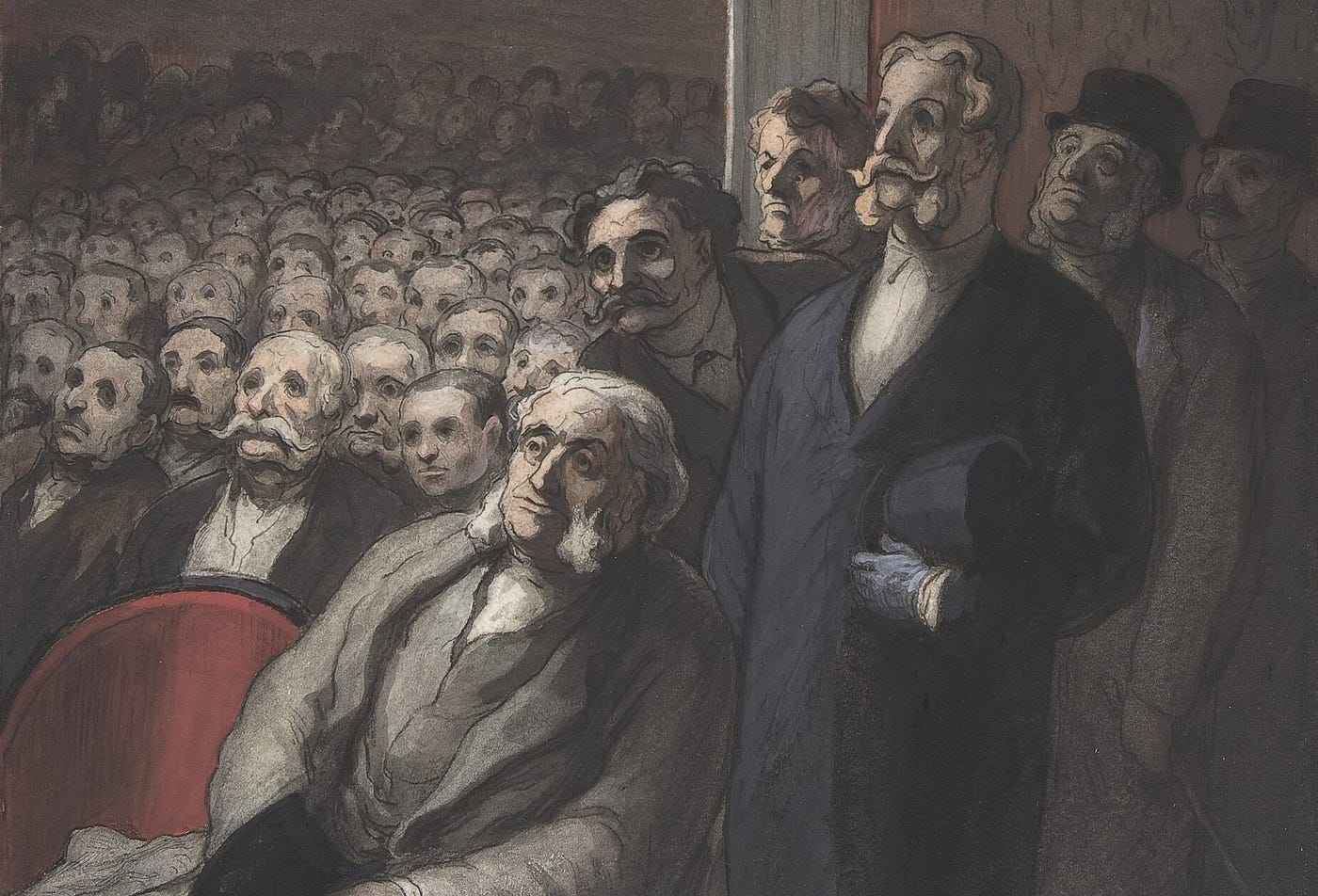
6 Movie Fathers We Can Look Up To
Here are six movie dads you can watch for Father’s Day and remember why dads rock.
6 Movie Fathers We Can Look Up To
Here are six movie dads you can watch for Father’s Day and remember why dads rock.

Dads are great / Andrik Langfield (Unsplash)
We love our dads for a whole host of reasons.
Always on the lookout for themes that sell tickets (yes, I’m a bit of a cynic), Hollywood happily responds by giving us a variety of father figures to watch and to talk about. Fathers of all kinds inhabit the silver screen; fathers that inadvertently teach us all kinds of different life lessons.
SPOILERS ALERT
I’m going to talk about pivotal plot points in these six movies, as well as their endings. If you haven’t seen these movies and you think one day you might want to see them without knowing how they end, turn back now. These are not the drones you’re looking for.
— — — — — — — — — — — — — — — — — — — — — — — — — — — — — — — — — — — —
Without further ado, let’s get into this list of six movie dads that give us a glimpse into the complex, loving, sometimes difficult, always poignant experience we call “fatherhood.”
1. Marlin: Finding Nemo (2003)
The loving father who learns how to trust his child

Not Nemo / David Clode (Unsplah)
Let’s start with a cartoon! (My son just reminded me, wearily, that this is not a “cartoon;” it’s “animated.” My bad. When you get to my age, you don’t see a difference, people.)
Anyway, this animation classic follows Marlin, a daddy clownfish who loses his young son, Nemo, to a scuba diver who takes Nemo to an aquarium in Sydney.
Hence, a journey of discovery begins, or rather, two journeys. Because both father and son experience emotional growth over the course of finding their way back to each other. Nemo learns the value of friendship and collaboration as he works with other aquarium fish he meets to plan an escape and return home.
But his dad, Marlin, also grows emotionally in his search for Nemo. While the film is ostensibly about a father’s love for his child, it’s also about a parent learning how to let go of his fear and allow his son to become more independent.
2. Guido Orefice: Life Is Beautiful (1997)
The imaginative father who shields and self-sacrifices

Life Is Beautiful Movie Shot / Flicks https://share.google/BLmXNo8dkhe8N1ZSb
Grab a box of Kleenex for this one, folks. It’s a heart-breaker. If you don’t want to call your dad after seeing this film, well . . . I don’t know.
This film tells the story of Guido and his son, Giosuè, during World War II. Father and son are sent to a Nazi concentration camp, and Guido makes it his purpose to convince the young boy that they are actually in the middle of an elaborate game. Contestants in this game earn points every day and at the end, the winner will get a tank.
Over time, Guido uses the few things he has at his disposal; his humor and imagination, to keep the boy’s mind off of the horrors around them.
At the end, he hides the boy at a pivotal point and ends up being executed. But the Allied forces arrive and as Giosuè emerges from hiding, an Allied tank enters the camp. The little boy believes he has won the game prize and is overjoyed as an Allied soldier lifts him onto the tank.
Guido stands as one of cinema’s great examples of a father willing to sacrifice everything for their child’s well-being. Roberto Benigni, who played Guido, won the Oscar for Best Actor that year, and deservedly so.
3. Chris Gardner: The Pursuit of Happyness (2006)
The devoted father who persevered through hardships
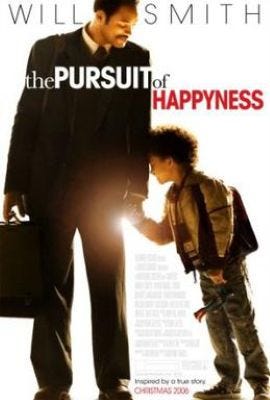
Movie Poster / © 2006 Columbia Pictures Industries Inc.
Based on a true story, Chris Gardner is a salesman in 1980s San Francisco, who loses everything, including his marriage. He eventually becomes homeless, doing whatever he can to take care of himself and his son as a single dad. Despite their bleak situation, Gardner (played passionately by Will Smith) refuses to give up and earns an unpaid internship at a top-class brokerage firm.
Yes, it’s unpaid, but he has the opportunity to compete with other interns for a single paid position. The audience sees Gardner juggle the incredible demands of meeting the sky-high expectations of the firm, while at the same time trying to be a good father to his son. Ultimately, he is selected for the one paid stockbroker position. At the end of the movie, you’re told that the real Chris Gardner went on to become a successful stockbroker and entrepreneur.
As such, this movie illustrates a father’s willingness to strive for something in the face of adversity to make life better for his child. Gardner works incredibly hard, overcoming profound hardships in order to provide for his family and in so doing shows his son the value of hard work and love.
4. Bryan Mills: Taken (2008)
The relentless father who protects. . . at any cost

I have the skills . . . / Screen Rant https://share.google/FBaDA4YmanTasUMKs
Buckle up, folks, we’re pivoting to a vastly different take on fatherhood here. We’re entering the Bad-Ass Dads in Movies category.
Taken centers on Bryan Mills, a former CIA operative whose teenage daughter, Kim, travels to Paris with a friend. Kim is almost immediately kidnapped by a human trafficking ring.
(Author’s note: I lived in France for a year, never got kidnapped by a human trafficking ring. Didn’t know anyone kidnapped by a human trafficking ring. Never saw anyone get kidnapped by a human trafficking ring. Does that mean there weren’t any human trafficking rings? No. But, really, the daughter was there, like 2 hours? Didn’t even have time to leave the apartment! What the hell?)
Anyway, Kim happens to be on the phone with Dad when she’s grabbed, so Mills is able to pick up some clues about her abductors.
Mills travels to France and begins a relentless pursuit of the bad guys, using his Intelligence and ex-combat skills to look for his daughter. In fact, his “skills” become part of the iconic phone scene from this movie that occurs between Mills and the kidnappers, when Mills (played by the stoic Liam Neeson) threatens the villain, growling, “I don’t know who you are… But what I do have are a very particular set of skills… I will find you, and I will kill you.”
And Mills uses these skills as a one-man army with dogged determination to save his child, regardless of the hazards, the risks, or the costs. He is not concerned with laws, with rights, with anything other than saving his daughter.
He is ultimately successful; he reunites with Kim and the two of them return safely to the US.
I cannot in good conscience stop the discussion there, however.
Yes — Mills saves his daughter. Yes — he is the protective father.
However, there has been a fair amount of criticism aimed at this film concerning how extreme and seemingly undiscriminating Mills can be with regard to violence. He tortures, maims, and kills a LOT of people. The violence is presented as cleansing, almost honorable.
Mills’ character is also dinged for being an overbearing father at the beginning of the movie, and critics complain that the story appears to almost vindicate the father’s overprotective behavior at the expense of his daughter’s independence.
Taken presents a challenging look at fatherhood. As a daughter myself, I have to admit that the image of a dad who gallantly comes to the rescue of his daughter, fighting off the “bad guys,” and taking her home to safety? On one level, I love it.
On the other hand, the image of the overprotective, overbearing father that doesn’t trust his daughter and then goes on a one-man torture and killing spree supposedly on her behalf? That’s kind of icky, folks. Can’t lie.
So, where Taken is concerned, I’ll leave it up to you to decide if Bryan Mills is the model of fatherhood you want to admire and emulate. If it is, I’ve got good news for you — there are two other Taken movies you can watch. I haven’t seen them. I can only assume that Mills’ daughter can’t cross the street without being kidnapped by a human trafficking ring. (Maybe in this case, the father is right to be overprotective? Just sayin’.)
5. Lee Abbott: A Quiet Place
The courageous father who protects at the cost of his own life

A Quiet Place / The Guardian https://share.google/29tHUJjBrfqNsDlMA
In A Quiet Place, I maintain we see another Bad-Ass Dad, but of a very different flavor. Lee Abbott and his family find themselves in an almost impossible situation. The world has been taken over by blind, vicious aliens who hunt humans by sound. And their hearing is very good.
Lee, his pregnant wife, and their two children (they lose their youngest son early in the movie to the creatures) struggle to survive. They have to live in total silence and communicate through sign language, which they know because their teenage daughter is deaf.
Lee (played subtly, but beautifully by John Krasinski) is a loving husband and a caring, protective father. The movie highlights the challenge of raising children in a shattered world full of danger and fear. We see Lee do everything he can to protect his family and try to make as good a life as possible, given the situation. His devotion to his family is clear and unwavering.
Even so, it is still heart-wrenching when Lee sacrifices his own life to allow his kids a chance to escape the aliens at the climax of the film. We’ve come to love this family. Lee’s self-sacrifice is not really surprising; it’s completely in character. But it is still jarring and hard to watch this good man die. And you can see it in the horrified faces of his children as they watch as well.
I can’t help but compare these two “Bad-Ass Dads.”
Both Mills and Abbott love their children beyond a doubt. Both Mills and Abbott protect their kids and are willing to put themselves in the line of fire to shield their children from harm.
But that’s where the similarities end.
Mills’ is a burn-and-destroy-everything-and-everyone-approach. Torch the house and sort it all out later.
Abbott’s is a subtler, quieter (pun intended) approach. Not as brash, not as “macho.” But every bit as strong and protective. Every bit as emotional.
Again, it’s up to you to decide which of these masculine approaches to parenting is your cup of tea.
For me, I have to go with Abbott. He has a strength I admire; physical strength, yes. But also strength of character, strength of love.
6. Atticus Finch: To Kill a Mockingbird (1962)
The “gold-standard” of movie fathers with moral courage and wisdom

Atticus Finch & Scout / Jays Classic Movie Blog https://share.google/0tO06TCpXGs1klIIp
Finally, we have arrived at the man who is almost always held up as one of the finest examples of fatherhood in movies. Set in a small Alabama town during the Great Depression, the story is told from the perspective of a young girl named Scout Finch. She lives with her older brother, Jem, and their widowed father, Atticus Finch.
The main action in the movie revolves around the trial of Tom Robinson, a black man falsely accused of assaulting a white woman. Atticus acts as Robinson’s defense lawyer and eventually loses, even though he presents a strong, compelling case. Through the trial, Scout witnesses the prejudice and racial injustice that exists among the residents of her town.
There’s no combat fighting in To Kill a Mockingbird. No “I will kill you.” No aliens. No clownfish. It’s a simple, straightforward tale about a man (and a father) willing to take a stand for what is right, even when it’s not likely to succeed. Even when it’s not popular. Atticus (played brilliantly by Gregory Peck) teaches Scout and Jem lessons about courage, moral integrity, and empathy.
I’d be remiss if I didn’t mention that there has been contemporary criticism of Finch’s parenting style. It’s been observed that he allowed his children to be exposed to harsh events (a rape trial, racist slurs, a near-fatal attack) without concern for the potential psychological toll it might take on the children. Others complain that he was too hands-off, letting Scout and Jem get away with quite a lot.
But the general consensus is Atticus Finch can be viewed as a moral, loving father who taught his children to be good human beings.
I’m more than ok with that.
I started this article saying we love our dads for a whole host of reasons. Our movies reflect that diversity of perspective. But at the end of the day, these movie dads all had these things in common:
- They loved their kids.
- They sacrificed for them.
- Their kids were a major aspect of their lives, if not the most important aspect of their lives.
- They taught their children and they learned from their children too.
- When push came to shove, they were willing to sacrifice themselves for their children.
The way in which each father went about enacting these things may have varied. But they all had the same objective in mind. Their kids.
I’m not sure we can ask much more of our fathers.
메타데이터
- post_id
- 7e6afef997c7
- slug
- 6-movie-fathers-we-can-look-up-to-7e6afef997c7
- url
- https://medium.com/big-list-energy/6-movie-fathers-we-can-look-up-to-7e6afef997c7
- canonical_url
- https://medium.com/big-list-energy/6-movie-fathers-we-can-look-up-to-7e6afef997c7
- author_url
- https://medium.com/@standirl
- status
- ok
- fetched_at
- 2026-07-09 21:48:21