Ironhack’s Prework: Challenge 1 — Design Thinking
Citymapper App
Ironhack’s Prework: Challenge 1 — Design Thinking
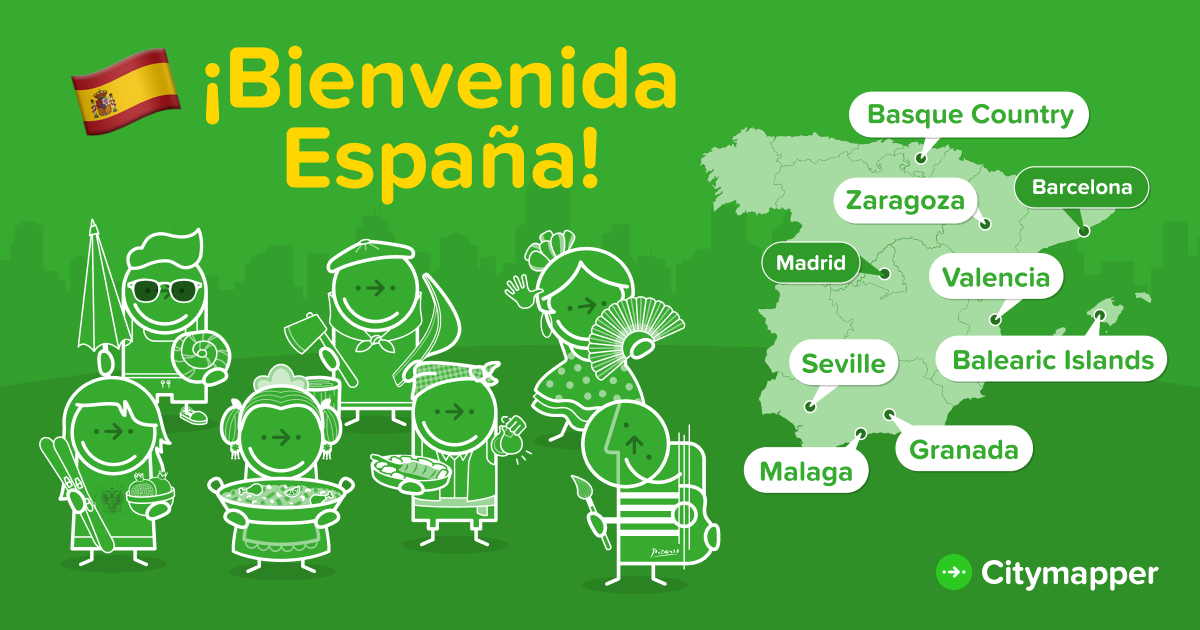
Source: Citymapper
Citymapper App
Citymapper is a free navigation app that allows users to navigate through the city. Using the latest technologies, the app finds the most convenient way to get you from point A to point B. It shows all the public and private transport options, length of the journey, allows you to save frequent destinations, shows any transport interruptions, it also tells the time remaining for each transport to arrive, it has customized journeys for wheelchairs, shows the prices for bicycles, scooters and taxis and even suggests if you need to take action in the bus, train, etc. (better to enter from the end of the train, leave at the next stop, among others).
This app was founded by Azmat Yusuf in 2011 and was first available in London. Soon after it was accessible to many other cities and it is now available in mobile and web app.
The Problem
After spending some time learning how the app works and discovering all the different functionalities it has, I started to question if Citymapper truly covers every aspect regarding the users transportation needs.
It does solve the majority of the main problems of transportation, but there’s still one thing that users have an issue with: the different amount of public transport tickets the users have to purchase.
Thinking about my own experiences using public transportation abroad, no matter which country I flew to, I always used public transportation. Finding the way from one point to another was really easy, but buying the right type of ticket is time consuming and difficult. Different types of tickets, purchasing methods, ticket validating rules and different duration or zone validity, a lot of information to remember when you are travelling and just wanting to enjoy.
To better understand the users, I conducted interviews with 5 people living in Madrid, who use the public transport and tend to travel, to understand their point of view and the problems they could have encountered. Here are some of the patterns I could gather from their answers:
- They all use Google Maps as their main navigation tool. People tend to default to what’s familiar even if it’s not the best tool for public transport specifically.
- When asked how they buy the tickets abroad, they all said manually through a machine or in a ticket window, or in some countries they pay directly with card/Apple Wallet. Nobody is buying tickets through an app.
- Real-time information is missing. They want the app to be live and accurate, real-time arrival of buses/metros as well as traffic adjustments.
Problem Statement
Users who rely on public transport, especially when traveling to unfamiliar cities, struggle to buy the right tickets due to the process being fragmented, manual and stressful. Most people rely on Google Maps for navigation but it has no integrated way of purchasing tickets digitally. This creates a gap to be solved.
The Solution
Taking all of the research and interview answers into consideration, one thing became very clear, users have no trouble finding their route, they have trouble with everything that comes after. Buying the right ticket, finding the right machine (or one that is not broken), figuring out the payment system and even the language barrier to ask for someone’s help.
With that in mind, I brainstormed several possible solutions, from a simple auto-buy button to a shopping cart-like section. After considering which approach would be most intuitive and useful for the user, I decided to go with a Travel Wallet concept, a space inside Citymapper where all your tickets are stored (active and past ones), and where the app helps you buy the tickets that you need the moment you confirm your route.
Prototype


Key Learnings
This project taught me more than I expected. At first I felt lost, I wasn’t sure where to start or how to add a new feature to an already existing app. But once I started sketching, something clicked. The ideas began to flow more naturally and I started to see more clearly how the Tickets section could be integrated inside the app.
If I could do this again, I would give myself more time in the ideation phase before jumping into the prototype, not to think more, but to sketch more loosely first and see where it takes me. Less pressure early on means more creativity.
Lastly, I could say this project helped me see how an UX gap can have a major impact on a user’s journey. Something as simple as not being able to buy a ticket inside the app you’re using forces you to leave your flow completely. It made me realize that the most valuable design work is identifying the gaps between what an app does and what the user actually needs, and bridging them.
메타데이터
- post_id
- 7e79fd30f623
- slug
- ironhacks-prework-challenge-1-design-thinking-7e79fd30f623
- url
- https://medium.com/@ari.asmat0710/ironhacks-prework-challenge-1-design-thinking-7e79fd30f623
- canonical_url
- https://medium.com/@ari.asmat0710/ironhacks-prework-challenge-1-design-thinking-7e79fd30f623
- author_url
- https://medium.com/@ari.asmat0710
- status
- ok
- fetched_at
- 2026-07-10 12:09:34