Yoo Young-kuk: A Mountain Within Me (산은 내 안에 있다), Seoul, Korea
From nature to abstraction
Yoo Young-kuk: A Mountain Within Me (산은 내 안에 있다), Seoul, Korea
From nature to abstraction
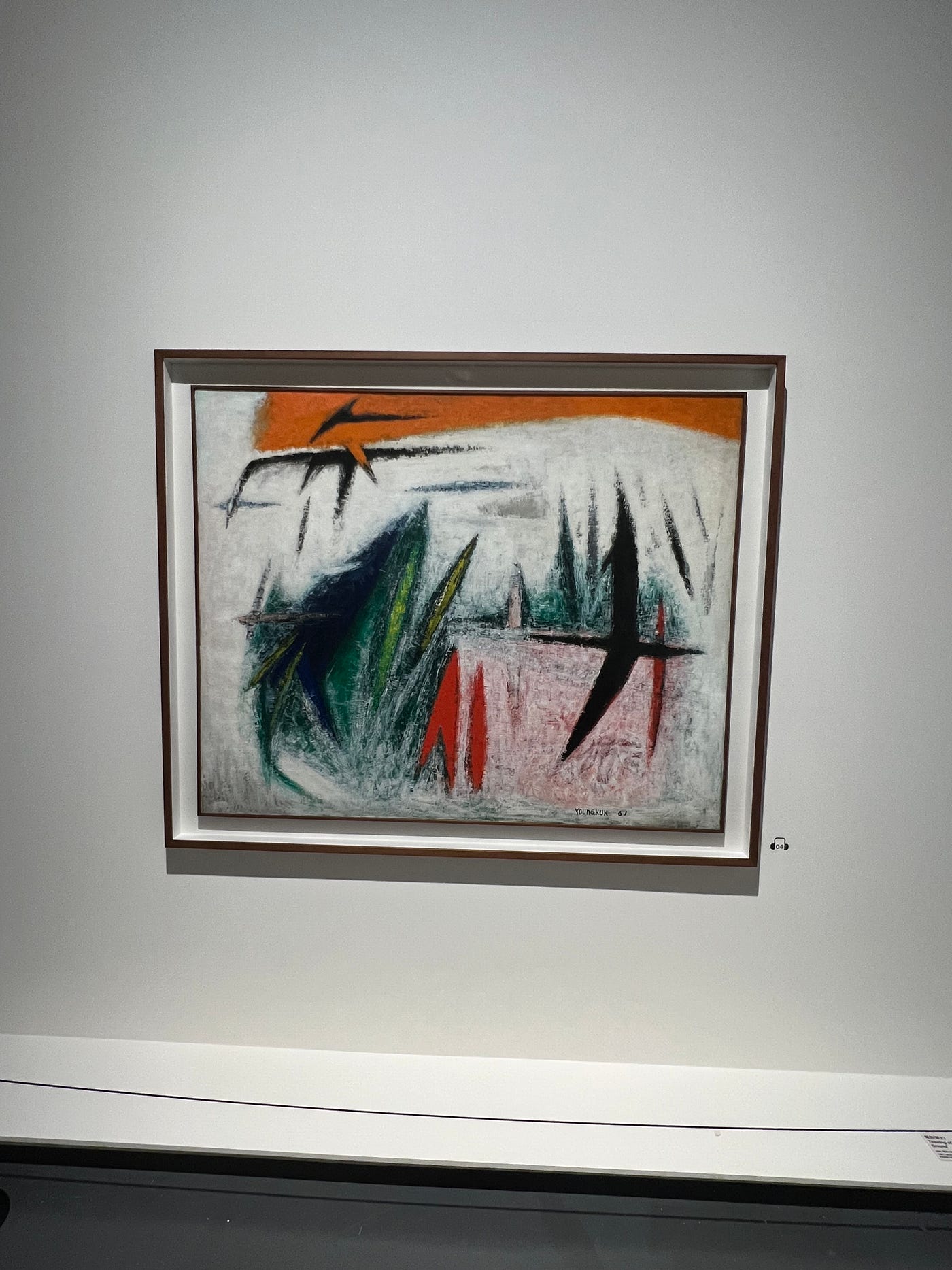
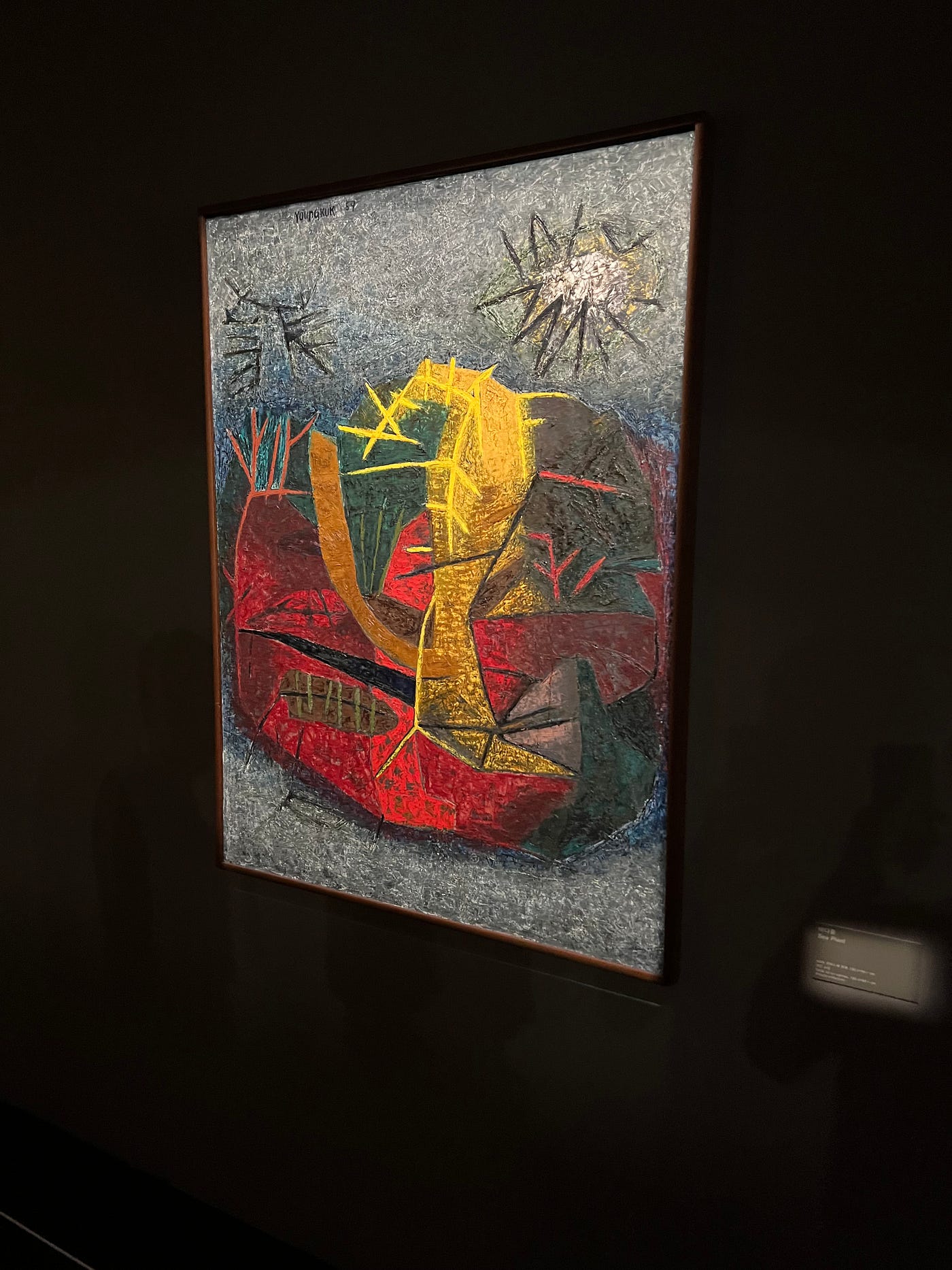
‘Thawing of the Ground’ (1961) — images photographed by the writer
Held at the Seoul Museum Of Art’s Seosomun (서소문) Main Building, Yoo Young-kuk: The Mountain is Within Me marks the 110th anniversary of Yoo Young-kuk’s birth and is the largest retrospective of his career. Featuring an estimated 170 paintings, reliefs, drawings, and archival materials, the exhibition traces his artistic journey from his avant-garde experiments in Tokyo during the 1930s to his final work in 1999. For Yoo, mountains were not merely natural forms but the principal motif which he explored abstraction, geometry, as well as color.
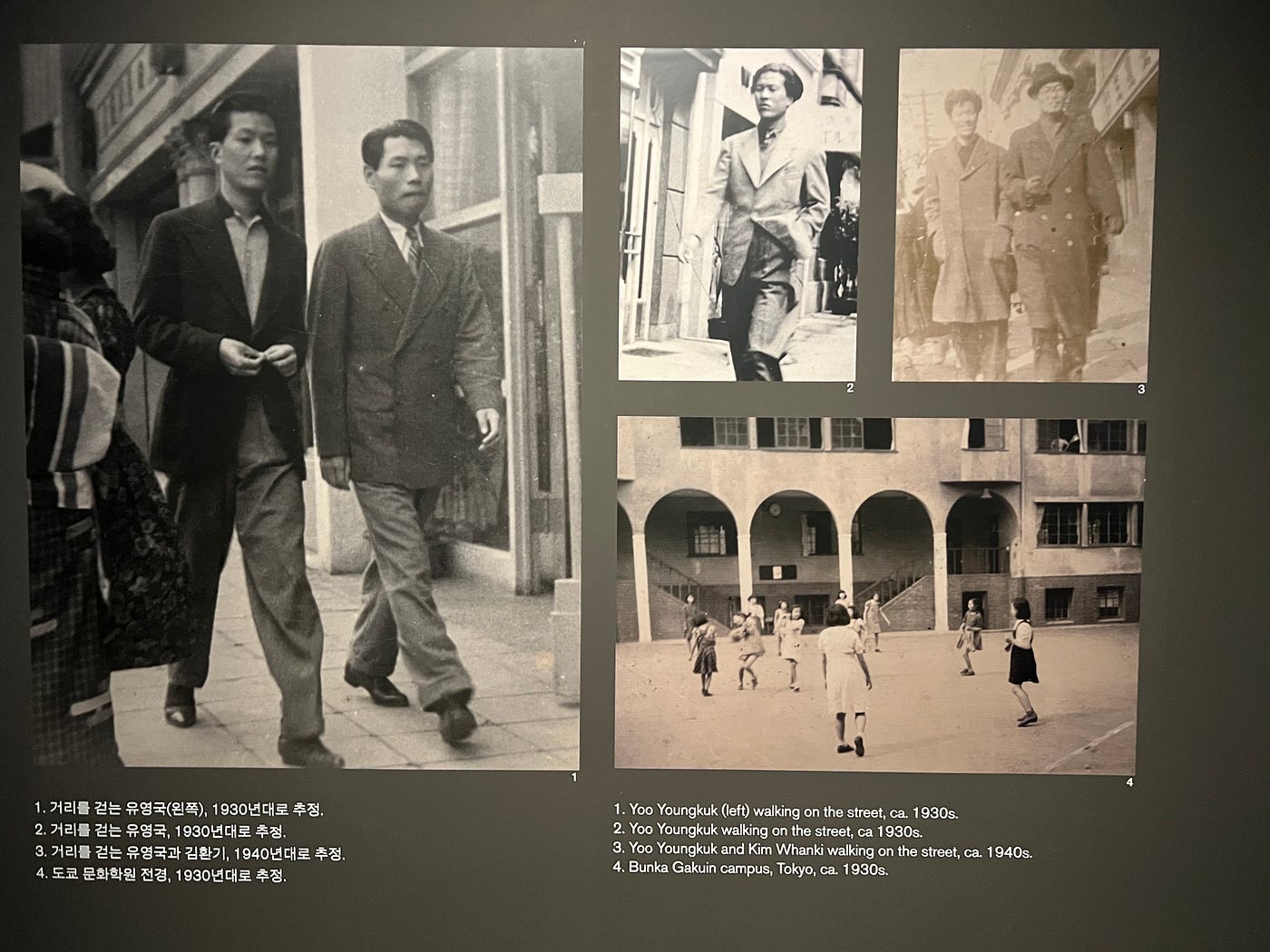
While studying in the city of Tokyo, Yoo was heavily influenced by European modernism. After returning to Korea, he remained committed to abstraction in spite of the Korean War that was ongoing. Other issues such as industrialization and a Korean art world that still viewed abstract art as unfamiliar did not stop Yoo from pursuing his artistic vision. Rather than reproducing nature, his paintings reduced the experience of mountains into simplified geometric forms and bold fields of color, establishing contemplative works that reflected his inner experience rather than the physical landscape.
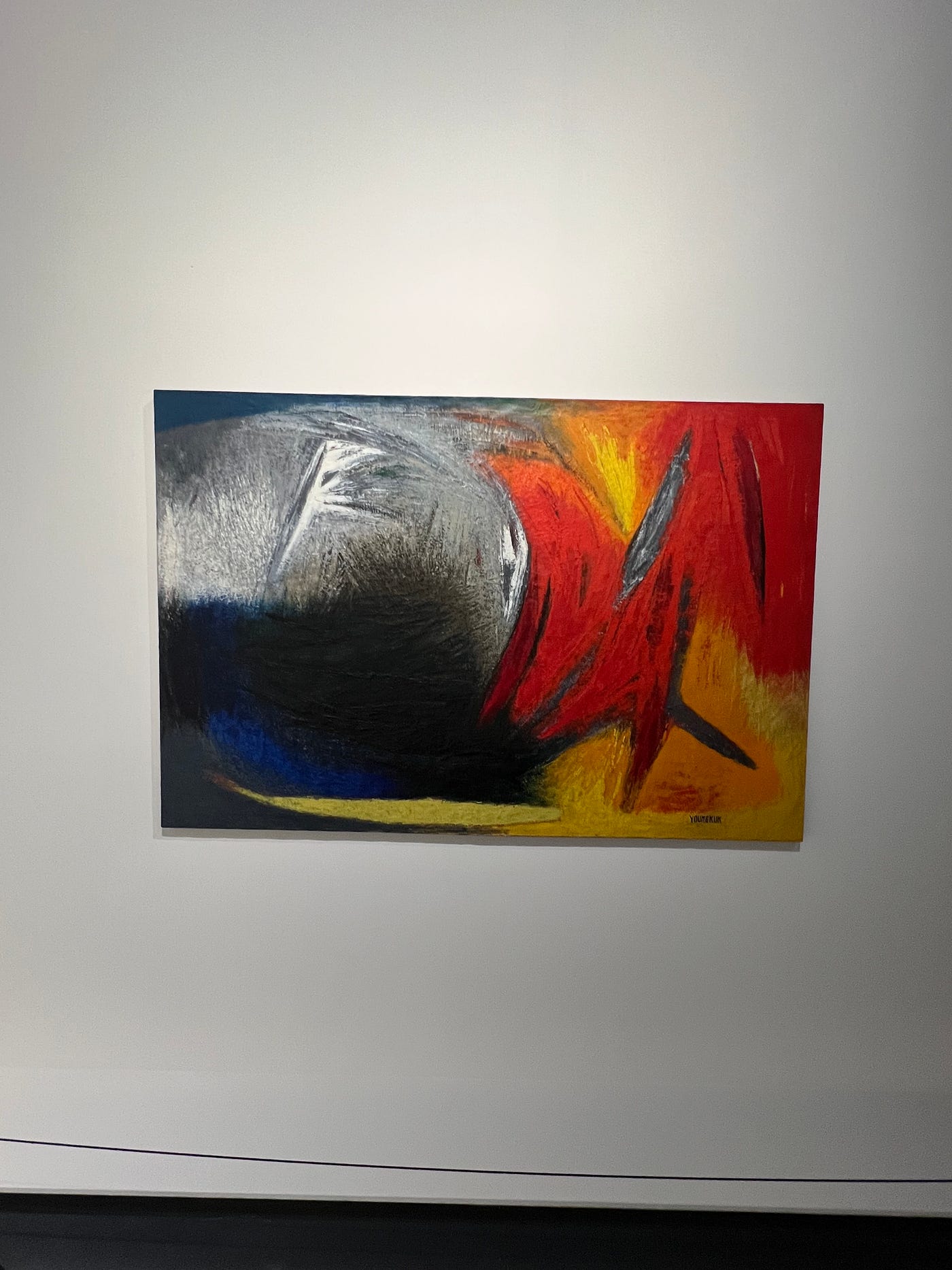
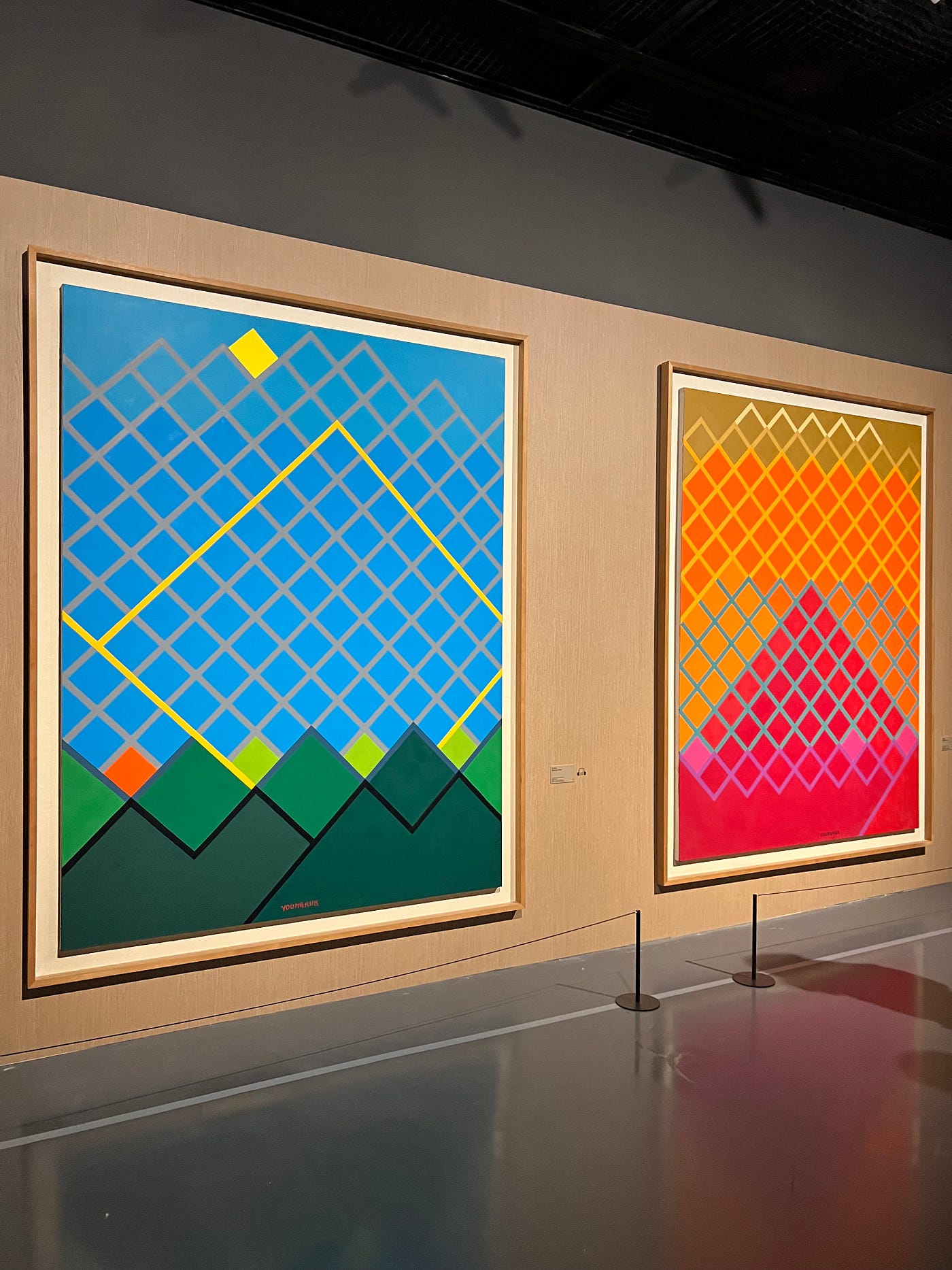
Thawing of the Ground, 1961 (left); Work, 1962 (right), original content
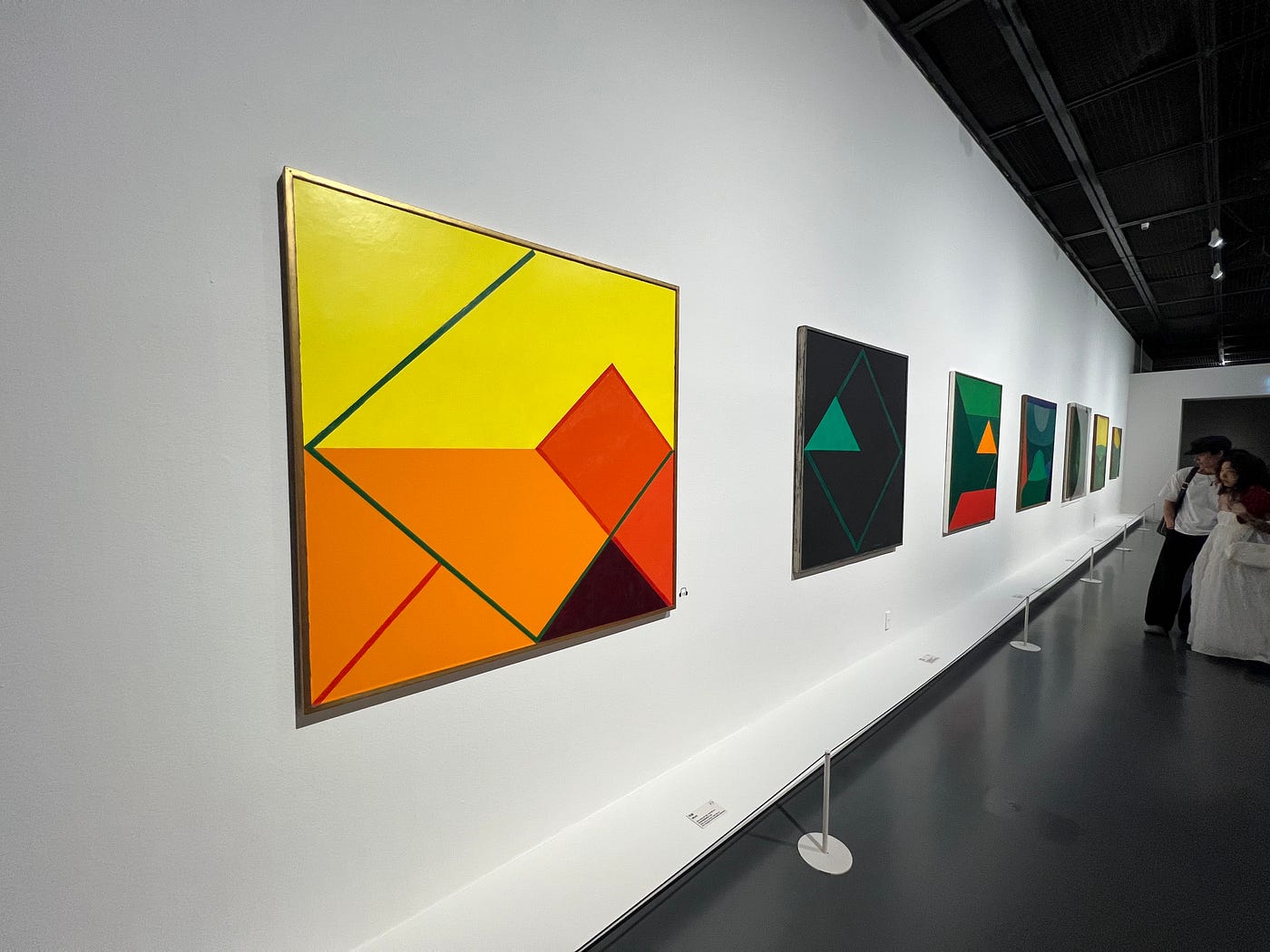
Sea Pool, 1959 (left); Mountain, 1968 (center); Work, 1974 (right), original content
Sea Pool (1959), located in the bottom left, demonstrates Yoo Young-kuk’s transition from early experimentation toward the abstract visual language that would shape his career in the decades to come. By contrasting the composition purely through angular geometric forms, intersecting lines, and bold contrasts of red, yellow, black, and gray, Yoo does not depict a recognizable mountain landscape. The luminous yellow structure dominates the center of the canvas, creating a sense of upward movement and implying a symbolic rather than literal natural form.
Sharp black star-like motifs scattered across the composition bring tension and rhythm into the scene, while the textured surface softens the rigid contour lines and shapes, giving the work a tactile quality. Yoo organizes the painting through balance and color relationships, encouraging viewers to experience the work in a more emotional manner. Furthermore, the composition reflects his belief than abstraction could elucidate the inner essence of nature instead of its outward appearance. This work as a whole captures the influence of European modernism while seamlessly incorporating the uniquely Korean artistic language that Yoo would continue to refine throughout the 20th century.
The second main artwork I would like to talk about is Thawing on the Ground (1961), where the painting exemplifies Yoo’s mature abstract style, in which nature is distilled into simplified forms and carefully balanced compositions. Extended areas of white create a calm, spacious atmosphere, while vibrant green, orange, red, and black geometric shapes introduce movement and visual tension. Mountain peaks are expressed through dark triangular forms; by doing so, the artist avoids direct representation, instead evoking the emotional and structural essence of the landscape. The sweeping black marks across the canvas bring the composition to life, guiding the observer’s eye while removing any possibility of realism. Yoo eliminates perspective and unnecessary detail, enabling color, shape, and rhythm to communicate his experience of nature. The restrained composition demonstrates his lifelong pursuit of abstraction as a method of expressing contemplation rather than simple observation.
During my visit to the exhibition on June 7th, I thoroughly enjoyed experiencing Yoo Young-kuk’s work in person. Seeing his paintings together allowed me to appreciate his longevity and consistency in the field of painting. His use of geometric forms and bold colors transformed a simply subject, in this case mountains, into emotional and symbolic landscapes rather than literal scenes. Although this consistency highlighted his artistic vision, I occasionally wished there had been greater variety in subject matter or style to establish a stronger contrast between sections. Nevertheless, the exhibition successfully demonstrated the depth of his commitment to abstraction, leaving me with a greater appreciation for both his artistic discipline and lasting impact on Korean modern art.
Going back to the exhibition as a whole, the presentation does not follow a conventional chronological format, instead focusing on Yoo’s 1964 solo exhibition, where he left all group activities to become a full-time artist. Part 1 introduces this turning point, while Part 2 goes further back in time to his early experiments and his contributions to Korean abstract art through the New Realism group and the Modern Art Association. Parts 3 and 4 showcase his celebrated Mountain series, where controlled geometric forms alongside vibrant colors express nature as an internal image rather than an external actuality. Part 5 showcases his final masterpieces, painted until shortly before he stopped working in 1999, exemplifying a balance of geometric precision, vitality, and lyrical harmony.
As the first exhibition in the Seoul Museum of Art’s new Modern Korean Masters series, it also evokes a discussion regarding how “modern” Korean artists should be defined. By utilizing audio guides, extensive merchandise, and collaborations with Seoul Light DDP, the museum aims to expand public engagement while encouraging guests to reflect on Yoo Young-kuk’s lasting artistic legacy and the role museums play in presenting Korean culture in the contemporary world.
메타데이터
- post_id
- 7e7c2bbdb7ce
- slug
- yoo-young-kuk-a-mountain-within-me-산은-내-안에-있다-seoul-korea-7e7c2bbdb7ce
- url
- https://medium.com/counterarts/yoo-young-kuk-a-mountain-within-me-%EC%82%B0%EC%9D%80-%EB%82%B4-%EC%95%88%EC%97%90-%EC%9E%88%EB%8B%A4-seoul-korea-7e7c2bbdb7ce
- canonical_url
- https://medium.com/counterarts/yoo-young-kuk-a-mountain-within-me-%EC%82%B0%EC%9D%80-%EB%82%B4-%EC%95%88%EC%97%90-%EC%9E%88%EB%8B%A4-seoul-korea-7e7c2bbdb7ce
- author_url
- https://medium.com/@alexleeart
- status
- ok
- fetched_at
- 2026-07-08 16:17:31