My nose is a bridge to my past
This morning, I ran past a truck. Men were offloading wood — not logs, but planks. Scrap, perhaps. Something wet. The timber was damp with…
My nose is a bridge to my past

This morning, I ran past a truck. Men were offloading wood — not logs, but planks. Scrap, perhaps. Something wet. The timber was damp with dew or rain, the kind of deep moisture that seeps into the bone of things left outside too long.
The smell hit me before I even saw the men. It was heavy. Deep. Like a forest floor after three days of relentless downpour. Like a room that never sees the sun. Like something rotting and something growing all at once.
I slowed down. My legs kept moving, but my chest stopped. The men didn’t look at me; they just kept stacking the wood in front of a shop. One of them paused to light a cigarette. As the sharp strike of tobacco smoke mixed with the damp wood, the morning asphalt dissolved. For a breathless second, I was no longer on that road. I was ten years old again.
The dampness dragged me backward to a time when I lived with a stranger. My mother was ill with cancer. I don’t remember ever hearing the word cancer back then. I only remember my brother and me packing small school bags and getting into the car. My father drove in a heavy, unbroken silence. He never said much in those days.
We pulled up to a house that was not ours. A woman opened the door. She was not our mother. She was my father’s girlfriend, a woman who owned a bar, and we were to live with her for a few months.
A few months is nothing when you are grown. When you are ten, a few months is an ocean.
I. Dampness

That house always smelled of wet towels. Perhaps the bathroom lacked a window, or perhaps no one ever remembered to hang them out to dry. Or maybe the whole structure was built over a swamp, or a grave. The smell was an absolute entity. It lived in the hallway, settled in the bedroom, and wove itself into the sheets. At night, I would pull the blanket up to my nose, only to inhale that same suffocating moisture. There was no escape.
If I am honest, I am not entirely sure it was wet towels. It might have been something else entirely — something I have pushed deep into the abyss of my mind. The abyss does not give back clear answers; it only returns feelings. And the feeling was this: heavy air, closed windows, and the crushing weight of a place where no one belonged. It was a holding cell for two children left behind while their mother was dying and their father was working, or running, or both.
My brother and I shared a room. Being two years younger, his fear was a palpable thing. I could hear it in his breathing — fast, shallow, like an animal sensing a predator in the brush. Sometimes he would whisper into the dark, “Are you awake?”
I would always say yes, even if I had just been drifting off. I said it so he would know he wasn’t alone. But I was only ten. I was terrified too; I just didn’t have the luxury of whispering it.
The stranger wore heavy perfumes and thick makeup. In the mornings, her face looked like a mask that hadn’t fully dried. We only saw her in the early hours or late at night; the rest of the time she belonged to her bar. I never saw the place, but I smelled it on her skin when she returned — stale cigarettes, alcohol, and the sharp, cold night air trapped in clothes that had passed through a door opening and closing a hundred times. She would walk past our room, and the ghost of the bar would linger in the hallway for an hour. Sometimes I heard her keys clatter to the floor. Sometimes she cursed under her breath. She never checked on us. She never opened our door.
In the mornings, she smelled of nothing at all — or if she did, the abyss has claimed that memory too. I would listen to the routine: the rattle of the kettle, her footsteps on the tile, the rush of the shower, the opening of her dresser. Then came the perfume — spray, spray, spray — until the morning vacuum was replaced by the evening smell of departure. Once she slammed the gate, the house would plunge into a dead quiet. Only then would my brother and I creep into the kitchen to eat something, anything we could find.
My mother stayed in the hospital, and I never visited her. I don’t know why. Maybe the adults felt it was too much for me to handle. Maybe I was too terrified to see her anchored to a bed by plastic tubes. Or maybe, with the desperate bargain of a child, I believed that if I didn’t see her sick, she wasn’t truly dying.
Now, when I think of that dampness — the wet-towel suffocated air of that house — I realize it was her pain. Her intense, unyielding cancer pain. I never saw it, and I never heard it, but I felt it across the city, vibrating through the stranger’s walls. The dampness was her sickness, translated into air so that I could breathe it without seeing her change. So that I could carry it without understanding what it was.
Some nights, I would lie awake and try to imagine her hospital room. I pictured white sheets, sterile equipment, and the sharp scent of antiseptic. The exact opposite of damp. I would try to broadcast my thoughts across the distance: I am here. I am in a damp house with a woman who wears too much perfume. My brother is scared. I am scared. Come back.
She didn’t come back. Not then. Not ever.
II. Chin Chin

But there is another smell. I must tell you about it, because if I only leave you with the dampness, you will think my childhood was defined entirely by twilight. It wasn’t. There was also the kitchen. There was my mother. There were Saturdays.
It started with the smell of flour mixing with sugar, butter, and eggs. The warm, woody scrape of nutmeg. The sharp rise of baking powder. Then came the scent of dough being rolled flat against a wooden board, followed by the magic of it dropping into boiling oil — that sudden puff, the violent, joyous sizzle, the golden rising of something being born. Words fail the description, though I have tried. It is an intense, beautiful scent that makes my mouth water and my eyes sting simultaneously. It is the smell of before.
On those Saturday mornings, before the hospital and the stranger, the radio would play Panam Percy Paul, Gozie Okeke, or The Dynamite — the buzzing Igbo musical groups my mother loved. The songs would crackle and loop through a small radio with a bass response that was far too loud. My mother would turn it up anyway, humming along, occasionally singing a line before forgetting the next and bursting into a laugh. That laugh. I would trade years of my life to hear it just once more.
She made the chin chin to sell to neighbors, church women, and anyone who came to her shop to buy. “Don’t eat from it,” she would warn us. “This is for the shop.”
But we did anyway. My brother and I would wait until her back was turned to the stove, her eyes fixed on the bubbling oil. We would reach into the cooling bowl, scoop up a handful of the fried pieces, and shove them into our mouths. Hot. Crunchy. Sweet. We chewed with our mouths closed to stifle the crackle. She knew, of course. She had to know, but she never said a word about the stolen pieces.
The raw dough, however, was where she drew the line. When our fingers snuck into the mixing bowl to steal a sticky, unbaked lump, she would swat our hands away. “You will get a stomach ache. You will ruin your appetite. That is not how you eat chin chin.” Her slaps were gentle — always gently. And five minutes later, we would do it again.
When I grew old enough, she let me help. I wasn’t allowed near the roaring oil, but I was given the dough. I can still feel my small hands pushing, folding, and kneading until the shaggy mess became a smooth, resilient ball. She would watch me, nodding approval. “More pressure,” she would instruct. “Use your palm, not just your fingers.”
I would flatten the dough with a rolling pin across a wooden board that bore a dark stain in the center from years of faithful service. Once it was thin enough, she would run her hand over the surface like a blind person reading Braille. “Good,” she’d say, or, “A little more here.”
Then came the cutting. I used a real kitchen knife, dulled by years of tracing lines on wood, to carve out tiny squares. My brother would cut his own pieces next to mine — smaller, crooked, completely uneven. “Mine are better,” he’d boast. “No, mine,” I’d fire back, and my mother would laugh.
Sometimes she stood directly behind me to correct my form. Her hand would cup mine, her fingers guiding the blade. I could feel her breath against my ear. She showed me the exact angle. The perfect, uniform square.
If I could freeze any moment in eternity, it would be that one. Not a staged photograph, not a holiday hug. Just her hand over mine, correcting my cutting. That was love. That was the most love I have ever felt in my life. I am 29 years old now, and I have been loved deeply by good, kind people since then. But no one has ever loved me the way my mother did when she stood behind me in that kitchen, guiding my hand with a dull knife.
There must have been a last Saturday. A final afternoon of making chin chin before the cancer arrived to carry her to the hospital and then to the grave. I do not remember it. I have sat in hours of silence, searching my memory for the last time I saw her leaning over the hot oil, the last time I kneaded the dough, the last time she laughed at my brother’s antics. I cannot find it. It is entirely gone.
Perhaps that is a mercy. Some endings are too ordinary to bear a marker. You simply wake up one morning, and the Saturdays are finished. The radio is silent. The kitchen is cold. The wooden board is washed and tucked away, never to be taken out again. And suddenly, you are living in a damp house with a stranger, your brother is whispering in the dark, and your mother is dying in a room you are too afraid to visit.
You never know it is the last Saturday until it is already a ghost. That is the cruelty of childhood: no one warns you to pay attention.
III. The Bridge

Now, I am 29 years old.
My nose does not choose which bridge it crosses. The dampness forces me into a house I have spent a lifetime trying to forget; the scent of frying dough summons a kitchen I am desperately trying to remember. Both smells are true. Both histories occupy the same body. They live in my chest; they wait in the back of my throat.
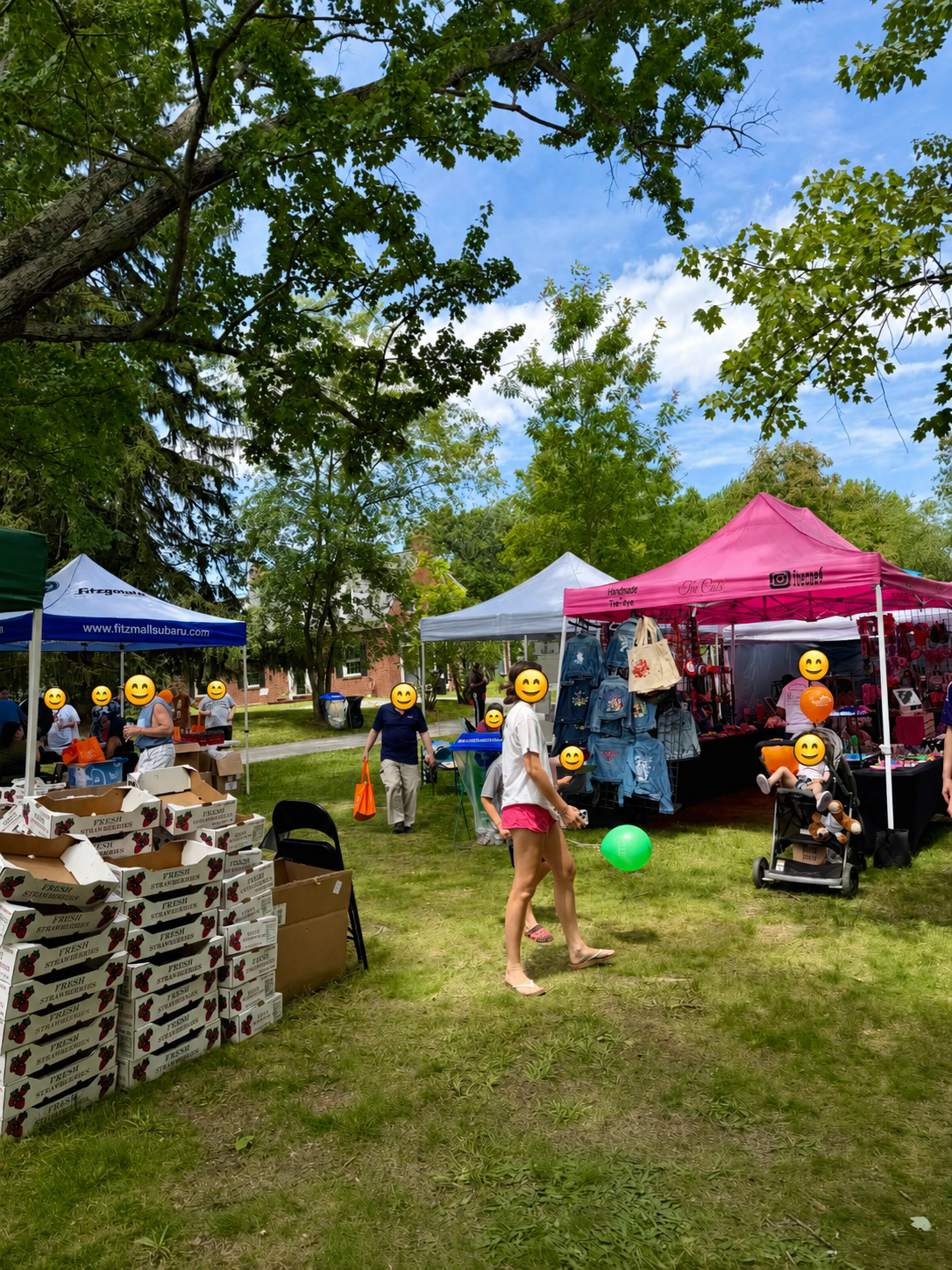
Whenever I smell fresh chin chin today — at a market stall, a party, or on the rare occasions I find the courage to make it myself — I exist on a knife-edge between weeping and laughing. My eyes fill, my mouth waters, and my heart undergoes a violent expansion and collapse. Time has done an admirable job of closing the visible scars left by my mother’s death. I don’t cry on her anniversary. I can say her name in conversation without my voice breaking.
The runner at 6:00 AM carries them both: the sad child and the happy one. The girl who failed to visit the hospital, and the girl who stole dough from the bowl. They aren’t at war. They exist, side by side, like my brother and me in that damp room, whispering into the dark.
I am learning to listen to both of them.
As I kept running past the clearing where the truck had been, the sun began to break through — weak and orange against the clouds. My legs were heavy, but I didn’t stop.
메타데이터
- post_id
- 7e867b482faa
- slug
- my-nose-is-a-bridge-to-my-past-7e867b482faa
- url
- https://medium.com/@gduruem/my-nose-is-a-bridge-to-my-past-7e867b482faa
- canonical_url
- https://medium.com/@gduruem/my-nose-is-a-bridge-to-my-past-7e867b482faa
- author_url
- https://medium.com/@gduruem
- status
- ok
- fetched_at
- 2026-07-10 06:10:56