Intergenerational Queer Friendships Are Expansive and Underrated
A gay scuba diver with duck tattoos helped me see age segregation in LGBTQ+ community differently
PRIDE 2026. TIME TO RAISE OUR VOICES IN A LOVING ROAR
Intergenerational Queer Friendships Are Expansive and Underrated
A gay scuba diver with duck tattoos helped me see age segregation in LGBTQ+ community differently
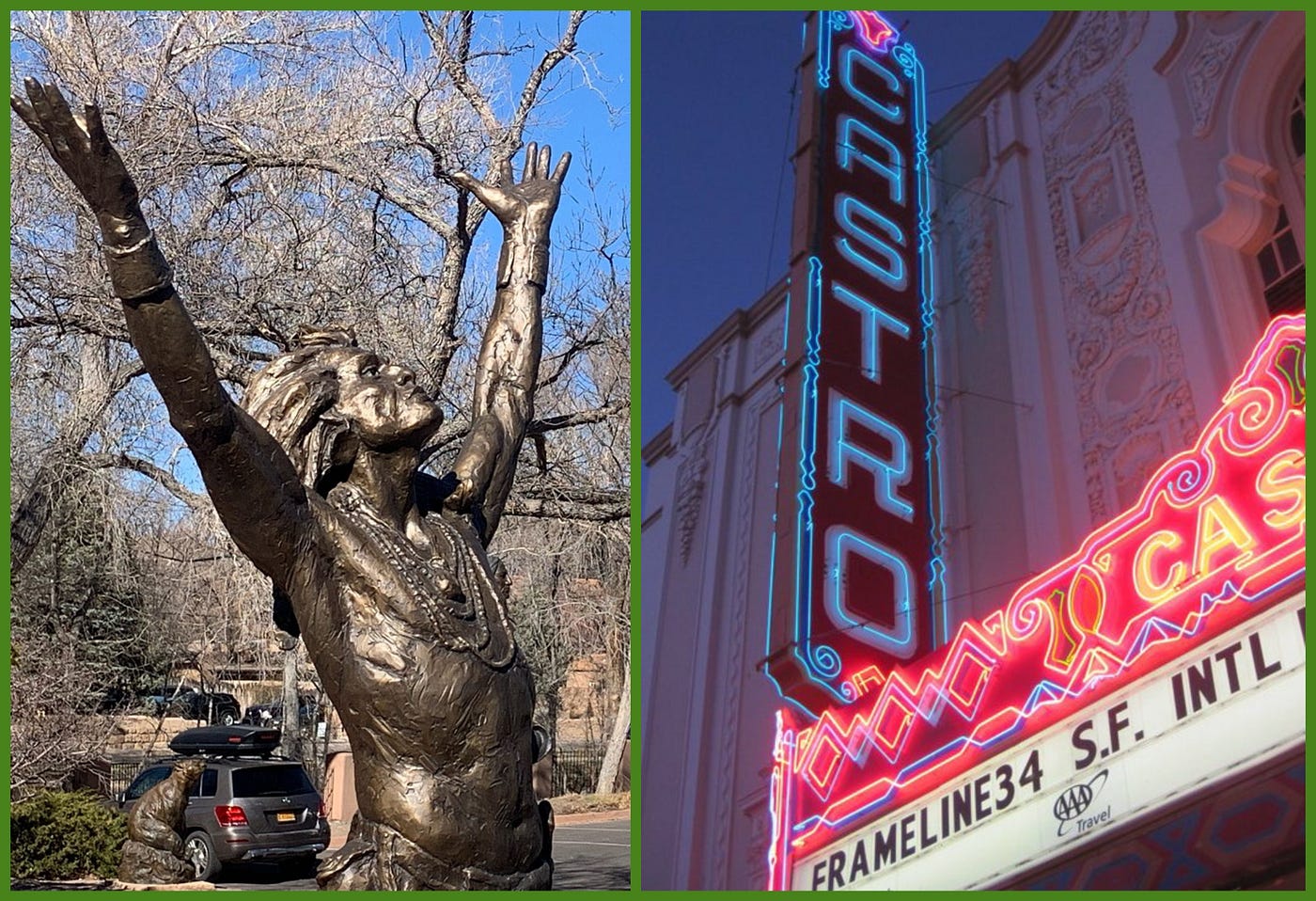
Photos by author
Years ago, in my mid-twenties, I met Robert at the LGBT Center in Sacramento.
Robert was a Navy veteran, a scuba diver who’d explored the waters around Guam, and a thoughtful man brimming with stories. He proudly sported two duck tattoos, one on each arm: a mallard on the left, a wood duck on the right.
He was also a gay elder.
Robert remembered a world with no apps or public Pride events. No easy way to find each other except through friends, flyers, bars, and luck.
“We had phrases,” he told me. “You’d ask, ‘Are you a friend of Dorothy?’”
A coded reference to Judy Garland’s Wizard of Oz character, the phrase allowed gay men to recognize one another without naming themselves outright.
Queer social life circulated through whispers, glances, and word of mouth. Specific clothing choices — cuffed jeans, leather jackets, and short hair on women — communicated queerness. Many bars had unmarked doors or frosted windows to keep outsiders from seeing in.
Robert told me about raids, arrests, humiliation. About how people could be targeted for same-sex dancing, cross-dressing, or so-called “lewd conduct.”
In some cities, the “three-article rule” policed gender expression, arresting anyone not wearing clothing associated with their assigned sex. A masculine-presenting lesbian might keep on earrings, a stocking, or a bra. Three items could mean the difference between going home and getting taken in.
Talking with Robert reminded me that Pride didn’t begin as a party sponsored by banks and vodka brands. It began with people like him. Bar regulars and organizers fighting for our rights. Drag queens, leather dykes, trans women all surviving a world that framed their love as an illness.
Hearing that history from a person who’s lived it — hearing not just what happened, but how it felt — lands differently than reading a paragraph in a textbook.
An essay by Rebecca Solnit described how “epic public changes made the era of [her] youth feel like a foreign country.” One the young will never visit and may never understand.
“Most will never know how different it was and why it changed and who to thank,” Solnit writes.
I could celebrate Pride in broad daylight. In Uruguay, I’d watched rainbow confetti rain from balconies while strangers shouted “¡Orgullo!” from above. I’d danced barefoot on sand in Puerto Vallarta while a DJ mixed Zumba anthems with U.S. pop hits.
Robert’s stories put these experiences into perspective, making them feel both joyful and inherited.
Following our interaction, it occurred to me that I didn’t have many older friends. Much less queer ones.
In college and through most of my twenties, my friendships clustered within a few years of my own age — older or younger by two, maybe five at most. The primary older people I interacted with consistently were family friends, professors, or my parents’ social circle.
Modern life is deeply age-segregated, especially when we are young. School sorts us by age. College keeps us within a narrow band of years. Early career life often reinforces the pattern. By the time many of us reach our late twenties, we’ve had little meaningful interaction with people much older or younger than us, outside of family.
A thirty-year-old friend of mine hosts gatherings with people in their twenties, thirties, forties, fifties, and sixties. I love that he does this. To me, the room feels more dynamic when age is mixed. Conversations take more unexpected turns. You are not all swimming in the same cultural water, repeating the same references.
Communities used to function this way more often, by default. People worked, lived, worshiped, and gathered in shared environments that made age-mixing normal.
Older friends can offer memory, perspective, and lived experience that cannot be gleaned from an article. Younger friends can bring new language, cultural shifts, energy, and questions.
At its best, the exchange moves in both directions. Both groups meet one another as full humans with different vantage points.
On one hand, it makes sense that many queer spaces skew young.
They are often high-energy, late-night, and fast-moving. Queer people in their thirties, forties, and beyond often organize their time differently. They may work demanding jobs, live farther from city centers, or care for children or aging parents. Or they may simply prefer dinners with friends, hikes, small living-room parties, or sleep.
And yet, part of me expected queer culture to resist age segregation at least a little more than it does. Many of us do not follow the straight timeline of marriage, suburbs, children, and social retreat in the same way, or at the same pace. I assumed this would create more visible overlap between the newly out and those decades into queer life. More mingling between gaybies just finding language for themselves and older queers who have lived through several eras of that language changing.
Sometimes this happens. But by and large, youth still dominates the scene. Sociologists who study LGBTQ+ aging have described queer culture as strongly youth-centered, which can leave older queer people feeling invisible in their communities. Nearly half of midlife and older LGBTQ+ adults report loneliness, a rate higher than that of non-queer elders.
Research also links the combined experience of sexual-orientation and age discrimination to higher levels of anxiety and depression among queer seniors. Many live alone and are less likely to have the same default family support networks that straight elders rely on.
While not inevitable, that loneliness also isn’t random. It stems, at least in part, from a culture that reduces people to their utility.
Ageism does not always present as overt cruelty.
More often, it shows up as a question not asked. A story interrupted. A glance down at the phone. An assumption that a speaker’s knowledge is outdated before the listener has even heard it. It looks like treating older people’s references as irrelevant and their pacing as inconvenient.
I think few of us escape youth-worshiping conditioning completely. I know I have absorbed pieces of it, having lived in the same culture and taken in the same messages. I too have felt pressure to remain vital and quick on my feet.
Still, the older I get, the more value I place on signals like: Is someone thoughtful? Are they kind? Do they listen and ask generous questions? How do they relate to their memories?
Those qualities matter more to me now than surface markers of vitality or coolness.
This Pride season, I’ve been wondering what a less age-segregated culture would ask of us.
How might we widen our attention beyond youth and resist reducing people to their speed, novelty, or usefulness?
One way is through the quality and direction of our attention. Asking follow-up questions, staying present when a story takes a winding route, and shifting away from treating quickness as proof of competence.
We can also practice patience with different conversational rhythms. Not everyone delivers their thoughts in a punchy manner. Some people speak more slowly or tell stories in a more meandering way. This doesn’t make their insight any less valuable.
We can notice vitality where culture tells us not to look for it. Youth and vitality are not synonymous, but neither are vitality and constant activity. Some people radiate energy through a packed calendar. Others carry it more quietly: through humor, memory, curiosity, steadiness, or the depth of attention they bring to a conversation.
One of my friends, who is in her sixties, has far more social energy than I do. She is always on the go, involved in a medley of activities and connecting with a wide range of personalities. Having people like her in my life has expanded my sense of what aging can look like.
But that is only one version. Aging can also involve fatigue, disability, pain, quieter rhythms, smaller circles, and a greater need for rest. None of that makes someone less alive, less interesting, or less worthy of being included. A less age-segregated queer culture would not simply invite older people into young people’s pace. It would make room for different paces altogether.
I don’t mean to romanticize elders or scold younger people when I say intergenerational queer friendship is underrated. Older people are not automatically wise. Younger people are not inherently shallow, impatient, or culturally empty. Every generation has gifts and blind spots, people who listen and people who do not.
Still, queer culture loses a great deal when different age groups rarely sit at the same table or meet one another with real curiosity.
LGBTQ+ historian Logan Weaver notes that queer history “is not safely archived by default.” Historically, it has not been protected by schools, families, churches or governments. Much of it has survived through old photographs and letters. Chosen families and hand-built archives. People willing to say, “This is what it was like.”
Our history survives when people remember, record, and share it. For queer people, this makes intergenerational exchange not just meaningful, but necessary.
I do not want older queer people offered the consolation prize of polite half-inclusion. I want queer spaces where older people are not treated as mascots, warnings, or inspirational exceptions.
I want rooms where the twenty-two-year-old just coming out can talk to the seventy-year-old who remembers coded phrases.
Spaces where aging is regarded as a deepening evolution, and where neither group treats the other like a problem to manage.
Communities that value storytelling, listening and rest alongside energy and reinvention.
Old age is the one destination every generation shares, if we are lucky enough to reach it. That inevitability gives us common ground. Ideally, it would unite us.
Aging shouldn’t feel like a quiet return to the closet. Queer spaces don’t subsist on youth alone. They deepen when older queers return with memory and are met with the attention they deserve — inside the communities they helped make possible.
*Thanks for reading! Follow me on Substack or Instagram for more of my writing.

This story is a response to the Prism & Pen writing prompt, **Pride 2026, Time To Raise Our Voices in a Loving Roar!**
[embed]It’s Pride 2026, Time To Raise Our Voices in a Loving Roar! A Prism & Pen writers promptmedium.com
메타데이터
- post_id
- 7e88f80b91b4
- slug
- intergenerational-queer-friendships-are-expansive-and-underrated-7e88f80b91b4
- url
- https://medium.com/prismnpen/intergenerational-queer-friendships-are-expansive-and-underrated-7e88f80b91b4
- canonical_url
- https://medium.com/prismnpen/intergenerational-queer-friendships-are-expansive-and-underrated-7e88f80b91b4
- author_url
- https://medium.com/@esteph42190
- status
- ok
- fetched_at
- 2026-06-10 18:44:10