Writing for AI Doesn’t Mean Writing for Robots
The best AI-friendly content isn’t written for machines. It’s written so clearly that both people and machines can understand it.
Writing for AI Doesn’t Mean Writing for Robots
The best AI-friendly content isn’t written for machines. It’s written so clearly that both people and machines can understand it.
For years, content marketing followed a familiar formula.
Find a keyword.
Write a blog post.
Optimize the headings.
Add internal links.
Publish.
Repeat.
That approach helped millions of websites become discoverable through traditional search.
But AI-powered search is changing something fundamental.
People are no longer just searching for pages.
They’re asking questions.
And AI systems aren’t simply looking for pages that contain the right keywords.
They’re looking for information they can confidently understand, retrieve, and explain.
That’s a subtle difference.
But it changes the way we should think about content.
This article is Part 5 of The AI Visibility Handbook, a five-part series exploring how brands become discoverable, understandable, and recommendable in AI-powered search.
In Part 1, we explored how structured data helps AI understand your business.
In Part 2, we looked at why crawlability determines whether AI systems can access your content.
In Part 3, we examined how sitemaps improve discoverability.
In Part 4, we explored why entity clarity helps AI recognize your organization.
Now we arrive at the final layer.
How do you create content that AI systems can actually understand?
AI Doesn’t Read Like People Do
When humans read an article, they naturally connect ideas.
We infer context.
We interpret tone.
We understand nuance.
AI systems work differently.
They break information into smaller pieces.
They identify relationships.
They retrieve passages.
They look for answers.
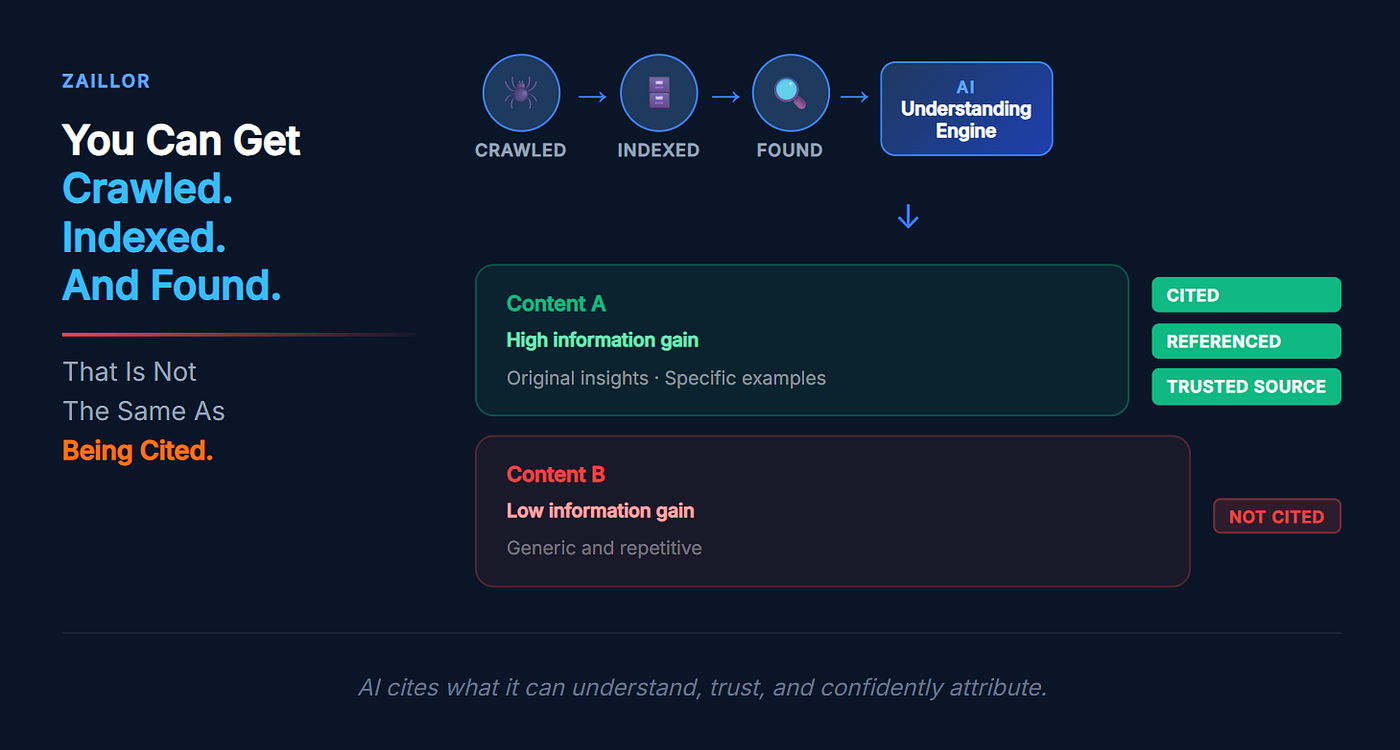
This is why simply writing more content doesn’t automatically improve AI visibility.
The content also needs to communicate clearly.
Imagine asking two people the same question.
One gives a concise, well-structured answer.
The other rambles for ten minutes before making the point.
Both may be correct.
But only one is easy to understand.
AI systems face a similar choice every day.
Content Is Becoming Knowledge Infrastructure

One of the biggest misconceptions about AI optimization is that it requires writing specifically for machines.
It doesn’t.
The goal isn’t robotic writing.
The goal is organized knowledge.
Clear headings.
Direct answers.
Logical structure.
Well-defined concepts.
Consistent terminology.
Pages that focus on a single topic instead of trying to answer everything at once.
These are characteristics of good writing regardless of whether the audience is human or AI.
The difference is that AI systems benefit even more from clarity than people do.
Why Great Content Still Gets Missed
We’ve seen plenty of websites with excellent content that rarely appears in AI-powered responses.
The issue usually isn’t quality.
It’s presentation.
Important ideas are buried halfway through long paragraphs.
Multiple topics compete for attention on the same page.
Product information blends into company history.
Services overlap without clear definitions.
Humans are remarkably good at filling in those gaps.
Machines are much less forgiving.
The clearer the structure becomes, the easier it is for AI systems to retrieve the right information at the right moment.
The future of content isn’t about writing more. It’s about making knowledge easier to retrieve.
AI Visibility Is More Than Content
Throughout this series, we’ve explored AI visibility as a connected system rather than a collection of isolated tactics.
Structured data helps define entities.
Robots.txt enables access.
Sitemaps improve discovery.
Entity clarity creates confidence.
Content brings all of those layers together.
Without clear content, structured data has little context.
Without discovery, great content remains hidden.
Without entity clarity, information becomes fragmented.
Each layer strengthens the next.
That’s why AI visibility isn’t a checklist.
It’s an ecosystem.
Think Less About Keywords. Think More About Questions.

Traditional SEO encouraged businesses to think about keywords.
AI search encourages businesses to think about conversations.
What questions does your audience ask?
Can each page answer one of those questions clearly?
Can someone understand your expertise within the first few paragraphs?
Can AI retrieve the answer without searching through thousands of words?
Those are increasingly valuable questions.
Not because SEO is disappearing.
But because search itself is evolving.
The Future Of Content Is Clarity
Every major change in digital marketing has rewarded businesses that made information easier to access.
Mobile-friendly websites.
Fast-loading pages.
Structured data.
Now we’re entering another transition.
Content that communicates clearly.
Not just to people.
But to machines as well.
The organizations that succeed won’t necessarily produce the most articles.
They’ll build the clearest knowledge base.
One that humans enjoy reading and AI systems can confidently understand.
That may become one of the most valuable competitive advantages in the next generation of search.
A Thought Before You Leave
The next time you publish a page, don’t ask,
“Is this optimized for Google?”
Ask something slightly different.
“If an AI assistant had to answer a customer’s question using only this page, would it understand exactly what we’re trying to say?”
That single question captures the future of content optimization better than any keyword checklist.
Want The Technical Deep Dive?
This article is an educational overview of a much larger piece of research.
If you’d like to explore AI content optimization in greater depth, understand how AI systems retrieve and interpret content, learn practical content structuring techniques, and see recommendations for improving AI visibility, we’ve published the complete research on Zaillor.
Read the full research:
AI Content Optimisation and AI Visibility
https://www.zaillor.com/insights/ai-content-optimisation-ai-visibility
Continue Reading The AI Visibility Handbook
Part 1: Why AI Can’t Recommend a Brand It Doesn’t Understand (Structured Data and AI Visibility)
https://www.zaillor.com/insights/structured-data-ai-visibility
Part 2: Why Your Website Might Be Invisible to AI (Robots.txt, AI Crawlers, and AI Crawlability)
https://www.zaillor.com/insights/robots-txt-ai-crawlers-ai-crawlability
Part 3: Your Best Content Is Worthless If AI Can’t Find It (Sitemaps and AI Visibility)
https://www.zaillor.com/insights/sitemap-ai-visibility
Part 4: The Internet Is Becoming a Database of Entities (Entity Clarity and AI Visibility)
https://www.zaillor.com/insights/entity-clarity-ai-visibility
Part 5: Writing for AI Doesn’t Mean Writing for Robots ✔
You’ve Reached the End of the Series
Thank you for reading The AI Visibility Handbook.
Across these five articles, we’ve explored the foundations of AI visibility:
- How AI understands entities through structured data.
- Why crawlability determines whether content can be accessed.
- How sitemaps improve discoverability.
- Why entity clarity builds confidence.
- How clear, well-structured content helps AI retrieve and explain information.
Together, these form a practical framework for helping brands become more discoverable, understandable, and recommendable in AI-powered search.
If you’d like to explore more original research, practical guides, and experiments on AI visibility, visit:
Zaillor Insights
https://www.zaillor.com/insights
We’ll continue publishing research on how AI systems discover, interpret, and recommend brands, along with practical frameworks to help organizations prepare for the next generation of search.
메타데이터
- post_id
- 7e8feae4a476
- slug
- writing-for-ai-doesnt-mean-writing-for-robots-7e8feae4a476
- url
- https://medium.com/@zaillor/writing-for-ai-doesnt-mean-writing-for-robots-7e8feae4a476
- canonical_url
- https://medium.com/@zaillor/writing-for-ai-doesnt-mean-writing-for-robots-7e8feae4a476
- author_url
- https://medium.com/@zaillor
- status
- ok
- fetched_at
- 2026-07-11 02:40:15




