What exactly is a Distributed Key-Value Store? (And Why Are We Building One?)
Before diving into lines of code and complex consensus algorithms, let’s take a step back and answer the most fundamental question: What…
What exactly is a Distributed Key-Value Store? (And Why Are We Building One?)
Before diving into lines of code and complex consensus algorithms, let’s take a step back and answer the most fundamental question: What actually is a distributed key-value store?
If you’ve ever used Amazon DynamoDB, Apache Cassandra, or Redis, you’ve used a distributed key-value store. They are the backbone of the modern internet, powering everything from shopping carts on e-commerce sites to real-time session management in massive multiplayer games.
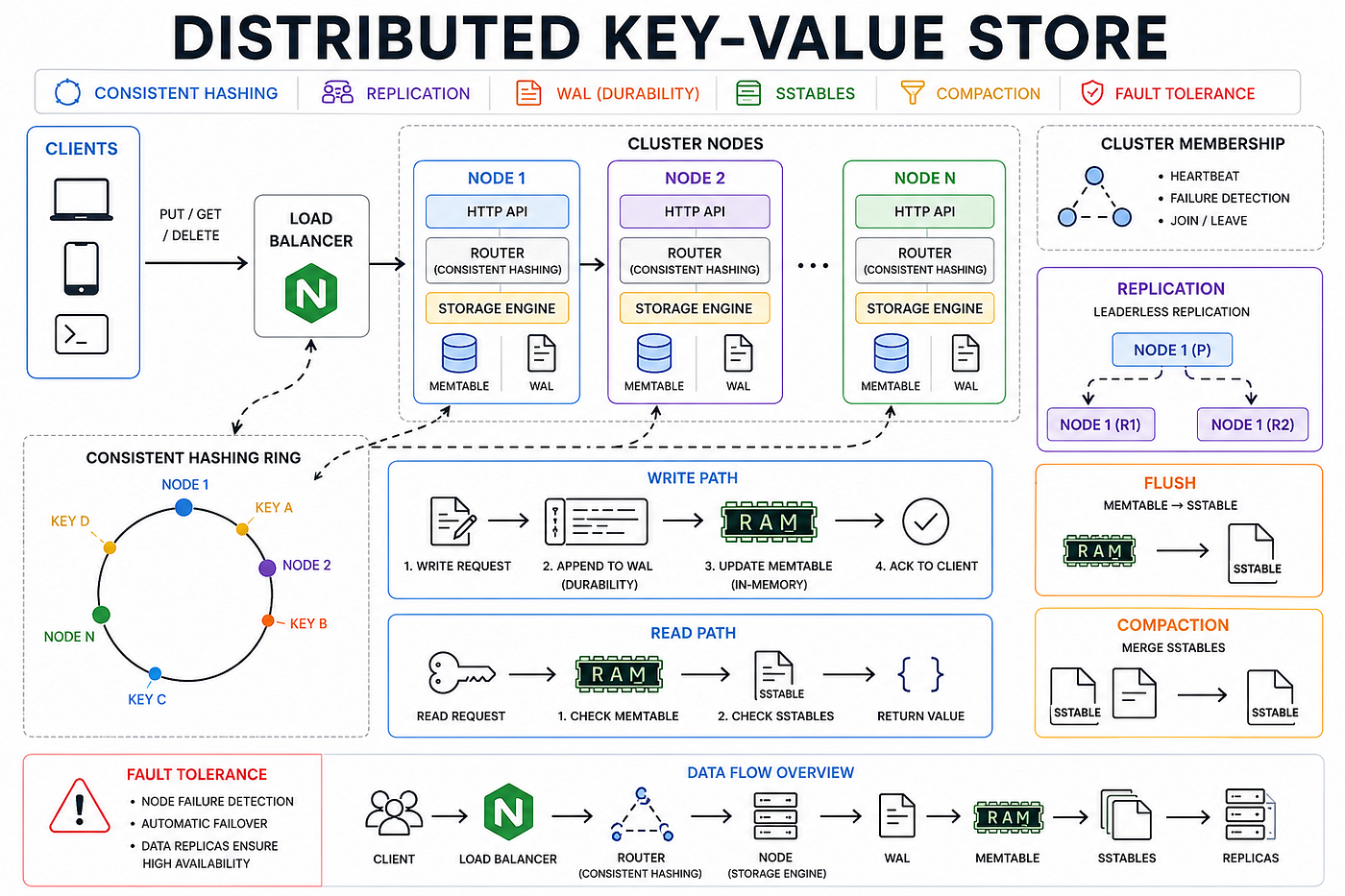
Distributed Key Value Store
In this short introduction, we will break down the concept into two simple parts: the “Key-Value” part, and the “Distributed” part.
1. The “Key-Value” Part: The Simplest Database
Most of us are introduced to databases through SQL. We think in tables, rows, columns, and complex relations.
A Key-Value store completely discards that complexity. It is the absolute simplest form of a database. You can think of it like a massive digital dictionary.

2. The “Distributed” Part: Surviving the Chaos
If a Key-Value store is just a digital dictionary, why is it so hard to build? Why do we need an entire tutorial series?
The challenge arises when your application becomes popular.
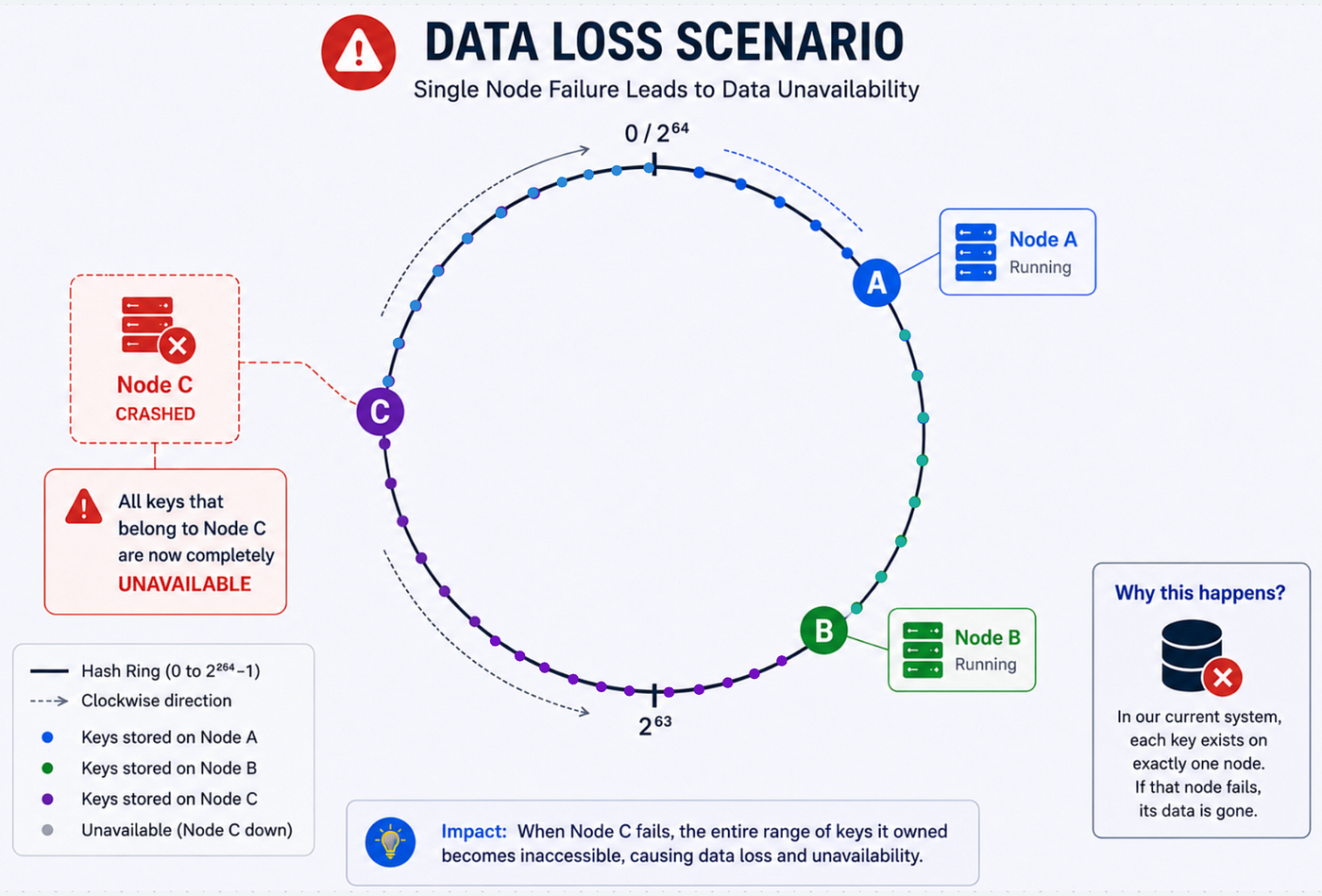
Imagine you build a simple key-value store on a single server. It works perfectly. But then, Black Friday hits. Millions of users flood your application. Your single server runs out of memory, the CPU maxes out, and eventually, the server catches on fire (metaphorically speaking) and crashes.
All your users’ shopping carts are permanently lost.

To solve this, we make the system Distributed. Instead of one massive server, we use a cluster of multiple smaller, cheaper servers (nodes) that work together as a single team.
When we distribute the system, we gain two massive superpowers:
- Scalability (Partitioning): We can split the data up. Node A handles keys A-H, Node B handles keys I-P, and Node C handles Q-Z. If we need more storage, we simply add Node D.
- High Availability (Replication): We keep multiple copies of the data. If Client 1 saves their shopping cart to Node A, Node A secretly copies it to Node B in the background. If Node A suddenly dies, Node B immediately steps in to serve the data. The user never even notices the crash.

Why Build One From Scratch?
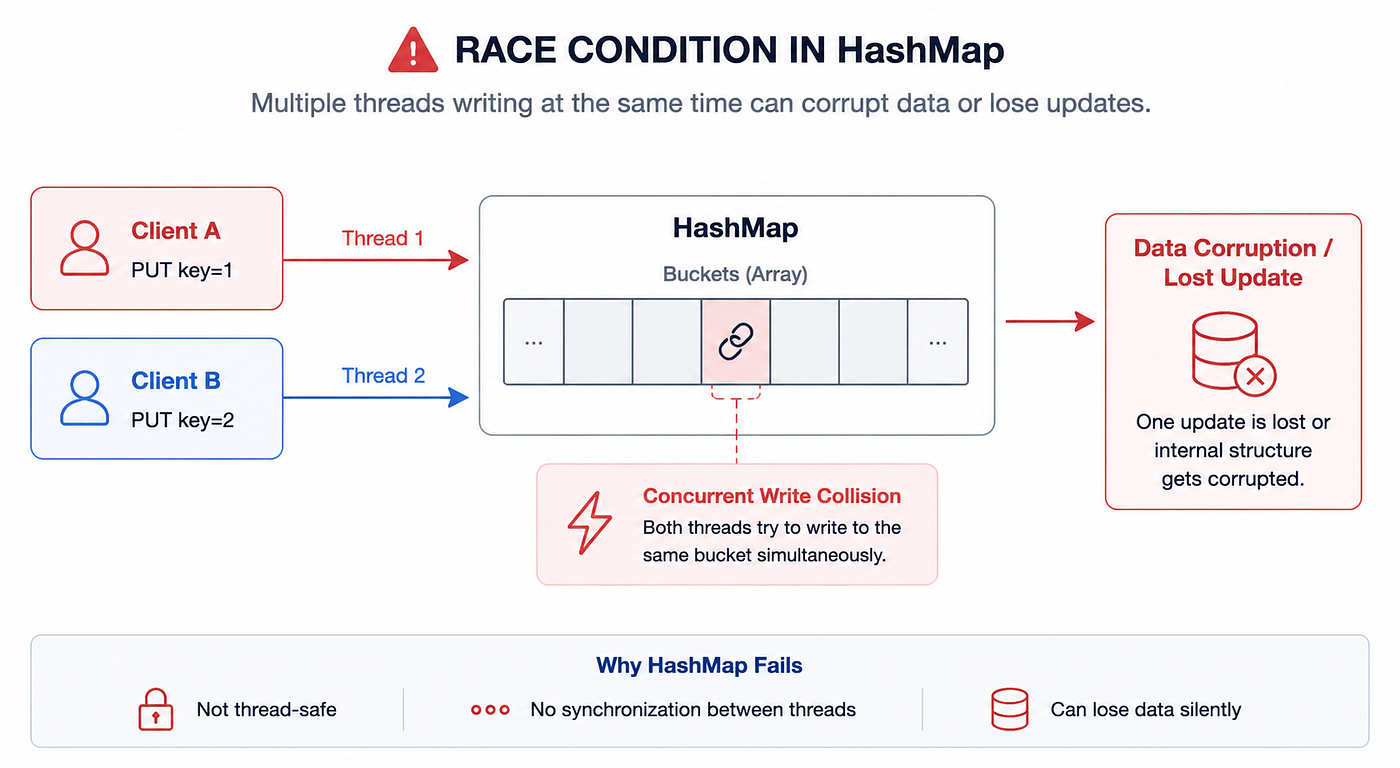
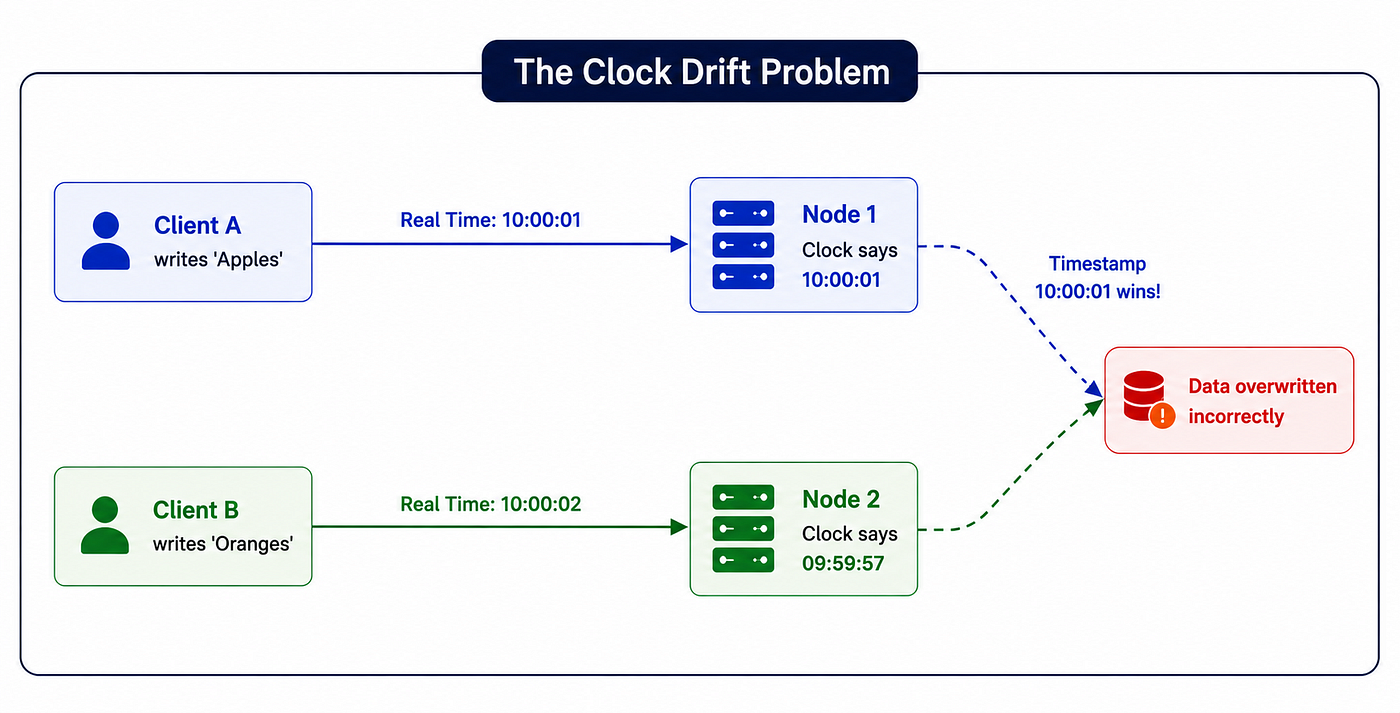
Distributed systems are notoriously difficult. You have to deal with race conditions, servers dying randomly, network cables being unplugged (network partitions), and clocks drifting out of sync.
By building a distributed key-value store from scratch in Java, we are going to peel back the magic of cloud computing. We won’t just learn how to use tools like DynamoDB; we will understand exactly why they are built the way they are.
We will tackle concurrency, write-ahead logging (WAL), consistent hashing, the gossip protocol, and vector clocks — one commit at a time.
(You can follow along with the complete source code for the finished project here: https://github.com/rahulch07/kvstore)
Ready to Start?
In **Article 1: From Zero to Thread-Safe**, we will open up our IDE, build the very first building block (the in-memory cache), and discover the hidden dangers of race conditions.
Let’s start coding!
메타데이터
- post_id
- 7eb2a3cf7aae
- slug
- what-exactly-is-a-distributed-key-value-store-and-why-are-we-building-one-7eb2a3cf7aae
- url
- https://medium.com/@rahulch07/what-exactly-is-a-distributed-key-value-store-and-why-are-we-building-one-7eb2a3cf7aae
- canonical_url
- https://medium.com/@rahulch07/what-exactly-is-a-distributed-key-value-store-and-why-are-we-building-one-7eb2a3cf7aae
- author_url
- https://medium.com/@rahulch07
- status
- ok
- fetched_at
- 2026-08-09 11:07:28