How China Built a $600B AI & Computer Vision Empire: Strategic Insights for Global AI Leadership
From groundbreaking surveillance systems to smart manufacturing: the comprehensive strategy behind China’s AI and computer vision dominance
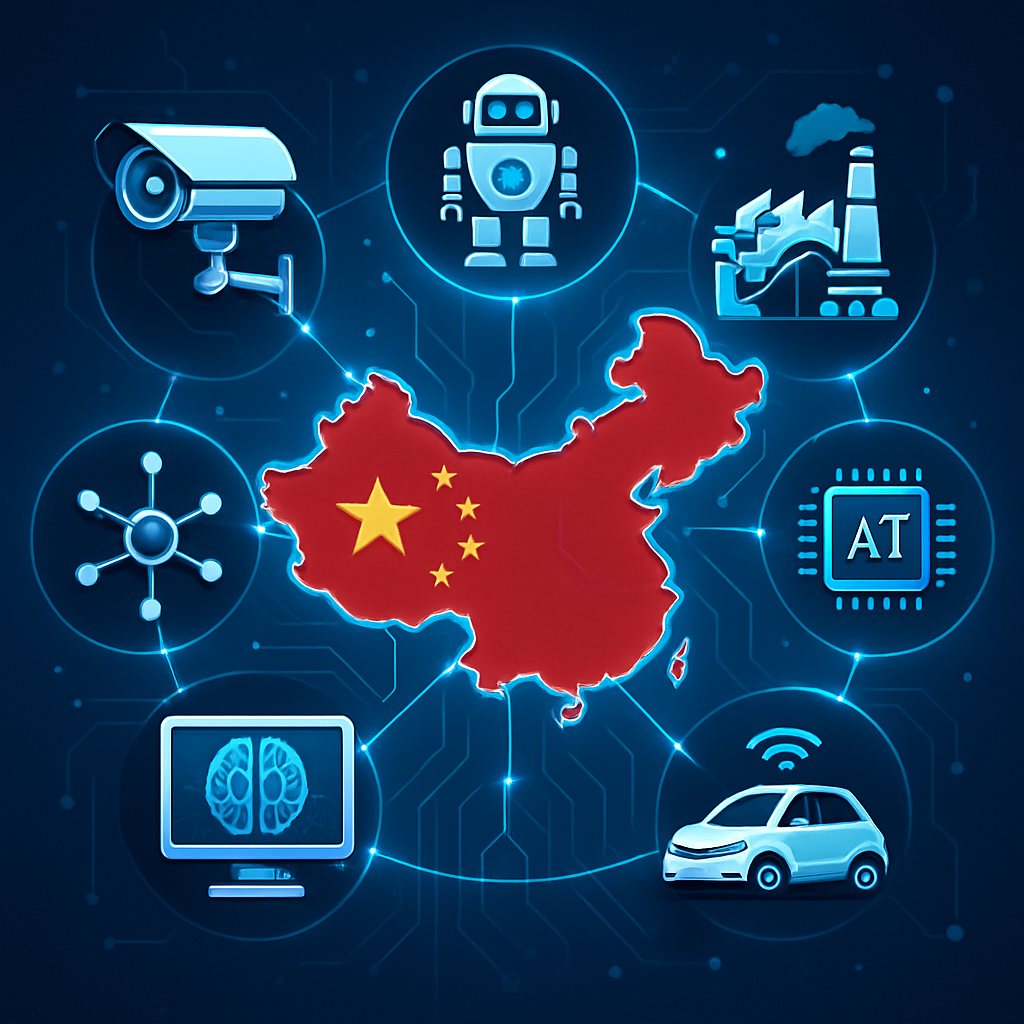
How China Built a $600B AI & Computer Vision Empire: Strategic Insights for Global AI Leadership
From groundbreaking surveillance systems to smart manufacturing: the comprehensive strategy behind China’s AI and computer vision dominance
Over the past 15 years, China has transformed from a passive technology consumer to a global leader in artificial intelligence (AI) and computer vision (CV). This extraordinary journey has propelled economic growth, industrial modernization, and technological competitiveness, positioning China as a model for nations seeking to harness the transformative power of AI. Understanding China’s integrated, long-term approach provides key insights for business leaders, policymakers, and technologists aiming to build robust, AI-driven economies.
According to McKinsey & Company projections, the estimated total annual economic value generated by AI technologies across China’s entire economy is approximately $600 B, which represents not just the market size of computer vision or AI product sales. AI and machine learning technologies are expected to contribute approximately 3.7% to China’s GDP annually, as outlined earlier amounts to roughly $600 B per year. This value encompasses computer vision applications as a key pillar, but also extends to natural language processing, automation, predictive analytics, healthcare, finance, energy, manufacturing, and more. This holistic perspective is essential for fully appreciating how China’s AI strategy integrates a spectrum of technologies to drive broad, transformative national value.
At nearly ~$84 B in 2024, China’s AI sector is experiencing unprecedented growth, with an expected compound annual growth rate (CAGR) of 15.6%, forecasting a market size exceeding ~$140 B by 2030. Remarkably, computer vision alone comprises over one-third of China’s AI market, while holding a dominant share globally in patent filings and technological innovation.
This isn’t just market expansion, it’s strategic economic transformation powered by coordinated government policy, massive investment in creating AI ecosystem end-to-end, and practical deployment focus. Understanding this broad economic impact is crucial for appreciating how China’s systematic approach integrates multiple AI technologies to create transformative national value, rather than focusing on individual market segments in isolation.
1. Foundation: Massive Surveillance Networks Powering Social Governance
The Strategic Starting Point
China’s initial focus on computer vision was developing the world’s largest surveillance infrastructure, now covering cities, public spaces, and critical infrastructure nationwide. As of 2017, approximately 68% of China’s CV market concentrated on surveillance technology, including sophisticated facial recognition, object tracking, and real-time automated monitoring systems for social stability and national security.
Building Domestic Champions
Leading domestic companies like Hikvision, Megvii (Face++), CloudWalk, and Huawei grew rapidly through government-backed procurement strategies. These once-startup companies have matured into global leaders, supplying surveillance and computer vision technology worldwide and positioning China as the dominant exporter in this critical sector.
Key Success Factor: Government became the first customer, providing guaranteed domestic demand that enabled local companies to achieve scale, refine their technologies, and eventually compete globally.
2. Industrial Manufacturing Revolution: The AI+ Initiative
Comprehensive Manufacturing Transformation
Launched in 2024, China’s AI+ Initiative promotes deep integration of AI, particularly computer vision, within manufacturing to upgrade productivity and innovation. Core applications include:
- Predictive maintenance systems reducing costly equipment failures by 30–50%
- Visual inspection systems achieving over 99% defect detection accuracy
- Smart factories optimized with real-time CV-driven analytics
- Automated production and assembly lines guided by computer vision systems
Measurable Results
This initiative has propelled fundamental transformation in manufacturing efficiency, quality standards, and operational agility. Manufacturing productivity gains of 25–30% in AI-integrated facilities demonstrate the tangible economic impact of systematic computer vision deployment.
3. Healthcare System Modernization: AI-Powered Medical Imaging
Explosive Market Growth
China’s AI healthcare market accelerated from $1.59 billion in 2023 to a projected $7.33 billion by 2028, representing a 42.5% CAGR. Computer vision-based medical image analysis plays a crucial role in addressing critical radiologist shortages (1:70,000 ratio vs. 1:7,000 in the US) and enabling early disease detection.
Scale of Implementation
The deployment of AI-assisted diagnostics in over 228 top-tier hospitals exemplifies rapid adoption at national scale. These advancements enable:
- Automated screening on a mass population scale
- Remote rural diagnostics extending healthcare access
- Precision medicine guided by visual biomarker identification
- Early disease detection through advanced image analysis
4. Smart Cities & Autonomous Transportation Leadership
Global Leadership in Autonomous Vehicles
China leads the global autonomous vehicle landscape with 16 cities actively testing robotaxi fleets. Baidu alone operates 400 robot taxis across 1,160 square miles in Wuhan, supported by more than 100 square kilometers of intelligent road infrastructure leveraging AI, 5G, and integrated vehicle-to-everything communications.
Integrated Smart Infrastructure
Smart city development integrates multiple computer vision applications:
- AI-optimized traffic signals reducing congestion by 20–30%
- Vehicle-to-everything (V2X) systems for seamless communication
- Comprehensive city monitoring and public safety enforcement
- Real-time traffic management using computer vision analytics
5. Economic Integration: Strategic Military-Civil Fusion
Dual-Use Technology Development
China’s Military-Civil Fusion (MCF) strategy incorporates civilian computer vision and AI advancements into defense technologies and logistics. This approach creates synergies between commercial innovation and strategic capabilities, accelerating development in both sectors.
Centralized Data Strategy
A centralized National Data Bureau governs vast data resources, facilitating the extensive, government-integrated AI training necessary for both industrial and strategic applications. This national compute grid infrastructure enables large-scale computer vision development.
6. Robust Innovation Ecosystem & Talent Cultivation
Strategic R&D Investment
China invests heavily in research and development through:
- Significant university partnerships connecting academia with industry
- Open-source projects like the WuDao 3.0 multimodal model
- Proprietary hardware innovation such as Huawei’s Ascend 910C AI chip
- Advanced AI models like DeepSeek achieving frontier performance at 40% lower cost
Comprehensive Talent Development
This ecosystem supports sustained growth through:
- Massive AI talent cultivation programs across universities
- High-tech industrial parks accelerating smart manufacturing
- Regulatory sandboxes enabling safe technology testing
- Strategic talent development through extensive partnerships
7. Comprehensive AI Ecosystem Development: Chips, Data Centers, Startups, and Strategic Investment
China’s staggering rise in AI and computer vision leadership is not merely the outcome of isolated research breakthroughs but the result of an intricate, layered ecosystem cultivated meticulously over years. This ecosystem encompasses significant government investment, advanced hardware development, robust data infrastructure, academic-industrial partnerships, and strategic startup support programs.
Massive Government Funding
The Chinese government has injected over $8.2 billion into targeted state funds supporting early-stage AI startups and innovation projects, signifying a strong commitment to nurturing domestic technological capacities from the ground up. These resources fuel a vibrant pipeline of technologies and ventures tailored to align with national priorities. Additionally, 16 local governments including Shanghai provide companies with vouchers for subsidized processing power from state-operated data centers.
250+ AI Data Centers Nationwide
To power sprawling AI computations, China boasts over 250 dedicated AI data centers across diverse provinces. These centers provide the critical computational power and data availability required for training vast machine learning and deep learning models, including foundational and domain-specific large language models (LLMs). With over 8.1 million standard racks nationwide and 230 exaflops of computing power (second globally), this widespread infrastructure supports real-time applications across finance, health, manufacturing, and urban systems.
Strategic AI Chip Manufacturing
Advancing self-reliance in semiconductor technology is paramount for China. With an estimated $10 billion invested in domestic AI chip production, the goal is reducing dependence on foreign suppliers. Industry giants like Huawei have pioneered proprietary AI accelerator chips such as the Ascend 910C, promoting high-performance, energy-efficient processing tailored to AI workloads. Beijing authorities provide subsidies for firms buying domestically produced AI chips to boost the semiconductor industry. This localized hardware capability accelerates edge AI development vital for latency-sensitive applications.
Industry-Academic Collaborative Research
Recognizing the importance of knowledge generation, China intricately weaves academic institutions and industry. This synergy fuels the rapid deployment of customized AI models and the development of multi-modal AI systems like WuDao 3.0, the world’s largest open-source multimodal AI model released by Beijing Academy of Artificial Intelligence. 47% of the world’s top AI researchers are now in China, with universities, research institutes, and enterprises collaborating to push AI capabilities frontiers, ensuring a steady supply of innovative solutions.
Cross-Sectoral Integration
China’s AI ecosystem extends holistically into critical economic sectors — finance leveraging AI for risk management and financial analytics; energy optimizing power grid operations with 246 green data centers established and renewable energy capacity positioning China to account for nearly 60% of global renewable installations by 2030; smart cities deploying AI-powered urban management; and manufacturing upgrading with AI-driven automation. This comprehensive integration ensures AI advancements have broad and measurable societal impact.
East Data, West Computing Initiative
The strategic “Eastern Data, Western Computing” initiative has received over $6.1 billion in government funding over two years, redistributing computing resources from densely populated eastern regions to western regions where renewable energy is abundant. This national project optimizes data center distribution, with energy-rich western regions processing information collected in data-rich eastern provinces.
Startup and Scaleup Ecosystem Support
The government promotes startups by offering early contract opportunities, preferential funding, and market access, effectively acting as the “first customer.” This approach accelerates go-to-market timelines and allows startups to rapidly refine products and scale internationally. Companies like 4Paradigm exemplify AI-driven startups exploring new business models powered by AI decision-making. The emerging AI startup community plays a pivotal role in driving competition and innovation at all ecosystem levels.
Advanced AI Model Development
China has registered 188 foundation models at the national level as of August 2024, demonstrating rapid progress in large language model development. The focus on industry-specific and domain-specialized models through close collaboration with industry partners enables deeper customization and optimization for sectors characterized by high digitalization levels.
This multifaceted, deeply interconnected AI ecosystem forms the backbone enabling China’s accelerated innovation trajectory and global market leadership in computer vision and AI applications. It epitomizes a strategic, patient, and comprehensive approach emphasizing infrastructure, finance, human capital, and practical deployment that other nations can learn from.
8. China’s AI & Computer Vision Powerhouse: Real Achievements, Global Rankings, and the Quest for Tech Supremacy
China’s AI and computer vision success is underpinned by a multifaceted, meticulously constructed ecosystem that extends far beyond mere application: it is a deliberate model of technological self-reliance, relentless investment, and national ambition.
Unmatched Infrastructure and Ecosystem Scale
- China has built over 250 AI-focused data centers, with the data center industry expected to surpass $41 billion in 2025 and investments projected to reach $41 billion annually by 2028. The “Eastern Data, Western Computing” national initiative is redistributing computing resources to energy-rich provinces, supercharging foundational model training and AI deployment — even in the face of chip export controls.
- The government has invested over $10 billion in domestic semiconductor/AI chip manufacturing, fostering advanced, energy-efficient chips like Huawei’s Ascend 910C and fueling resilient edge AI rollouts — shifting the balance from dependency to self-sufficiency. Generous subsidies, green electricity, and multi-year operation incentives are attracting global investment to next-generation computing clusters in China’s desert and hinterland regions.
China’s Foundation Model Revolution and AI Supremacy Battle
- DeepSeek and Sovereign AI Models
China’s AI ecosystem includes significant investments in building sovereign foundational AI models, exemplified by the groundbreaking DeepSeek model with over 80 billion parameters, positioning it as a major jolt to global AI competition. Unlike dependency on foreign foundational models, China has developed over 188 national-level foundation models by August 2024, ensuring AI technology sovereignty by reducing reliance on US technology.
DeepSeek’s breakthrough represents more than technical achievement — it signals China’s capability to develop frontier AI models that compete directly with OpenAI’s GPT series, Google’s Gemini, and Anthropic’s Claude, fundamentally challenging Western AI dominance.
- The Multi-Front AI War: US vs. China
The AI race between the US and China is a complex, multi-front competition spanning chips, AI research, cloud data centers, startups, and energy infrastructure. The US leads in total AI investments (~$1 trillion in 2025), AI R&D, and startup funding, focusing on scale, chip supremacy, and ecosystem development.
China, with AI-related investments estimated between $253-$277 billion, emphasizes rapid catch-up, self-sufficiency, and a sovereign AI stack, aiming for 70% chip self-reliance while investing heavily in domestic cloud infrastructure, data centers, and nuclear energy expansion.
- Strategic Implications: AI as Global Power Determinant
This strategic positioning reflects a high-stakes contest where AI technological supremacy is poised to become a defining factor in global geopolitical power balances. The nation that achieves AI dominance across chips, models, infrastructure, and applications will likely shape international norms, economic systems, and security architectures for decades.
China’s approach demonstrates that AI leadership isn’t just about building better algorithms — it’s about constructing entire technological ecosystems that can operate independently of foreign dependencies while competing globally for influence and market share.
AI Research and University Infrastructure
- Since 2018, China has exploded from 35 to more than 2,300 undergraduate AI major programs — including 350 at the nation’s top institutions, with AI even surpassing computer science as the preferred engineering major. National scholarships, interdisciplinary schools, and streamlined “undergraduate-master’s-doctorate” training are producing the next wave of deep tech talent.
- China hosts the world’s largest population of AI researchers, and is closing the “depth gap” with the US, supported by new AI-focused research campuses, academic-industrial labs, and record numbers of top-cited AI publications and international research prizes.
Patent Dominance and Intellectual Property Might
- By 2024, China owned a staggering 74.7% of global AI patent applications, filing four times more than the US in just 2022 alone, and six times more between 2014–2023. Chinese startups and “AI tigers” (Zhipu AI, Moonshot, Baichuan, MiniMax) lead aggressive open-source, commercial, and hybrid innovation. Tsinghua University, Shanghai AI Lab, and the Beijing Academy of Artificial Intelligence anchor this patent surge, showing that China’s AI edge is not just in deployment — but in inventive technical output.
Corporate Giants and Model Leadership
- Tech titans like Baidu (ERNIE Bot), Alibaba (Tongyi Qianwen), Tencent (Hunyuan), Huawei, ByteDance, and SenseTime compete globally with US AI leaders. Open-source projects like DeepSeek’s R1 and V3, and homegrown models like MiniMax, Qwen3 (Alibaba), and Zhipu have set global benchmarks — sometimes even outpacing Western competitors in certain metrics.
- In computer vision, robotics, video, and audio AI, China’s companies dominate world patent share and provide the “infrastructure backbone” for global supply chains, smart cities, and surveillance deployments far beyond China’s borders.
Global Standing: Supremacy and Strategic Rivalry
- China’s export revenue from AI technologies exceeds $100 billion yearly, dominating global market share in smart city solutions, surveillance platforms, and video AI. The country’s strategic autonomy in critical AI and hardware is increasingly strong, even under US-led restrictions.
- While the US continues to lead innovation in some frontier fields (e.g., cutting-edge foundational models, generative AI breakthroughs, chips like Nvidia’s H100), China’s relentless public-private collaboration, vast AI patent portfolio, and coordinated regional/national strategy challenge US tech leadership on every front.
- China’s “parallel universe” of AI giants, such as Baidu, Alibaba, Huawei, and new disruptors like Moonshot or 4Paradigm, have built their own ChatGPT equivalents and proprietary LLMs, now serving hundreds of millions of users — and all tightly aligned with state policy and regionwide industrial plans.
China’s Own AI Evangelists and Research Luminaries
- While Western experts like LeCun, Hinton, and Andrew Ng (who himself spent years at Baidu) are globally known, China’s parallel roster runs deep — Xu Li (SenseTime), Tang Xiao’ou (SenseTime co-founder), Wang Xiaochuan (Sogou/Beijing Academy of AI), and teams behind WuDao and DeepSeek are architecting the country’s frontier advances.
- China’s push for AI superstars also goes beyond individuals — national initiatives rapidly scale up entire teams, university clusters, and corporate skunkworks labs, elevating the institutional position and resources devoted to AI and CV research.
9. Global Market Leadership & Export Dominance
Market Dominance Achievements
Chinese computer vision and AI companies now dominate international markets:
- Hikvision and Dahua control 60%+ of global surveillance equipment market
- ByteDance’s computer vision algorithms power TikTok’s global success
- Alibaba Cloud’s AI services expanding rapidly across international markets
- Technology export revenue now exceeding $100 billion annually
Strategic Global Positioning
China has successfully transformed from technology importer to innovation exporter, with Chinese companies setting global standards in multiple computer vision applications and creating sustained competitive advantages.
Summarizing Aagain — Key Success Factors: What Made This Possible
1. Strategic Coordination
- Top-down government planning with clear AI development targets
- End-to-end creation of AI ecosystem from Energy to Chips to Data centres to Foundation models
- Coordinated industrial policy across multiple sectors
- Long-term vision (China aims to be AI global leader by 2030)
- Resource allocation prioritizing CV-AI development
2. Scale Advantages
- 1.4 billion population providing massive training data
- Unified domestic market enabling rapid technology deployment
- Government adoption creating immediate demand
- Manufacturing scale reducing hardware costs
3. Implementation Focus
- Practical applications over theoretical research
- Real-world problem solving approach
- Rapid deployment of proven technologies
- Iterative improvement based on usage data
Economic Impact & Global Competitiveness: China’s AI and Computer Vision Dominance
Industrial Transformation
- Manufacturing productivity gains of 25–30% in AI-integrated facilities
- Smart city implementations in 500+ cities nationwide
- Healthcare cost reductions through automated diagnosis
- Transportation efficiency improvements reducing urban congestion
Patent Leadership and Innovation Output
China has established overwhelming dominance in AI intellectual property, holding 74.7% of global AI patent applications as of 2024, filing four times more AI patents than the US in 2022 alone. In computer vision specifically, Chinese institutions and companies lead in patent volume across facial recognition, autonomous vehicle vision systems, and smart city surveillance technologies. This patent supremacy reflects not just quantity but increasingly sophisticated technical innovation that drives global AI development.
Export Revenue and Market Penetration
Chinese AI and computer vision technology exports exceed $100 billion annually, demonstrating robust international demand and successful market penetration across multiple continents. Major Chinese companies dominate global supply chains for AI hardware, smart city infrastructure, and surveillance systems, with Hikvision and Dahua controlling over 60% of global surveillance equipment markets. This export success spans from Southeast Asia and Africa to parts of Europe and Latin America.
Strategic Market Dominance
China’s companies have achieved commanding global market share leadership in:
- Surveillance and security systems: Hikvision, Dahua, and other Chinese firms supply AI-powered surveillance to over 100 countries
- Smart city technologies: Chinese platforms power urban management systems in dozens of international cities
- Computer vision applications: ByteDance’s algorithms power TikTok’s global success, while Alibaba Cloud expands AI services internationally
- Manufacturing AI: Chinese automation and quality control systems are increasingly adopted in global manufacturing
Strategic Autonomy Despite Geopolitical Pressure
Perhaps most remarkably, China has maintained and expanded its AI leadership despite comprehensive export controls imposed by the US and allies. The country has achieved strategic autonomy through:
- Domestic AI chip production: $10+ billion investment in companies like Huawei (Ascend 910C) reducing dependence on foreign semiconductors
- Indigenous software ecosystems: Complete AI development stacks from chips to applications
- Alternative supply chains: Partnerships with non-aligned countries for critical materials and components
- Technological workarounds: Innovative approaches to achieve AI performance despite hardware limitations
Global Competitive Positioning
This multifaceted global competitiveness positions China as the primary strategic challenger to US technological leadership. While the US maintains advantages in some frontier AI research and advanced semiconductors, China’s comprehensive ecosystem approach, massive domestic market, coordinated industrial policy, and export success create a bipolar AI world where nations increasingly must choose between Chinese and American technology stacks.
The implications are profound: China has transformed from a technology follower to a technology leader and exporter, fundamentally reshaping global AI competition and forcing a recalibration of technological dependencies worldwide.
Strategic Takeaways for Global AI Leadership
China’s meteoric rise in computer vision and AI demonstrates several critical success principles:
1. Coordinated National Strategy with end-to-end ecosystem
Success requires alignment across government, industry, and academia with clear targets and coordinated resource allocation for all that is required from energy to data centres to foundation models, etc.
2. Large-Scale Implementation
Creating network effects through massive deployment enables rapid learning and improvement cycles.
3. Data-Driven Governance
Centralized data infrastructure and governance enable continuous optimization and large-scale AI training.
4. Patient Capital Investment
Long-term technology development requires sustained investment with patient capital focused on strategic outcomes rather than short-term returns.
5. Practical Problem-Solving Focus
Emphasizing real-world applications and immediate economic benefits drives adoption and refinement faster than pure research approaches.
Conclusion: A Model for AI-Powered Economic Development
China’s systematic, government-coordinated approach to computer vision and AI development has created a virtuous cycle of innovation, implementation, and improvement that has fundamentally transformed its economy and positioned it as a global technology leader.
The integration of computer vision and AI into governance, industry, and society demonstrates how strategic technology deployment can accelerate national development and create sustained competitive advantages.
For business leaders and policymakers worldwide, China’s journey offers a comprehensive blueprint for harnessing AI and computer vision technologies to drive economic growth, industrial modernization, and global competitiveness.
The question isn’t whether computer vision and AI will transform economies, it’s whether leaders will implement the coordinated, strategic approaches necessary to capture these transformative benefits.
Sources & Further Reading:
- China’s $600 B Economic Value Addition by AI & Computer Vision
- Computer Vision Market Analysis and AI Patent Research
- Global X Research: China’s AI Computer Vision Industry
- Chinese AI Innovations and Market Development
- World Economic Forum: China’s AI-Powered Industry Transformation
- National Security Analysis: China’s AI/ML Data Environment
- Mirae Asset: China AI Computer Vision Investment Insight
- CIRSD: Chinese Perspective on AI Development
메타데이터
- post_id
- 7eb4b5372caa
- slug
- how-china-built-a-600b-ai-computer-vision-empire-strategic-insights-for-global-ai-leadership-7eb4b5372caa
- url
- https://medium.com/@vivek.khanna/how-china-built-a-600b-ai-computer-vision-empire-strategic-insights-for-global-ai-leadership-7eb4b5372caa
- canonical_url
- https://medium.com/@vivek.khanna/how-china-built-a-600b-ai-computer-vision-empire-strategic-insights-for-global-ai-leadership-7eb4b5372caa
- author_url
- https://medium.com/@vivek.khanna
- status
- ok
- fetched_at
- 2026-08-16 11:19:59



