Covert Narcissism and the Extraction Economy of Human Relationships
You weren’t loved. You were mined. And the worst part is — you helped them do it.
Covert Narcissism and the Extraction Economy of Human Relationships
You weren’t loved. You were mined. And the worst part is — you helped them do it.

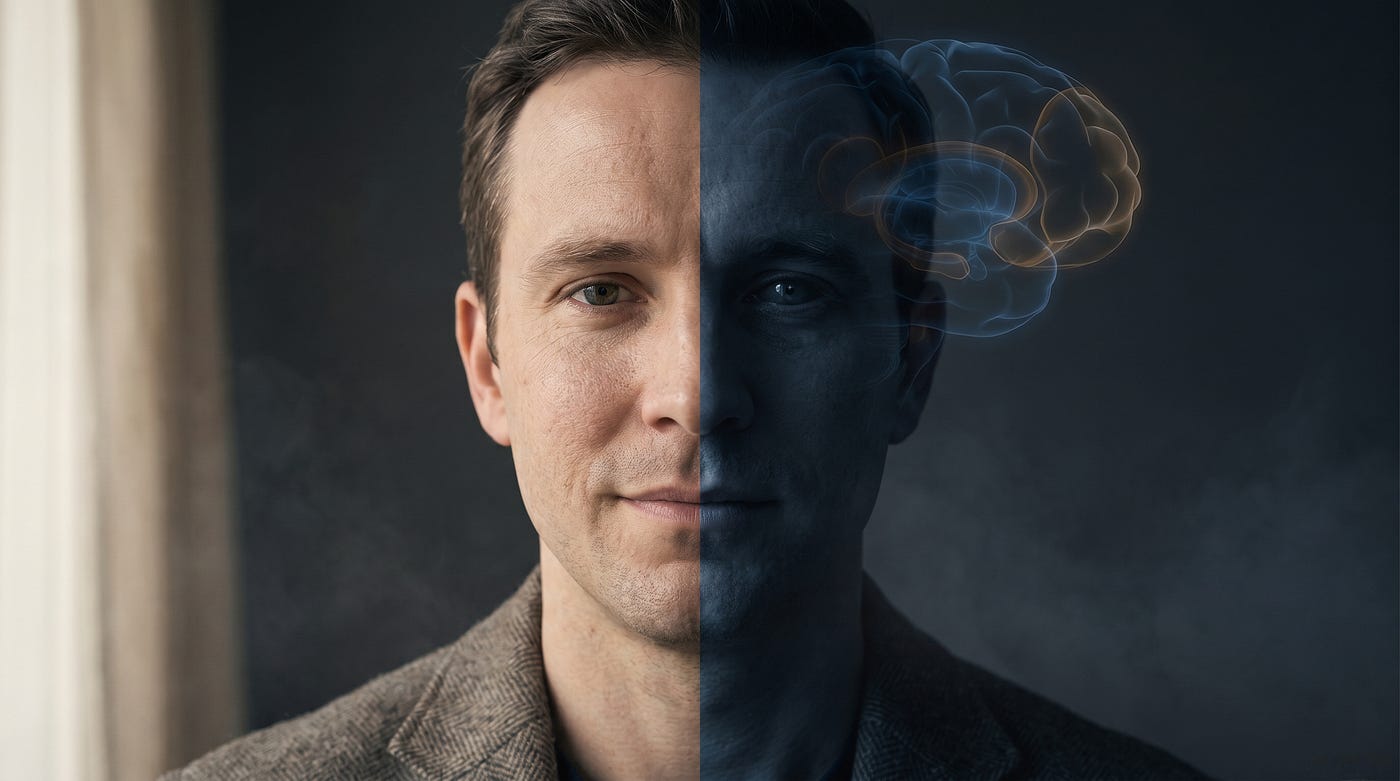
Image is generated via Nano Banana Pro.
You did not lose a partner. You lost an account.
It took me a long time to write that sentence. Longer to believe it. But the moment I finally let it land — really land — something in my chest unclenched for the first time in two years.
Because that is what it was. An account. A line item on someone else’s emotional balance sheet. You were a recurring deposit of attention, reassurance, sex, status, errands, apologies, and patience. And the day the deposits stopped clearing, the account was quietly closed, the password changed, and somewhere — within a week, sometimes within a day — a new account was opened in someone else’s name.
You called it love. They called it supply.
We are living through a strange historical moment, you and I. A moment where the loudest cultural conversation is about boundaries, attachment styles, “the ick,” red flags, beige flags, and pop-psych TikToks dissecting your ex frame by frame — and yet, the loneliness numbers keep climbing. The U.S. Surgeon General now officially calls it an epidemic. Half of American adults report meaningful loneliness. The average person under thirty has fewer close friends than at any point measured in the last forty years. We have never had more language for relationships, and we have never been worse at them.
That is not a contradiction. That is the symptom.
Because what we have actually built — quietly, brick by brick, swipe by swipe, optimization by optimization — is not a culture of connection. It is an extraction economy of human relationships. And the people who thrive inside it, the ones who walk away unscarred while everyone around them limps, are not the cruelest people you’ll ever meet.
They are the quietest.
They are the covert narcissists. And they did not invent this economy. They simply learned, before the rest of us, that it had arrived.
The Lie You Were Sold About Narcissism
When you first started Googling at 2 a.m. — because you do, eventually; everyone does — you probably typed in the obvious search. Signs of a narcissist. And what came back was the cartoon. The mirror-kisser. The Patrick Bateman. The guy in the convertible who interrupts you mid-sentence to talk about his Rolex. The girl who needs to be the loudest at the table or she’ll burn the table down.
That is the overt narcissist. And here is the thing nobody tells you when you start reading: that profile is almost useless to you.
Because the person you actually lived with did not look like that.
The person you lived with was kind. Or seemed to be. They volunteered at the shelter once. They cried at your father’s funeral. They wrote you a card on your birthday in handwriting that genuinely tried. They were the one your friends said was “so quiet, so sweet, lucky you.” They had a soft voice. They apologized — sometimes too much. They told you, often, that they were the broken one. That they were so afraid of hurting you.
And then, somehow, they hurt you for years.
What you were dealing with is what clinicians call vulnerable, or covert, narcissism. The DSM doesn’t technically separate it from grandiose narcissism — they’re considered two presentations of the same underlying structure — but the research literature has been splitting them for decades because, behaviorally, they may as well be different species.
The covert narcissist runs the same operating system as the overt one. Fragile self-esteem propped up by external validation. Grandiose internal fantasies about being misunderstood, special, uniquely tortured. Empathy that operates as cognitive performance rather than felt experience. A constant background hunger for what the literature, with surprising honesty, calls supply.
But the user interface is inverted. Where the overt narcissist demands the spotlight, the covert one demands the shadows. Where the overt one brags, the covert one humblebrags — or self-deprecates so persistently that you spend the entire dinner reassuring them. Where the overt one rages, the covert one withdraws, sulks, weaponizes silence into a kind of psychological hostage situation that can last for days.
You did not date a villain. You dated a vacuum.
And vacuums, by their nature, are very hard to see. You only notice them by what they pull toward themselves. Your time. Your money. Your apologies you didn’t owe. Your career sacrifices. Your shrinking social circle. Your strange new habit of checking their mood before checking your own.
That pulling — that gravitational drag on your life force — is the entire game. That is the extraction.
What “Supply” Actually Means (And Why It’s Not a Metaphor)
The word supply sounds melodramatic until you understand it isn’t a metaphor. It’s a function.
A covert narcissist does not relate to you. They consume from you. The consumption is mostly invisible because what’s being consumed is mostly invisible: your attention, your emotional regulation, your time, your reputation, your social access, your money sometimes, your sex sometimes, but mostly — almost always — your capacity to reflect them back to themselves as the person they wish they were.
You are a mirror with a heartbeat. And mirrors, in the supply economy, are inventory.
This is why the early phase felt so extraordinary. Love bombing isn’t a strategy in the cold-blooded sense — most covert narcissists are not consciously plotting. It’s an automatic process. When they find a high-quality mirror — empathetic, attentive, self-doubting, easy to destabilize — their nervous system lights up like a slot machine paying out. They flood you with attention because your reflection feels, to them, like finally being seen. Which is the closest thing to love their architecture can generate.
But mirrors get smudged. Mirrors start to show wrinkles. Mirrors start, eventually, to reflect what’s actually there rather than what the narcissist wishes were there. And the moment your mirror begins reflecting truth instead of idealization — the moment you say “you hurt me” instead of “you’re amazing” — the supply degrades.
That is when the devaluation begins.
It is rarely dramatic. With a covert, almost nothing is dramatic. Devaluation looks like a slow drift of warmth. A meal eaten in silence. A sigh when you walk in. A way of looking at your face that makes you wonder if there’s something on it. A withdrawal of small affections so gradual you cannot pinpoint when they ended. You’ll catch yourself thinking, when was the last time they kissed me good morning without me starting it? and you won’t be able to answer.
The supply, you see, has been tapering. Not because you did anything wrong. Because the mirror is no longer reflecting what they need.
And somewhere — in their phone, in a DM, in the smile they give a coworker, in an old flame they’ve “reconnected with as friends” — a new mirror is being polished.
The Extraction Economy Did Not Start With Your Ex
Here is where I have to widen the lens. Because what I’m describing is not just one person’s pathology. It is a personality that has finally found its native habitat.
We live, you and I, inside a deeply specific economic and cultural moment. It’s been called late capitalism, attention economy, platform capitalism, the loneliness economy — pick your label. The mechanic is the same. Almost every interaction we have has been quietly restructured so that one party extracts value from another, often without either party fully realizing it.
You wake up and immediately deposit your attention into apps that monetize it. You scroll through profiles whose entire purpose is to be evaluated against other profiles. You apply for jobs that ask you to “bring your whole self to work” while paying for a fraction of that self. You meet partners on platforms where the verbs are swipe, match, ghost, breadcrumb, soft-launch — verbs that would have horrified your grandmother, who used verbs like court, marry, last.
The philosopher Erich Fromm warned about this in 1976, in a book called To Have or To Be. He argued that modern industrial society had quietly trained humans to operate in the “having mode” rather than the “being mode” — to relate to everything, including love, as a possession to be acquired and a portfolio to be managed. I have a husband. I have a girlfriend. I have a career. I have followers.
Fromm thought we’d outgrow it.
We did the opposite. We turbo-charged it. We took every relationship Fromm worried about — friend, lover, child, neighbor — and built infrastructure to optimize the extraction. We made dating a marketplace. We made attention an asset class. We made vulnerability a content format. We made grief a niche.
In an economy like this, what kind of person flourishes?
Not the loudest. The loudest get exposed. Twitter mobs them. HR fires them. Documentaries get made about them.
The person who flourishes is the one who has internalized the logic so smoothly that they cannot even feel the extraction anymore. The one who genuinely believes their needs are everyone else’s needs. The one who can perform empathy fluently while feeling none of it. The one who can extract for years from a single source without the source noticing, because the extraction is wrapped in compliments, in apologies, in “I just love you so much I get scared,” in “you know I’d be lost without you.”
The covert narcissist is the extraction economy’s ideal worker. The extraction economy is the covert narcissist’s natural habitat. They evolved together, and now they are everywhere.
The Three Phases of Every Covert Extraction Cycle
If you’ve been through one of these relationships — and statistically, between one in six and one in four adults has — you’ll recognize what I’m about to describe. It will feel like reading your own diary.
The cycle has three phases. It is the same cycle, almost word for word, whether the partner is your spouse, your boss, your best friend, your mother, or that podcaster you’ve been listening to every morning for two years without realizing they’re harvesting your loneliness for ad revenue.
Phase One: Idealization. This is when you are the mirror they have been waiting their whole life to find. You are told this — often, explicitly. I’ve never connected with anyone like this. You see me. You’re different. The intensity is intoxicating because it is real, in the only sense a covert narcissist understands real: the supply is flowing, the reflection is perfect, and their internal grandiose self finally feels true. You may be told, within weeks, that you are soulmates. There may be future-faking — extravagantly specific plans for a shared house, a child, a country, a startup. The plans serve a function: they bind you to a future that exists only inside the narcissist’s mood. When the mood shifts, so does the future. But by then, you’ve already restructured your life around it.
Phase Two: Devaluation. The mirror begins to crack. Not because you have done anything — but because mirrors always do. Reality always leaks through eventually. Your needs become evidence of your unreasonableness. Your sadness becomes evidence of your instability. Your achievements become evidence of your arrogance. The narcissist begins to source supply from elsewhere — coworkers, an old ex, online attention, a new “best friend” who texts at suspicious hours — while still drawing from you, because covert narcissists rarely cut a source until a replacement is fully online. You will feel, during this phase, like you are slowly going insane. You’re not. You are simply being audited. You are being tested for how much extraction you’ll tolerate before becoming uneconomical.
Phase Three: Discard. This is where covert and overt narcissists differ most dramatically. The overt narcissist discards loudly — affairs, screaming matches, dramatic packed bags. The covert narcissist discards by quiet attrition. They do not leave. They become unbearable enough that you leave — and then they tell everyone, with the soft voice of a wounded saint, that you abandoned them. They have practiced this monologue. They’ve been writing it, mentally, since Phase Two.
And the moment you’re gone, the cycle resets. With someone new. Sometimes with you, when their new supply runs thin — this is what the literature calls hoovering, named for the vacuum cleaner because that is genuinely what it feels like to be pulled back in. A birthday text. A nostalgic playlist. A late-night I’ve been doing so much work on myself. The hoover is not reconciliation. The hoover is restocking inventory.
I want you to feel the cruelty of that sentence, because I think it is the truest thing I can offer you in this entire essay: when they came back, they were not coming back to you. They were coming back to the function you performed. And functions are interchangeable. That is the whole horror.
DARVO: The Covert Narcissist’s Native Language
There is a four-letter acronym that, once you learn it, you will see everywhere for the rest of your life. It was coined by the psychologist Jennifer Freyd in the 1990s, and it describes the single most reliable behavior of high-conflict, low-accountability people, especially covert narcissists.
DARVO. Deny. Attack. Reverse Victim and Offender.
You bring up the way they spoke to your mother at dinner. They Deny it happened. (“I didn’t say that. You’re misremembering.”) When you push, they Attack you — your memory, your stability, your habit of “twisting things.” (“You always do this. You’re impossible to talk to.”) And then, the masterstroke: they Reverse the roles. Suddenly, somehow, before you can quite track what happened, they are the one crying. They are the one hurt. You are now apologizing for an incident in which you were the wounded party.
You will spend the next three days re-litigating whether the original incident even occurred.
This is not poor communication. This is not a “conflict style.” This is a precision-engineered extraction tool. It accomplishes three things in one motion: it preserves the narcissist’s self-image as the wronged party, it depletes your psychological resources so you cannot pursue the original grievance, and it trains you, Pavlovianly, not to raise grievances at all in the future. Three meals from one fork.
The covert narcissist is the world champion of DARVO, because the covert presentation depends entirely on victim aesthetics. They are always the one who has been hurt more. Always the one who tried harder, gave more, asked for less. Always the one whose suffering, conveniently, eclipses yours. If you try to describe your pain, they describe theirs in higher resolution. If you describe a slight, they remember a worse one from three years ago that you’d forgotten about, which they have apparently been silently scorekeeping the entire time.
You did not realize, when you signed up for this relationship, that you were signing up for a bookkeeper.
Why You Couldn’t Leave (And Why It Was Not Weakness)
If you stayed too long — and I am going to assume you did, because we all do — please stop blaming yourself for it. The reason you stayed is not character weakness. It is neuroscience.
In the 1950s, the psychologist B.F. Skinner discovered that the most powerful way to train a behavior — more powerful than constant reward, more powerful than punishment — is what he called intermittent reinforcement. Reward the pigeon sometimes. Withhold the reward other times. Make the pattern unpredictable. The pigeon will peck at that lever until it dies.
This is also, it turns out, the exact pattern of a relationship with a covert narcissist.
The good days are very good. The phase where they suddenly become tender again, after weeks of withdrawal, can feel like the most luminous days of your life. They’re back. The person I fell in love with is back. You attribute the return to something you did right — and immediately, unconsciously, you start trying to figure out what it was so you can do it again.
You have just been trained.
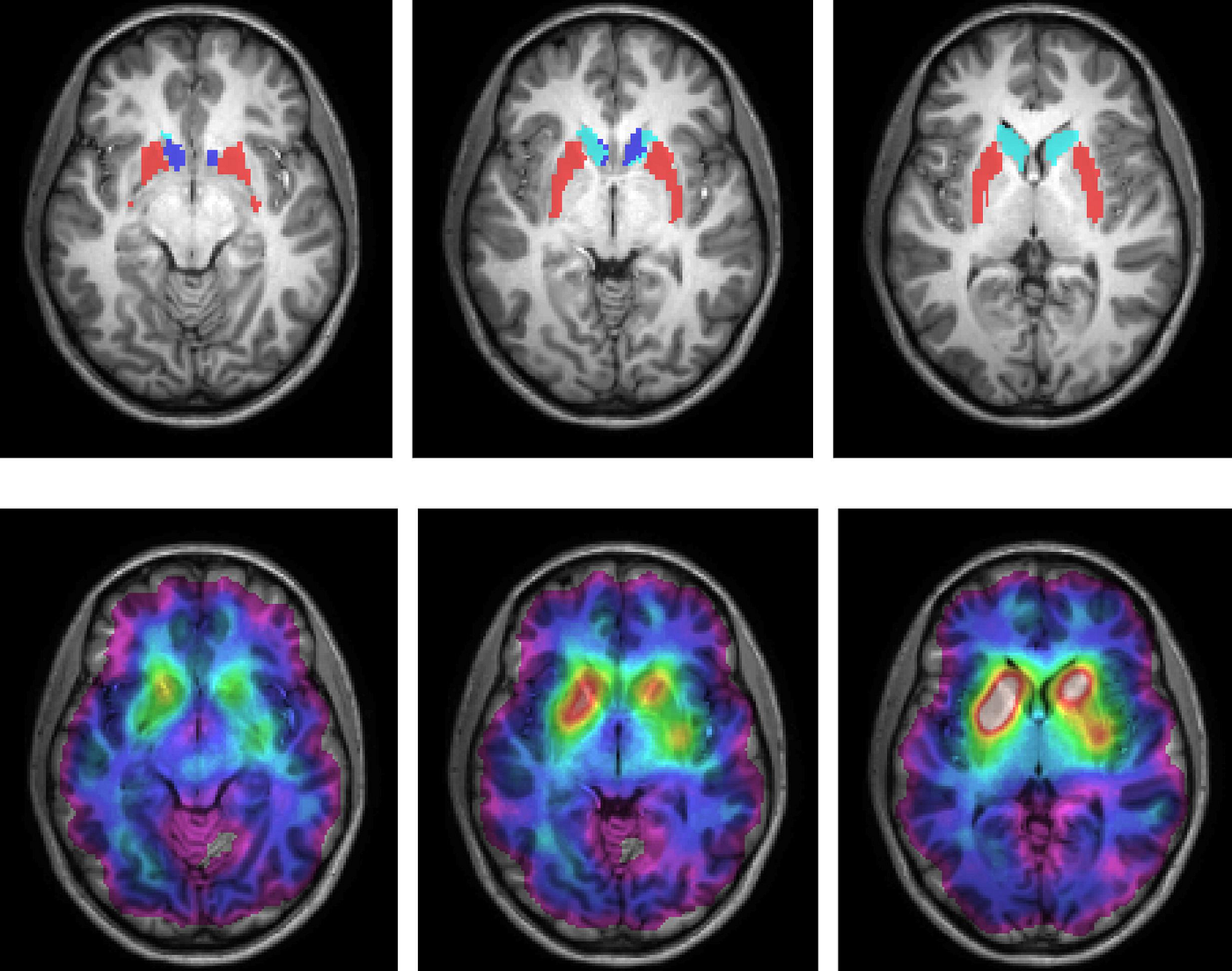
Neurologically, the unpredictability hits your dopamine system in exactly the way slot machines do, exactly the way cocaine does, exactly the way social media notifications do. Steady reward is processed by the brain as baseline. Intermittent reward is processed as urgent, as significant, as worth restructuring your life around. The dopamine spike on a good day with a covert narcissist is bigger than the spike on a good day with a healthy partner, because in the healthy partnership the good day was expected and in the covert partnership it was a miracle.
You are not addicted to them. You are addicted to the pattern. Your brain has been hijacked by a reinforcement schedule it was never meant to survive.
This is why the people around you saying “just leave” is not advice. It is, in some sense, asking a gambling addict to leave the casino mid-streak. Yes, theoretically, they can. No, it is not as simple as the question implies.
It also explains the strangest part of these relationships — the part that survivors of narcissistic abuse describe with a kind of haunted bewilderment. Months after leaving, often years, you will still miss them. Not the real them. You will miss the phantom them — the love-bombing version, the Phase One version, the version that existed for three months in the first year and never came back. Your nervous system, conditioned by intermittent reinforcement, will keep pulling the lever in your mind for a long, long time.
That is not a defect in you. That is, paradoxically, evidence that your attachment system worked. It tried to bond. It met a system that monetized the bonding.
The Modern Mirror: When the Whole Culture Trains Us Into Supply
Let me say something I think we mostly avoid saying.
The covert narcissist could not thrive at the scale they currently do without enormous cultural infrastructure assisting them.
In 1985, if someone tried to run a Phase One on you, the people around you would have noticed. Your sister would have said something at Thanksgiving. Your best friend would have raised an eyebrow. Communities were tighter, friend groups overlapped, behavior was witnessed.
In 2026, you can be lovebombed entirely over text by someone who lives forty minutes away, whom none of your friends have ever met, whose history you cannot verify, whose other relationships are invisible to you, whose previous partners cannot warn you. The supply transaction has been moved offshore. It is happening in a private channel. Outside witnesses have been engineered out.
This is not an accident of technology. It is a feature of the extraction economy. The same platforms that let your covert narcissist run parallel emotional affairs with three other people are the platforms that train the rest of us, every day, to value people the way they value people. By their numbers. By their photos. By what they bring to the table. By their “high value” or “low value” labels — phrases that did not exist in mainstream relationship discourse fifteen years ago and now appear in conversations between sixteen-year-olds.
We have, collectively, internalized the narcissist’s frame.
Psychology Today put it bluntly in early 2025: romance has been culturally restructured from a transformational process into a transactional one. The dominant question is no longer who are you becoming with me? It is what do you bring to the table? Platforms like Seeking and OnlyFans have not corrupted the culture; they have simply made explicit what the culture had already implied. The terms are negotiated. The contributions are valued. The intimacy is invoiced.
When the entire culture talks like a covert narcissist, the covert narcissist becomes invisible. They are simply speaking the local language, fluently, while the rest of us pick it up as a second tongue. By the time you notice that your partner has been treating you like an account, you cannot fully tell whether it is because they are pathological or because everyone you know talks about love the same way.
This is the most dangerous thing about the extraction economy. It is not that it exists. It is that it has become the water we swim in.
The Quiet Violences You Were Trained to Call Normal
I want to walk through a few specific behaviors. Not the cinematic ones. The small ones. The ones you almost certainly accepted, because the rest of the culture accepted them too.
The Soft Withdrawal of Presence. You sit beside them on the couch. They are physically there. They are not there. Their phone has been the third person in your relationship for so long that you no longer remember what it felt like to have their full attention. When you ask for it, you sound needy — even to yourself. So you stop asking. This is extraction by omission. Your loneliness is now subsidizing their stimulation.
The Performance of Listening. They nod. They say mm-hmm. They might even repeat back the last phrase of your sentence, the way the productivity podcasts taught them to. But they are not listening — they are waiting. The proof comes three days later, when you mention the thing you told them and they react as if it is new information. You are now apologizing for “not communicating,” when in fact you communicated; they simply did not bother to receive.
The Apology That Isn’t One. I’m sorry you feel that way. I’m sorry if I hurt you. I’m sorry that you can’t see my side of it. These are not apologies. They are extraction tools wearing apology costumes. A real apology has three parts: acknowledgement of the act, acknowledgement of the impact, and a concrete change. The covert apology has one part: stopping the conversation. Once it stops, the extraction resumes. You will hear hundreds of these in a multi-year relationship and never receive the real thing.
The Slow Theft of Your Social World. They never explicitly forbid your friendships. They simply sulk after every visit. They make small comments about each friend that, over months, accumulate into a quiet case file in your mind. Sarah is so dramatic. Mike is using you. Your sister doesn’t really like me. You start declining invitations. The narcissist did not isolate you. You isolated you, technically. And this is what they will tell the therapist later.
The Hijacked Emergency. You have something hard happening — a parent’s diagnosis, a job loss, a miscarriage. Within hours, somehow, the emergency has become about them. Their fears. Their needs. Their reactions. You are now comforting them about your tragedy. You will catch yourself doing this and feel briefly insane. You are not insane. You have been re-routed. The extraction system cannot tolerate a moment in which the supply is the one needing supply.
The Compliment That Hurts. Wow, you actually look great today. You sounded smart in that meeting — for once. I’m so glad you finally have a friend. These are micro-extractions. Each one places you slightly below them in the implicit hierarchy. Done enough times, you will start to wonder, accurately, what is wrong with you. Nothing is. You are simply being managed downward to keep the supply stable.
Each of these behaviors, taken alone, is something many of us live with. The culture tells us this is what long-term relationships look like — a little drift, a little distraction, a little resentment. The culture is wrong, but the culture is also very loud, and so most of us spend years gaslighting ourselves on its behalf.
Add up the small behaviors over five years, ten years, twenty years. The total is not a difficult marriage. The total is a slow extraction of one human being by another, ratified by a society that no longer remembers what unextracted love looks like.
What the Covert Narcissist Cannot Do (And Why That Is Your Liberation)
For all the damage they cause, covert narcissists are, in clinical terms, profoundly limited beings.
They cannot tolerate being seen.
They can tolerate being admired. They can tolerate being pitied. They can tolerate being feared. But the one thing they cannot survive is the experience of being accurately perceived — flaws and all, in the same field of vision as their grandiose self-image, by a person who still chooses to remain in the room.
This is why, paradoxically, your growth is what destroys them. Not your rage. Not your accusations. Not your therapy-speak diagnoses thrown at them in the kitchen. Those they can metabolize, weaponize, DARVO.
What they cannot survive is your clarity. The moment you stop arguing the facts of the case and start simply seeing them — calmly, without contempt, without illusion — they begin to dissolve. Because the supply they were extracting required your participation in their fantasy. The moment you exit the fantasy, the supply runs dry.
This is also why, when you leave one of these relationships, you are very likely to experience what survivors call the smear campaign. They will tell mutual friends that you were unstable, abusive, unfaithful, mentally ill, crazy. They will rewrite the history of the relationship in real time. Some of your friends will believe them — this is one of the most painful parts of recovery, and you need to know it is coming.
But here is what’s happening underneath the smear: they are trying, frantically, to restore the mirror you broke. The mirror said you are the wronged saint. You walking away says no, you are the one who wronged me. They cannot live inside that reflection. So they go shopping, urgently, for new mirrors that will tell them the older story. Some of those mirrors will be your friends. Some will be a new partner, who will be lovebombed within weeks of your departure — sometimes, devastatingly, within days.
Watch this carefully and try not to flinch. The new partner is not a sign that you were replaceable. The new partner is a sign that you were never the relationship in the first place. The function was the relationship. You were just the most recent occupant of the function. The vacancy was always being advertised.
The Hardest Truth: You Are Probably Not Innocent Either
I want to write this section gently, because it is the section that costs me the most to write.
When we leave a relationship with a covert narcissist, the seductive narrative — and the one all the therapy accounts on Instagram will reinforce — is that we were pure prey, and they were pure predator. There is some truth to this. The asymmetry of intent is real. The asymmetry of damage is real. You did not deserve what was done to you.
But the extraction economy is not just a system that produces extractors. It is a system that produces suppliers — people who have been so thoroughly trained to be useful, agreeable, indispensable, that they sometimes mistake being extracted from for being loved.
If you were the supply in a covert narcissist’s economy, somewhere in your formation you learned that being needed was safer than being known. That earning love through service was more reliable than receiving it through being. That your worth was contingent. That your access to other people’s attention was conditional on what you provided.
A covert narcissist is, in some ways, the perfect counterpart for that wound. They love what you provide. They never ask who you are underneath the providing — because they don’t care, and because part of you, in the early phases, was relieved that they didn’t ask. You were so accustomed to performing for love that performing felt safer than risking the alternative.
I do not say this to blame you. I say this because if you do not see this pattern, you will leave one covert narcissist and find another. Then another. Then another. Each one will feel different on the outside and identical on the inside. You will start to wonder if you are the problem.
You are not the problem. But you do have a part. The part is the wound that made you mistakeable for inventory. That wound is healable, and healing it is, in the end, the only real exit from the extraction economy. Not new boundaries. Not better screening. Not vetting checklists. Not “knowing the red flags.” Those are useful in the short term. They are not the cure.
The cure is becoming a person who is no longer fluent in the language of supply.
That is harder than leaving the narcissist. Vastly harder. Some people never do it. They simply find a kinder partner and continue to over-give in slightly safer conditions. That is fine. That is most of us. But if you want the deeper exit — the one where you finally stop attracting extractors entirely — it lives there. In the long, unglamorous work of believing that you are worthy of attention you didn’t earn, love you didn’t perform for, and presence you didn’t have to be useful to deserve.
What Recovery Actually Looks Like (Not What the Internet Tells You)
The first year after leaving a covert narcissist is, for most people, the strangest psychological year of their life. I want to describe it honestly because the internet, in its appetite for content, tends to compress it into thirty-second clips that miss the texture.
Month one to three. You will feel, more than anything, relief. The constant low-grade adrenaline that has been your background music for years will quiet. You will sleep. You will breathe. You will be astonished at how loud your own thoughts are, now that they are not being drowned out by the management of someone else’s mood. You will tell anyone who’ll listen how much better you feel. Some part of you will wonder if you overreacted by leaving. This is a trick of the calmer water. Do not, under any circumstances, contact them during this phase.
Month four to seven. The grief lands. Not for the relationship as it was — for the relationship as it could have been. You will cry over the wedding that never happened, or the kid you never had, or the house you almost bought. You will miss the Phase One person. You will hear a song and need to sit down. You will go through a week or two of full magical thinking, where you genuinely entertain the possibility that they have changed, that this time would be different, that the love was real after all. This is the intermittent-reinforcement-trained dopamine system trying to renegotiate. Do not contact them. Especially do not contact them.
Month eight to twelve. The anger arrives. Real, clean, structural anger. You will feel it in your jaw and your hips. You will start to understand, in your body and not just your head, what was done. You may want, briefly, to expose them — to write the long social media post, to confront them, to make sure everyone knows. You can do this, but it usually does not heal you. What heals you, in this phase, is repurposing the anger into protection. Stricter no-contact. New locks if needed. Aggressive boundaries with anyone still in their orbit. The anger is the immune system finally activating. Let it work.
Year two. Something quieter begins. You will start to notice the patterns in your own life that made you vulnerable. Not in a self-flagellating way — in a clinical, almost curious way. You’ll see the over-functioning. You’ll see the historical caregiving role you played in your family. You’ll see the reflex to apologize before you have done anything. You will start, slowly, to interrupt those reflexes. This is where the real exit from the extraction economy begins. Therapy helps enormously here. The right therapist will not focus on the narcissist. The right therapist will focus on you.
Year three. You will meet someone, maybe. Or maybe you will not yet, and that will be fine. If you do meet someone, the most disorienting part will be how strangely boring a healthy attachment feels at first. Healthy love does not hit your nervous system the way the narcissist did. There are no spikes. There are no crises. There is no constant rehearsal of whether you are wanted. Your dopamine system, accustomed to intermittent reinforcement, will read this as “no chemistry.” This is a lie your brain is telling you. The lie will fade. Sit with the boredom. The boredom is safety. You have never felt safety before. Learn its taste.
I cannot promise a clean ending. Some people are still healing at year five, year ten. Some never fully heal. But the trajectory, broadly, bends toward freedom — provided you stop, fully and finally, replenishing the supply.
The Wider Reclamation: Living Outside the Extraction Economy
There is a deeper question hiding under everything I’ve written, and I want to name it before we close.
If the entire culture has been restructured around extraction — if our jobs extract, our apps extract, our algorithms extract, and our intimate relationships now extract too — then leaving one covert narcissist does not solve very much. You exit one extraction site. You are still living inside the extraction economy. The next extraction site is already loading.
What does it mean to live outside this economy, even partially? I don’t know the full answer. I don’t think anyone does yet. But I have noticed a few things in the people who seem to have built something like an exit.
They give without scorekeeping, and they receive without flinching. This is rarer than it sounds. Most of us oscillate between two failure modes — either we give and quietly tally, or we cannot accept anything without immediately feeling we owe something. Both are extraction-economy reflexes. The people who have left the economy have learned to give freely without a ledger, and to receive without an instant urge to repay. They have, in effect, denationalized themselves from the currency.
They do not negotiate their needs into invisibility. When they want something — connection, rest, honesty, more, less — they say it. They do not turn it into a hint. They do not turn it into a sulk. They do not turn it into a passive-aggressive joke at dinner. They treat their own needs as real information, not as bargaining chips.
They let themselves be seen badly. This is the one I find hardest. They are willing to be seen on their worst day, in their lowest mood, in their least flattering opinion — and they trust that the people who love them will stay through it, and that the ones who leave were never really there in the first place. The extraction economy trained us all to perform constant adequacy. The exit from it requires us to risk inadequacy in front of people who matter.
They mourn the people who could only love their function. This is the quietest one, and the most adult. Somewhere, they have accepted that the people who only loved what they provided — including, sometimes, family members, lifelong friends, lovers, mentors — were not capable of more. They do not hate those people. They simply do not work with them anymore.
This is, I think, the deepest meaning of the recent therapeutic vocabulary about boundaries. Not the cartoon version — the no-saying, the cutting-off — but the real version. The version where you decide which parts of yourself are not for sale.
The 2026 Endgame: Why This Conversation Is Suddenly Everywhere
You may have noticed that covert narcissism has become a kind of cultural obsession in the last two years. The TikTok hashtag has billions of views. Therapists have become online celebrities by speaking about it. Half of memoir publishing is now, in some form, about it.
This is not a fad. This is a mass nervous-system reaction.
We are, collectively, beginning to notice that something has gone wrong in our intimate lives. The loneliness numbers tell us. The divorce statistics tell us. The plummeting marriage rates and the rising “single by choice” cohort tell us. The rise of therapy-speak as a way of structuring conversation tells us. We are, at scale, suddenly very interested in the language of harm because we have, at scale, suddenly noticed that we are being harmed.
The covert narcissist is the face we have given to this harm. Sometimes accurately. Sometimes too quickly — not everyone who hurts you is a narcissist, and the diagnostic inflation online is its own problem, with its own costs. But the underlying intuition is correct. We are noticing a structural feature of contemporary intimacy that did not used to be there at this volume. The extraction has become normalized. The supply has become exhausted. The mirrors are starting to crack.
And cracked mirrors do not return to wholeness by being polished. They have to be replaced — or finally laid down.
The question for the next decade, I think, is not how we identify covert narcissists faster. The diagnostic literacy will keep improving; the warnings will keep multiplying; the red flag lists will keep getting longer. That is the easy part.
The hard part is whether we, the suppliers, the over-givers, the empathic ones, the trained mirrors — whether we can imagine ourselves into a different economy entirely. Whether we can re-learn what it is to relate to another human being without computing, without performing, without optimizing, without exchanging. Whether we can become unprofitable to extractors not by hiding from them, but by no longer being legible as inventory in the first place.
That is a project of years, not weeks. It is also, I think, the only project that matters now.
A Closing Letter to the Person Who Was Mined
I want to end where I should have started.
You are not crazy. You are not weak. You are not “too sensitive.” You did not love the wrong way. You did not give too much — you gave at exactly the amount that human love is supposed to be given at, to a person who happened to be physically incapable of receiving it without converting it into supply.
The years are not wasted. Even the worst ones. They taught you, in your bones, what extraction feels like. That knowledge is not pleasant, but it is permanent. You will never again confuse the two things — being loved and being used — because you have felt the difference at the cellular level. Most people go through their entire lives never developing this discrimination. You did, the hard way. It is a brutal credential. It is still a credential.
You are also not alone, in the largest possible sense. There is something happening across millions of people right now, in this same moment you are reading this. We are all, in our own corners, beginning to suspect that the relationships we were sold are not the relationships we want. We are unhooking, one by one, from the extraction economy of human connection — sometimes by leaving a person, sometimes by leaving a job, sometimes by leaving an app, sometimes by simply changing what we are willing to pretend not to notice.
You are part of that. You are part of a quiet exodus.
The covert narcissist was the symptom. The economy was the disease. The exit was always going to be the same thing it has been for every previous generation that found itself trapped inside an exhausting cultural arrangement.
Become someone different. Build relationships on the new terms. Refuse, slowly and stubbornly, to relate to another human being as inventory. Refuse to be related to that way. Choose, for the rest of your life, the slow boring miracle of being seen by someone who has no use for you whatsoever — and who stays anyway.
That is what was stolen from you. That is what you are now allowed to want.
Not love as a transaction. Not love as a service. Not love as a portfolio. Not love as supply.
Love as the only thing it was ever supposed to be: the experience of being witnessed, fully, by another consciousness that wants nothing from you except your continued existence.
You weren’t loved, last time. You were mined.
Next time — and there will be a next time, whether with another person or with yourself first — you get to be loved.
Not as supply. As a soul.
That is the entire point of leaving the economy.
메타데이터
- post_id
- 7eca7dd7a020
- slug
- covert-narcissism-and-the-extraction-economy-of-human-relationships-7eca7dd7a020
- url
- https://medium.com/psyche-pedia/covert-narcissism-and-the-extraction-economy-of-human-relationships-7eca7dd7a020
- canonical_url
- https://medium.com/psyche-pedia/covert-narcissism-and-the-extraction-economy-of-human-relationships-7eca7dd7a020
- author_url
- https://medium.com/@waheedahmedofficial
- status
- ok
- fetched_at
- 2026-07-09 16:18:44