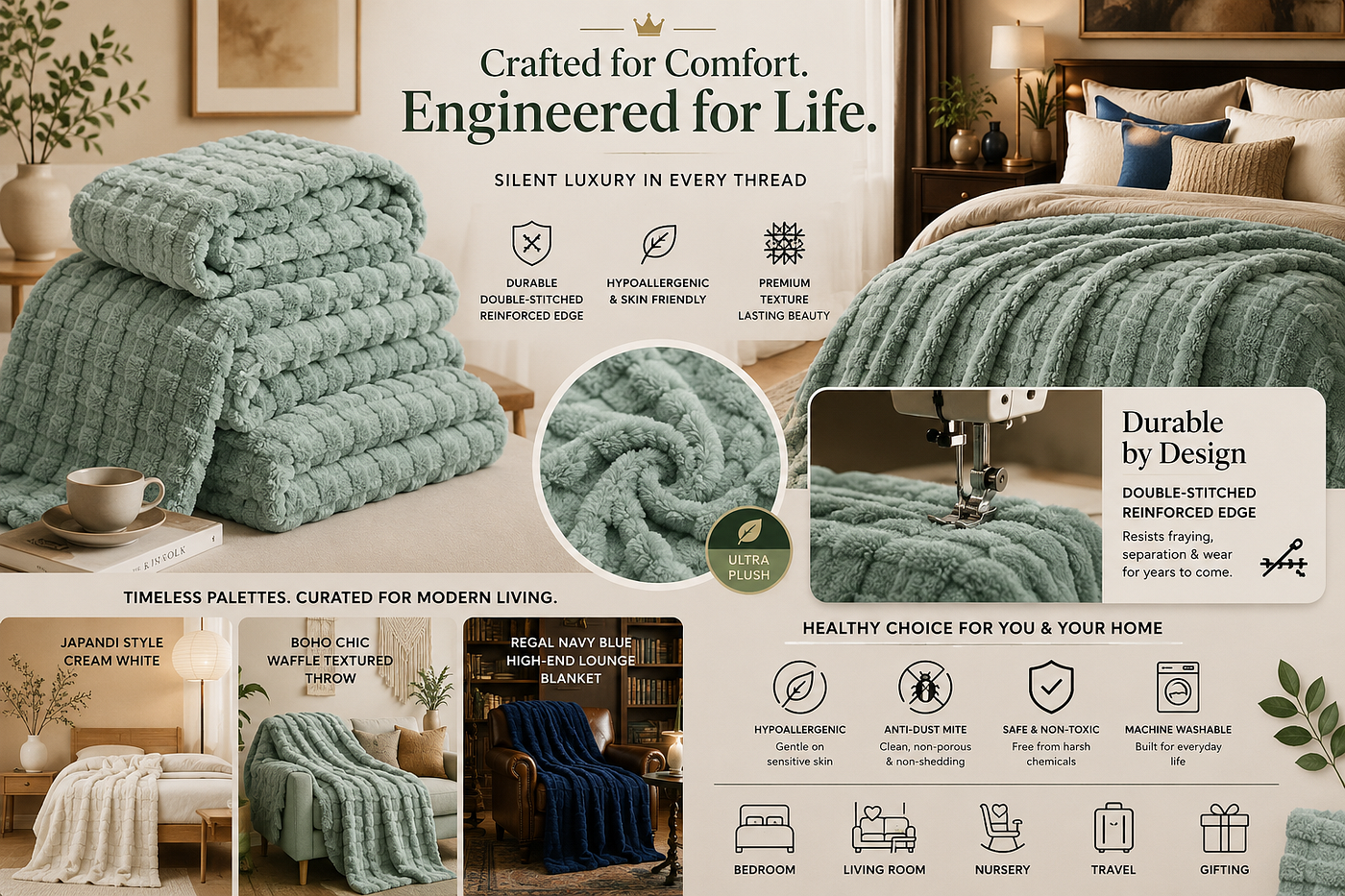
How to Use AI to Buy a Blanket (Without Getting Tricked by Fake Reviews and AI Hallucinations)
Shopping with AI in 2026 feels like a superpower, but it has a major blind spot. If you ask ChatGPT, Claude, or Perplexity a simple…
How to Use AI to Buy a Blanket (Without Getting Tricked by Fake Reviews and AI Hallucinations)

Shopping with AI in 2026 feels like a superpower, but it has a major blind spot. If you ask ChatGPT, Claude, or Perplexity a simple question like, “What is the best cozy blanket on Amazon?”, the AI will often spit out a list of mediocre, heavily sponsored products.
Why? Because AI learns from the internet, and the internet is currently flooded with fake reviews, paid affiliate blogs, and automated marketing fluff. The AI doesn’t know a blanket is cheap; it just knows the brand’s copywriter used the word “perfect” ten thousand times online.
If you want to use AI to find a genuinely high-quality product, you have to stop asking it for opinions and start forcing it to look at hard, verifiable data. Using blankets as our case study, here is the exact framework to turn AI into your ultimate, fluff-filtering shopping assistant.
Step 1: Force AI to Judge “Hard Parameters,” Not Marketing Words
The biggest mistake shoppers make is using emotional words in their prompts, like “super soft,” “cloud-like,” or “ultra-cozy.” Marketers love these words because they mean absolutely nothing legally.
Instead, you need to feed the AI strict industry parameters to filter out low-quality options. If we look at the technical standards outlined in professional sourcing documents like “毛毯(拟定关键词).docx”, we can find the exact metrics that separate premium textiles from cheap synthetics.
When you ask your AI assistant to scan e-commerce sites or search engines, instruct it to filter products by these exact technical criteria:
- Weight Metric (GSM): Do not let the AI search for “thick blankets.” Tell it to look for 280GSM (Grams per Square Meter) Heavyweight Shu Velveteen or higher. GSM is a mathematical measurement of fabric density. Cheap blankets sit around 200GSM and feel like paper after one wash; Ultra-density 280GSM fabrics provide actual Winter Warmth and durability.
- Weave Type: Instruct the AI to filter out “printed” designs. Tell it to search specifically for 3D Checkerboard Jacquard Weave or Non-printed structures. In a true Jacquard weave, the pattern is physically woven into the fabric using different yarn heights. It gives a Textured Pattern that won’t turn stiff or scratchy in the laundry.
Step 2: The “Devil’s Advocate” Prompting Technique
AI is naturally polite and prone to agreeing with a product’s main description. To break through this bias, you must assign the AI a cynical role. You want it to actively hunt for flaws.
Copy and paste this exact prompt format into your AI tool when pasting a product link or description:
“Act as a cynical textile quality inspector. Ignore the main product description and marketing claims of this blanket. I want you to analyze the 1-star and 2-star user reviews across the web for this specific item. Tell me exactly how many users report issues with pilling, shedding, or loose threads after the first wash. Cross-reference if the product fabric is genuinely Anti-pilling and Shed-resistant, or if the complaints indicate a cheap microfiber construction. Give me a brutal, unbiased summary of its defects.”
By forcing the AI to isolate the negative review data from the positive marketing data, you instantly bypass the “fake review fluff” that skews overall star ratings.
Step 3: Change the AI’s Data Source (The Reddit/Forum Bypass)
By default, standard AI tools look at SEO-optimized affiliate blogs (the ones titled “Top 10 Best Blankets of 2026”), which are almost always paid advertisements. You need to cut off that bad data source.
When using an AI with live web-searching capabilities (like Perplexity or Gemini), explicitly tell it where to look. Use a prompt like this:
“Search only within communities like Reddit (e.g., r/BuyItForLife, r/InteriorDesign) for discussions about high-quality sofa throw blankets. What are the specific materials or weave structures real people recommend for a Cozy Movie Night Essential that doesn’t trap pet hair? Do not pull data from commercial retail sites or standard blog posts.”
Real people on forums use casual, honest language. They will tell you if a blanket feels like a Butter Soft luxury item or if it’s just a waste of forty dollars.
Summary Checklist for Smart Shopping
The next time you use AI to buy any home product, remember the golden rule: garbage in, garbage out. If you feed the AI lazy, emotional prompts, it will give you a lazy, sponsored recommendation.
By holding the AI accountable to technical specs (like GSM and weave types), forcing it to audit the worst reviews, and restricting its search to human-centered communities, you turn the AI into a powerful shield against modern marketing tricks.
메타데이터
- post_id
- 7ed6b3a2bef2
- slug
- how-to-use-ai-to-buy-a-blanket-without-getting-tricked-by-fake-reviews-and-ai-hallucinations-7ed6b3a2bef2
- url
- https://medium.com/@dzhotovekaterina90/how-to-use-ai-to-buy-a-blanket-without-getting-tricked-by-fake-reviews-and-ai-hallucinations-7ed6b3a2bef2
- canonical_url
- https://medium.com/@dzhotovekaterina90/how-to-use-ai-to-buy-a-blanket-without-getting-tricked-by-fake-reviews-and-ai-hallucinations-7ed6b3a2bef2
- author_url
- https://medium.com/@dzhotovekaterina90
- status
- ok
- fetched_at
- 2026-06-09 15:37:30