Korah and the Question of Accountability
The warning God gives us through the judgment of Korah
Korah and the Question of Accountability
The warning God gives us through the judgment of Korah

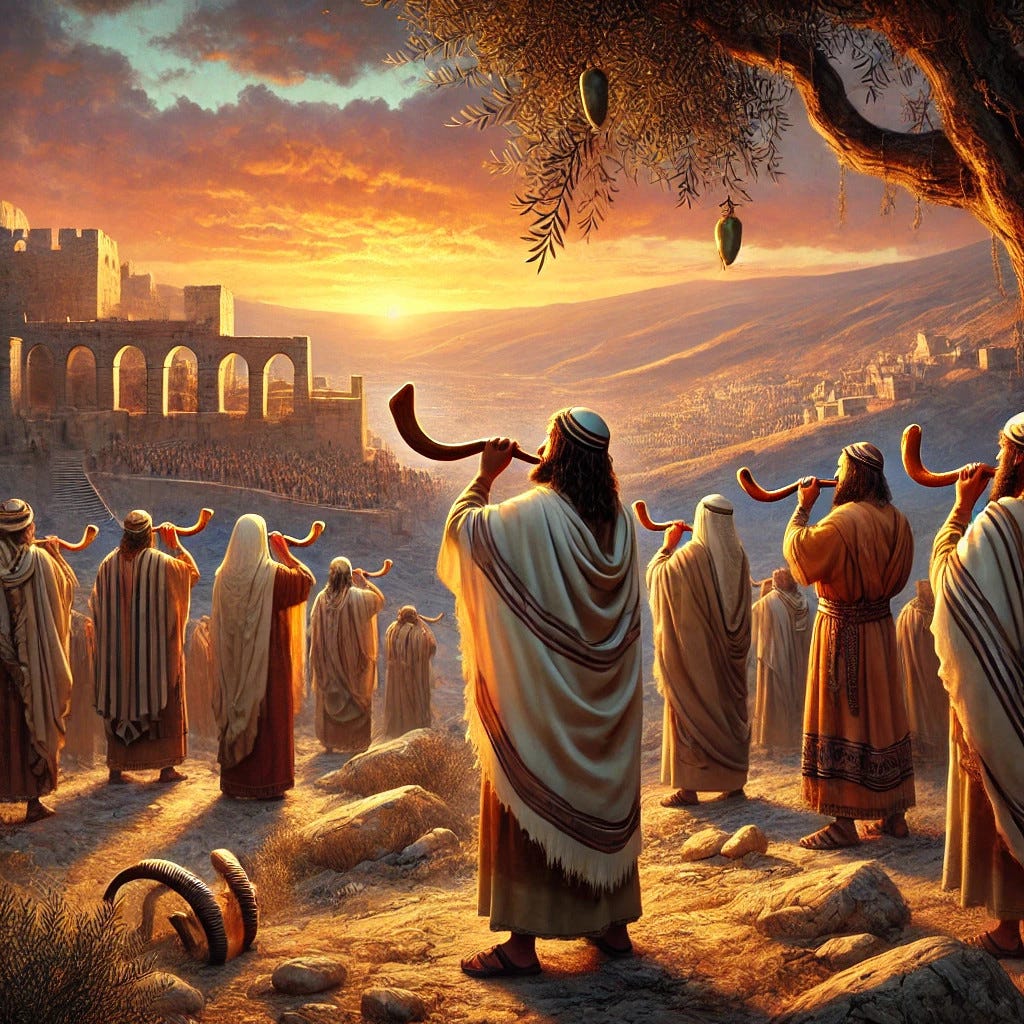
Image by Mohamed_hassan on Pixabay.com
Parashat Korah Genesis 16:1–18:32 1 Samuel 11:14–12:22; John 19:1–17
The rebellion of Korah and his band was an event that was not to be repeated. Korah openly challenged Moses, accusing him of exalting himself above the congregation. In doing so, he transferred his own behavior onto God’s chosen one. But how could such rebellion be prevented in the future?
The warning to the generations to come
After Korah and his followers had sunk into the ground and gone alive to the land of the dead, YHWH commanded the following:
Speak unto the children of Israel, and take of every one of them a rod according to the house of their fathers, of all their princes according to the house of their fathers twelve rods: write thou every man’ name upon his rod. And thou shalt write Aaron’ name upon the rod of Levi: for one rod shall be for the head of the house of their fathers. (Numbers 17:2–3, KJV)
The 250 censers of the rebels, which were beaten into plates and placed on the altar of burnt offering, also served as a reminder to future generations to conduct themselves in God’s presence according to His protocol. And part of that protocol was that the priesthood belonged to Aaron and his sons (Numbers 17:4–5).
YHWH also made this clear when He caused Aaron’s almond rod to blossom (Numbers 17:16–28).
None of these signs, however, delivered the people from the danger of a Korah-like rebellion against God’s appointed leaders.
The oversight of the priests
So YHWH instructed Aaron directly and entrusted him with the oversight and care of Israel and especially the Levites:
And the LORD said unto Aaron, Thou and thy sons and thy father’ house with thee shall bear the iniquity of the sanctuary: and thou and thy sons with thee shall bear the iniquity of your priesthood. (Numbers 18:1, KJV)
What does it mean that Aaron and his sons had to bear the sin of the sanctuary? It seems to be directly related to the unlawful approach of an Israelite to the sanctuary, for it goes on to say
Therefore thou and thy sons with thee shall keep your priest’ office for every thing of the altar, and within the vail; and ye shall serve: I have given your priest’ office unto you as a service of gift: and the stranger that cometh nigh shall be put to death. (Numbers 18:7, KJV)
The principle of oversight, responsibility and accountability
In this case, triggered by the rebellion of Korah, we see once again a structure of oversight and accountability that YHWH had put in place to help His people reach their goal — eternal life in the Kingdom of God.
We see this pattern everywhere. Even Jethro divided the people into divisions of men that were set over 1000, over 100, over 50, and over 10 (Exodus 19). Again, the idea was that no one was completely alone, but that each man had a specific contact person who was there for him and took responsibility for him. Yeshua never sent His disciples out alone, but always in pairs (Luke 10:1).
Now we see this principle again with Aaron and his sons, who were directly responsible for making sure that an incident like Korah’s mutiny would not happen again, and that no one would take it upon themselves to be priests in the sanctuary without authorization.
Aaron was certainly not responsible for every wrongdoing, but it was his job to warn and point out (Ezekiel 33:1–20).
Who are we really accountable to? Yeshua, of course, but are there also people to whom we entrust our lives, to whom we communicate, and to whom we give account? Is there someone who helps us along the way? And who are we helping? Who do we take responsibility for?
Korach’s rebellion most likely did not happen overnight. It was probably built up over a period of time. If Korach had a watcher by his side, to whom he had listened, it might not have come to this.
So who is watching over you?
Thank you for reading to the end! If you enjoyed this post, please don’t forget to:
- Follow me and this publication to never miss upcoming articles.
- Leave some claps and share your thoughts in the responses. I’d love to hear what you think!
- Support my work with a tip via PayPal.
Your support motivates me to keep producing content that informs, inspires, and entertains. Thank you for your time and generosity!
메타데이터
- post_id
- 7efb07ea064a
- slug
- korah-and-the-question-of-accountability-7efb07ea064a
- url
- https://medium.com/messainic-torah-commentaries/korah-and-the-question-of-accountability-7efb07ea064a
- canonical_url
- https://medium.com/messainic-torah-commentaries/korah-and-the-question-of-accountability-7efb07ea064a
- author_url
- https://medium.com/@rudy.mentaire
- status
- ok
- fetched_at
- 2026-06-27 18:43:58