Artificial Intelligence and the Structural Realities of African Agriculture
Artificial intelligence is increasingly presented as a corrective force in agriculture. Predictive analytics promise optimized planting…
Artificial Intelligence and the Structural Realities of African Agriculture

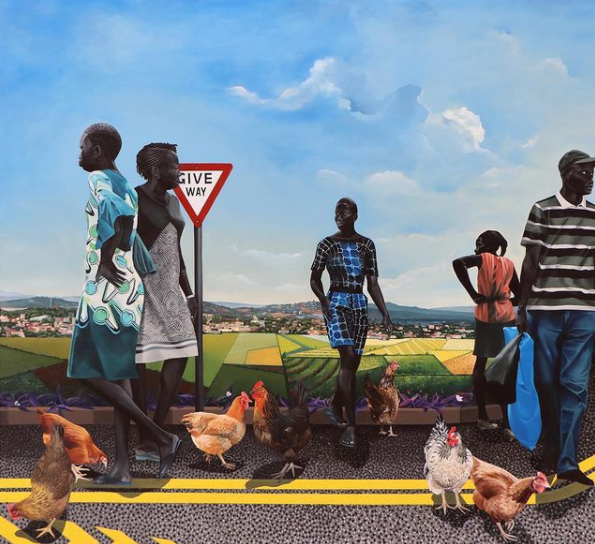
Image sourced online. Full credit to the original artist.
Artificial intelligence is increasingly presented as a corrective force in agriculture. Predictive analytics promise optimized planting cycles. Machine learning models claim to improve yield forecasts. Data platforms position themselves as bridges between climate volatility and farmer decision-making.
The technological capability is not in question.
What remains insufficiently examined is the structural environment into which these systems are introduced.
Agriculture in much of Africa does not operate within a uniform digital ecosystem. Connectivity is uneven. Data flows are fragmented. Device access is layered rather than universal. Infrastructure reliability varies not only between countries, but within districts.
Under such conditions, technological success is not determined solely by model performance. It is shaped by architecture.
There is a persistent assumption that digital transformation follows a linear path: build an intelligent system, deploy through a mobile interface, scale through adoption. Yet this model presumes stable connectivity, consistent device ownership, and predictable digital engagement patterns.
These presumptions do not consistently hold in rural agricultural contexts.
A more useful distinction is between intelligence generation and intelligence distribution. A system may generate accurate recommendations based on climate data and agronomic inputs. However, if the delivery mechanism depends on infrastructural conditions that are intermittent or exclusionary, the intelligence remains abstract.
Infrastructure, however, is only one layer of constraint.
Agricultural systems are also embedded within governance frameworks that shape how data is collected, shared, and regulated. Data protection legislation, telecommunications regulation, and agricultural policy environments differ significantly across jurisdictions. Uncertainty or fragmentation within these frameworks can slow deployment, limit interoperability, or create compliance burdens that smaller actors struggle to navigate.
In addition, technology adoption is not purely technical. It is behavioral. Farmers operate within established trust networks, informal knowledge systems, and community-based decision-making structures. Introducing unfamiliar digital tools requires shifts in routine, perception of risk, and patterns of information exchange. Adoption therefore depends not only on usability, but on credibility and sustained engagement.
When these institutional and behavioral dimensions are overlooked, even technically sound systems may underperform.
This reframes the discussion.
The central challenge of agricultural AI in Africa is not whether algorithms will improve. They will. The challenge is whether system design acknowledges structural variability as a starting condition rather than an afterthought.
This suggests a different orientation for future work. Instead of asking how advanced a model is, we may need to ask how adaptable its delivery is, how interoperable it is within regulatory environments, and how responsive it is to established patterns of trust and decision making.
In contexts defined by variability rather than uniformity, architecture determines accessibility. Accessibility determines impact.
The long term trajectory of agricultural AI in Africa will therefore depend less on computational novelty and more on disciplined systems thinking, systems designed to function within constraint rather than assume its absence.
메타데이터
- post_id
- 7f0074df71d6
- slug
- artificial-intelligence-and-the-structural-realities-of-african-agriculture-7f0074df71d6
- url
- https://medium.com/@bredent/artificial-intelligence-and-the-structural-realities-of-african-agriculture-7f0074df71d6
- canonical_url
- https://medium.com/@bredent/artificial-intelligence-and-the-structural-realities-of-african-agriculture-7f0074df71d6
- author_url
- https://medium.com/@bredent
- status
- ok
- fetched_at
- 2026-07-11 15:05:29