What happens when users no longer need navigation?
For decades, navigation has been one of the cornerstones of user experience design.
What happens when users no longer need navigation?

For decades, navigation has been one of the cornerstones of user experience design.
We spent years refining information architecture, optimizing menus, reducing clicks, and creating intuitive pathways through digital products. A well-designed navigation system was often considered a hallmark of great UX.
But what if navigation is no longer the primary way users interact with products?
As AI becomes deeply integrated into digital experiences, we’re witnessing a shift from navigation-based interactions to intent-based interactions. Users are increasingly moving away from finding things and toward simply asking for them.
This doesn’t mean navigation will disappear overnight. But it does suggest that its role is changing in ways many designers haven’t fully considered.
Navigation Exists Because Systems Need Structure
People think in goals.
Systems think in structures.
When a user wants to download a tax statement, they don’t naturally think:
- Login
- Open Accounts
- Navigate to Documents
- Select Tax Records
- Download PDF
They simply think:
“I need last year’s tax statement.”
Traditionally, navigation has served as the bridge between human intent and system architecture. It helps users traverse the structure that computers require.
The challenge has always been translating a simple goal into a sequence of actions.
AI Removes the Translation Layer
AI changes this dynamic.
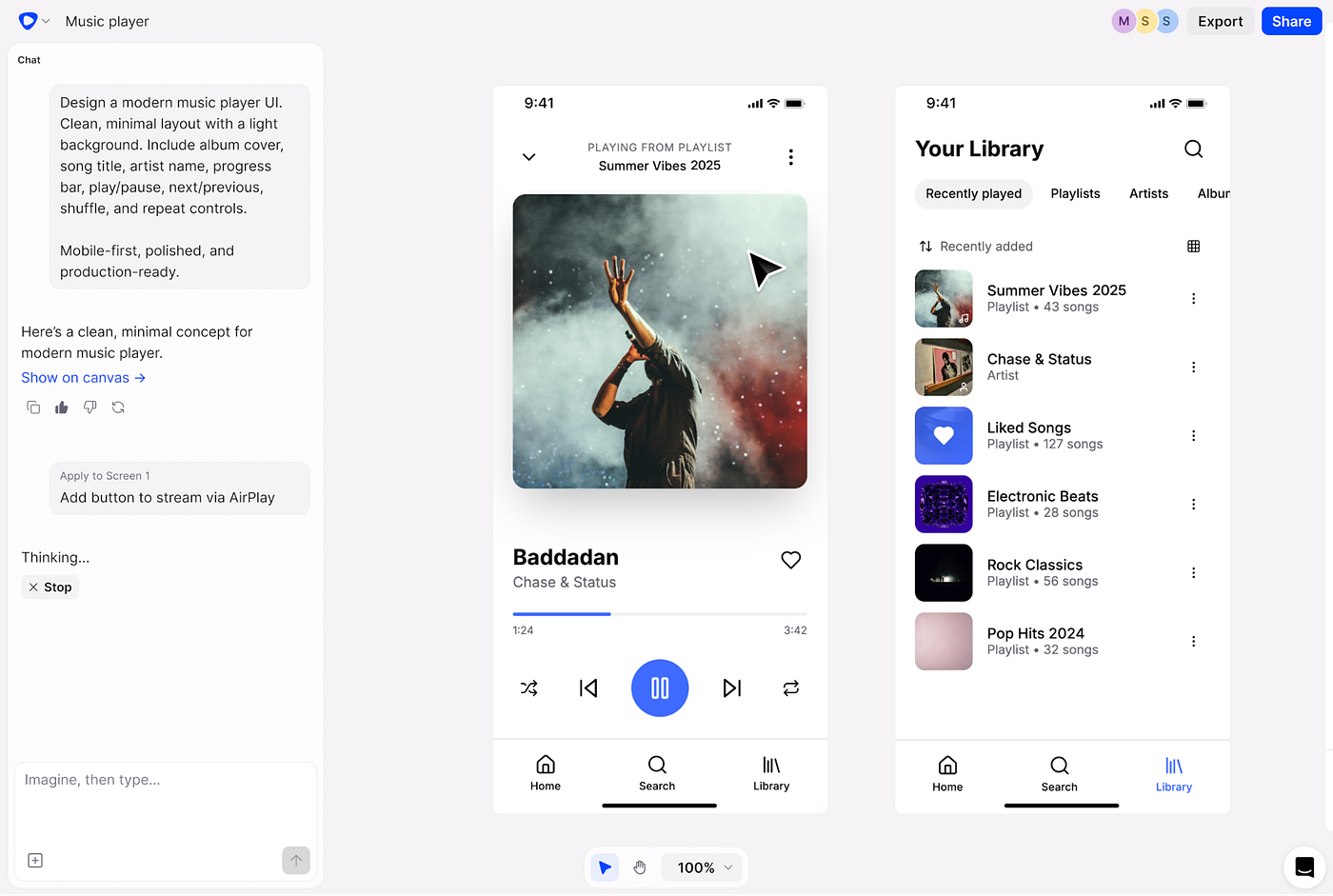
Instead of forcing users to learn where information lives, AI can increasingly understand what users want and retrieve it directly.
Rather than navigating through layers of menus, users can simply ask:
“Show me my tax statement from 2025.”
The system interprets the request, locates the document, and completes the task.
The journey becomes invisible.
This shift transforms interaction from exploration of a system to expression of intent.
We’re Already Seeing It Happen
The transition isn’t theoretical. It’s already happening across products.
In e-commerce, users are moving beyond filters and categories. Instead of browsing multiple pages, they can ask:
“Find me a lightweight black backpack under ₹1,000 for weekend travel.”
In enterprise software, employees increasingly ask:
“Show me customers most likely to churn.”
Instead of manually building reports or navigating dashboards.
Even media platforms are evolving toward recommendation and conversational discovery rather than traditional browsing.
The interface is becoming less about where information is stored and more about understanding what users need.
The Surprising Truth: Information Architecture Matters More Than Ever
It’s tempting to assume that if navigation becomes less important, information architecture becomes less important too.
The opposite may be true.
AI can only retrieve, reason about and act on information that is well-structured.
Navigation may disappear from the surface but structure remains essential behind the scenes.
In the past, designers organized information so humans could find it.
Now, information must be organized so both humans and AI can understand it.
The visible menu may become optional, but the invisible architecture becomes critical.
The New Question for UX Designers
For years, UX teams focused on a simple question:
“How can users find this?”
Increasingly, a new question is emerging:
“How can AI find this?”
This changes the skills and considerations involved in experience design.
Designers may need to think more deeply about:
- Content structure
- Metadata
- Semantic relationships
- Knowledge organization
- AI discoverability
The challenge shifts from designing pathways to designing understanding.
Navigation Isn’t Dead, But Its Monopoly Is
There will always be situations where navigation makes sense.
People still enjoy exploring, comparing options, discovering new content and learning unfamiliar systems.
Platforms like streaming services, travel websites and creative marketplaces will continue to benefit from rich browsing experiences.
However, navigation may lose its position as the default way users accomplish tasks.
Instead, it becomes one option among many.
And for goal-oriented actions, it may increasingly become the fallback rather than the primary experience.
Beyond Menus: The Future of UX in an AI-First World
For nearly three decades, UX designers have focused on helping users move through interfaces.
AI introduces a different possibility: users may no longer need to move through interfaces at all.
The future of UX may not be about designing better navigation bars, smarter menus or shorter user flows.
It may be about designing systems so intelligent that navigation becomes unnecessary.
If that future arrives, the most successful experiences won’t be the ones users can navigate most efficiently.
They’ll be the ones users never have to navigate in the first place.
메타데이터
- post_id
- 7f2bc00aaa45
- slug
- what-happens-when-users-no-longer-need-navigation-7f2bc00aaa45
- url
- https://medium.com/@sanskritijha12/what-happens-when-users-no-longer-need-navigation-7f2bc00aaa45
- canonical_url
- https://medium.com/@sanskritijha12/what-happens-when-users-no-longer-need-navigation-7f2bc00aaa45
- author_url
- https://medium.com/@sanskritijha12
- status
- ok
- fetched_at
- 2026-06-27 23:56:40