You’re Not Speaking Pure Indonesian: How Your Daily Slang Carried an Ancient European Language
Step into the bustling, sun-drenched streets of Jakarta, and you’ll instantly be hit by a symphony of sounds. You’ll hear a barista calling…
You’re Not Speaking Pure Indonesian: How Your Daily Slang Carried an Ancient European Language

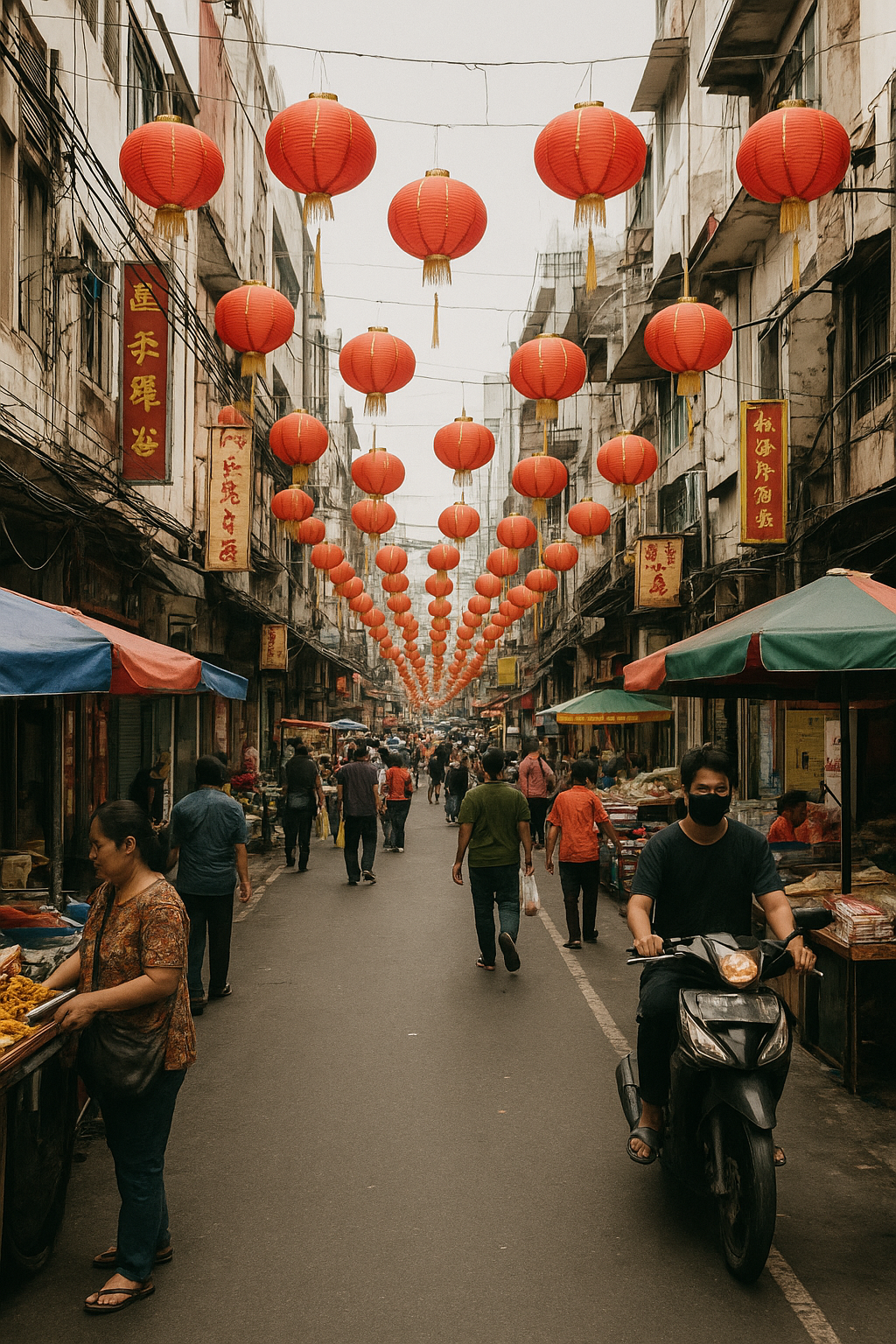
The streets of Jakarta: A vibrant hub where modern slang silently carries centuries of global history
Step into the bustling, sun-drenched streets of Jakarta, and you’ll instantly be hit by a symphony of sounds. You’ll hear a barista calling out an order, a street vendor haggling with a customer, or teenagers laughing over a shared meme.
To the casual observer, they are speaking modern Indonesian or more accurately, Bahasa Gaul (Jakarta slang). It feels fresh, informal, and deeply localized.
But what if I told you that every single day, without even realizing it, you are speaking a centuries-old European language? What if the words you use to complain about your chores, dress up for work, or check your wallet actually belong to the seafaring sailors of the golden age of exploration?
If you think your daily vocabulary is purely local, it’s time to look a little closer at the invisible ghosts in our language.
The Unintended Legacy of the Maritime Masters

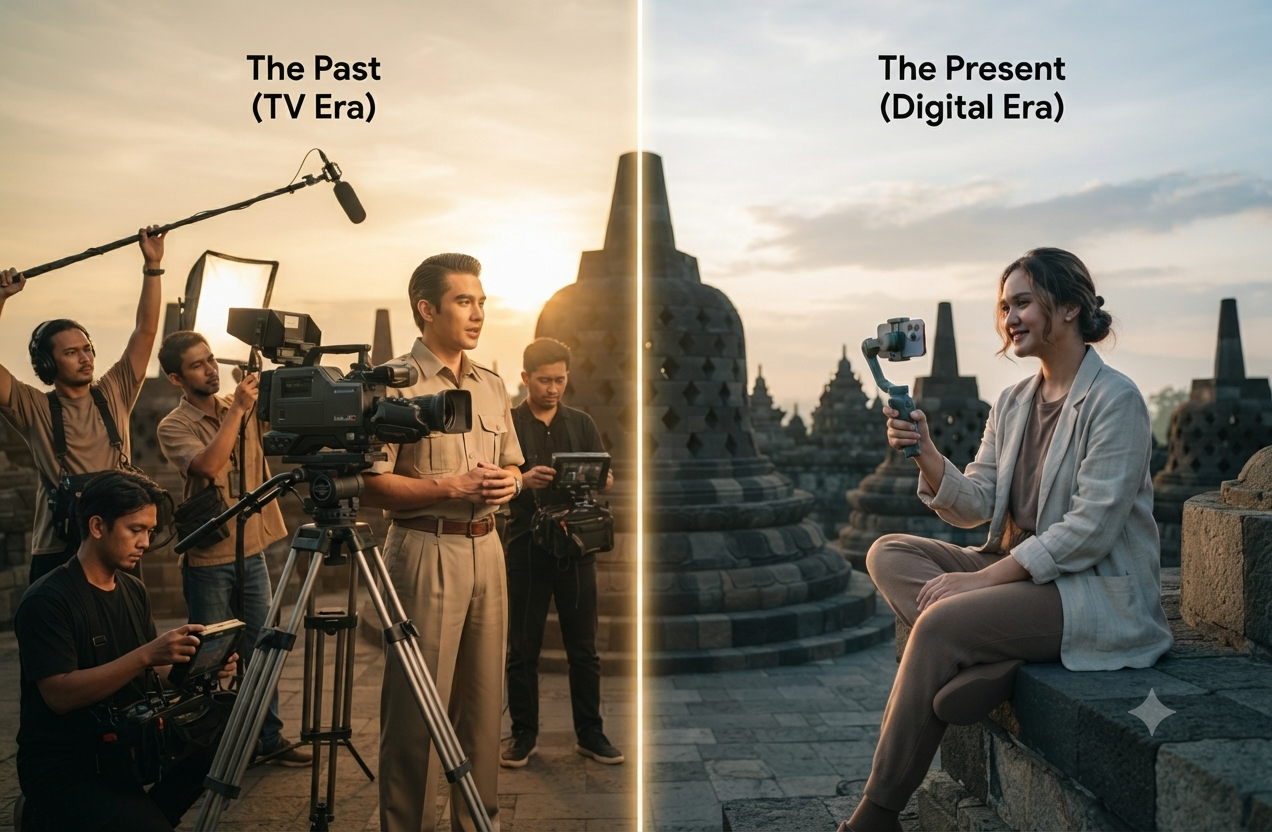
A 15th-century maritime voyage that unknowingly reshaped the daily vocabulary of Southeast Asia. (Photo via Unsplash/Museum Archives)
Long before the Dutch corporate empire (the VOC) tightened its grip on the archipelago, another European superpower dominated our waters: The Portuguese.
Arriving in Malacca and the shores of Nusantara in the early 15th century, these explorers weren’t just chasing nutmeg and cloves; they brought their culture, their religion, and crucially, their language.
Eventually, the Dutch pushed the Portuguese out. The grand stone fortresses changed hands, and a new colonial master took over. Mathematically, you would think Portuguese would fade away from the islands, right?
Wrong.
Instead of vanishing, the Portuguese language pulled off the ultimate survival trick: it melted seamlessly into the local dialects. It became so comfortable in our mouths that we forgot it was ever foreign.
“Oh, Wait… That’s Portuguese?”
Let’s look at a typical morning routine in Indonesia through a linguistic lens.
You wake up, open your jendela (window), and put on a clean kemeja (shirt). You reach into your saku (pocket) to grab your wallet, hoping you have enough duit (money) to buy some mentega (butter) and terigu (flour) at the local market.
To an Indonesian, this is just a standard sentence. But to someone from Lisbon, it sounds like a distorted echo of home.
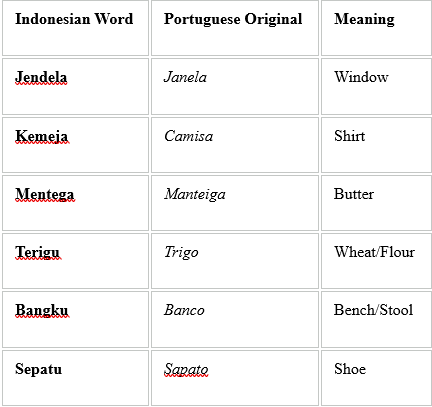
Even the word Sinyo which Jakarta locals traditionally used to describe a wealthy, flashy young man comes directly from Senhor (Sir).
When the Dutch took over, they tried to enforce their own language for centuries. Yet, while Dutch remained the stiff language of bureaucracy and law courts, Portuguese became the warm language of the streets, the markets, and the homes. It was intimate. It was practical.
The Linguistic Camouflage

Everyday objects, ancient names: Our shirts, shoes, and windows are living monuments of linguistic acculturation
Why did Portuguese stick around while Dutch mostly faded into formal legal textbooks?
The answer lies in how the two cultures interacted with the locals. The Dutch maintained a strict, segregated distance from the native population. The Portuguese, on the other hand, integrated heavily. They married local women, converted communities, and lived side-by-side with the locals in old Batavia (particularly in areas like Kampung Tugu).
Because of this intimate blending, native speakers didn’t adopt Portuguese through textbooks; they absorbed it through survival, trade, and love.
By the time the modern Indonesian language was formalized, these words had already spent hundreds of years wearing local camouflage. We took a romance language born on the Iberian Peninsula, stripped away its complex conjugations, gave it a tropical accent, and made it entirely our own.
So, the next time you put on your sepatu or sit on a bangku, you aren’t just talking. You are keeping a 500-year-old maritime voyage alive in your mouth.
Over to You!
Linguistics is the ultimate time travel. It proves that no culture develops in a vacuum, and our daily slang is a living museum of global history.
Now, let’s test your vocabulary: Can you think of any other Indonesian words that sound suspiciously European? Or perhaps you know a piece of slang from your own regional dialect (Sundanese, Javanese, Ambonese) that carries a hidden foreign roots?
Drop your guesses and favorite loanwords in the comments below. Let’s map out the hidden history of our words together!
메타데이터
- post_id
- 7f645c6ed21f
- slug
- youre-not-speaking-pure-indonesian-how-your-daily-slang-carried-an-ancient-european-language-7f645c6ed21f
- url
- https://medium.com/write-a-catalyst/youre-not-speaking-pure-indonesian-how-your-daily-slang-carried-an-ancient-european-language-7f645c6ed21f
- canonical_url
- https://medium.com/write-a-catalyst/youre-not-speaking-pure-indonesian-how-your-daily-slang-carried-an-ancient-european-language-7f645c6ed21f
- author_url
- https://medium.com/@anisasetiawati
- status
- ok
- fetched_at
- 2026-07-16 12:34:21