The Boys Who Claimed They Captured a Palm-Sized UFO in Japan (1972) — Kera Incident (Part 10/10)
Mystery Japan Presents: The Unexplained Japan Files Case File #001 — The Kera Incident (Part 10)
The Boys Who Claimed They Captured a Palm-Sized UFO in Japan (1972) — Kera Incident (Part 10/10)
Mystery Japan Presents: The Unexplained Japan Files Case File #001 — The Kera Incident (Part 10)
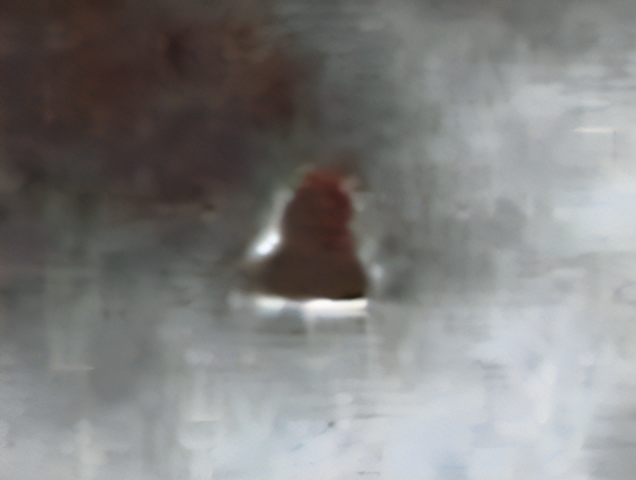
A month after the “palm-sized UFO” vanished, new lights appeared over Kera. Witnesses — some of them adults — kept reporting small, hat-like objects that didn’t fit neatly into the ashtray theory. In this final episode, we follow the aftershocks — and ask the oldest investigative question: Who benefits?
Previously (Part 9): The ashtray theory didn’t fade — it multiplied: reader tips, forum finds, high-priced auctions, and even a 2023 meetup where six near-matching “UFO ashtrays” were compared side by side. Read Part 9 here: **The Boys Who Claimed They Captured a Palm-Sized UFO in Japan (1972) — Kera Incident (Part 9/10)**
1. A “Small UFO” Sighted Shortly After the Kera Incident
Nearly a month after the day the Kera object was said to have “vanished” for the last time — on October 26, 1972 — Kiyoko Fujiwara, the mother of Sadao, reported seeing a strange aerial object over Kera.
It was just after 6:30 p.m. Kiyoko was on her way home after picking up Sadao’s younger sister from daycare. She happened to glance up — and noticed something unfamiliar approaching low in the sky from the north.
In her account, it was a small object with a silhouette like a sphere trapped inside a ring — close to the classic “flying saucer” image.
From beneath, it blinked red and blue lights. It made no sound, moved slowly as if gently bobbing up and down, and drifted southward. She said it seemed to be heading toward the direction locals call “Kera Fuji,” the small, Fuji-shaped hill visible to the south.
In that moment, one thought flashed through her mind: the very “saucer” the children had been so worked up about.
Could that be the flying saucer?
And in fact, around the same period, Kiyoko was not the only person in Kera to report seeing an unusual object in the sky.
2. Testimony from “Mulder Ryoma,” Head of JSPS Kochi Branch
“Mulder Ryoma” is a UFO researcher and the Kochi branch head of JSPS (the Japan Space Phenomena Research Society). He has reportedly continued on-site investigations of the Kera Incident for more than forty years.
According to a feature on the Kera case in the April 2014 issue of Mu, Mulder visited Kera during the period of the incident together with Kazuo Hayashi, then head of the JSPS Osaka branch, and conducted field inquiries.
That evening, shortly after 7:00 p.m., Mulder was riding a motorbike with Hayashi on the back, heading toward the residential area where the boys lived. On the way, the two happened to look toward the southern sky at the same moment — and witnessed something odd.
In Mulder’s recollection, it was a small luminous object, shining a whitish, lamp-like light.
They were looking at an elevation of roughly 15 degrees. The light appeared to drop at considerable speed toward a low hill about two kilometers away, disappearing behind it. Mulder also remembers the trail it left behind: not a straight line, but a fine, regular zigzag — an unmistakable, rhythmic wavering in the sky.
Normally, you would expect such a sight to make people stop and follow it. Yet, strangely, Mulder says that neither he nor Hayashi pursued it.
He is convinced of what it was:
“That was the disc we would hear about from the middle-school boys immediately afterward.”
Mulder adds that, in his view, the Kera UFO was not seen only by children. He says he also obtained testimony from several adults who were near the area at the time and claimed to have watched a UFO hovering over the rice fields from a distance.
3. A Similar “Captured Mini-UFO” Report from Okinawa
Mulder also notes, in the April 2014 Mu feature on the Kera Incident, that a remarkably similar “captured mini-UFO” story has been reported in Okinawa.
According to that account, more than a decade before 2014, an elementary-school-aged child in Okinawa allegedly caught a small UFO flying low to the ground using an insect net. The child then tried to keep the object — burying it in sand, or storing it in a box — but each time, it supposedly escaped.
The parallels to Kera are hard to miss.
One additional detail makes this even more intriguing. One of the Kera boys, Keiko Fujimoto, has reportedly told a similar story much later in life — during an ethics class at Kochi Otemae High School. According to the recollection, Fujimoto said something to the effect of:
“When I was a child, I caught a small UFO with a bug net and put it in a dresser drawer — but at some point it disappeared.”
Note: this classroom anecdote is based on a mention in a community post on mixi related to Kochi Otemae High School.
4. A “Second Kera Incident”? A Mini-UFO Sighting Four Years Later
About four years after the Kera Incident, another report involving a “mini-UFO” surfaced — this time elsewhere in Kochi Prefecture. The date is given as mid-June 1976.
Just after 8:00 p.m., Sachiko Oyama, then nine years old and living in Agawa Village (now part of Niyodogawa Town), stepped outside to look for a cat that had run off. That’s when she noticed a yellow glowing object in the sky near an uphill road to the east. She began walking toward the light.
The slope was roughly 40–50 meters away, with a thick stand of trees stretching along her left. As she stood on the road looking up, something extraordinary happened: the glowing object, she says, struck a tree at the edge of the woods and dropped down — landing near her feet.
One detail is especially odd. Even though the road was paved in concrete, she recalled hearing little to no impact sound when it fell.
Up close, the object appeared silver, with a diameter of roughly a dozen centimeters. In her memory, it was shaped like a small hat. Curious, she touched the top with her index finger. The surface felt sticky, and her finger sank one to two centimeters — but beneath that, it felt hard.
Frightened by how unfamiliar it was, Sachiko turned to head home. But when she glanced back, the object was now glowing faintly yellow. Then, she says, it spun counterclockwise three times — and shot off at high speed, diagonally to the right.
All of the cases discussed so far fall into the same loose category: reports of “mini-UFOs.” Among them, this 1976 incident stands out because it also takes place in Kochi Prefecture and involves a child encountering a hat-shaped object at close range — enough that some people have nicknamed it “the second Kera Incident.”
But one point matters. Both the Okinawa story mentioned earlier and this Kochi case are generally told as independent sightings, with no confirmed direct link to the original Kera Incident. Even if Kera itself were a prank, that alone would not automatically explain why similar “hat-shaped mini-object” stories appear in other places and times.
Which leaves a broader possibility on the table: that in 1970s Japan, accounts of small, hat-like flying objects may have been circulating more widely — or at least that this narrative pattern emerged in multiple locations, more than once.
5. Shimizu Kazuo’s Account (Introduced in 2005)
The Kera Incident includes one more intriguing piece of testimony. The narrator here is Kazuo Shimizu — a writer who was also known in Japan as a skeptical investigator of paranormal claims.
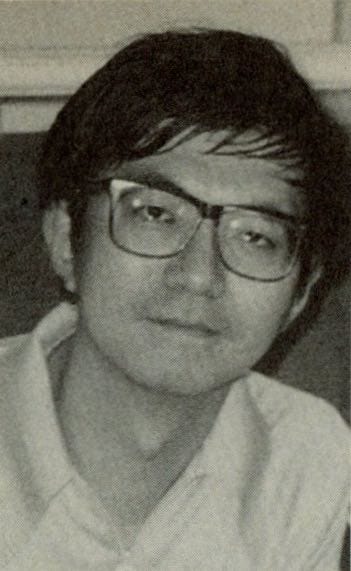
Kazuo Shimizu (1954–2009)
Shimizu spent years reviewing how UFO stories were reported across Japanese television, newspapers, and magazines, often re-examining famous cases from a critical standpoint. In 1990 he published UFO Lies (UFO no Uso, Datahouse), laying out concrete examples of misidentification, embellishment, and outright fabrication repeated by the media and, at times, by researchers as well. He was also sharply critical of the production practices of Junichi Yaoi, the director who helped popularize UFO programming in that era.
And yet — even Shimizu, a committed skeptic, acknowledged that the Kera Incident contained elements that were difficult to dismiss as mere “kids’ mischief.”
In Shimizu’s recollection, when the late-night show 11PM covered the Kera story, he was at the Tokyo studio along with Shinichiro Namiki, then chairman of the Japan Space Phenomena Research Society (JSPS). There, Shimizu says, he met two of the boys who had come to appear on the program — drawn from among Hiroshi, Sadao, and Toshiaki — and conducted a brief, informal interview.
During that conversation, Shimizu showed them a relatively large ashtray and asked:
“Was the UFO about this size?”
One boy answered:
“Yeah — about like that.”
But the other immediately objected:
“No, that’s wrong!”
Right in front of Shimizu, the two boys began arguing intensely over the exact size of the object.
And that, Shimizu says, made him pause.
If the story had been entirely fabricated, he reasoned, they would have had every incentive to coordinate their details in advance and preserve a consistent narrative. Instead, they didn’t hide the discrepancy at all — they clashed openly, seriously, and without smoothing it over.
In that moment, Shimizu recalls thinking: Something really did happen.
6. Shinichiro Namiki’s Testimony (2014)
Shinichiro Namiki is known in Japan as a writer and researcher of paranormal phenomena, and as a longtime main contributor to Mu, the magazine that regularly covers UFOs and the occult. He also served as chairman of JSPS (the Japan Space Phenomena Research Society) and has followed domestic UFO cases for decades.
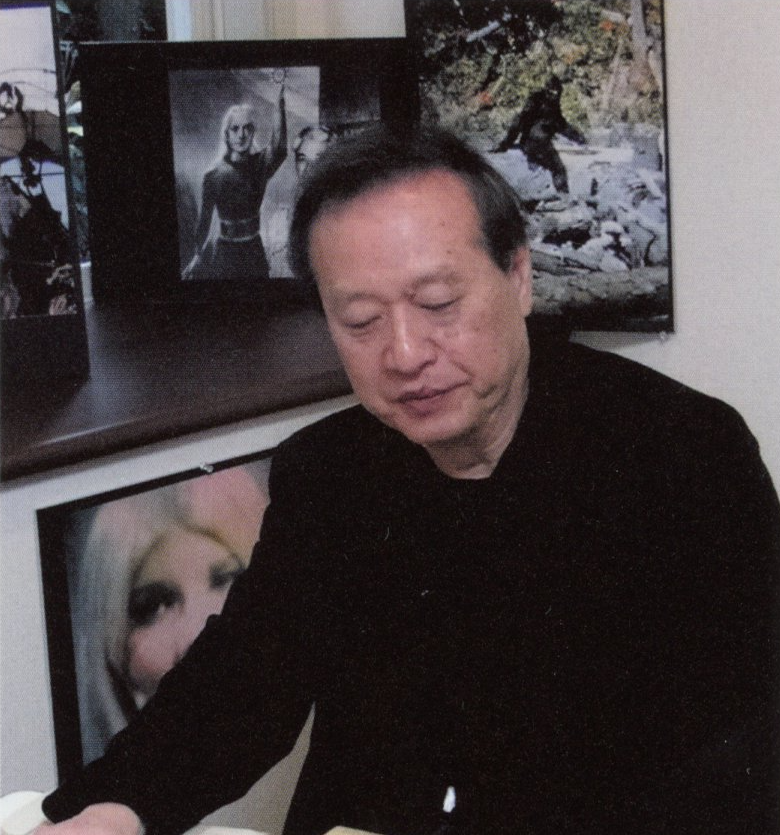
Shinichiro Namiki
Namiki says he began interviewing witnesses and visiting the Kera site shortly after the incident, and continued pursuing what he calls “the case’s true shape” for nearly half a century. In that sense, he is often treated as one of the most central figures in Kera research.
By 2014, however, Namiki notes that re-interviewing all nine boys had become difficult — many had begun refusing requests altogether. Against that backdrop, Mu’s April 2014 reporting describes Namiki, Kazuo Hayashi, and “Mulder Ryoma” visiting a yakitori shop run by Hiroshi Mori, often described as one of the incident’s central figures. There, Mori agreed to speak.
Forty-two years had passed. Mori, who had been fourteen at the time, was now in his fifties. Hayashi reportedly took the Kera “UFO” replica out of his bag and showed it to him. Mori looked at it with a kind of nostalgia, picked it up, and examined it closely. As he checked the details, he reportedly said something to the effect of:
“I feel like this part was a bit thicker…”
Mori then emphasized that there had been “no lies and no changes” in what he had said over the years, reaffirming the reality of the incident. Mu presents his account as broadly consistent across four decades. His remarks are quoted along these lines:
“Back then we were just junior-high kids, but that incident was absolutely real. And no matter how much you ask, nothing more will come out beyond what I’ve already said. After all this time I can’t answer every detail precisely. But there’s no doubt it really happened.”
At the same time, recent years have produced new reports and physical comparisons that seem to strengthen the “ashtray theory,” and criticism directed at the central figures has grown sharper. And yet Mori’s stance appears largely unchanged since adolescence. That consistency itself is a point on which interpretations will diverge.
Can someone repeat the same lie consistently for more than forty years? Or does the feeling of certainty — memory’s conviction — harden through mechanisms that are not the same as factual accuracy?
This is one of the reasons the Kera Incident remains difficult. The case isn’t only about an object. It’s also about how stories and beliefs — true or not — can stabilize, and refuse to move, over time.
7. New Testimony from a 2022 Field Visit — The Key Detail: “The UFO Was Lighter”
In the summer of 2022, three investigators reportedly conducted a new field visit in Kera: Ken Nakazawa (a writer and UMA researcher), Zacres Hobby (an “alien enthusiast”), and Getter Sean (a Kochi-based paranormal researcher).
During that visit, they are said to have spoken with Takaō Nomura, the head priest of Asamine Shrine — who was also described as one of the people who had witnessed the small UFO about fifty years earlier.
According to Nomura, sightings still occur occasionally in the skies above the small hill visible from the rice fields — often called Kofujiyama (“Little Fuji”). But he explained that what people see today is not the palm-sized object associated with the original Kera story. Instead, he described something closer to a large luminous body.
The group also heard another local account: that a UFO had been seen near a large rock sitting in the middle of the surrounding farmland. The rock, they were told, has long been known locally as a kind of “power stone,” with a tradition warning that moving it could bring misfortune.

A massive boulder in the middle of the fields — locals say moving it invites misfortune.
Here, Nakazawa showed Nomura an ashtray said to closely resemble the Kera object. Nomura reportedly reacted by pointing out multiple similarities — “the pattern on the underside is very close,” and “the texture and hardness feel similar,” among them.
But he also identified two points he believed were different:
- “There was a machine-like part, shaped like an antenna, protruding from the underside.”
- “The UFO was lighter.”
Nakazawa reportedly treated the second point — the claim that it was lighter — as especially important.
Even if Kera involved a prank, one could argue the boys didn’t use an ashtray “as-is,” but modified it to look more UFO-like. In that sense, testimony about “parts that aren’t on the ashtray” could be folded into a modification theory.
The weight claim, however, cuts the other way. If the object had been modified by adding components, it would typically become heavier, not lighter. Yet Nomura’s reaction was the opposite: the ashtray in hand felt too heavy — meaning that in his memory, the object he saw back then was comparatively light.
That single detail leaves a margin the simple “ashtray = the object” equation doesn’t fully close.
At minimum, Nomura seems convinced he saw something unusual fifty years ago — and Nakazawa, by his account, came away persuaded of that much as well.
The 2022 reporting also includes an additional note: around the time some of the boys later traveled to Nagasaki on a school trip — about a month after the “capture” — Nomura and several other local witnesses reportedly saw another unidentified object in the sky. This one, they said, was not Kera’s small, palm-sized type, but a larger object flying higher overhead.
8. A “Hat-Shaped UFO” Photographed in Hiroshima (2008)
When people think of UFOs, the classic images tend to be discs or spheres. In Japan, however, there are also recurring reports of something less widely known: “hat-shaped” objects — seen in the sky, and occasionally captured in photographs.
One of the best-known photo cases was reported by Takashi Tahara, an amateur photographer from Shimane Prefecture. According to an article in the weekly magazine FRIDAY (July 31, 2009 issue), Tahara later noticed that a photo he had taken on October 29, 2008, near Nukui Dam (around Nukui Dam Park) in Akiota, Hiroshima Prefecture, appeared to contain a flying object shaped like a hat.
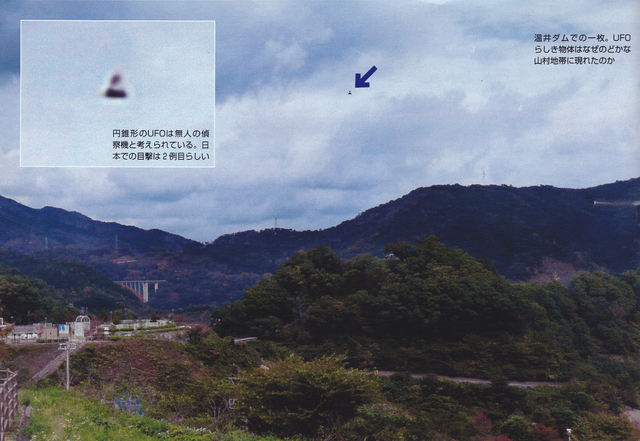
Source: FRIDAY, July 31, 2009, “Shocking UFO Photos…” pp. 90–91, Kodansha.
What makes Tahara’s account especially notable is that he did not notice anything unusual in the sky at the moment he pressed the shutter. It was only later — while reviewing images on his computer — that he spotted something in one frame that looked like “trash” or “dust.” His first suspicion was that it might be a smudge on the lens or a flaw in the image itself.
But Tahara had a personal habit: to avoid blur, he would often take two shots of the same scene in quick succession. In this case he did exactly that — and only one of the two consecutive shots contained the mysterious object. The other showed nothing.
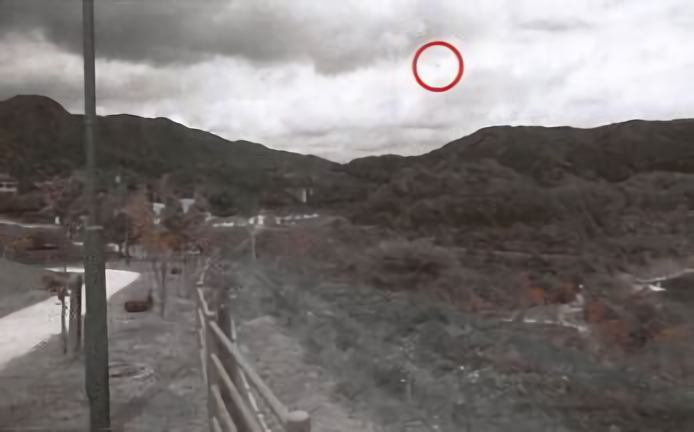
A photo taken by Tahara at Nukui Dam.
That discrepancy made him take a closer look. When he enlarged the image, he concluded that it was not a speck of dirt at all, but something with a distinct hat-like outline.


Surprised, Tahara shared the photo online and asked UFO researchers to weigh in.
One of the responses came from Kiyoshi Amamiya, a veteran Japanese UFO researcher known for writing A History of UFO Research in Japan. Amamiya reportedly concluded that the object in the photo was “a genuine UFO.” He also noted that Japan had seen at least one other well-known example of a hat-shaped object photographed in Kobe in the 1980s, and suggested a possible interpretation: that some “hat-shaped UFOs” might be unmanned reconnaissance drones.
9. Don’t Rush the Verdict — The Mystery That the “Ashtray Theory” Can’t Fully Erase

As we’ve seen, even if the Kera Incident began as “kids’ mischief,” it still leaves behind a number of lingering snags — details that don’t neatly dissolve under a single explanation. So what was it, really? A cleverly staged prank? Or did the boys truly capture something not of this world?
Maybe the person who solves it isn’t a researcher at all — maybe it’s you, the reader.
A Roman consul from 127 BCE, Lucius Cassius Longinus Ravilla, is said to have emphasized one guiding question in criminal inquiry:
Cui bono? — Who benefits?
If the Kera object was “just an ashtray,” then who, exactly, stood to gain the most from that story?
Here, I want to sketch one possible scenario — strictly as a hypothesis.
Note: What follows is admittedly speculative, and it may read like science fiction. Still, it is a narrative that can be made to fit — without obvious contradiction — the three threads we’ve been following: (1) the nine boys’ testimonies, (2) the fact that multiple ashtrays closely resembling the Kera object have been identified, and (3) the recurring reports of “hat-shaped” mini-UFOs in other places.
10. The Winner of the Mind Game — Who Benefits Most from the “Ashtray Theory”?
Imagine this.
You’re a space-engineering specialist assigned to the 346th Reconnaissance Unit of the Orion Frontier Force — part of the Galactic Empire. Your mission is to monitor the technological evolution of a developing world on the galaxy’s edge: Planet T820.
Recently, T820 has risen in priority. Its human inhabitants have developed nuclear weapons, and they’ve even sent a crewed spacecraft to their only satellite, T820-L1.

Your unit’s job is straightforward: observe T820’s technological level and any signs of outward expansion, then report back to the imperial homeworld, X, near the galactic core.
But the Central AI Collective has reached an uncomfortable conclusion: T820 humans are aggressive and unpredictable. If you want to avoid the risks of direct contact, surveillance must be conducted not by crewed craft, but by unmanned micro-recon units.
So the unit begins developing a small autonomous AI drone — capable of flying within T820’s atmosphere and quietly gathering data.
Then the problem appears.
In an unfamiliar gravity field, the AI’s behavior can’t be fully predicted. In the worst case, the drone is spotted — and captured.
You consider disguising it as a bird or an insect, but the engineers object: an anti-gravity flight profile that’s irregular and extremely fast demands a frame with high strength and stability. And the anti-gravity engine itself is difficult to stabilize unless the body is centrally symmetric.
You even consider a self-destruct system — until compliance officers strike it down as a potential violation of the Empire’s Environmental Protection Protocol for Monitored Biospheres (GE-BEPR-MP1404–2).
You’re stuck.
And then you have an idea.
Use a mass-produced local product as the outer shell.
If you embed an anti-gravity engine inside something already common on T820, the drone’s appearance becomes “ordinary.” Even if the AI malfunctions, even if it crashes, even if it’s picked up — there’s a good chance the locals will dismiss it as junk.
Imperial technology is advanced enough that the anti-gravity unit can be made astonishingly small. It does have one drawback: when active, it emits a faint blue glow. But that isn’t a deal-breaker.
Command approves your plan. Using items acquired by agents already operating on T820, the unit produces the new recon drones — each built around an everyday object widely distributed on the planet.
The chosen shell?
An ashtray.
To further reduce risk, the test flights avoid major cities — New York, Paris, Shanghai, Tokyo — and instead focus on sparsely populated rural zones.
Then the concern becomes reality. The AI glitches. A recon drone goes down. And it’s captured — by children.
The recovery team reports that the captured unit’s exterior is indistinguishable from a commercially available ashtray on T820. The locals treat it as “evidence of a prank.” No matter how passionately the children insist otherwise, adults dismiss them.
An alien-made UFO never existed. Because an identical ashtray is sold in stores.
You exhale in relief. The camouflage works — almost too well. Your solution is praised. Fifty years later, you’re granted return authorization to Homeworld X.
As you board the return craft, you feel a brief flicker of guilt.
You do feel sorry for the nine children who caught the unit. But on Homeworld X, your family is waiting.
The ship pulls away from T820 and initiates warp toward X — twenty-five thousand light-years distant. You fall asleep with a thin layer of remorse still intact… and just before consciousness fades, an old investigative motto from T820 surfaces in your mind:
Cui bono? Who benefited?
The children pleaded. The adults concluded, “It was an ashtray.” Researchers debated for half a century.
And in the end, the ones who benefited most weren’t the children at all.
It was the side that made it look like an ashtray.
Because once you hide inside something explainable, even capture becomes survivable. As long as humans can reassure themselves — “it’s just a prank” — surveillance can continue.
The warp vibrations flatten into a lullaby. You let a small laugh cover the last traces of discomfort, and think:
The strongest defense against T820 humans isn’t weapons. It isn’t science.
It’s their ability to make the unknown feel ordinary — to turn it into something they can explain away.
And the ones who used that power best were the winners.
Thank you, “ashtray theory.”
Perfect camouflage.
References
-
Namiki, Shinichiro, & Hayashi, Kazuo. (April 1973). “JSPS Special Report — Attempted Live Capture of a Flying Saucer!! The Bizarre Disc Disturbance in Kera Village, Kochi City…???” Unidentified Flying Objects — Information and Research — Vol. 1, №1. Japan Space Phenomena Research Society (JSPS). pp. 48–50.
-
Namiki, Shinichiro. (February 2010). Unidentified Flying Objects: UFO Encyclopedia (Mikakunin Hikō Buttai UFO Taizen). Gakken Plus. pp. 227–233.
-
Mulder Ryoma. (November 2002). “The Kochi Mini-UFO Capture Incident: Full Account (Mulder Ryoma Report).” http://www.youneeds.com/xfiles/ufo/kela_ufo_catcher.htm
-
Namiki, Shinichiro. (April 2014). “Junior-High Students Capture a Mini-Disc in a Rice Field: Pursuing the Kera UFO Incident Today!!” Mu. Gakken. pp. 172–177.
-
Yamamoto, Hiroshi; Shimizu, Kazuo; & Minakami, Ryutaro. (July 2005). An Introduction to Outrageous UFOs (Tondemo UFO Nyumon). Yosensha.
-
MYSTERY PHOTONICLE. (May 2016 issue). Digital Ultra Project. pp. 40–41.
-
Nakazawa, Ken. (Web Mu). “A Kera UFO Witness Reveals ‘New Information at the 50-Year Mark’! The Mini-UFO Had an Antenna!” https://web-mu.jp/paranormal/3358/
-
Nakazawa, Ken. (Web Mu). “50 Years Since the Kera Incident: A ‘New Discovery’ at the Site Where the Mini-UFO Was Captured!” https://web-mu.jp/paranormal/3324/
-
FRIDAY. (July 31, 2009 issue). “Chasing U.S. Military Helicopters at Iwakuni Air Base! Plus Shocking UFO Photos.” Kodansha. pp. 90–91.
Author Profile
Haruto Rein, Ph.D. (羅院春人) Former quantum physicist turned independent writer and researcher. He writes Mystery Japan, a case-file series on Japan’s recorded anomalies — built from reports, documents, and testimony, with facts separated from inference and conclusions left to the reader. He also authored ToEST (Shinto philosophy in dialogue) and writes the Shinto Girl series on consciousness and “Spiritual Science.”
© 2026 Mystery Japan Project. Written by Haruto Rein, Ph.D. (羅院春人). All rights reserved. Unauthorized reproduction or distribution is prohibited.
메타데이터
- post_id
- 7f6b303f54ea
- slug
- the-boys-who-claimed-they-captured-a-palm-sized-ufo-in-japan-1972-kera-incident-part-10-10-7f6b303f54ea
- url
- https://medium.otakupapa.net/the-boys-who-claimed-they-captured-a-palm-sized-ufo-in-japan-1972-kera-incident-part-10-10-7f6b303f54ea
- canonical_url
- https://medium.otakupapa.net/the-boys-who-claimed-they-captured-a-palm-sized-ufo-in-japan-1972-kera-incident-part-10-10-7f6b303f54ea
- author_url
- https://medium.com/@wotakupapa
- status
- ok
- fetched_at
- 2026-06-12 07:40:50