UPS vs Generators: What’s Better Than Traditional UPS Power?
Traditional UPS power is excellent for protecting sensitive electronics during short outages, but solar battery backup and modern energy…
UPS vs Generators: What’s Better Than Traditional UPS Power?
Traditional UPS power is excellent for protecting sensitive electronics during short outages, but solar battery backup and modern energy storage systems can deliver longer runtimes, lower operating costs, and better sustainability for many homes and businesses.
For users who need both clean power quality and extended backup, a hybrid approach that combines UPS-grade protection with solar battery storage and, where needed, generators can offer the most resilient and cost-effective solution.
What Is a UPS and When Is It Enough?
A UPS (Uninterruptible Power Supply) is a device that provides near-instant backup power from batteries to keep connected equipment running when grid power fails or fluctuates.
Most home and office UPS units are designed for minutes — not hours — of runtime, giving you enough time to safely shut down computers, prevent data loss, and ride through very short blackouts or voltage dips.
For example, a typical small desktop UPS might provide 5–15 minutes of power for a single PC, while a larger line-interactive or online UPS for a network rack may offer 30–45 minutes depending on load and battery capacity .
UPS systems shine in three scenarios: protecting sensitive electronics from surges and brownouts, bridging short outages until power returns, and giving you a buffer so generators or other backup systems can start safely.
UPS vs Solar Battery Backup: Which Power Solution Is Better?
Solar battery backup is a system that stores energy (usually from solar panels ) in a battery storage pack and can power selected loads or an entire home during an outage, often for many hours or days.
Compared with a traditional UPS, a solar battery system focuses on long-duration backup and ongoing energy savings, while a UPS focuses on extremely fast transfer times and power quality for sensitive devices.
When paired with rooftop solar panels , a home battery storage can keep essential loads like lights, refrigeration, networking, and medical devices running during extended outages, recharging automatically each day from solar energy .
By contrast, a UPS cannot recharge itself without grid or generator power and typically supports only a small set of plugs for a short period.
Solar batteries also enable time-of-use optimization: you can charge when electricity is cheaper and discharge when it is more expensive, improving lifetime value beyond simple backup.
According to industry estimates, a common 13.5 kWh home battery storage can cost around 15,000 USD before incentives but may offset thousands of dollars in electricity bills and generator fuel over its lifetime.
Top Alternatives to Traditional UPS Power Systems
Alternatives to traditional plug-in UPS units include **solar battery systems , portable power stations, and whole-home battery storage** solutions, each optimized for longer runtime or broader loads than a typical UPS.
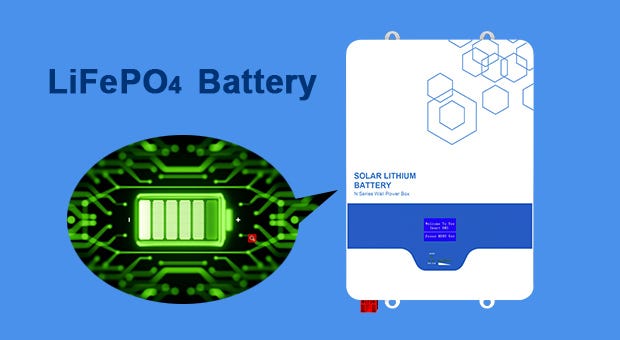
These newer options often integrate solar charging, advanced battery chemistry (like lithium iron phosphate ), and smart energy management, making them attractive not only for emergencies but also for daily energy use.
Key alternatives to consider are:
● All-in-one solar storage systems : Wall- or floor-mounted batteries with inverter types that can power essential loads or entire homes, and often integrate seamlessly with rooftop solar panels .
● Portable power stations: Suitcase-style lithium units that can act as small UPS devices, power camping or construction tools, and be recharged via **solar panels** or wall outlets.
● Whole-home battery storage : Larger systems designed to run most or all household circuits for many hours, sometimes stacked for higher battery capacity .
● Hybrid inverter systems: Inverter types that combine solar input, battery storage , and UPS-grade transfer times, acting as a bridge between traditional UPS and solar storage .
Brands like Anern design stacked **lithium solar energy storage systems and portable battery storage** units that can fill these roles, replacing conventional UPS boxes in many modern installations.
When Battery Energy Storage Outperforms a UPS
Battery energy storage systems outperform traditional UPS devices when you need long-duration power, whole-home coverage, or ongoing bill savings beyond short emergency use.
Instead of minutes of runtime on a few outlets, a correctly sized battery storage system can support kilowatts of load for many hours and recharge daily from solar panels or off-peak grid power.
Battery energy storage is usually better than a UPS in these situations:
● Extended outages: Whole-home battery storage systems can keep essentials running through multi-hour or multi-day grid failures, especially when paired with rooftop solar panels .
● High usage regions: Areas with frequent blackouts or high time-of-use rates benefit from batteries that both protect and actively reduce electricity costs.
● Sustainability goals: Batteries charged from solar panels drastically reduce carbon emissions compared with constantly running fuel-based generators.
● Larger critical loads: Refrigeration, HVAC, medical devices, and communications often require more energy than a small UPS can realistically supply.
For example, some analyses estimate that replacing a diesel generator with a solar plus battery system can cut backup-related carbon emissions by up to 70%, depending on fuel mix and local grid intensity.
Business-grade **commercial battery storage** can also provide peak shaving and demand charge management, which traditional UPS units are not built to deliver.
Comparing UPS, Generators, and Solar Backup for Home Use
UPS units, generators, and solar backup systems each address different parts of the home backup power problem in terms of response time, runtime, cost, and environmental impact.
Most homeowners end up combining at least two of these options, such as a UPS for electronics plus either a generator or a solar battery for longer outages.
Home Backup Options: UPS vs Solar Battery vs Generator
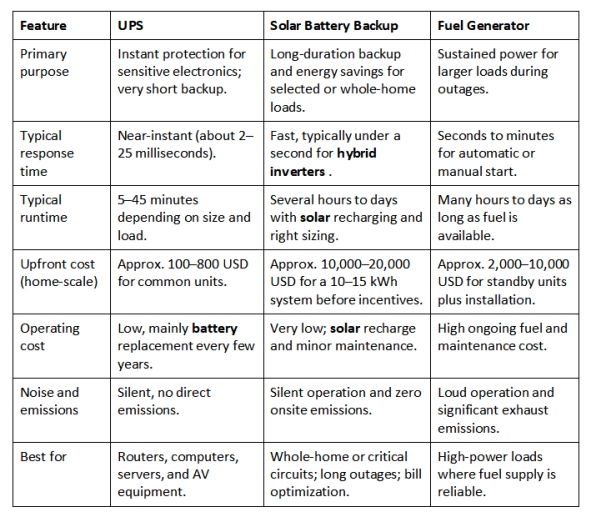
home backup options: ups vs solar battery vs generator
Resources like EnergySage, GreenLancer, and SolarReviews broadly agree that solar batteries offer cleaner and often more economical long-term backup than fuel generators, especially when paired with solar panels .
How Anern Solar and Storage Fit Into the Picture
Anern is a manufacturer specializing in solar panels , inverter types , batteries , and complete solar energy storage systems for residential, commercial, and off-grid use.
Its product line includes stacked lithium battery storage systems, portable solar energy storage units, and integrated solar storage solutions that can operate as advanced alternatives to traditional UPS systems.
For example, Anern’s solar storage systems support multiple charging modes (mains, solar panels , and sometimes generator), allowing them to work as whole-home backup, off-grid power, or a hybrid UPS-like solution depending on configuration.
Commercial solar battery storage offerings from Anern target businesses that want to shave peak demand, improve power reliability, and support critical loads during outages without relying solely on generators.
Users can explore Anern’s main product categories via pages such as the Anern homepage, Solar Storage System section, and Stacked Lithium Battery System overview.
How to Choose the Best Backup Power Option for Reliability
The most reliable backup power option is the one that matches your critical loads, expected outage duration, budget, and sustainability goals while still providing fast protection for sensitive electronics.
In practice, this often means combining a fast-acting UPS or hybrid inverter with either a solar battery system, a generator, or both, to cover both instant response and long-duration resilience.
When choosing your setup, consider these steps:
-
List critical loads: Identify which circuits or devices must stay on (e.g., fridge, Wi-Fi, medical equipment) and estimate their power draw and daily energy use in kWh.
-
Estimate outage patterns: If your area typically experiences short, rare outages, a UPS plus small portable power station might be enough; for frequent multi-hour outages, a home battery storage or generator is usually required.
-
Assess noise and emissions tolerance: Urban neighborhoods and eco-focused users often prefer silent solar batteries , while remote sites may accept generator noise for high-power loads.
-
Compare lifetime costs: While batteries have higher upfront costs, they can reduce electricity bills and avoid fuel purchases, narrowing the total cost of ownership gap vs. generators over several years.
-
Check integration options: Look for systems that integrate UPS functionality with solar storage , such as hybrid inverters and all-in-one solar storage units, to reduce complexity and improve efficiency.
-
Work with a specialist: An experienced solar and battery storage provider like Anern can help size batteries correctly, design safe switch-over systems, and ensure compliance with local electrical codes.
For many households, a practical and highly reliable configuration is: small UPS units for computers and networking, plus a right-sized solar battery storage system that can cover essentials for at least 8–24 hours of typical use.
High-Quality Resources for Further Research
Trusted energy platforms provide detailed breakdowns of home backup options, including cost calculators and real-world performance data.
For deeper learning, you can consult:
● EnergySage: Home Battery Backup vs. Generators
● GreenLancer: Solar Battery vs Generator
● SolarReviews: Whole-Home Backup and UPS
Combining these external resources with manufacturer documentation from companies such as Anern will help you craft a backup power strategy that is both technically sound and financially optimized.
FAQs
The following FAQs address common questions about when alternatives are better than traditional UPS power and how to design a reliable backup system.
Is a solar battery really better than a UPS?
A solar battery is better than a traditional UPS for long outages, whole-home backup, and reducing energy bills, but a UPS is still superior for instant protection of sensitive electronics.
How long can a home battery storage run my house?
A typical 10–15 kWh home battery storage can power essential loads for 8–24 hours, depending on usage and whether you have solar panels recharging it during the day.
Are generators obsolete now that batteries are popular?
Generators are not obsolete; they still make sense for very high-power loads or locations where large batteries and solar panels are impractical, though batteries often win on noise, emissions, and long-term cost.
Can a portable power station replace my UPS?
Many portable power stations have UPS-like pass-through modes, but their transfer times and power electronics vary, so they may not always meet strict uptime requirements for sensitive IT equipment.
How often do UPS and batteries need replacement?
Consumer UPS units often use lead-acid batteries that may need replacement every 3–5 years, while modern lithium home batteries often carry warranties of 10 years or more depending on usage.
How can Anern help design my backup system?
Anern can supply solar panels , inverter types , and battery storage systems and work with project partners to design tailored residential, commercial, or off-grid backup solutions based on your critical loads and budget.
Conclusion
For short outages and protecting sensitive devices, nothing is more cost-effective and simple than a correctly sized UPS, but for whole-home resilience, solar battery backup and modern energy storage systems clearly outperform traditional UPS power alone.
The strongest strategy is rarely “UPS or batteries or generators” but a layered approach: UPS or hybrid inverter for instant protection, plus solar -charged batteries (and, where needed, generators) to provide long-duration, low-carbon backup with predictable lifetime costs.
If you share how long typical outages last in your area, I can suggest a concrete combination of UPS, solar battery , and/or generator capacity that fits your situation.
메타데이터
- post_id
- 7f94394bcbcd
- slug
- ups-vs-generators-whats-better-than-traditional-ups-power-7f94394bcbcd
- url
- https://medium.com/@anern/ups-vs-generators-whats-better-than-traditional-ups-power-7f94394bcbcd
- canonical_url
- https://medium.com/@anern/ups-vs-generators-whats-better-than-traditional-ups-power-7f94394bcbcd
- author_url
- https://medium.com/@anern
- status
- ok
- fetched_at
- 2026-07-14 06:00:22