The Benefits of Thinking Less & How to Do So
Introducing the concept of No Mind. The art of presence without performance.
The Benefits of Thinking Less & How to Do So
Introducing the concept of No Mind. The art of presence without performance.
Source: Pinterest
No mind, no body, no thoughts, no thing.
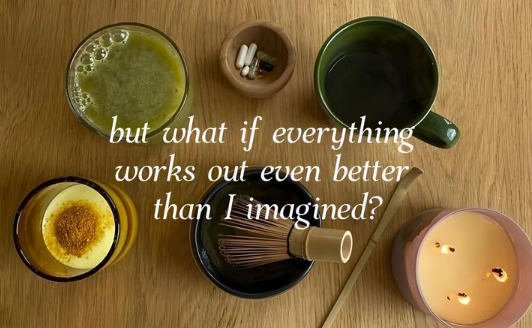
Use that mantra next time you’re stressed, in an overthinking spiral, or feel totally bogged down by the chaos and noise of the world. Or, even better, meditate on it. Light a candle and stare at it, as you repeat it to yourself over and over. Or try box breathing, 4-in, 4-hold, 4-out, 4-hold, repeating each part of the mantra for each count of 4.
Your issue is you think too much.
You’re paralyzed by it, in fact. You have anxiety, you have creative blocks, you’re left staring at the ceiling in the middle of the night thinking about something you did years ago. You rehash past conversations and rehearse future ones. You call it preparation. You’re just looping. You’re like an old scratchy record that just plays the same part of the song over and over. You need to be more like a healthy record — one that just flows, playing beautiful tunes, sending positive vibrations out into the universe.
You’re stuck in mind.
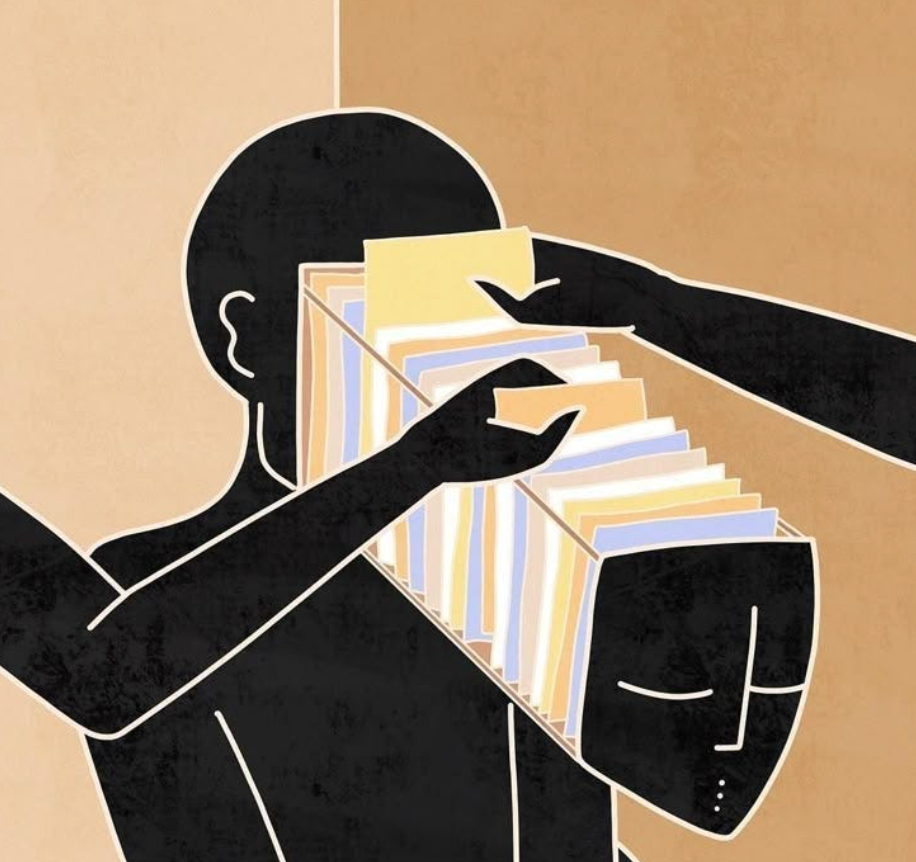
When you try to fix the issues caused by too-much-mind, you try to intellectualize your way out of them. You research mental models you can try, you go to therapy to talk it out, you read self-help books, all the while desperately searching for clarity on your too-much-mind problem.
I’m speaking from experience. I’ve experienced anxiety for all of my teen years and 20s. It got worse over time, until I was left thinking that my only solution would be to go on medication. I researched the hell out of anxiety, even thinking about writing a book about it. I tried talk therapy, every self-help book on the planet, and a series of other techniques to try and cure me of my problem.
It was only when I tried breathwork that I started to find some relief from my anxiety. And that wasn’t why I tried it.
Breathwork: Stillness for Busy Minds

Source: Pinterest
Breathwork got me out of my mind. For an hour a week, I went to a breathwork class. And for that one hour, I was out of my mind. I was in my body. It was an unfamiliar place. Sure, I was in my body for workouts, but in nearly every workout I was still very much trapped in my mind. I pushed my body so hard — too hard — to the point that it just became a mental thing. I would berate myself to workout, and it was mentally draining.
Breathwork on the other hand, was rest. It was stillness. It was a release. I connected with my body in a unique, non-judgmental way. I wasn’t pushing myself. I was just in flow. I was disconnecting from my mind and reconnecting with something deeper.
Something I didn’t have words for at the time — just a sense that I was, finally, home.
That’s the irony of “healing.” We try to think our way through it. We analyze, optimize, and label everything. But the thing that truly heals us is often the thing that bypasses the mind entirely.
It’s what I now understand as no-mind — a state where thoughts lose their grip, where presence takes the wheel, and where you don’t need to do anything to be okay.
What is the Concept of No-Mind?
The term no-mind comes from Zen Buddhism, where it’s referred to as mushin (無心). It literally means “without mind” — but not in a blank, brain-dead kind of way. It means without the interference of thought. Without mental noise. Without the compulsive need to interpret, control, and narrate every moment of your life.

Source: Pinterest
No-mind is presence. It’s flow.
I went to a yoga class the other day and the teacher explained it so beautifully. She said that a stream on the side of the mountain doesn’t force its way down. It’s not in a hurry, it’s not sharp and jumpy and harsh. It just flows. It’s yielding to nature. It’s soft. That’s the state you enter into in no-mind.
The Modern Problem of Too Much
Here’s the issue: modern life is not designed for peace or presence. It’s designed for productivity, stimulation, and constant mental engagement.
You wake up to a screen. Scroll through other people’s lives. Switch between six apps before breakfast. Your brain is already fragmented before your feet hit the floor.
Then you spend the rest of the day bouncing between to-dos, Slack pings, WhatsApps, TikToks, Reels, meetings, money worries, and 17 open tabs. All while feeling like you’re forced to try and be a better partner, a better parent, a better employee, or whatever role you’re expected to play. Everything comes from a stack of lack, need, and force.
On top of all of that, we’re completely disconnected from our bodies and totally fused with our thoughts.

Source: Pinterest
Modern culture rewards this. You’re praised for being busy, ambitious, switched on. You’re encouraged to multitask, optimize, gamify your routine, and squeeze more out of every hour. (That’s why I will never compliment someone by saying they’re “good at multitasking” nor will I ever attempt to be a “good” multitasker — It doesn’t exist. You’re just half-assing everything and losing skill and flow by jumping between tasks).
There’s nothing more evident of this than the wellness world. Every wellness thing has become something to “win” at — meditate so you can be more productive. Journal so you can manifest harder. Sleep better so you can crush your 6 am workout and become more of a high-performance machine. Cold plunge so you can burn fat. Sauna so you can rid yourself of pesky inflammation that is killing your focus.
It’s all mind, all the time.
And that’s the problem. The more you live in your head, the more disconnected you become from life itself. From your intuition.
The modern world has you convinced that your mind is the solution — when most of the time, it’s actually the problem.
Enter: no-mind.
No mind, no body, no thoughts, no thing.
This is your antidote to the constant noise. This mantra is your portal back to clarity, groundedness, and a sense of peace and fulfilment that doesn’t rely on external achievement.
How to Be Less Mind
Source: Pinterest
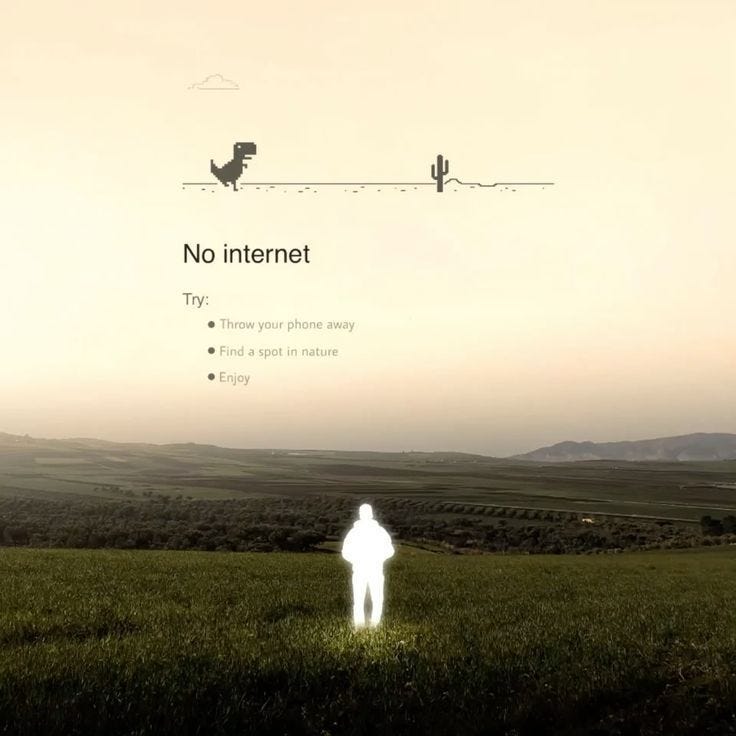
I can’t lie, it’s hard to suddenly try to think less. In fact, that often just leads to more thinking and a greater discrepancy between in how you feel and how you think you should feel. You end up over-analyzing your overthinking, stuck in a loop of self-judgment.
I used to get stressed at myself for my inability to rid myself of thoughts during meditation. “Why can’t I be more present😠?” “Why is my mind so loud😠?” “Why am I like this😡😡😡!!!!”
Here’s the reframe: You don’t need to think less — you need to feel more. The antidote to too much mind isn’t less thought. It’s more embodiment.
Start here:
- Somatic therapy. This has been one of the most underrated shifts for me personally. It’s a body-based form of therapy that helps you process emotion through the nervous system — not by talking about it for the hundredth time. In my opinion, talk therapy keeps you stuck in loops. You don’t need to articulate your trauma to heal it. Focus on healing the body by living in it, whatever that looks like.
- Move your body gently, without a goal. Go for a walk without tracking it. Dance in your kitchen. Stretch slowly. Don’t try to hit a number — try to inhabit your body.
- Do something tactile. Cook a meal by hand. Touch the soil. Take a cold shower. Feel sunshine on your skin. Organize your belongings and express gratitude for everything you own. These are all ways to shift awareness from head to hands, from mind to moment.
- Practice breathwork. Not to “fix” yourself — just to connect. Try box breathing (inhale 4, hold 4, exhale 4, hold 4). Or simply notice your breath without trying to change it.
- Watch your thoughts like traffic. Don’t try to control or reroute them. Just stand at the side of the road and observe. You’re not your thoughts. You’re the one who sees them.
- Sit in stillness, even for 3 minutes. No phone. No stimulation. No to-do list. Just presence. At first, your brain will scream. Let it. This is you breaking the addiction to mind.
No-mind isn’t something you do — it’s something you remember. It’s your original state, buried beneath the noise, just waiting for you to come home. Another piece of wisdom I’ve learned recently: We’re all walking ourselves home.
No-mind is that moment when you realize you’ve always been home — you just forgot. And now, you’re walking yourself back there.

Source: Pinterest
Subscribe to my page for more content like this or to my Instagram for micro insights and daily life content :) It means a lot to me.
메타데이터
- post_id
- 7f94f059e6e5
- slug
- the-benefits-of-thinking-less-how-to-do-so-7f94f059e6e5
- url
- https://medium.com/wholistique/the-benefits-of-thinking-less-how-to-do-so-7f94f059e6e5
- canonical_url
- https://medium.com/wholistique/the-benefits-of-thinking-less-how-to-do-so-7f94f059e6e5
- author_url
- https://medium.com/@emilinalomas
- status
- ok
- fetched_at
- 2026-06-11 11:25:07