How AI Voice Translation Improves Safety and Trust in Uber Clone Platforms
Discover how Wooberly’s AI voice translation enhances safety and trust in your Uber clone.
How AI Voice Translation Improves Safety and Trust in Uber Clone Platforms
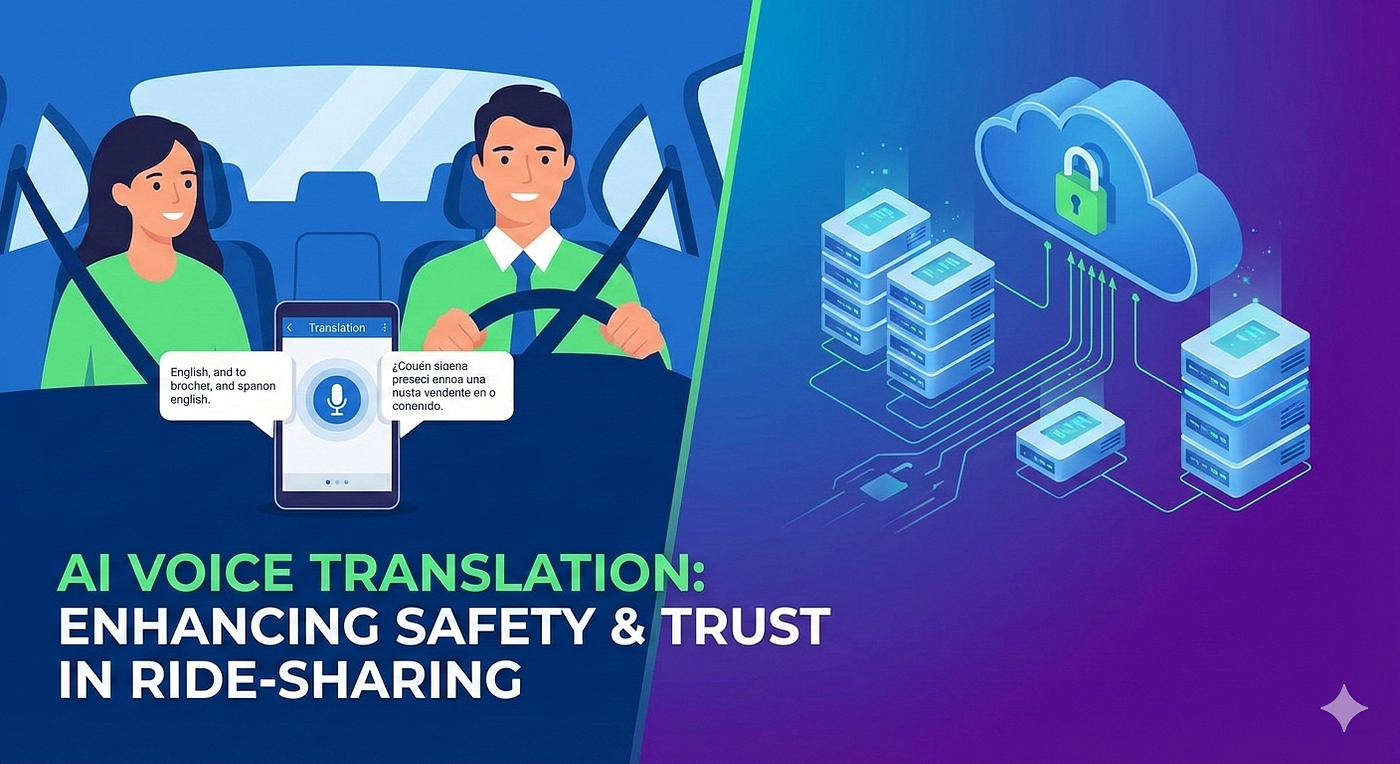
Communication is the silent engine that keeps the ride-hailing industry moving. When a rider and a driver can’t understand each other, a simple pickup turns into a stressful ordeal. As the global demand for mobility grows, entrepreneurs are increasingly turning to advanced technology to solve these friction points. One of the most significant breakthroughs in recent years is AI-powered voice translation. By integrating this into an Uber clone, platform owners are not just adding a “cool feature” they are fundamentally enhancing the safety and trust of their service.
What is an Uber Clone?
Before diving into the benefits of AI translation, it is important to understand the foundation. An **Uber clone** is a ready-made, white-label software solution that replicates the core functionalities of the world’s most famous ride-sharing app. It typically consists of a passenger app, a driver app, and an administrative dashboard.
Using an Uber clone script allows startups to launch a fully functional platform quickly and cost-effectively without building from scratch. Modern versions of these scripts now come integrated with advanced AI capabilities, such as the taxi booking script features that handle everything from dynamic pricing to real-time language translation.
Wooberly’s AI Innovation: Breaking the Language Barrier
Taking inspiration from Uber’s massive 100+ languages translation feature, the Wooberly Uber clone has leveled up the playing field for startups. It now comes equipped with a sophisticated AI-powered voice translation tool designed specifically for on-the-go communication.
Within the Wooberly ecosystem, riders and drivers can send 30-second audio messages in their preferred language. The system then uses advanced speech-to-text and translation AI to automatically translate these messages in real time for the recipient. This ensures that:
- Pickups are precise: No more wandering around dark streets because of a misunderstood landmark or gate number.
- Safety is prioritized: In the rare event of an emergency, being able to communicate clearly across languages can be life-saving.
- Navigational nuances are captured: Drivers can follow verbal instructions that GPS might miss, provided they understand the rider’s intent.
Fostering Trust Between Strangers
Trust is the currency of the sharing economy. When you enter a vehicle owned by a stranger, or when a driver picks up an unknown passenger, there is an inherent level of vulnerability. Language barriers often increase this tension.
By utilizing a Lyft clone or Lyft clone app architecture that includes real-time translation like Wooberly’s, the interaction becomes more human and less robotic. When a driver can understand a passenger’s request through a digital translator, it builds an immediate rapport.
Furthermore, using a Lyft clone script that supports multi-language voice translation shows that the brand cares about inclusivity. It signals to the user that the platform is designed for everyone, regardless of their native tongue. This professional touch transforms a basic taxi booking script into a premium service that users feel comfortable returning to.
Operational Efficiency and Reduced Cancellations
From a business perspective, misunderstandings lead to cancellations. If a driver cannot find a rider after minutes of trying to talk over the phone due to a language gap, they are likely to cancel. For the platform owner, this is lost revenue and a frustrated customer.
Integrating AI translation into your Uber clone script reduces these “fail-to-connect” scenarios. It streamlines the coordination process, ensuring that the driver and rider are on the same page from the moment the ride is accepted. This level of efficiency is what separates a standard **taxi booking app** from a market leader.
Conclusion
As the world becomes more connected, the expectation for seamless, borderless communication grows. For entrepreneurs looking to disrupt the local market, choosing an Uber clone with AI voice translation like the latest version of Wooberly is a strategic move. It doesn’t just solve a linguistic problem; it builds a foundation of safety, improves user trust, and ensures that every journey starts with a clear understanding.
To know more about how to launch an Uber-like app, read this blog:https://www.rentallscript.com/blog/launch-app-like-uber-in-usa/
Frequently Asked Questions (FAQs)
1. How does the 30-second audio translation feature work in Wooberly?
The feature allows either the rider or driver to record a short (up to 30 seconds) voice note. The Uber clone app then processes this audio using AI to transcribe and translate it into the recipient’s language, displaying the text or playing the translated audio almost instantly.
메타데이터
- post_id
- 7f9bd7305dfa
- slug
- how-ai-voice-translation-improves-safety-and-trust-in-uber-clone-platforms-7f9bd7305dfa
- url
- https://medium.com/@allencopper/how-ai-voice-translation-improves-safety-and-trust-in-uber-clone-platforms-7f9bd7305dfa
- canonical_url
- https://medium.com/@allencopper/how-ai-voice-translation-improves-safety-and-trust-in-uber-clone-platforms-7f9bd7305dfa
- author_url
- https://medium.com/@allencopper
- status
- ok
- fetched_at
- 2026-07-31 03:46:06