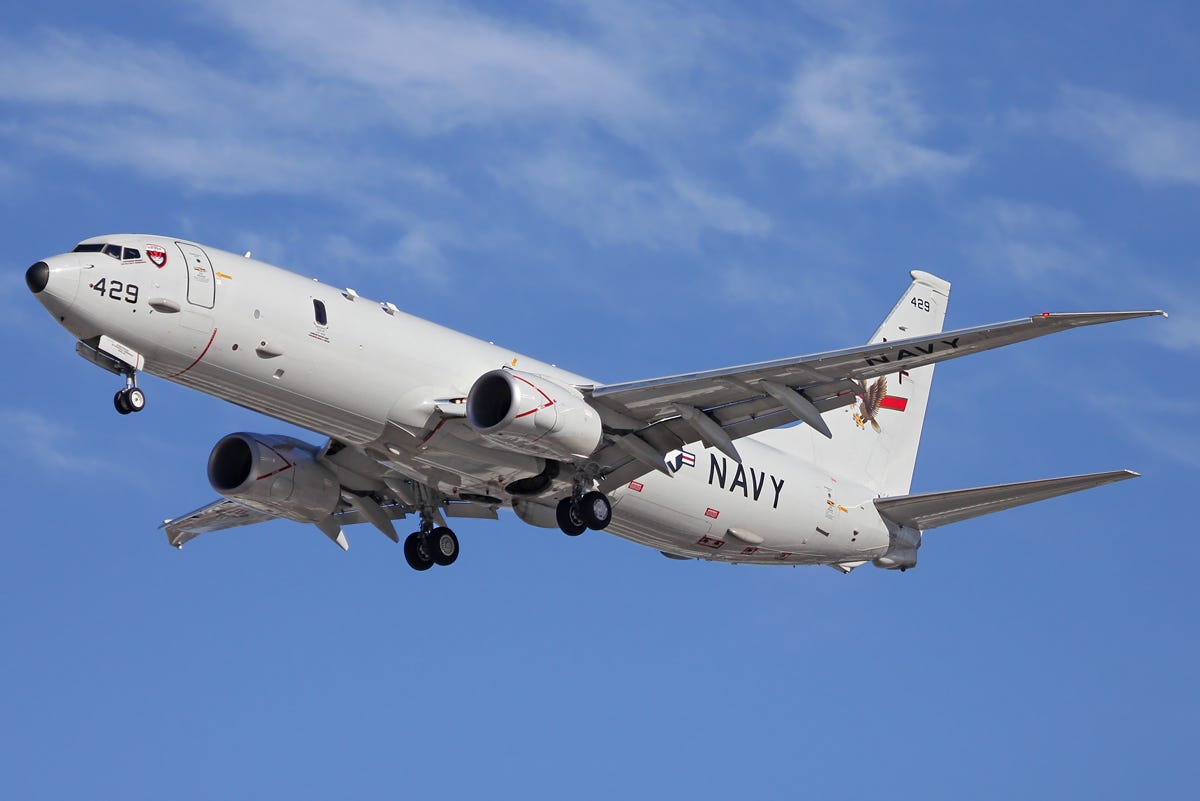
Wings, Wars & Milestones
From combat losses over Iran to historic training graduations
Wings, Wars & Milestones
From combat losses over Iran to historic training graduations
Here is a roundup of separate military aviation news stories from April 2026.
Operation Epic Fury: combat losses, rescues, and escalation over Iran
The most consequential aviation story of the period was the ongoing US–Iran conflict designated Operation Epic Fury, which claimed aircraft and service members across multiple theatres and generated some of the most dramatic combat search-and-rescue missions in recent American military history.
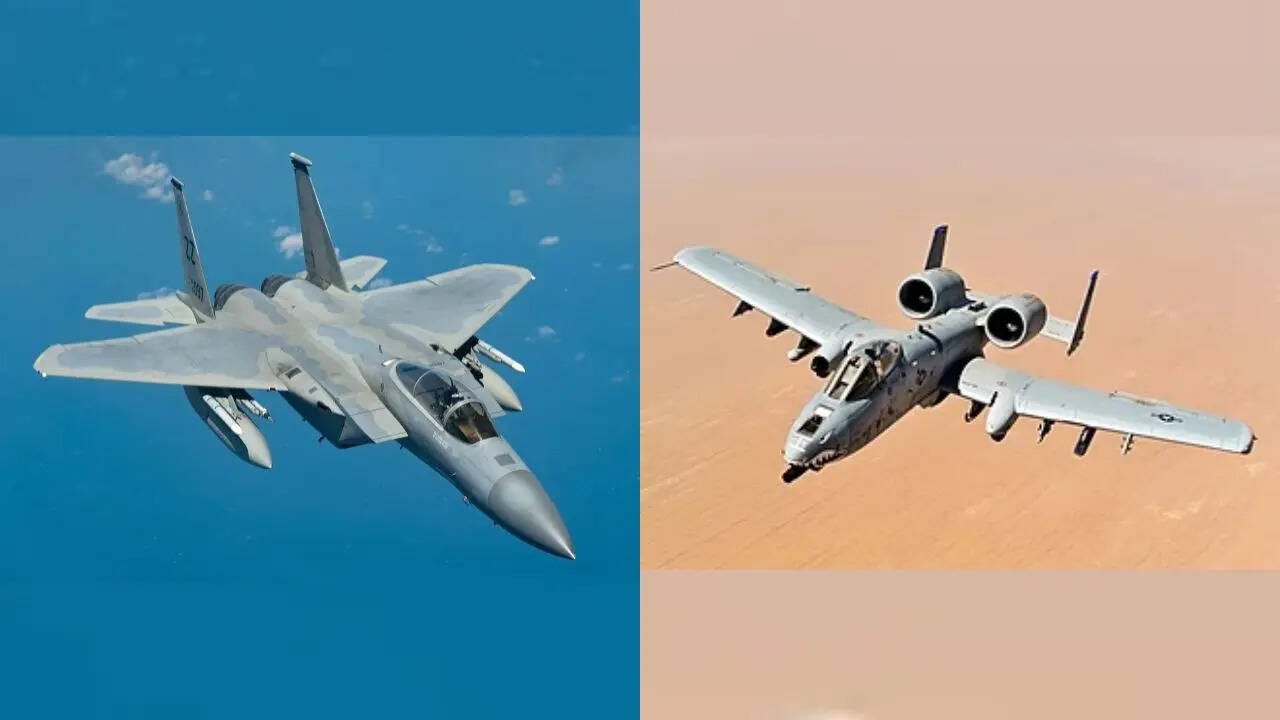
On April 3, 2026, an F-15E Strike Eagle from the 494th Fighter Squadron, 48th Fighter Wing, based at RAF Lakenheath, was shot down over Iran — the first manned American aircraft lost over Iranian territory during the operation. Initial Iranian state media claimed the aircraft was an F-35 Lightning II, but debris photographs showed features inconsistent with the F-35A and consistent with an F-15E. The Pentagon did not officially confirm the loss, stating all US fighter aircraft were accounted for.
A frantic combat search-and-rescue operation was launched for the two crew members. Two HH-60W Jolly Green II helicopters came under Iranian fire during the operation; all crew members were reported safe, though several sustained wounds from small arms fire. One crew member — the Weapon Systems Officer — was eventually recovered by US Special Operations forces deep inside Iranian territory. The rescue involved firefights with Iranian forces and the destruction of two MC-130J Commando II transport aircraft and MH-6 Little Bird helicopters at a forward arming and refuelling point in Isfahan province, to prevent their seizure. The second crew member’s fate remained unknown as of the latest reports.
Also on April 3, an A-10 Thunderbolt II providing top cover for the CSAR mission crashed near the Strait of Hormuz; its pilot was safely recovered. A-10s from the 127th Wing, Michigan Air National Guard — twelve of which arrived at RAF Lakenheath on March 30 — were active throughout the operation, conducting maritime interdiction against Iranian naval vessels and fast-attack watercraft in the Strait of Hormuz, strafing runs over Iranian-backed positions at Mosul, and combat search-and-rescue support.
Other losses during Operation Epic Fury included a USAF E-3G airborne warning and control aircraft destroyed, multiple KC-135 Stratotankers damaged, several MQ-9 Reapers lost, and an Iranian F-5 fighter reportedly breaching American air defences to bomb Camp Buehring in Kuwait. Iran additionally claimed to have struck more than 100 targets across 11 bases in seven countries. Total US casualties stood at 13 service members killed and over 300 wounded. A U-2 Dragon Lady, approaching the end of its service life, was also noted as having flown intelligence missions in support of the operation before the type’s planned retirement in 2027.
F-15C canopy blows off at 21,000 feet during California rodeo flyover
A USAF F-15C pilot from the 144th Fighter Wing safely landed at Fresno Air National Guard Base after the aircraft’s canopy detached at 21,000 feet during a flyover for the Clovis Rodeo. The incident took place on a Saturday afternoon over military training airspace in the Sierra Nevada mountains. The pilot declared an emergency and landed without further incident. Emergency personnel evaluated the pilot on the ground; no injuries were reported among the ground crew.
Retired USAF Colonel Rob Swertfager noted that canopy malfunctions of this kind are exceptionally rare and carry serious risks at high speeds and altitudes. An investigation was opened, with details withheld to preserve its integrity.
End of an era: the last A-10 Warthog student pilots graduate
In April 2026, the final class of A-10 Thunderbolt II student pilots graduated at Davis-Monthan Air Force Base in Arizona, bringing to a close the base’s decades-long role as the Air Force’s sole A-10 pilot training hub. The 357th Fighter Squadron — known as the “Dragons” — trained the class in battlefield surveillance, reconnaissance, and close air support before the programme’s conclusion. The base marked the occasion on social media with the post “The Last Dragons.”
The A-10 Thunderbolt II, colloquially the Warthog, excelled in low-altitude, low-speed manoeuvring; could loiter over battle areas for extended periods; and was capable of operating from austere, forward-positioned airstrips. Congress had previously blocked repeated USAF attempts to retire the type, mandating a minimum inventory of 103 aircraft through September 2026. As the fleet is progressively divested, the A-10 leaves behind a formidable operational record — most recently demonstrated in Operation Epic Fury. The T-1A Jayhawk trainer, a fixture at Columbus Air Force Base for more than thirty years, was also retired during this period, as the Air Force transitions to a modernised training curriculum.
A-10 receives probe-and-drogue refuelling capability for the first time
In a development that expanded operational flexibility during the Warthog’s final years of service, the Air National Guard and Air Force Reserve Command Test Center successfully delivered a probe-and-drogue refuelling adapter for the A-10 Thunderbolt II, with the first in-flight refuelling mission taking place on April 2, 2026. The adapter converts the aircraft from its standard boom refuelling configuration to a drogue-compatible system, enabling it to take fuel from C-130 tankers — aircraft whose airspeeds and altitude envelopes are far more compatible with A-10 operations than conventional boom-equipped tankers. The capability was delivered rapidly through a multi-organisation effort involving industry partners, the A-10 System Program Office, and accelerated support from Luke Air Force Base, in response to an urgent combatant command requirement that had emerged from limited aerial refuelling options available to mission planners.
USAF F-35As refuel from Chilean KC-135 in historic first
In April 2026, USAF F-35A Lightning II aircraft and Chilean Air Force KC-135 Stratotankers completed the first-ever air-to-air refuelling mission between the two countries’ assets, en route to the Feria Internacional del Aire y del Espacio 2026 (FIDAE) air show in Chile — the largest aviation trade show in Latin America. The mission was characterised as a “target of opportunity” by the USAF F-35A Demonstration Team, and was made possible by Chilean KC-135Es delivered through the US foreign military sales programme. Officials described the event as a demonstration of advanced interoperability and the ability to operate seamlessly across the Western Hemisphere.
KC-135 tankers pulled from long-term storage amid operational losses
Urgency around tanker fleet readiness prompted the transfer of retired KC-135 Stratotankers from long-term storage at Davis-Monthan Air Force Base to Tinker AFB in April 2026 for potential return to service. Two aircraft were relocated — one of which (serial 58–0018) was already back in active service, the other (serial 58–0011) having been retired the previous year. The move was driven in part by damage sustained by multiple KC-135s during Operation Epic Fury. The KC-135, now approaching seventy years in service, remains essential to USAF global reach; its planned successor, the KC-46 Pegasus, has faced delays that have extended the Stratotanker’s operational life.
The US Army officially names the MV-75 the “Cheyenne II”
The US Army officially designated the MV-75 tiltrotor aircraft the Cheyenne II in April 2026, honouring the heritage of the Cheyenne Tribes. Based on Bell Textron’s V-280 Valor platform, the Cheyenne II is designed to replace a portion of the H-60 Black Hawk fleet and enter service by 2028. The aircraft offers improved flight performance, enhanced mission equipment, and easier field maintenance compared to the rotorcraft it will supplement, and is intended to provide a significant leap forward in US Army multi-domain overmatch capability.
F-16 rapidly integrated with new Family of Affordable Mass Munitions weapon
The F-16 Fighting Falcon was rapidly integrated with the Family of Affordable Mass Munitions — Lugged (FAMM-L) weapon at Eglin Air Force Base, in a test series that covered fit and functionality checks, loading procedure validation, and flight compatibility. The aircraft successfully carried and released the FAMM-L. The FAMM programme is a Pentagon-wide initiative designed to shift the US arsenal away from high-cost, low-quantity precision munitions towards a large-scale, cost-effective weapons inventory. Separately, Beehive Industries was awarded a $29.7 million contract to complete vehicle integration, flight testing, and qualification of its Frenzy 8 engine as part of related propulsion development work.
US Navy completes first organic F/A-18 Super Hornet Block III upgrade
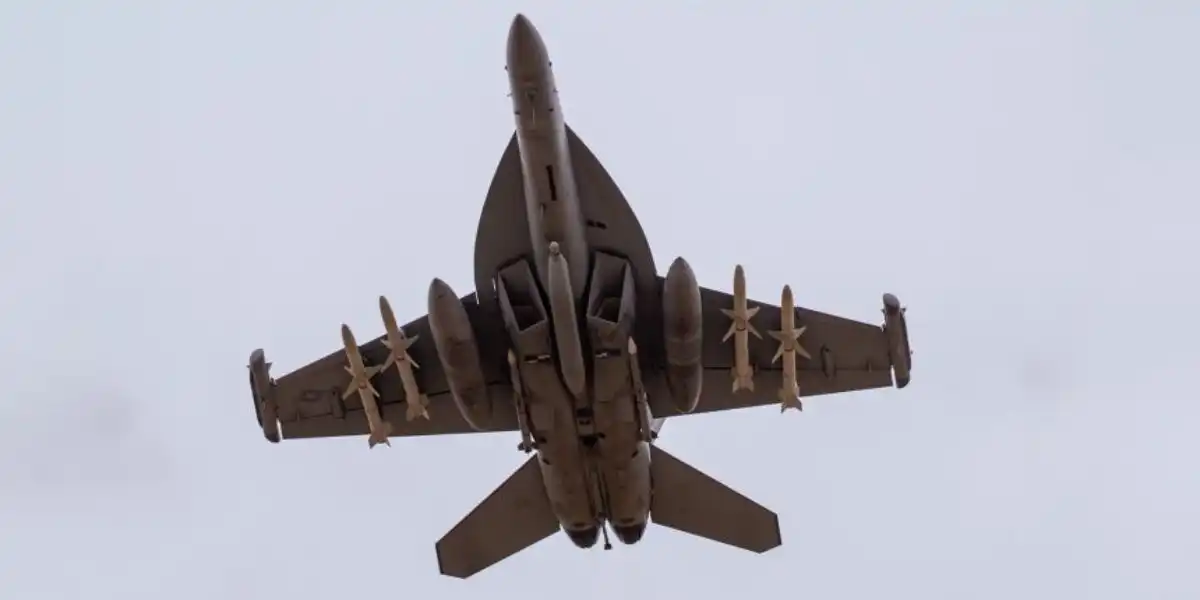
The US Navy reached a significant readiness milestone with the completion of its first fully in-house F/A-18 Super Hornet Block III Service Life Modification. Executed entirely by Navy military artisans and engineers at Fleet Readiness Center Southwest, the Block III upgrade is the most advanced phase of the Super Hornet’s modernisation effort. It encompasses an Advanced Cockpit System with a new large-area display, comprehensive avionics suite updates, enhanced networking capability, and electrical system modernisation. The work involves gutting the cockpit and rebuilding it with modern systems, and is designed to keep the aircraft’s mission systems tactically relevant into the 2040s as a core component of the carrier air wing.
MQ-25A Stingray completes its first US Navy test flight
On April 25, 2026, the Boeing MQ-25A Stingray completed its first test flight under US Navy oversight, taking off from Boeing’s facility in Illinois and flying for approximately two hours. Naval and Boeing pilots controlled the aircraft using ground control station software, executing a predetermined mission plan that validated basic flight controls, engine performance, and handling characteristics. The flight was controlled via Lockheed Martin’s MDCX software, the backbone of the Navy’s Unmanned Carrier Aviation Mission Control System. The Stingray’s primary mission will be autonomous aerial refuelling to extend the range of carrier air wings, freeing F/A-18 Super Hornets from the tanking role.
RAF Lakenheath commemorates Operation El Dorado Canyon’s 40th anniversary
The US Air Force unveiled a special commemorative F-15E tail flash at RAF Lakenheath to mark the 40th anniversary of Operation El Dorado Canyon, the April 1986 strikes against Libya conducted in response to terrorist attacks linked to Muammar Gaddafi’s regime — including the bombing of a West Berlin discotheque that killed two US servicemen. On April 15, 1986, USAF and US Navy aircraft struck five targets across Libya in a mission codenamed KARMA 52. One F-111 was lost. The commemorative tail art serves as a symbol of the Air Force’s enduring capacity to project lethal airpower globally on short notice.
South Korean F-15K collision: audit report released five years on
An audit report released in 2026 revisited a 2021 mid-air collision between two Republic of Korea Air Force F-15K Slam Eagle fighter-bombers during a formation flight near Daegu, which caused approximately $600,000 in damage. The report attributed the incident to unauthorised, unplanned manoeuvres conducted by the pilots for personal filming purposes. The ROKAF was criticised for lax controls on in-flight filming at the time, and the wingman — deemed primarily responsible — was ordered to repay a portion of the repair costs. Following the incident, the ROKAF tightened flight safety regulations. The F-15K Slam Eagle, a variant of the F-15E Strike Eagle, has been operated by South Korea since 2005 and is planned to remain in service through 2040.
Peru selects F-16 Block 70 to modernise its fighter fleet
Peru announced the purchase of 12 F-16 Block 70 fighters from Lockheed Martin, marking a significant step in the modernisation of its air force. The Block 70 is the most advanced F-16 variant produced, featuring an Active Electronically Scanned Array radar, a new avionics architecture, and structural upgrades extending the airframe’s service life. Sweden had also submitted a competing proposal to sell up to 12 JAS 39 E/F Gripen aircraft through Saab, a platform with potential cost advantages owing to Brazil’s existing South American Gripen operations. The F-16 Block 70/72 is expected to be flown by at least five countries from the mid-2020s onwards.
Top Gun 3 confirmed, with Cruise opposing AI recreation of Iceman
Paramount confirmed development of Top Gun 3, reuniting Tom Cruise and producer Jerry Bruckheimer for a scripted continuation of the franchise. The confirmation followed the enormous commercial success of Top Gun: Maverick (2022), which grossed nearly $1.5 billion globally and won an Academy Award for Best Sound. Cruise has reportedly opposed any use of artificial intelligence to recreate the character Iceman, originated by Val Kilmer, who passed away in 2025, arguing it would undermine Kilmer’s emotional farewell in the preceding film. Possible storylines reportedly under consideration include Maverick defending the case for human pilots against AI-controlled drones, and Pete “Rooster” Mitchell stepping into a leadership role.
Spitfire K5054 takes to the skies with RAF aircraft to mark 90 years since first flight
A historic tour organised by SPITFIRES.COM marked 90 years since the first flight of the Supermarine Spitfire, with the iconic prototype K5054 flying in formation alongside a range of RAF aircraft. On April 7, 2026, K5054 flew with an RAF F-35 Lightning II, a BBMF C-47 Dakota, and a Spitfire Mk V from Southampton Airport in the tour’s opening sortie. Subsequent flights featured encounters with F-35 Lightning IIs, the Red Arrows, a P-8 Poseidon, Typhoons, the Hawk T2, and an A400M, among others. The Spitfire first flew on March 5, 1936; test pilot Joseph “Mutt” Summers is said to have requested no changes after its eight-minute inaugural flight. The tour raised funds for charities supporting aviation and RAF personnel.
Polish F-16s star in Exercise Cobra Warrior 2026 at the Mach Loop
Exercise Cobra Warrior 2026 brought together aircrews from the United Kingdom, Germany, and Poland for advanced multinational warfighting training, with Polish F-16 Fighting Falcons and Eurofighter Typhoons — captured on film at the famous Mach Loop by photographer Dafydd Phillips — among the most visually striking participants. Billed as the Royal Air Force’s most advanced tactical air exercise, Cobra Warrior followed Exercise Agile Warrior 2026, which focused on dispersed airbase operations. UK Typhoons, F-35Bs, and Air Mobility Force aircraft operated alongside German and Polish assets, with NATO E-3A and USAF E-3G aircraft providing airborne command and control for complex composite air operations.
Artemis II: four astronauts complete first crewed lunar flyby in over 50 years
NASA’s Artemis II mission launched from Kennedy Space Center on April 1, 2026, carrying four astronauts aboard the Orion spacecraft atop the Space Launch System rocket — the first crewed lunar flyby in more than half a century. The approximately ten-day mission demonstrated Orion’s life support systems with crew aboard for the first time, and provided a foundation for establishing a sustained presence on the Moon ahead of future crewed missions to Mars. After a multi-hour lunar flyby on April 6, the crew returned to Earth, splashing down in the Pacific Ocean. The SLS core stage was manufactured by Boeing; the Orion spacecraft by Lockheed Martin.
Chinese student jailed for photographing Offutt Air Force Base
Tianrui Liang — a Chinese national studying aeronautical engineering at the University of Glasgow — was jailed after being found guilty of unauthorised photography at Offutt Air Force Base in Nebraska, home of US Strategic Command. Liang had photographed aircraft, including Boeing RC-135 surveillance planes and E-4B “Doomsday” command aircraft, without permission. He was arrested at JFK Airport in New York and charged under Title 18 of the US Code. FBI investigators established that Liang had driven across the US border from Canada to conduct the photography, acting on instructions from a planespotting website. Liang was initially released on bail before being returned to custody on flight-risk grounds. He had entered the United States on a B1/B2 visa. A co-conspirator remained under investigation, and the full investigative report was withheld accordingly.
Read more interesting stories on the Aviation Wings blog…
메타데이터
- post_id
- 7f9d2c1841a9
- slug
- wings-wars-milestones-7f9d2c1841a9
- url
- https://medium.com/@aviat.wings/wings-wars-milestones-7f9d2c1841a9
- canonical_url
- https://medium.com/@aviat.wings/wings-wars-milestones-7f9d2c1841a9
- author_url
- https://medium.com/@aviat.wings
- status
- ok
- fetched_at
- 2026-06-21 20:33:08