The Dopamine Hijack: Why Willpower Is the Wrong Framework for Quitting Smoking
We have spent fifty years telling smokers to try harder. Neuroscience has been telling us, for just as long, exactly why that doesn’t work…
The Dopamine Hijack: Why Willpower Is the Wrong Framework for Quitting Smoking
We have spent fifty years telling smokers to try harder. Neuroscience has been telling us, for just as long, exactly why that doesn’t work. It’s time to listen.
The Dopamine Hijack: Why Willpower Is the Wrong Framework for Quitting Smoking.
Smokers are told to “try harder” to quit smoking.
That gap between what the science shows and what is actually being done is the most expensive gap in medicine. It costs us in relapse rates, in patient shame, in clinical nihilism, and ultimately in lives. Smoking remains the leading preventable cause of death globally. We have had the neurobiological explanation for why cessation is so difficult for decades. We have simply chosen, institutionally, not to let it change how we talk to smokers.
This piece is an attempt to close that gap, at least conceptually, by laying out what the neuroscience actually says, what it means for treatment, and why the willpower framework is not just ineffective but neurologically incoherent.
Nicotine Does Not Create a Habit. It Rewires a Reward System.
The popular model of smoking addiction frames it as a strong habit, a deeply ingrained behavior that requires sufficient motivation and discipline to overcome. This model is wrong, and its wrongness has consequences.
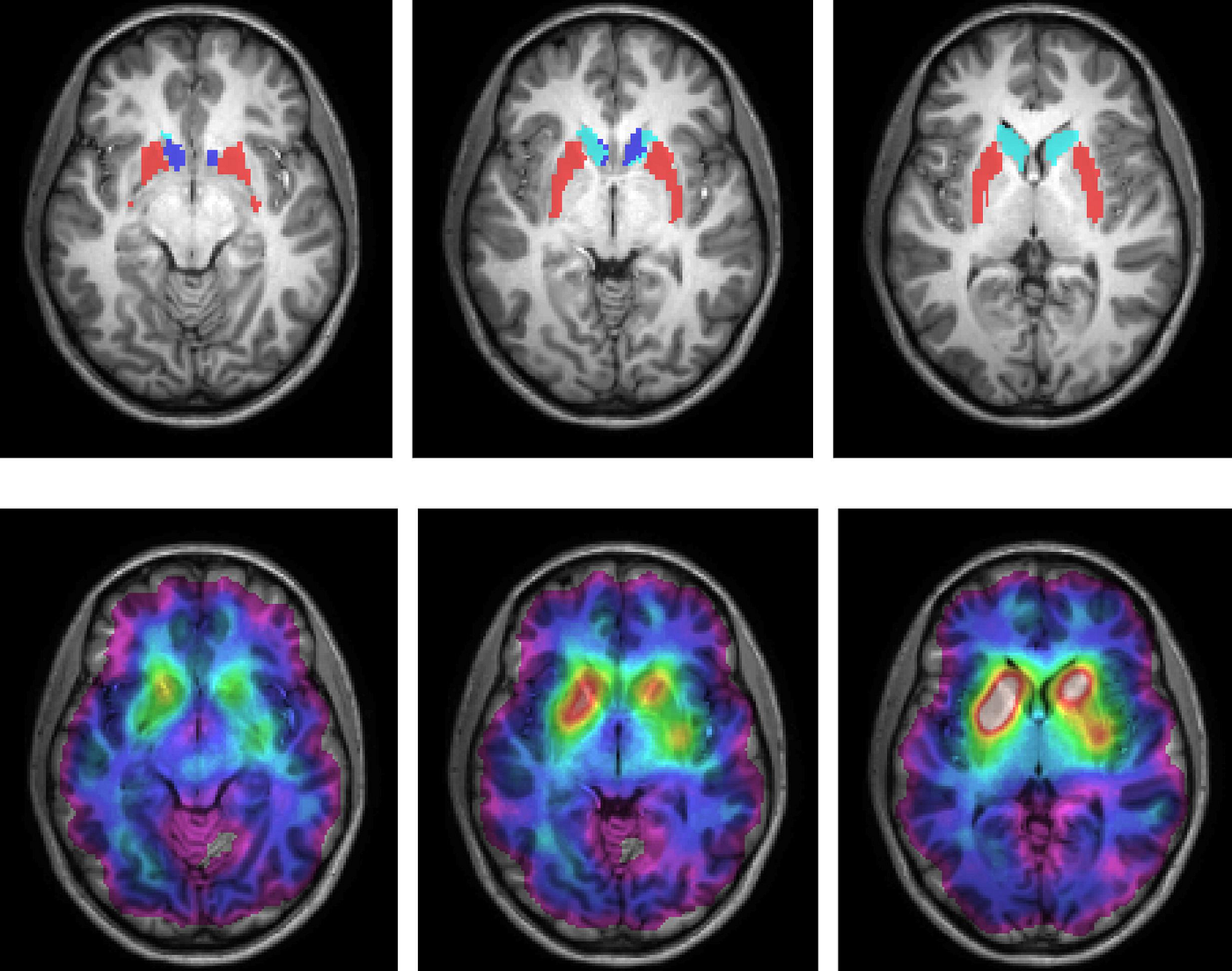
Within seconds of inhalation, nicotine crosses the blood-brain barrier and binds to nicotinic acetylcholine receptors in the ventral tegmental area, triggering a dopamine release into the nucleus accumbens at concentrations the brain was not designed to sustain naturally. This is not a gentle nudge to the reward system. It is a pharmacological override producing a dopamine signal roughly two to three times larger than any natural reward stimulus.
The brain is adaptive. It responds to this chronic overstimulation by downregulating dopamine receptor density and reducing baseline dopaminergic tone. Over months and years of regular smoking, the reward system recalibrates around nicotine as its primary input. The smoker is no longer smoking to feel pleasure. They are smoking to restore a neurochemical baseline that nicotine itself has redefined as normal.
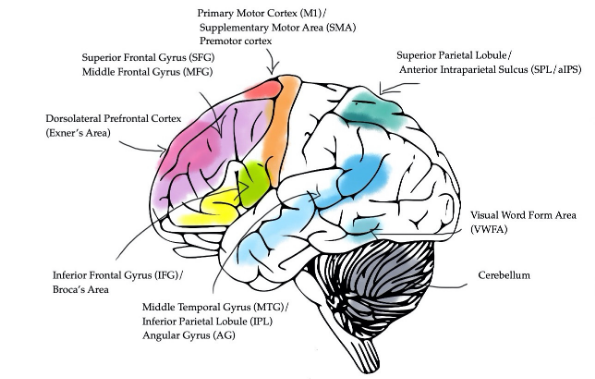
This is the mechanism that makes willpower the wrong tool. Willpower, whatever we mean by it clinically, is a cognitive resource. It operates in the prefrontal cortex. It can override impulse, delay gratification, and sustain effortful behavior toward a goal. What it cannot do is override a recalibrated homeostatic system operating at the level of basic neurochemical regulation. Asking a long-term smoker to quit through willpower alone is asking a cognitive process to correct a subcortical physiological state. The levels are not communicating on equal terms.
This is not weakness. This is neurobiology. The distinction matters enormously, for how patients understand their own experience, for how clinicians frame treatment, and for whether shame enters the therapeutic relationship or stays out of it.
The Brain Region Responsible for Self-Control Is Among the Most Affected
The anterior cingulate cortex sits at the intersection of cognitive and emotional processing. It is centrally involved in impulse inhibition, conflict monitoring, and the executive override of automatic responses, the precise functions we invoke when we ask someone to resist a craving.
It is also among the brain regions most measurably affected by chronic nicotine exposure.
Structural neuroimaging studies published from the early 2000s onward have documented consistent reductions in grey matter volume in the anterior cingulate cortex of long-term smokers compared to non-smokers. Functional imaging studies show blunted activation in this region during tasks requiring inhibitory control. The evidence is not preliminary or contested, it is a well-replicated finding that has been available to the clinical community for over twenty years.
The implication is direct and damaging to the willpower framework: we are asking patients to use a compromised tool to perform the function that tool is specifically designed for. The instrument of self-regulation has been structurally altered by the very substance we are asking patients to regulate their response to.
This does not mean quitting is impossible, it demonstrably is not. It means that the cognitive resource we keep pointing patients toward as their primary mechanism of change has been structurally undermined by their addiction. Acknowledging this should not produce fatalism. It should produce a different treatment model, one that supports and supplements the cingulate function rather than assuming it is intact and operating at full capacity.
We do not tell patients with Parkinson’s disease to willpower their way through dopamine depletion. We treat the underlying neurochemistry. Smoking cessation deserves the same intellectual honesty.
Cue-Reactivity, Not Craving, Is What Drives Relapse
The dominant lay model of relapse centers on craving, the conscious desire for a cigarette becoming too strong to resist. This model feels intuitively correct. It is also, as a mechanistic explanation, largely wrong.
The most robust neurobiological predictor of relapse is cue-reactivity: the automatic dopaminergic response triggered by environmental stimuli associated with smoking, occurring before conscious awareness and certainly before any deliberate decision-making process is engaged.
The office doorway at the end of a meeting. The first cup of morning coffee. The sensation of finishing a meal. The smell of a particular place. These stimuli, through classical conditioning over years of paired exposure with nicotine administration, have acquired the capacity to trigger anticipatory dopamine release- a neurological preparation for reward that manifests phenomenologically as craving, but is mechanistically a conditioned reflex.
By the time a patient is consciously aware they want a cigarette, a cascade of neurochemical events has already occurred that willpower is being asked to reverse, not prevent. The horse, as it were, has already left. Willpower is being deployed at the wrong point in the sequence.
This understanding, which the addiction neuroscience literature has supported for at least two decades, should have fundamentally reshaped cessation counseling. In most clinical settings it has not. We still counsel patients to resist cravings rather than to restructure their cue environment, extinguish conditioned responses through systematic exposure, and build behavioral repertoires for the specific moments, not the general state, where neurological automaticity is most likely to override conscious intention.
The intervention point is not the craving. It is the cue. Treating craving with motivational language while leaving the cue environment intact is treating the symptom and ignoring the cause.
Every Tool That Works Bypasses the Willpower Framework Entirely
This is perhaps the most telling piece of evidence against the willpower model: examine the mechanism of action of every pharmacological and behavioral intervention with robust cessation evidence, and you will find that none of them work by enhancing willpower. Every one of them works by acting on the neurobiology directly.
Behavioral interventions with the strongest evidence, cue exposure therapy, acceptance and commitment therapy applied to craving, implementation intentions paired with cue identification work because they target the conditioned response and the cue-reactivity mechanism directly. They retrain the automatic response, restructure the cue environment, and build specific behavioral strategies for specific high-risk moments. They do not work by increasing general motivation or willpower.
The pattern is unambiguous: the treatments that work are the ones that take the neurobiology seriously. The treatment framework that doesn’t work, and that we keep defaulting to is the one that ignores it.
What This Means for Practice
Retiring the willpower framework is not merely a conceptual exercise. It has direct clinical implications that should change how cessation is discussed, delivered, and measured.
It means that the language we use in consultations matters. Framing cessation as a test of character or motivation even implicitly activates shame, and shame is a well-documented predictor of relapse, not recovery. Framing it as a neurobiological process being actively managed, with tools that work at the level of the neurobiology, changes the patient’s relationship to their own experience of difficulty.
It means that relapse should be documented and communicated as a neurological event, not a motivational failure. The cue fired. The conditioned response was stronger than the inhibitory signal at that moment. What cue? What context? What can we modify? These are the productive clinical questions. “You need to want it more” is not.
It means that combination pharmacotherapy should be the default offer, not the escalation option for patients who have already failed behavioral approaches. The neurobiological case for starting with the most effective tools, not the least interventionist ones, is strong.
And it means that cue mapping systematically identifying the specific environmental triggers, times of day, emotional states, and social contexts where automaticity is highest, should be a standard component of cessation support, not an optional addition for specialist services.
None of this is new knowledge. All of it sits in the literature, waiting for clinical practice to catch up.
The Cost of Getting This Wrong
Every year we keep the willpower framework at the center of cessation practice, we do three things simultaneously.
We make it harder for patients to sustain the effort to quit, because we are directing them toward a resource that is structurally compromised and mechanistically mismatched to the problem.
We make it more likely they will internalize relapse as personal failure, deepening the shame and demoralization that predicts future quit attempts being delayed or abandoned.
And we communicate, however unintentionally, that the science of addiction has not reached the consultation room which erodes exactly the kind of patient trust in clinical guidance that cessation support depends on.
The neuroscience has been available for a long time. The gap is not in the evidence. The gap is in the willingness of clinical culture to let evidence displace a moral framework that has been embedded in how we talk about smoking since long before the neurobiology was understood.
Willpower is a moral concept dressed in clinical clothing. It locates the problem in the patient’s character. The neuroscience locates it in a pharmacologically altered reward system operating in a cue-saturated environment without adequate neurobiological support.
One of these frameworks produces better outcomes. One of them produces shame.
We know which is which. The question is what we are going to do about it.
If you work in addiction medicine, neuroscience, psychiatry, or primary care-what would change in your practice if willpower was formally retired as a clinical concept? And what would we replace it with? I am genuinely interested in the answers from people working at the coalface of this problem, because the distance between what the research says and what happens in consultations is one of the most important gaps in medicine right now.
메타데이터
- post_id
- 7fa166b18ae3
- slug
- the-dopamine-hijack-why-willpower-is-the-wrong-framework-for-quitting-smoking-7fa166b18ae3
- url
- https://medium.com/@cignix/the-dopamine-hijack-why-willpower-is-the-wrong-framework-for-quitting-smoking-7fa166b18ae3
- canonical_url
- https://medium.com/@cignix/the-dopamine-hijack-why-willpower-is-the-wrong-framework-for-quitting-smoking-7fa166b18ae3
- author_url
- https://medium.com/@cignix
- status
- ok
- fetched_at
- 2026-06-11 05:11:55