The Microbiota-Gut-Brain Axis: Mechanisms, Dysbiosis, and Neurological Consequences
The Gut-Brain Axis and Its Role in Neurological Disease
The Microbiota-Gut-Brain Axis: Mechanisms, Dysbiosis, and Neurological Consequences
The Gut-Brain Axis and Its Role in Neurological Disease
Doctors used to treat the brain and stomach as separate organs. There was only one person in charge of meals. The other was focused on concepts. Definitely, it’s close by. However, they were not really communicating.
That old idea? Gone. Completely upended. Turns out, these two are deep in chat all the time—back and forth, influencing everything. And if that link falters, watch out. Problems don’t stay in the belly. They creep right into how you think, reshaping the whole mental setup. It's quite remarkable when you pause to reflect on it.
From what I’ve seen in the field, this setup is known as the “gut-brain axis,” or GBA for short. Clinicians dealing with brain disorders can’t ignore it anymore. Thing is, it’s becoming a must-know. Essential, really.
What’s the Gut-Brain Axis?
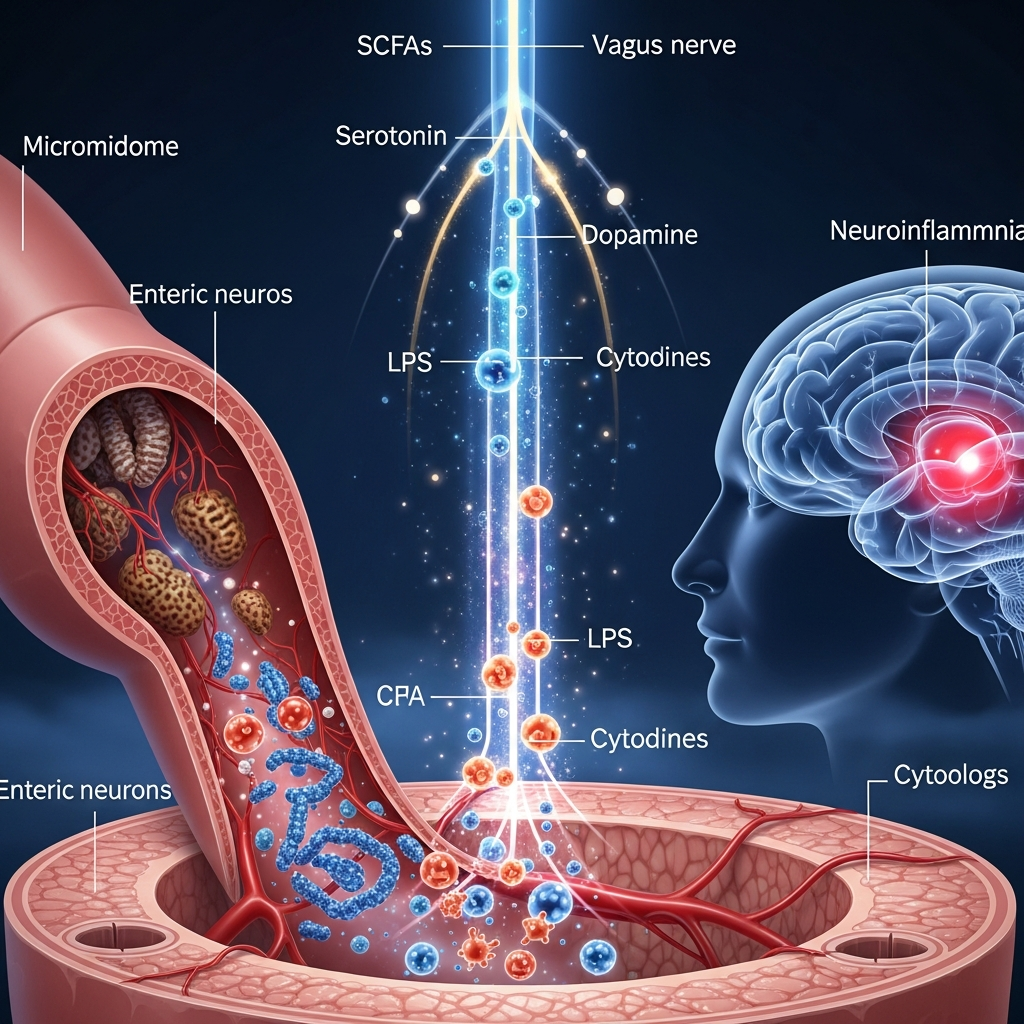
The gut-brain axis is a two-way communication pathway that connects the digestive system with the central nervous system (CNS). This complex network comprises several key components that facilitate constant interactions between the gut and the brain. At its anatomical core lies the enteric nervous system (ENS), often referred to as the “second brain,” embedded within the walls of the gastrointestinal tract and containing over 500 million neurons that function independently to regulate gastrointestinal motility, secretion, and blood flow. The vagus nerve, a crucial component of the parasympathetic nervous system, serves as a direct neural pathway between the gut and the brain, transmitting signals bidirectionally.
The Chemistry of Gut-Brain Communication
What strikes me the most from the most recent investigations is the crazy chemical exchange between the stomach and the brain.
Those trillions of microbes down there churn out serotonin and dopamine, the very chemicals that tweak our emotions, keep moods steady, and sharpen how we think. Pretty wild, right? Turns out these compounds hit the brain with real force. When the gut bacteria become imbalanced, it disrupts the entire system. This leads to symptoms such as racing anxiety, muddled thoughts, or debilitating depression. From what I’ve seen in practice, it’s not some vague link; the imbalance straight-up stirs up those issues.
Folks often overlook how gut bacteria crank out these short-chain fatty acids. Acetate, butyrate, and propionate—that's the main trio. They result from the breakdown of fiber in your intestines without oxygen. What stands out to me is their job linking the gut to the brain. They help keep the blood-brain barrier solid, especially when things go wrong health-wise. It turns out that these acids slip right across that barrier and into the brain. There, they mess with metabolism in ways that could slow down Alzheimer’s or Parkinson’s. These findings are quite significant, in my opinion. Based on the studies I’ve read, it’s difficult to grasp, yet the connections appear to be genuine.
Butyrate, the most extensively studied SCFA, demonstrates neuroprotective properties by enhancing blood-brain barrier integrity, reducing pro-inflammatory cytokine production (IL-6 and TNF-α), and promoting the expression of neurotrophic factors like BDNF. Clinical studies show that patients with Alzheimer's and Parkinson's disease have much lower levels of butyrate in their stool compared to healthy people of the same age, which is linked to worsening thinking skills and more severe movement problems. This is not merely a correlation. It demonstrates that the bacteria in our gut directly influence the fate of brain cells.
Short-chain fatty acids, which gut probiotics produce by breaking down fibers in your food, play a sneaky role in how your brain works. They tweak things through a few routes — neurotransmitters, hormones, dialing down brain inflammation, messing with the blood-brain barrier’s tightness, and even flipping epigenetic switches.
What catches my eye is how they boost serotonin, making and moving it around. Levels of GABA and glutamate go up, too. And here’s the kicker. These acids latch onto receptors in those enteroendocrine cells lining the gut. That triggers a dump of GLP-1 and PYY right into your bloodstream. From there, the signals zip up to the brain, kind of like a direct line from your belly to your head. Turns out, your gut’s got more pull on your thoughts than you’d guess.
When the Axis Breaks: Dysbiosis and Neurological Disease
A healthy gut microbiome keeps the brain working right. Disrupt that balance, though, and you end up with problems like foggy thinking, wild mood swings, or straight-up brain inflammation.
Dysbiosis—that's the term for when the microbes go out of whack—hits hard down the line.
The gut-brain link gets thrown off, feeding into all sorts of troubles: things like Parkinson’s or Alzheimer’s, inflammatory brain conditions, developmental glitches in kids, stroke risks, and even seizures. From my observations, the root causes of these issues include inflammation, alterations in neurotransmitter levels, accumulation of oxidative damage, and the onset of blood-brain barrier leakage. It’s not straightforward, but the ties run deep.
Actually, it’s rather simple. When the stomach becomes out of balance, a process known as dysbiosis occurs, resulting in a fall in short-chain fatty acids, which triggers a terrible chain reaction. The barrier in your gut deteriorates quickly, allowing substances such as LPS from germs and amyloid fragments to enter your system. It sets off alarms via TLR4, leading to severe oxidative damage and inflammation in the brain, which leads neuron proteins to misfold.
Gut problems crank up that leakiness even more. Bacterial junk crosses more easily, raising cytokine levels throughout the body. This condition also significantly impacts the blood-brain barrier, leading to an unexpected increase in brain damage.
This pathway directly connects leaky gut to brain damage. It becomes evident during the most severe neurological disorders that doctors encounter, the ones that cause significant harm to individuals.
Parkinson’s Disease: A Disease That May Begin in the Gut
Parkinson’s really grabs your attention among all those brain disorders tied to the gut connection. The most recent research suggests that the entire process may begin in the bowels, where gastrointestinal problems emerge long before anyone notices the unsteady motions or tight muscles.
And constipation? That’s a big one early on. It shows up as one of the top warning signs, staying for years — heck, even decades — ahead of the usual motor troubles.
One of the most fascinating aspects of Parkinson’s disease for me is how alpha-synuclein aggregates first emerge in the stomach. The fundamental feature of the illness is the aggregation of these proteins in Lewy bodies inside dopamine-producing cells in the substantia nigra. They are almost destroyed over time.
But here’s the intriguing part. In the early warning stage, before anything hits the brain hard, those same aggregates can be found in the enteric nervous system—right there in the intestines. From what I’ve read, they travel up to the brain along the vagus nerve. Animal studies have shown this straight up, with the proteins migrating that route. And then there’s the indirect proof: people who’ve had their vagus nerve cut, like in old ulcer surgeries, seem to have a lower chance of getting PD later on. Almost makes you wonder about the whole body-brain link, doesn’t it?
When your gut microbiome becomes imbalanced, it increases the production of harmful byproducts that significantly impact the brain and exacerbate Parkinson’s symptoms.
The intriguing part? Those byproducts mess with your gut lining, turning it leaky so toxins slip right into your blood and spark inflammation in the nervous system. Based on my research, inflammation begins to erode the blood-brain barrier. And once that’s compromised, alpha-synuclein proteins start piling up inside the brain, which only fuels the whole PD mess.
The link is clear: E. coli and its kin produce curli proteins. These proteins function as molecular decoys, exacerbating a clumping of alpha-synuclein. This directly connects gut bacteria to the fundamental issues at the heart of the disease.
People with Parkinson’s disease often have an imbalance in their gut microbes. Fewer of the beneficial types that produce butyrate and other short-chain fatty acids—think Prevotellaceae, Lachnospiraceae, and the Faecalibacterium genus. At the same time, Ralstonia becomes more common, which causes inflammation. My research indicates that this bacterium disrupts the stomach’s protective functions, leading to problems. This situation then sets the stage for future brain cell injury.
Alzheimer’s Disease and the Microbiome
Alzheimer’s hits the gut bacteria hard, too. Patients end up with less variety in their microbiome overall. And certain bugs like Bifidobacterium and Lactobacillus shift around in weird ways.
According to the study, this imbalance disrupts the body’s acid-processing mechanism. It also reduces serotonin production. Then there’s stuff like TMAO that these microbes crank out, which seeps into the brain somehow. The blood-brain barrier weakens, given it. The nervous system also gets a boost in inflammation. Scary when you connect the dots like that.
Certain gut bacteria are particularly important in Alzheimer’s research because they cause amyloid clumps and brain swelling.
What intrigues me is the possibility that the microbiome isn’t merely present during amyloid problems but could actually be contributing to their progression. Take those amyloid bits from bacteria right in your intestines. They activate the immune system, so when the brain produces its own neuronal amyloid, the response is stronger. This essentially initiates a cascade of events.
And here’s the frustrating part. All of the trials over the last few decades have focused on amyloid-beta and tau proteins. They flopped. Current meds barely nudge cognition and do nothing to slow the disease down.
So now folks are scrambling for options that hit several paths at once. The gut-brain link fits that bill perfectly—from what I’ve seen, it’s a smart spot to target. Turns out the body’s wiring runs deeper than we thought.
Beyond Neurodegeneration: Multiple Sclerosis, ALS, and Autism
The reach of the gut-brain axis extends well beyond Alzheimer’s and Parkinson’s disease. Epidemiological data suggest that individuals with inflammatory bowel disease (IBD) have an increased risk of developing neurological conditions such as multiple sclerosis (MS) and depression, indicating a potential shared pathophysiology. The incidence of autism spectrum disorders (ASD) has been linked to early-life gut microbiota perturbations, with numerous patients with ASD exhibiting gastrointestinal symptoms and altered microbial communities.
In amyotrophic lateral sclerosis (ALS), dysbiosis disrupts the gut-brain axis, leading to increased intestinal permeability, neuroinflammation, and excitotoxicity. Reductions in butyrate-producing bacteria, alterations in microbial metabolites, and enhanced NLRP3 inflammasome activation have been observed in patients with ALS. These alterations may occur before motor symptoms, indicating a possible causative influence. As gut dysbiosis may precede neurological manifestations in ALS, microbiota-targeted therapies offer a novel and potentially flexible treatment approach.
The pattern is consistent across conditions: a disrupted gut microbiome creates systemic and central inflammation, compromises the blood-brain barrier, and accelerates the very pathological processes that drive neurological disease.
Therapeutic Implications: Rewriting the Treatment Paradigm
If the gut causes neurological problems, it may indicate a solution. Isn’t this a rather straightforward concept?
What really grabs me about this study is fecal microbiota transplantation, or FMT for short. It’s this hands-on treatment that removes gut bacteria and rebuilds balance. Turns out, that shift hits the brain too, dialing down inflammation and those slow-burning nerve breakdowns.
Take Parkinson’s. From what I’ve seen in the studies, FMT straightens out the messed-up gut microbes patients deal with. It reinforces the intestinal lining, reduces that unpleasant oxidative damage, and soothes inflammation. The gut-brain connection gets regulated as a result, which is key. Patients end up with fewer symptoms, and honestly, their daily routine is a bit more normal. Not a cure-all, but actionable stuff doctors can actually try.
That GUT-PARFECT trial really stood out to me. It was this solid phase 2 setup, double-blind and randomized against a placebo, and it showed a one-time fecal transplant easing motor issues in folks with early Parkinson’s. The effects were gentle, sure, but they stuck around for a substantial while. This is particularly encouraging when considering the possibility of modifying gut bacteria as a viable treatment option.
From what I’ve seen in the data, these transplants don’t just stop there. They bump up key proteins in the brain’s connections—like synapsin I and PSD-95, which tend to drop off in Parkinson’s and Alzheimer’s cases. And that makes a difference in how synapses work overall.
The gut-brain link gets a nudge, too. Dopamine and serotonin levels start behaving better, which is huge since those chemicals go haywire in all sorts of brain decline. Turns out, fiddling with the microbiome might hit multiple angles at once. This result is impressive for something so simple.
Other treatments besides fecal transplants include probiotics, prebiotics, and synbiotics, plus some tweaks to what you eat and even psychobiotics. The whole idea centers on tweaking the gut’s bacterial setup to shield the brain a bit.
Diet really drives how your gut microbes form and work more than most outside influences. From what I’ve seen in practice, shifting those microbes with targeted eating habits could go a long way toward staving off brain disorders that worsen over time. Take the Mediterranean way of eating. It’s loaded with fiber, and those plant compounds called polyphenols. Studies link it to a wider range of gut bugs and lower signs of brain inflammation.
Pushing forward here feels exciting. It could mean crafting treatments that fit a person’s exact gut profile and how their immune system ticks. That shifts everything for handling nerve issues and conditions tied to the body’s defenses. Pretty much opens up new paths in clinics.
What This Means for Clinicians
Doctors dealing with nerves, guts, or just about any patient issue need to rethink how they will approach things. Take someone who shows up with mild constipation and can’t smell a thing anymore. That’s not just a stomach gripe—it could signal the early warning signs of Parkinson’s.
Folks with inflammatory bowel problems ought to get checked for brain-related stuff too. And if Alzheimer’s is in the picture, looking at the gut microbiome makes sense as part of the full checkup. What I’ve noticed in practice is how the gut isn’t some quiet sidekick to the brain anymore. It’s right there, working closely together—or fighting it out when neurological problems hit.
Clinicians who peek outside the head might find clues in the belly that years of staring at scans and neurons never turned up. The second brain’s been trying to tell us something for ages.
메타데이터
- post_id
- 7fa441b93378
- slug
- the-microbiota-gut-brain-axis-mechanisms-dysbiosis-and-neurological-consequences-7fa441b93378
- url
- https://medium.com/@abdurraffay777/the-microbiota-gut-brain-axis-mechanisms-dysbiosis-and-neurological-consequences-7fa441b93378
- canonical_url
- https://medium.com/@abdurraffay777/the-microbiota-gut-brain-axis-mechanisms-dysbiosis-and-neurological-consequences-7fa441b93378
- author_url
- https://medium.com/@abdurraffay777
- status
- ok
- fetched_at
- 2026-06-22 08:33:11